
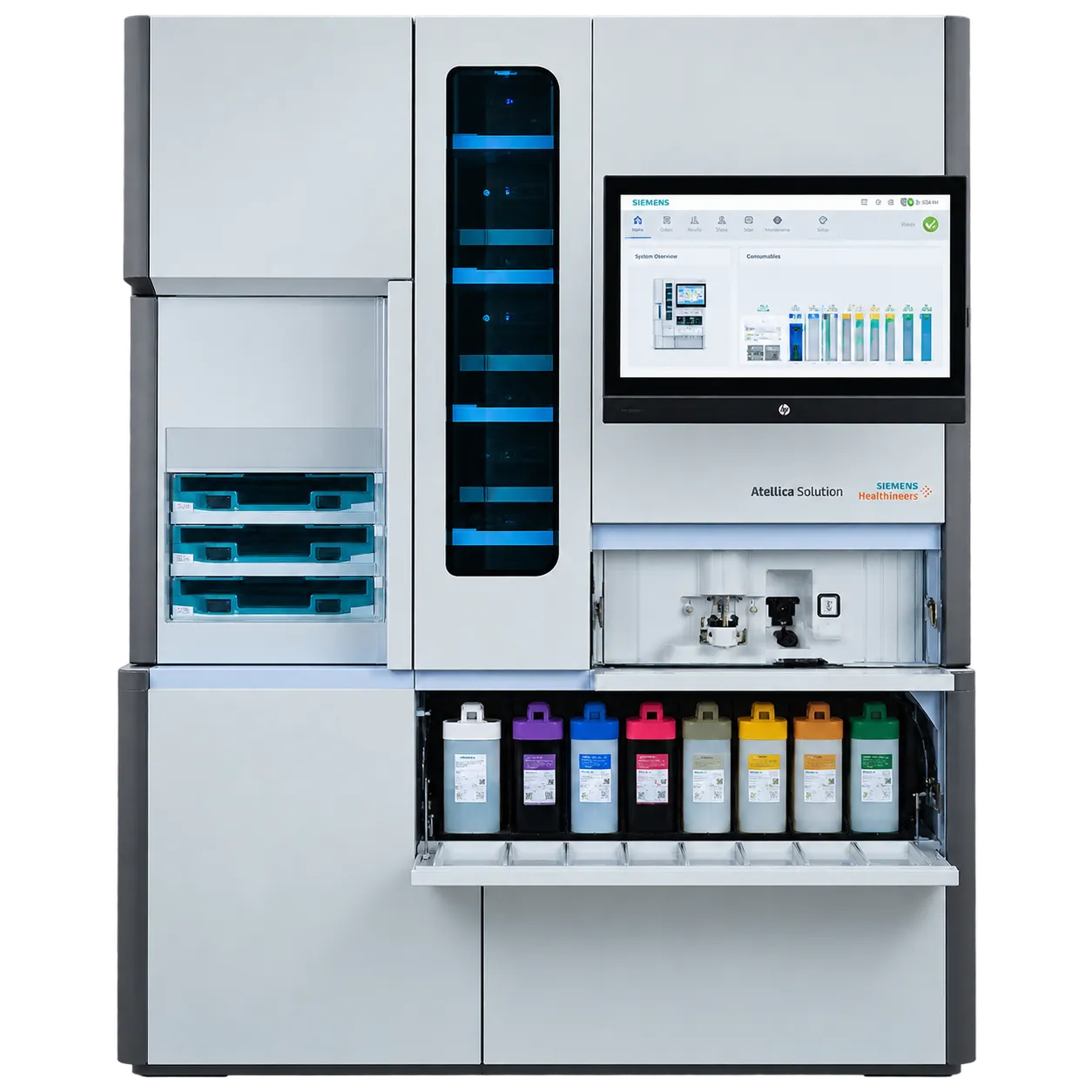
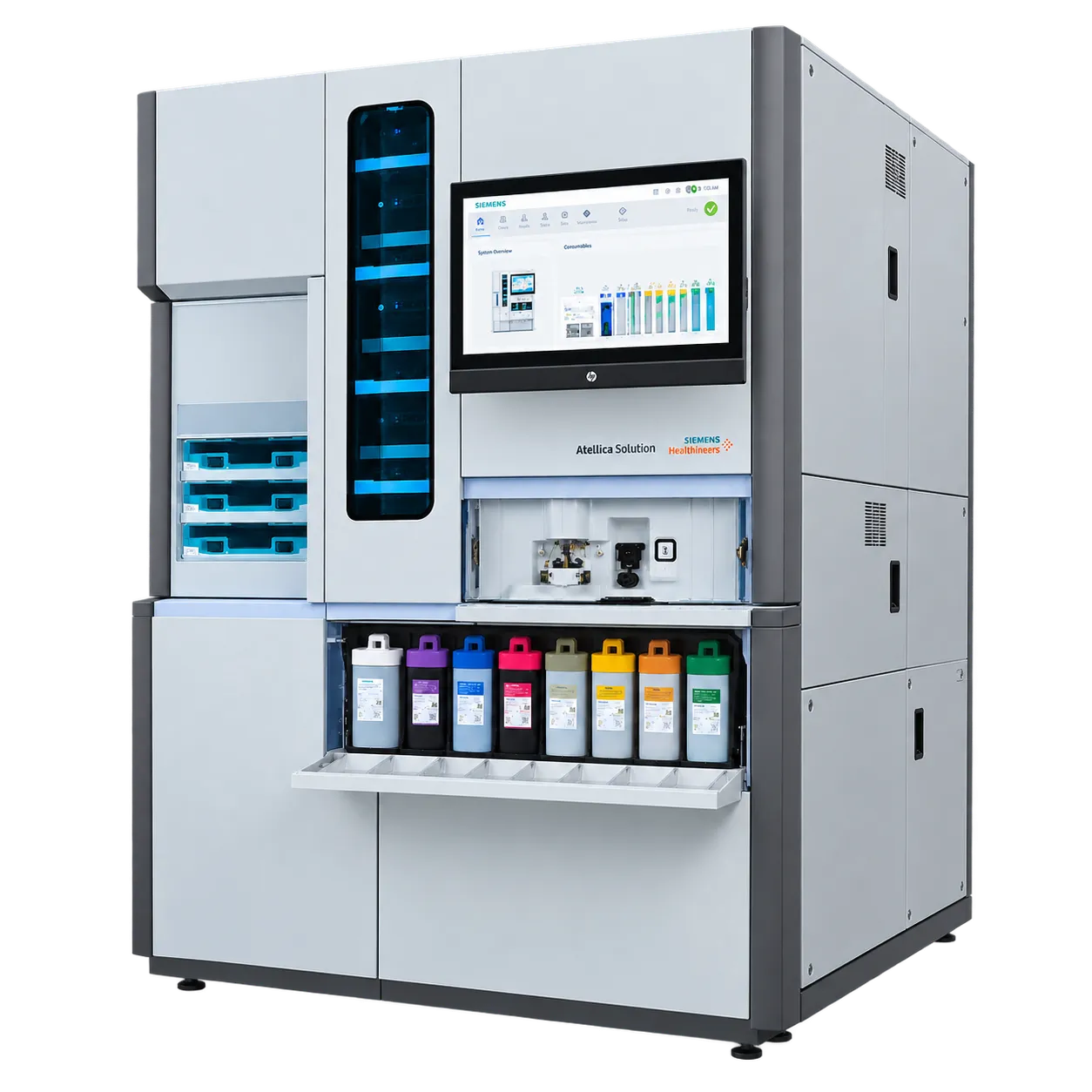
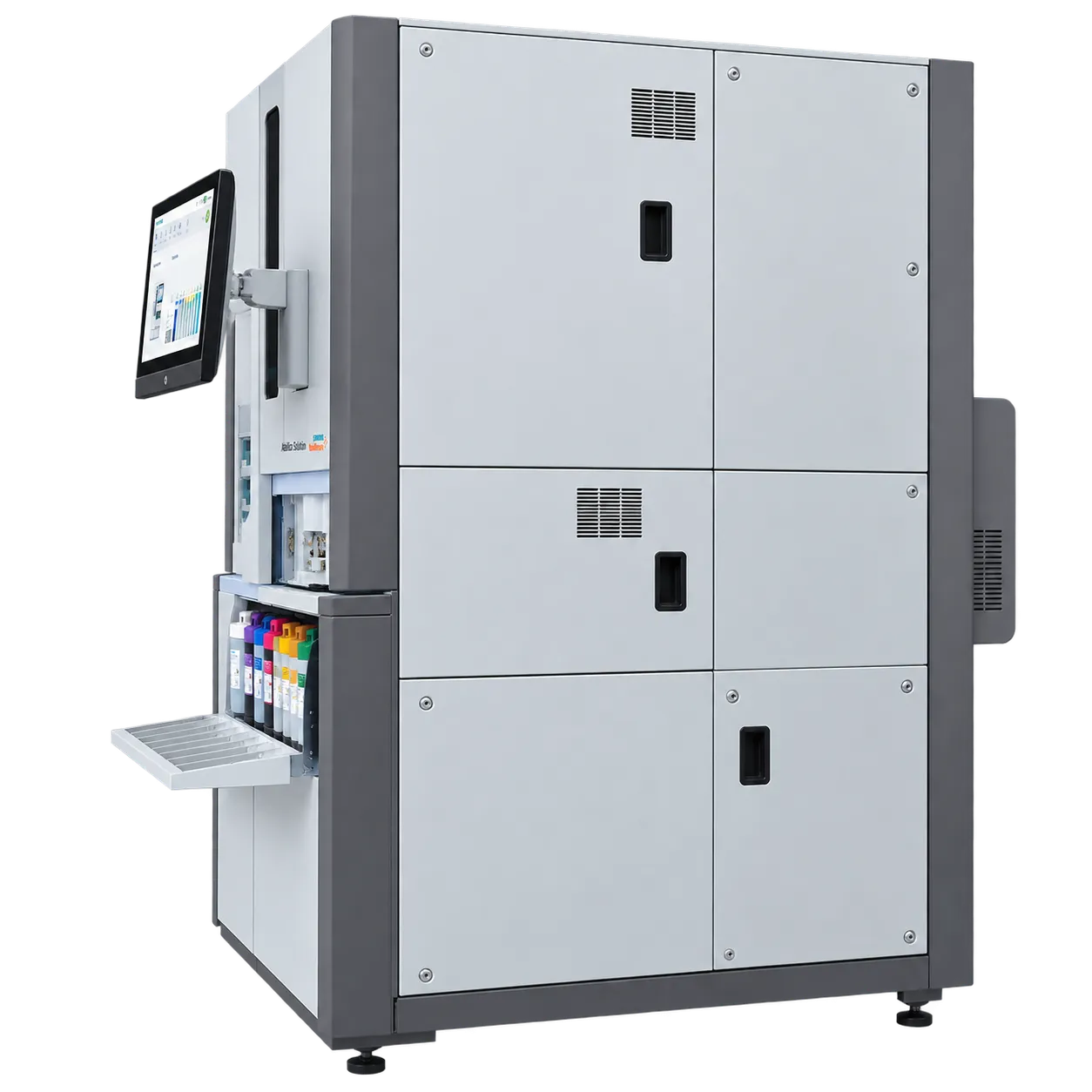
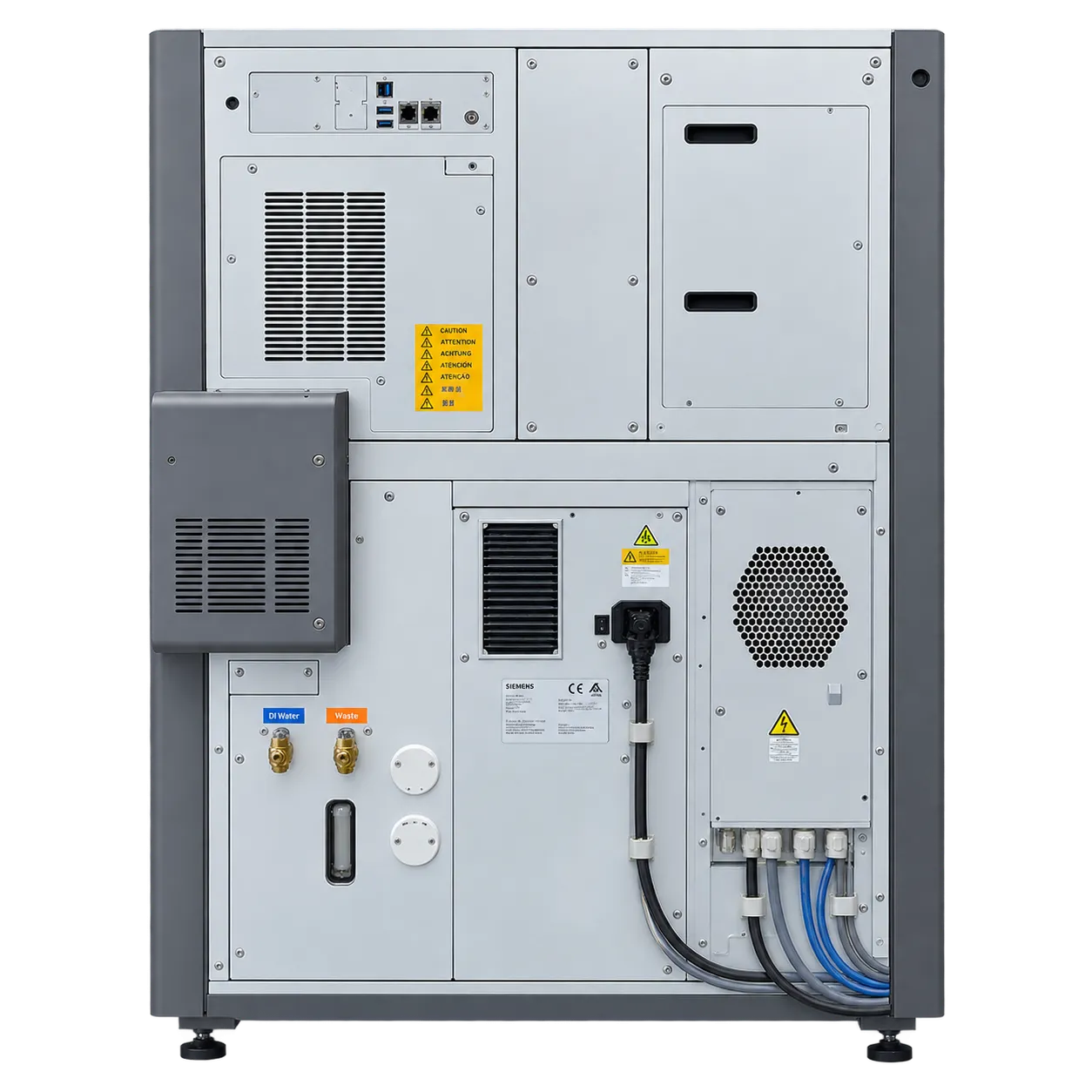
Routine histopathology reporting rests on H&E sections, and an instrument holding baking through coverslipping produces a finished slide from a cut section without intermediate handling steps.
High-volume laboratories running large daily slide numbers are served by a capacity of two hundred slides loaded at once and throughput of approximately 180 to 200 slides per hour at mid-stain protocols.
Laboratories with mixed tissue types benefit from holding over four hundred customised protocols, since staining can be tuned to the specimen rather than run to one recipe.
Frozen section and urgent work is supported by a first result in 40 to 45 minutes on mid-range protocols, which sets the floor for turnaround from load to coverslipped slide.
Laboratories managing chemical exposure gain from an H&E process that runs without xylene or alcohol, which changes what has to be handled, stored and extracted.
Digital pathology workflows depend on consistent input, and slides stained under the same conditions across a run give a scanning and image analysis pipeline a steadier starting point.
Services with governance and audit obligations are supported by barcode tracking from drying through coverslipping, giving a documented chain of custody for each slide.