
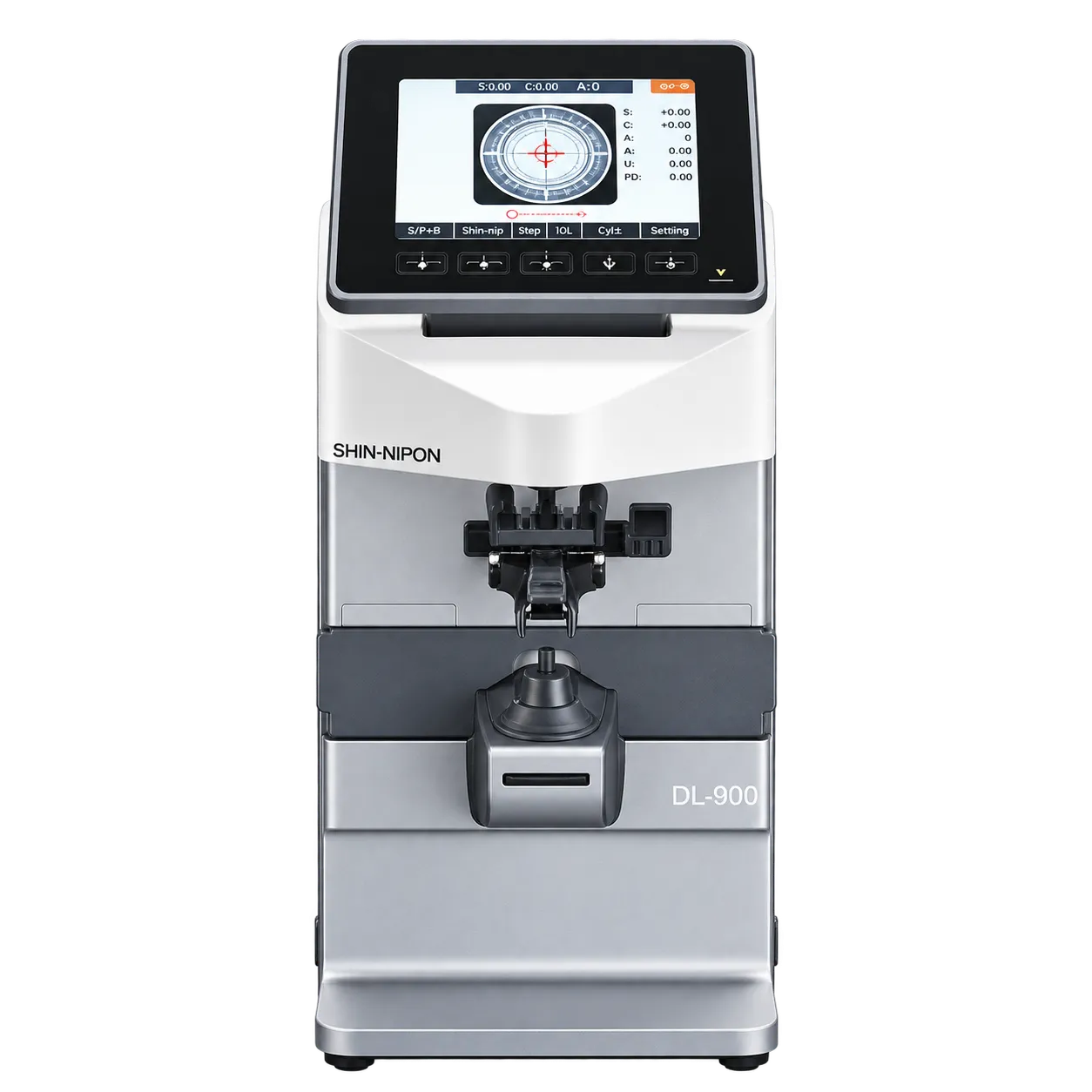
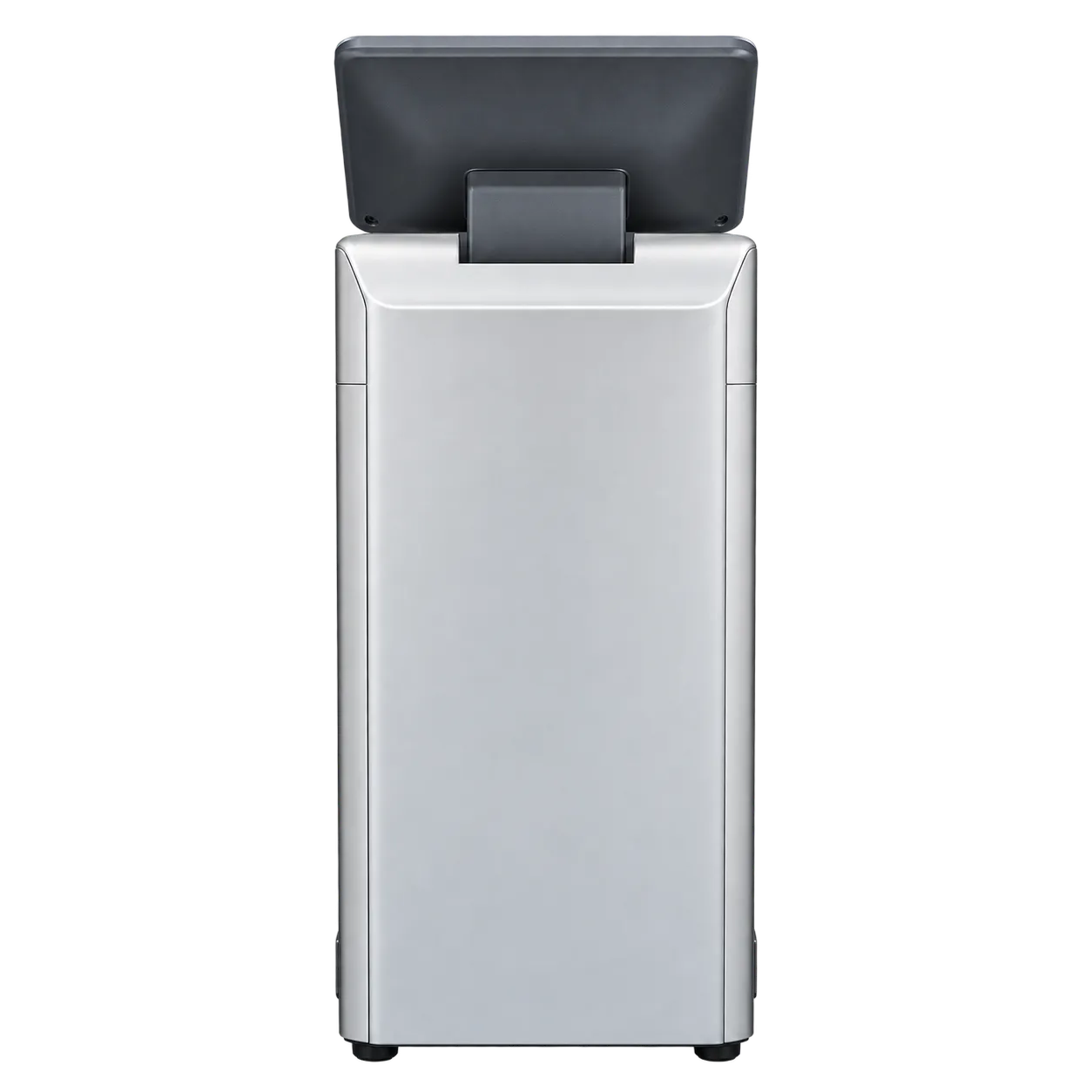
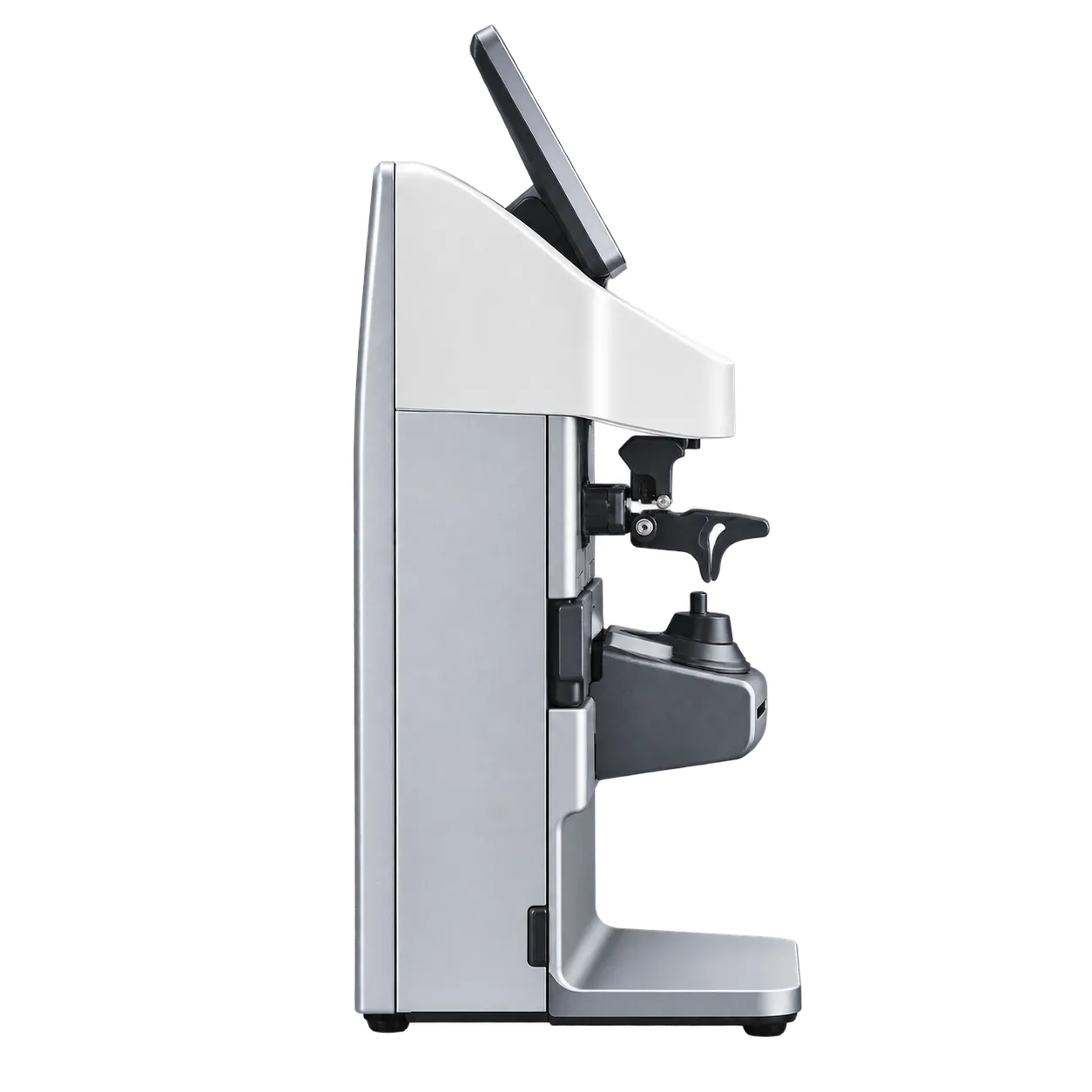
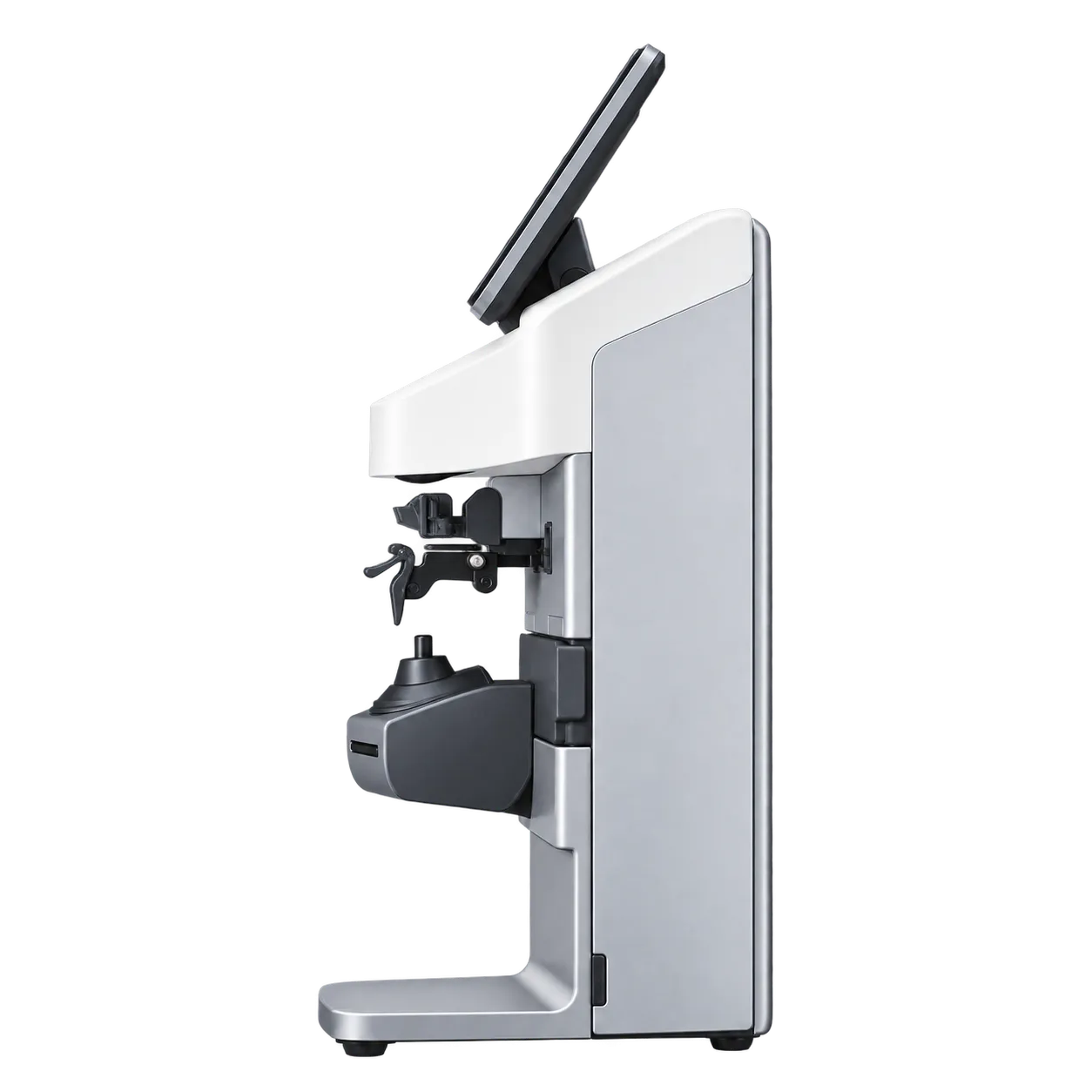
The DL-900 suits optometry practices, ophthalmology clinics, optical dispensaries, and lens-finishing benches. An operator seats a lens on the stage, follows the cross target and reads sphere, cylinder, axis, addition and prism from the tilting colour screen. The built-in printer then produces a slip for the patient file, so the reading travels with the order.
For a patient's current spectacles, the printed values give the starting prescription for the next examination. At the dispensing stage, the same printout checks a finished pair against the order, covering power, cylinder axis, addition and prism, and the slip can be attached to the job envelope.
Progressive lenses suit the graphical alignment guide. It detects the progressive design, stores far and near powers, and changes the data section colour when the reading is stored. The system reads multifocal and single-vision lenses at the same stage.
For contact lenses, soft lenses sit on the contact lens stand, and hard lenses are measured directly. Unprocessed lenses up to 100 mm in diameter can be read before cutting, and the storage box keeps marking cartridges and contact lens holders close to the stage.
In a refraction room, the RS-232C interface connects the DL-900 to the DR-900 digital refractor, so the examiner begins from the measured lens powers. The timer and the 4.3 kg body suit are on a bench shared by several staff. The printed slip gives a counter assistant and an optician one record to read, and the screen tilts up to 60° so that the data section can be read from different positions.