
The Siremobil Compact is commonly used in:
- Orthopaedic surgery and trauma imaging
- Intraoperative fluoroscopy
- General radiology and diagnostic procedures
- Pain management imaging
- Fracture assessment and reduction
- Emergency room imaging
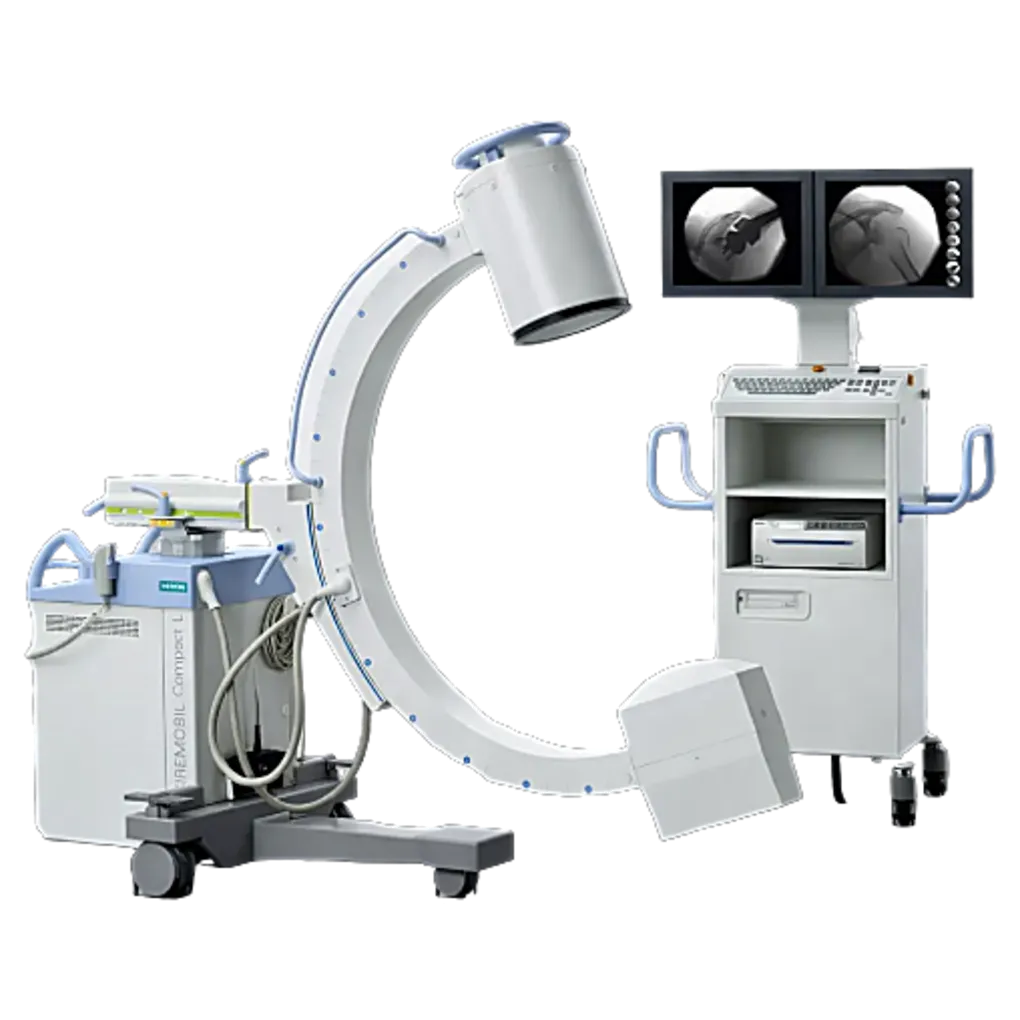
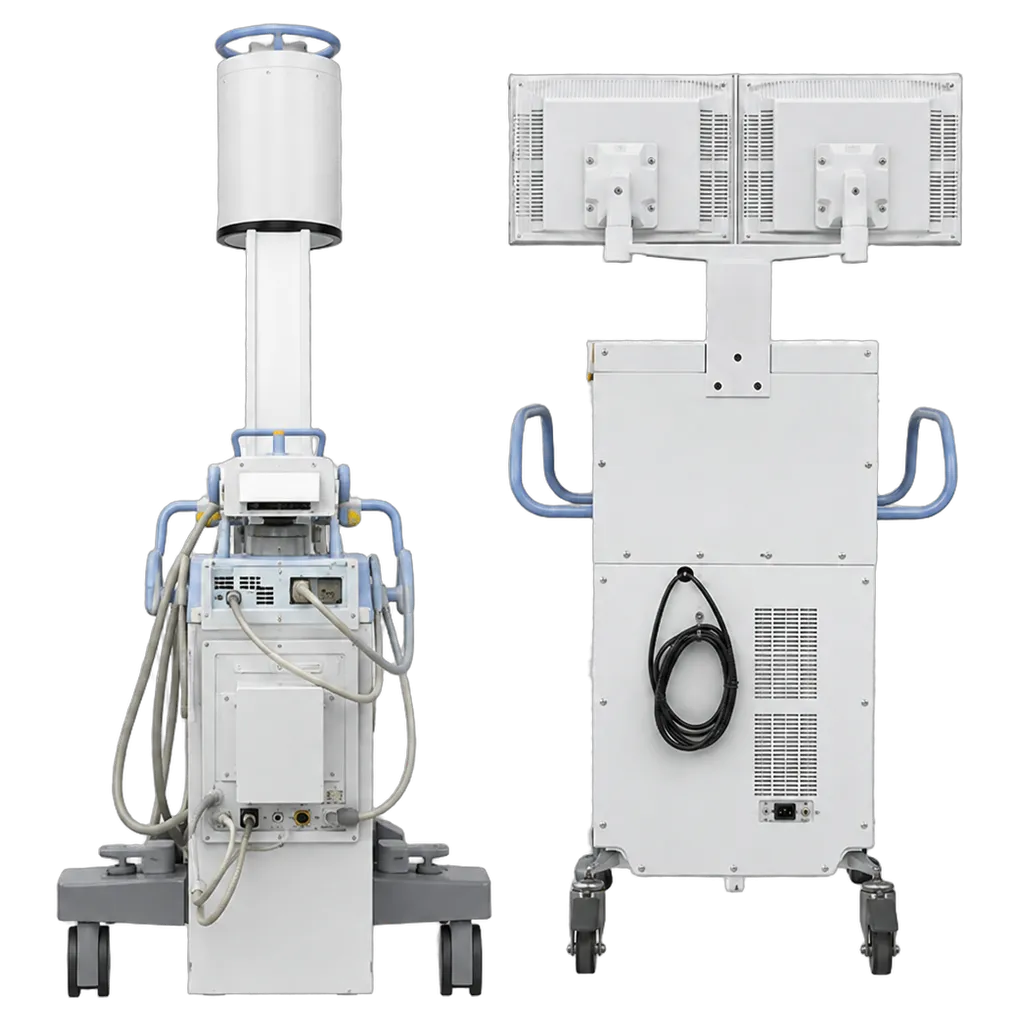
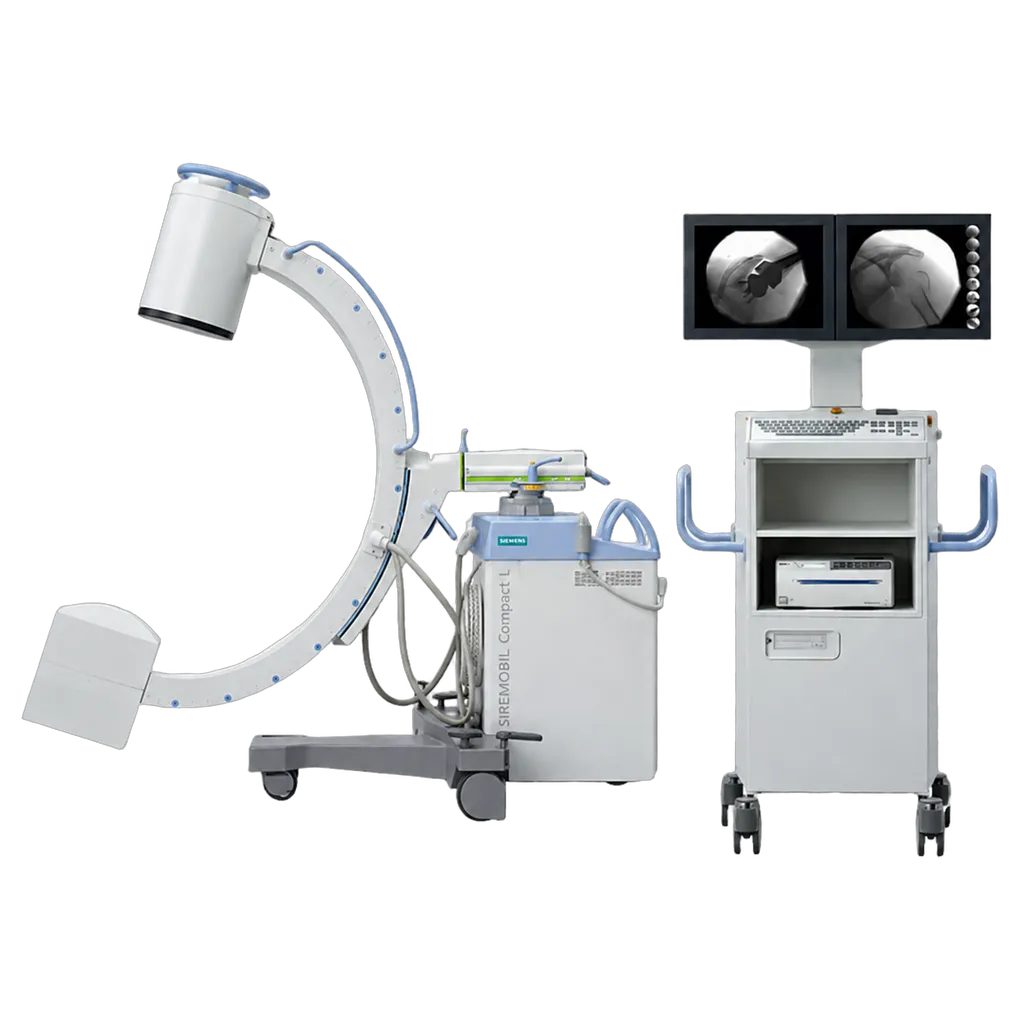
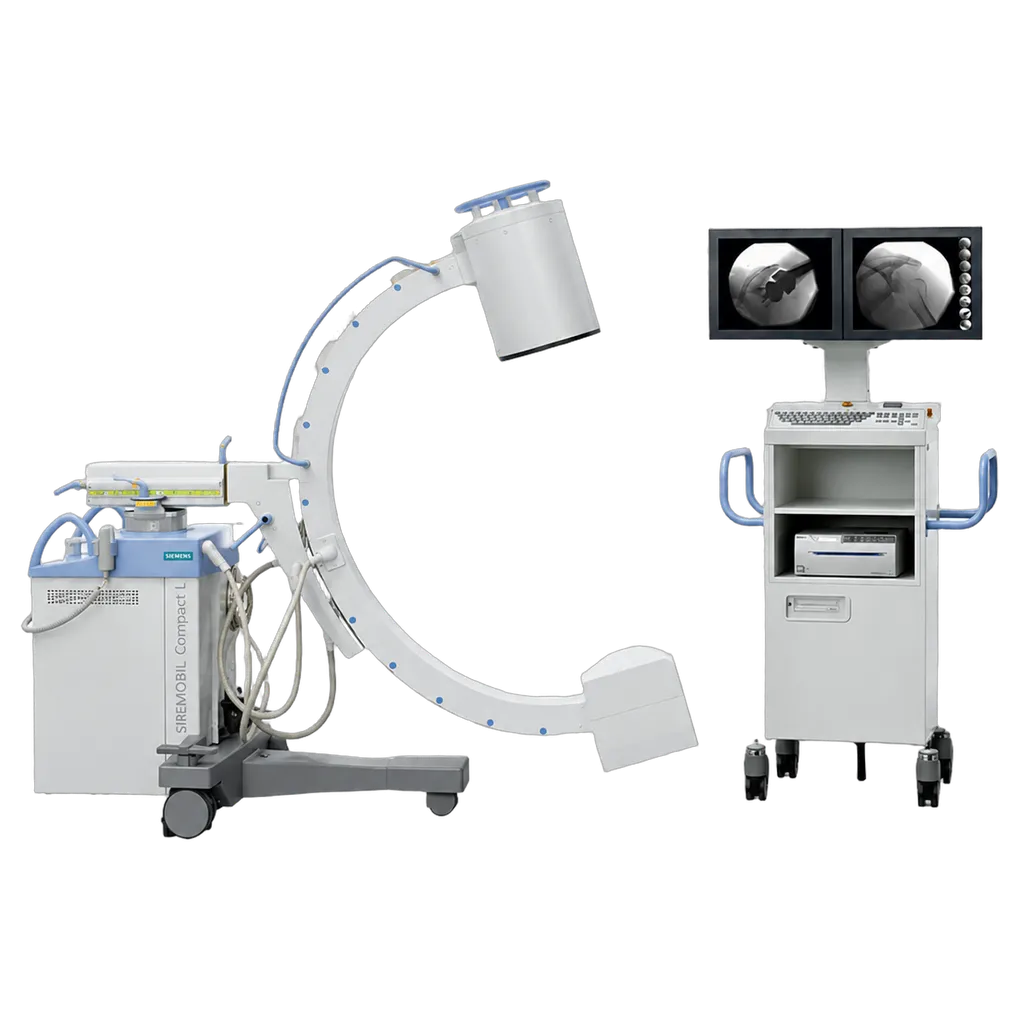
Compact mobility. Consistent imaging.
The Siremobil Compact is a mobile radiology imaging system designed for flexible use in surgical suites, emergency rooms, and general radiology departments. It offers reliable 2D fluoroscopic imaging in a compact, maneuverable package.
The Siremobil Compact radiology system is a mobile C-arm designed to deliver consistent and dependable fluoroscopic images for clinical procedures. Its compact size and easy mobility make it well-suited for hospital environments where space is limited or frequent repositioning is required.
This system supports real-time imaging during surgical, trauma, and diagnostic procedures. With intuitive controls and smooth movement, the Siremobil Compact helps clinicians capture the images they need quickly and efficiently without compromising patient care.
The design focuses on workflow efficiency and dependable performance. The C-shaped arm provides coverage around the patient for a variety of views, while the mobile base allows it to be positioned easily around operating tables or treatment areas.
Key Features
The Siremobil Compact is commonly used in:
1. What is the Siremobil Compact used for?
It is used for mobile fluoroscopic imaging during surgical, trauma, and diagnostic procedures.
2. Is it suitable for orthopaedic operations?
Yes, it supports orthopaedic surgery and fracture imaging.
3. Does it provide real-time imaging?
Yes, the system delivers real-time fluoroscopic images.
4. Is the device easy to move?
Yes, it is designed for smooth and easy mobility.
5. What clinical settings can use this system?
Operating rooms, emergency departments, and radiology suites.
6. Does it require special training?
Basic training is recommended but the controls are intuitive.
7. Can it integrate with digital image storage?
Yes, it supports digital imaging workflows.
8. Is it suitable for high-volume clinics?
Yes, it provides reliable performance for busy settings.
Everything buyers need to know about sourcing medical equipment through MediGear.
It is a mobile C-arm that provides two-dimensional fluoroscopic imaging at the point of care. Surgical suites, emergency departments and general radiology areas use it where the imaging has to come to the patient rather than the other way round. The C-shaped arm rotates around the patient to give a range of views without moving them. Medigear.uk lists it under Medical Diagnostic Equipment with the code MDIE-MIEQ-199.
Orthopaedic surgery and trauma work, intraoperative fluoroscopy, fracture assessment and reduction, pain management procedures and general diagnostic screening. What these share is the need for live imaging while the clinician works, rather than a static series afterwards. Medigear.uk can advise on the accessories a particular procedure list is likely to need.
Everyone who stays in the room needs proper protection, which in practice means lead aprons, thyroid shields where indicated, and mobile screens for staff who cannot step away. Distance and collimation achieve more than any single garment. The area around the C-arm becomes a controlled area during screening, with local rules setting out who may be present. Medigear.uk supplies the manufacturer documentation your radiation protection adviser will need.
Operation sits under your national framework for medical exposures. In the UK, that is the Ionising Radiation (Medical Exposure) Regulations 2017, which set out referrer, practitioner and operator duties and require adequate training for each role. Only staff entered on your local operator list should use the system. Medigear.uk provides the operating documentation that supports those training records.
The employer needs the relevant authorisation from the national regulator and a radiation protection adviser appointed before any X-ray unit is put into service. In Great Britain, work with ionising radiation is notified to or registered with the Health and Safety Executive under the Ionising Radiations Regulations 2017. A radiation protection supervisor and written local rules also have to be in place. Medigear.uk can supply the technical documentation these steps call for.
The system is compatible with digital image capture, so studies can be exported rather than left sitting on the trolley. Where images go to a hospital archive, network and DICOM settings are agreed with your imaging informatics team before first use. Confirm which capture and export options are fitted on the unit with the Medigear.uk team.
A mains supply the unit can reach without trailing cables across a sterile field, clearance to manoeuvre the C-arm around the table, and doorways and lifts that take it between theatres. Floor surfaces matter too, since thresholds and ramps make repositioning awkward mid-case. Weight, dimensions and packing measurements are confirmed by the Medigear.uk procurement team during planning.
Screening time is the largest single factor, so short taps rather than continuous exposure keep dose down. Collimating to the area of interest, keeping the image intensifier close to the patient, and using last image hold where the unit has it all help. Staff dose falls with distance from the patient, who is the main source of scatter. Medigear.uk supplies the manuals describing the dose-related settings on the system.
Routine quality assurance to your medical physics schedule, electrical safety testing, and a radiation safety check after installation or any move that could affect it. Tube and image intensifier condition are what determine image quality over the years. Records of these checks are needed at audit as much as the checks themselves. Medigear.uk supplies documentation to support acceptance testing at handover.
Tube condition and recorded usage, image intensifier performance, the state of the monitor trolley, footswitch and hand controls, and what manuals and service history exist. Parts availability is worth confirming on an established platform rather than assuming it. Medigear.uk confirms condition and history in writing before an order proceeds, and can quote spare parts alongside the system.