
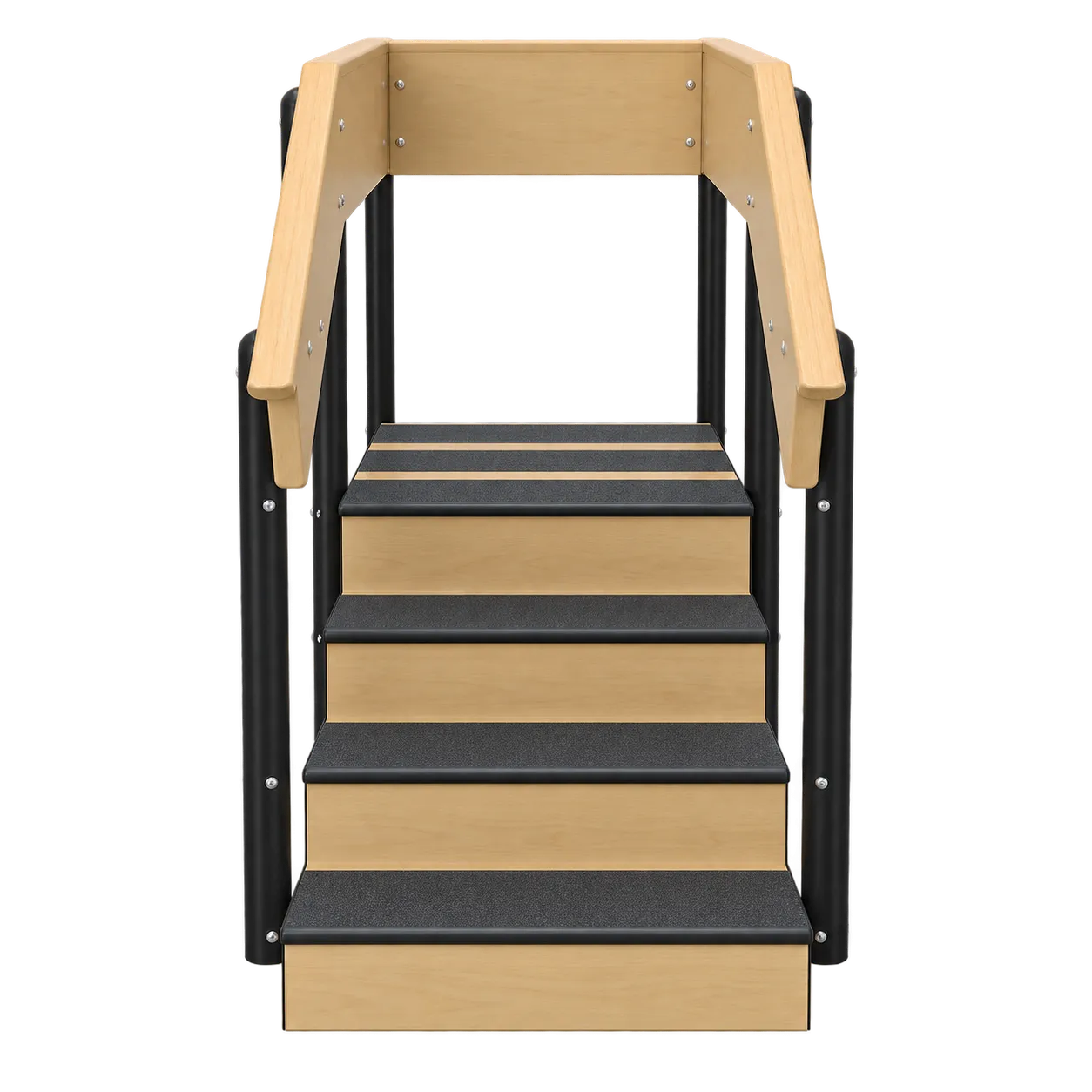
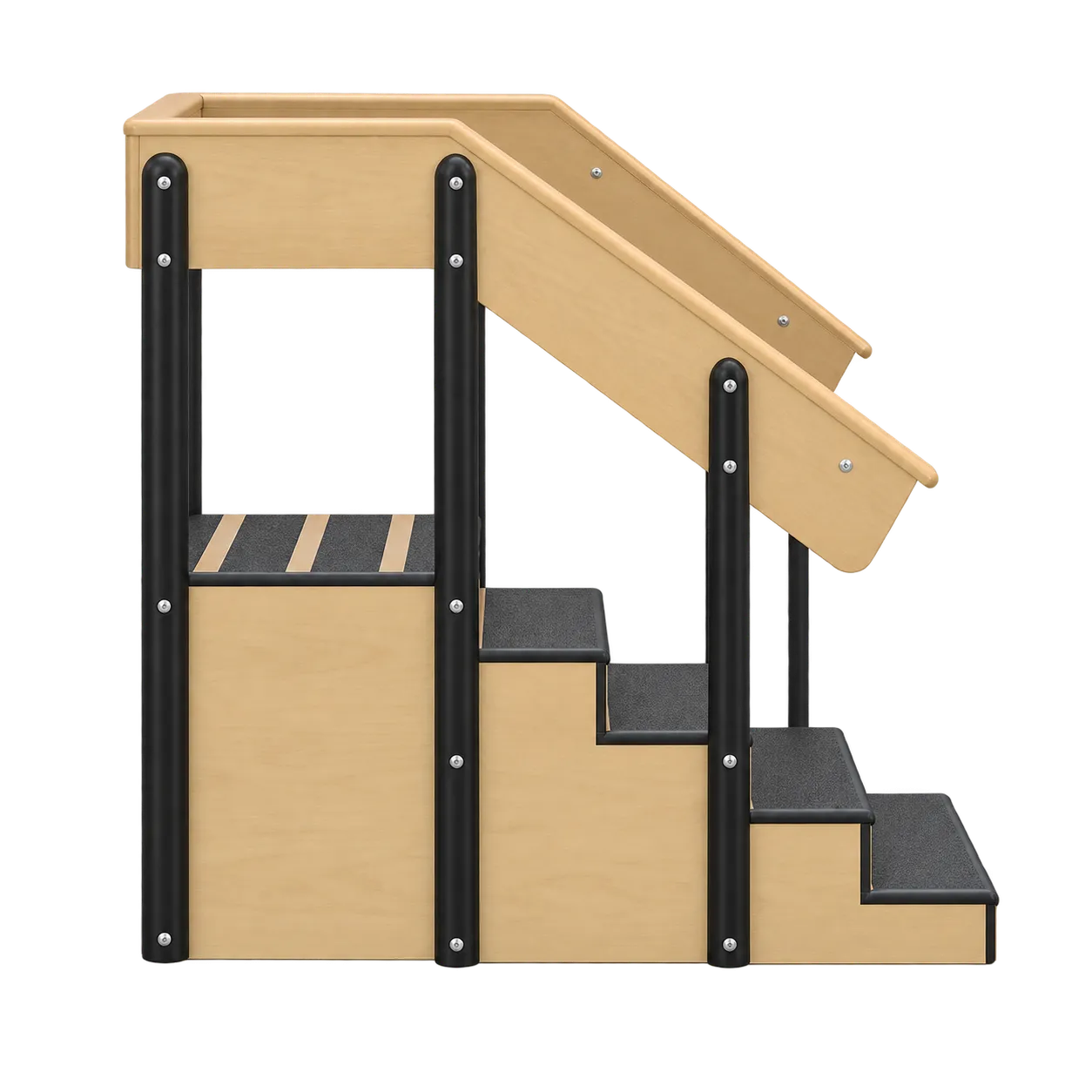
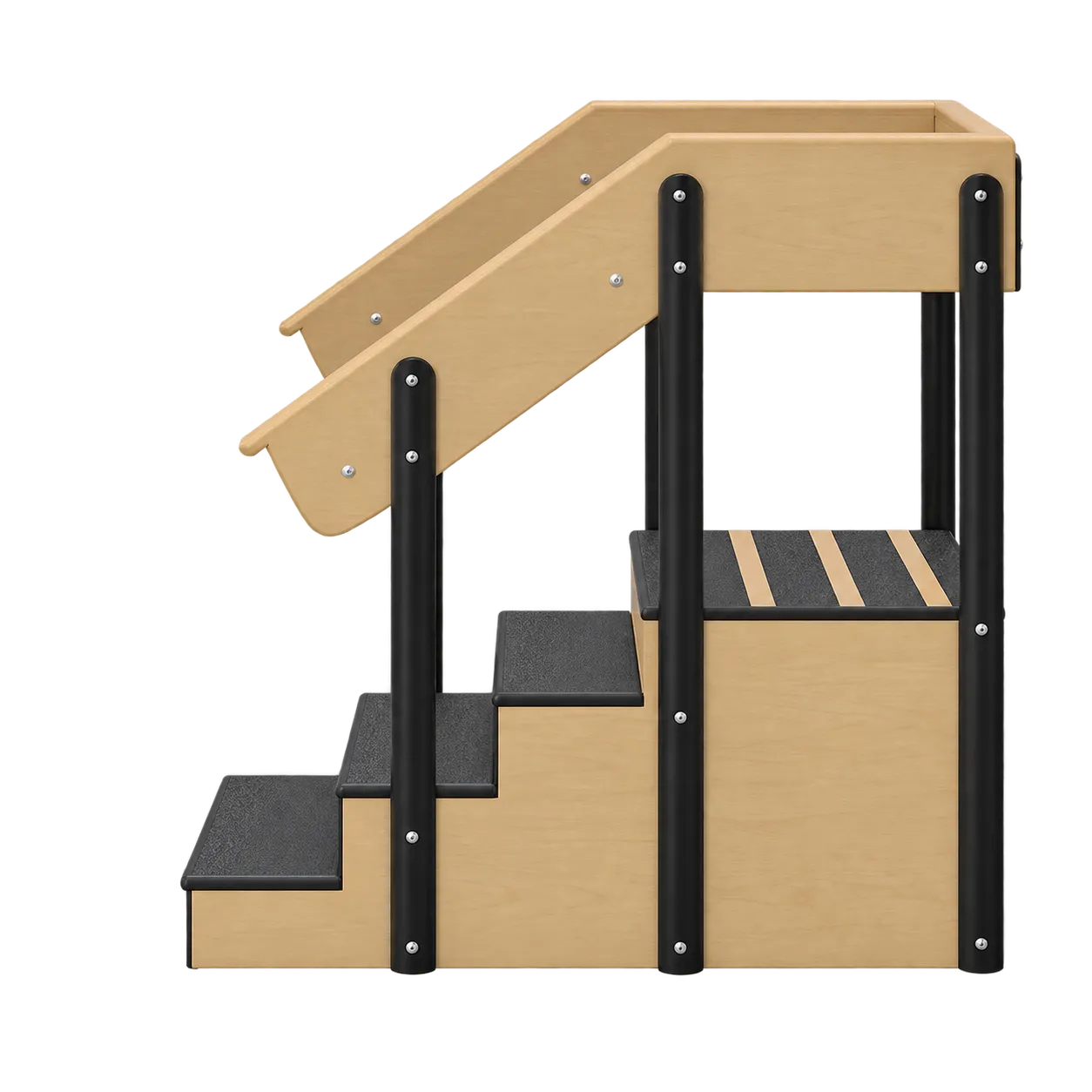
Hospital physiotherapy gyms, stroke units, orthopaedic and trauma therapy rooms, falls services, community rehabilitation teams and outpatient physiotherapy are where the 8104W earns its place. Patients practise step-to and step-over-step patterns with one or two rails, climb with a walking stick or crutches, and learn to turn safely on the top platform. Before a hip or knee replacement patient goes home, or a stroke survivor returns to a house with stairs, therapists can see how they manage a flight under supervision. Cardiac and respiratory teams can also watch breathlessness and recovery over a set number of climbs.
Stair ability matters well beyond the hospital. An observational study of community-dwelling people with stroke found that stair negotiation predicted how physically active they were in daily life. The trial evidence for training it is thinner. A 2025 meta-analysis found only very low-quality evidence that structured exercise improves stair climbing after stroke, with an average effect whose lower confidence limit sits at zero. A staircase in the gym makes the practice possible, and the evidence so far places it within a wider exercise programme, not as a stand-alone treatment.
In the UK, physiotherapists who supervise stair practice are HCPC registrants. Services providing treatment in England answer to the CQC, and the other three nations each have their own provider regulator. NHS procurement routes expect conformity papers and a declared user weight limit for rehabilitation equipment, and equivalent public procurement elsewhere asks the same. The conformity documentation those procurement routes require is issued by the manufacturer and shared by the enquiry team.