
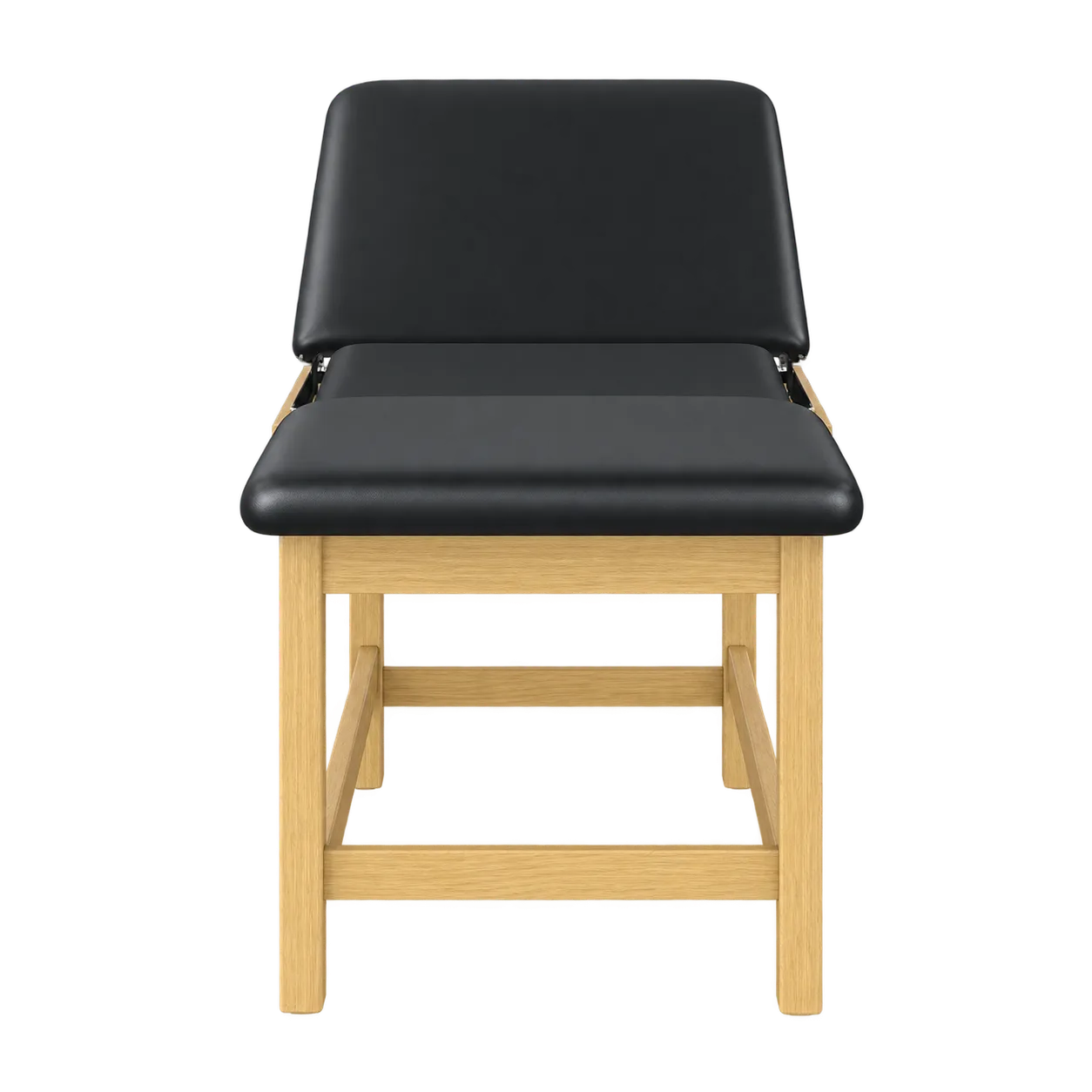
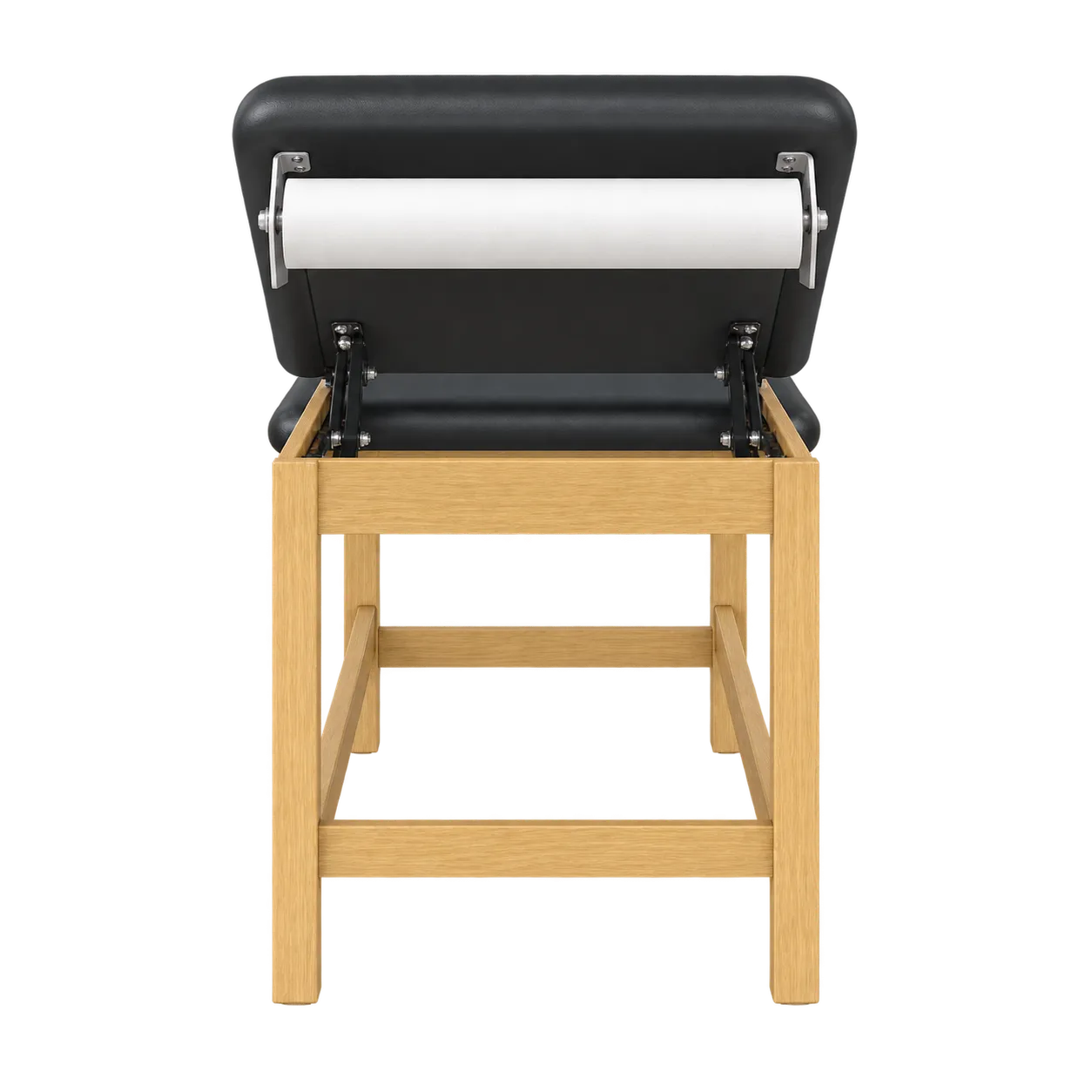
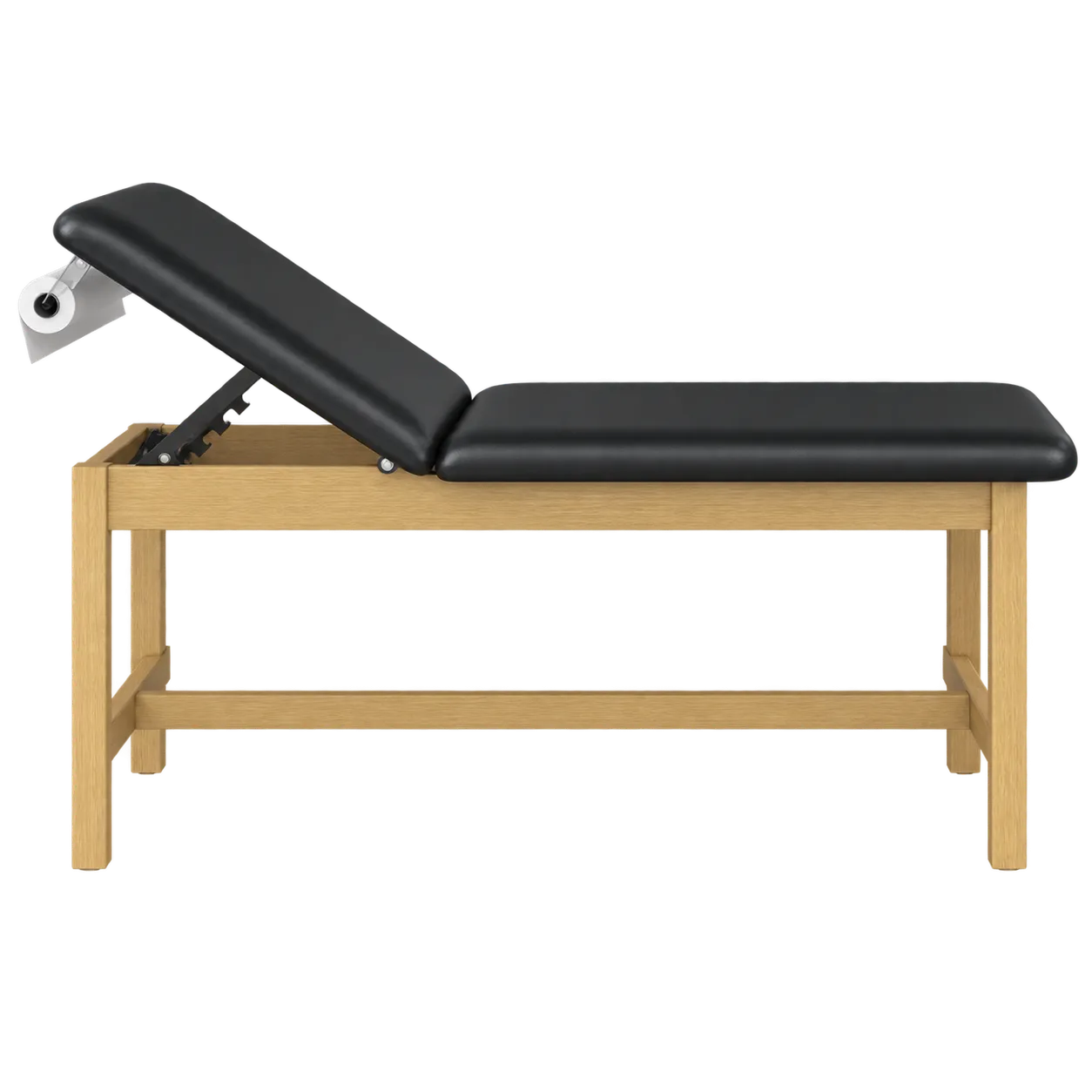
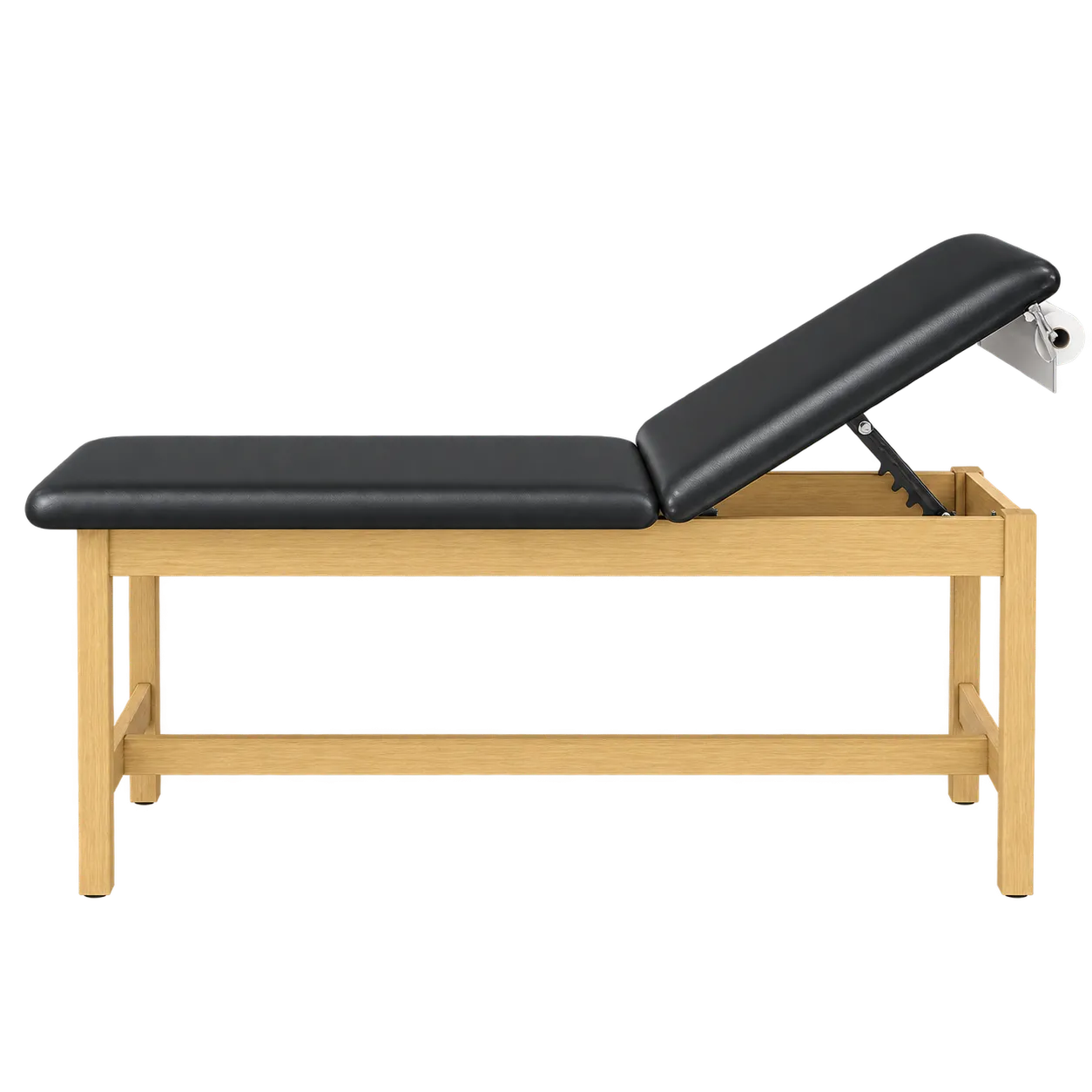
Treatment and examination couches carry the routine work of a clinic, and a version with an adjustable backrest widens which patients that room can properly accommodate. Typical use covers general examination, respiratory assessment, minor procedures, injections and dressings, phlebotomy, consultation and counselling, and post-procedure observation.
The backrest earns its place with patients who cannot lie flat. Orthopnoea associated with heart failure or advanced respiratory disease, late pregnancy, significant reflux and high body mass all make a supine position uncomfortable or genuinely difficult, and anxiety at lying flat affects more patients than tends to be recorded. Without a backrest, those consultations either happen hurriedly or move to another room; with one, they happen properly where they were scheduled.
Respiratory examination is the clearest positive indication. Auscultation of the posterior chest requires the patient sitting forward, and a backrest supports that position without a clinician propping the patient or piling pillows.
Communication-led work benefits in a quieter way. Consultation, explanation and counselling all run better at eye level than with one person supine and the other standing over them, and a semi-recumbent position changes the dynamic of a difficult conversation.
Post-procedure observation is more comfortable and more easily monitored semi-recumbent than flat, particularly where a patient is recovering from a vasovagal episode and needs to be brought up gradually rather than sat upright at once.
The fixed working height sorts the applications as on any non-adjustable couch, with the caveat that the patients most helped by a raised back are often those who find climbing onto a high surface hardest.