
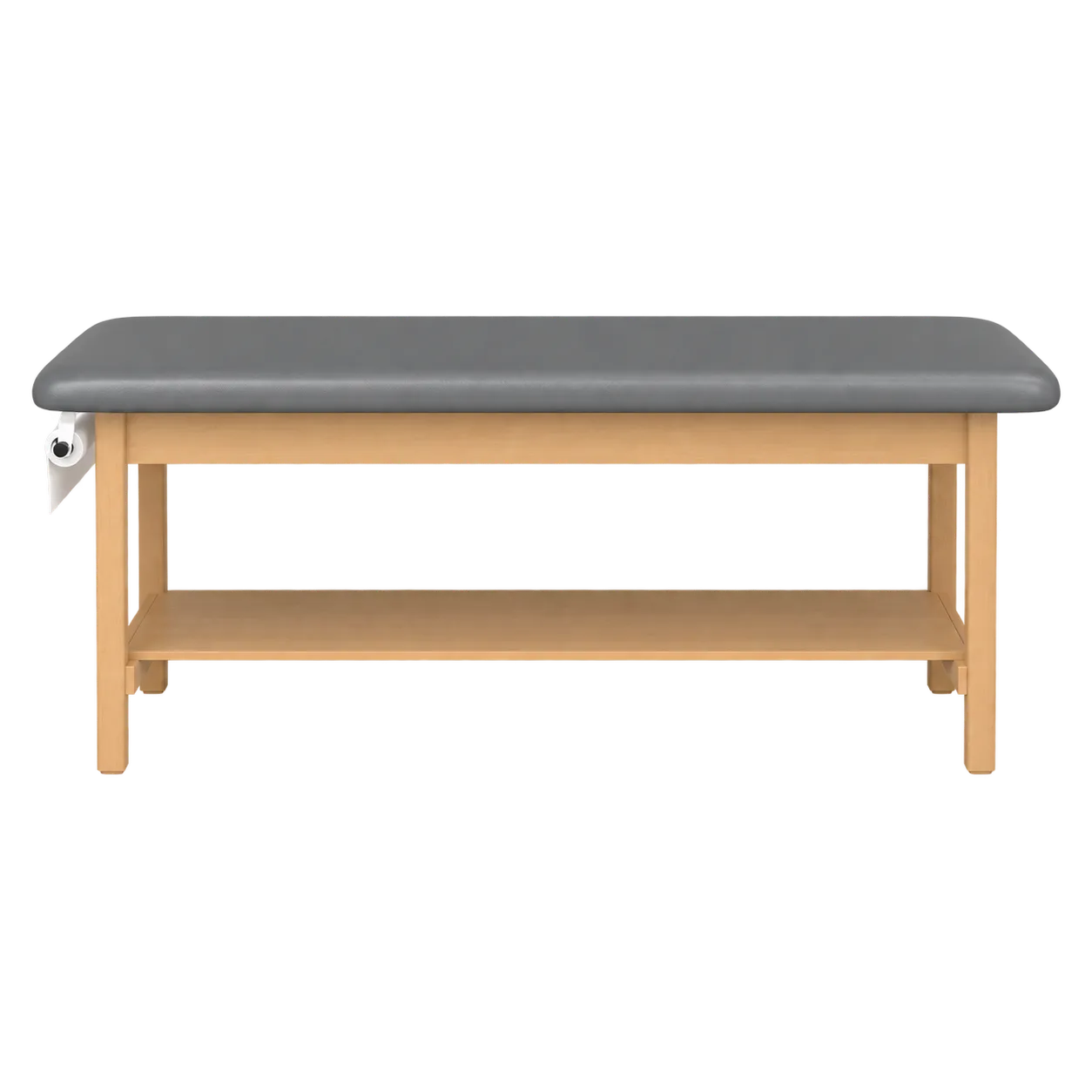
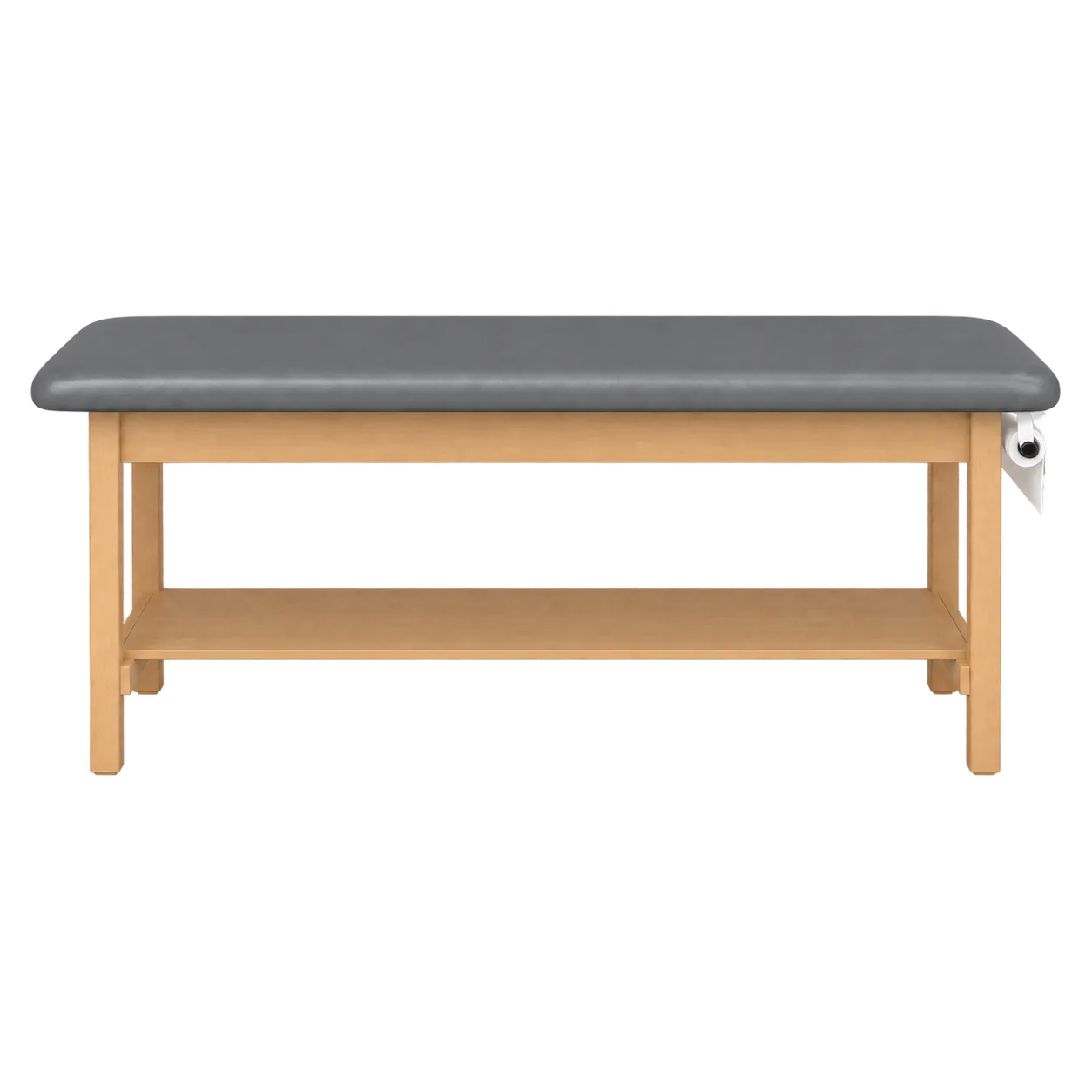
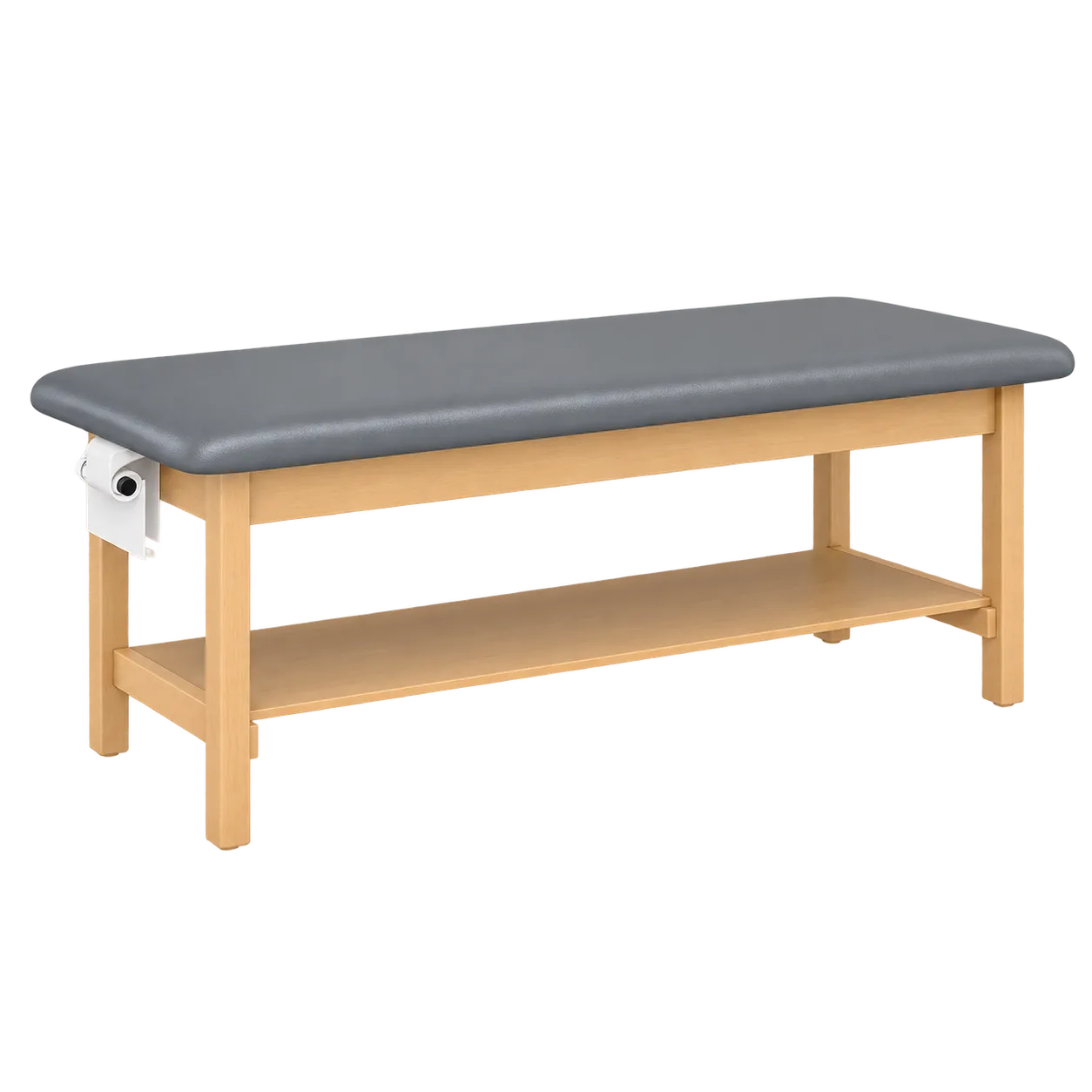
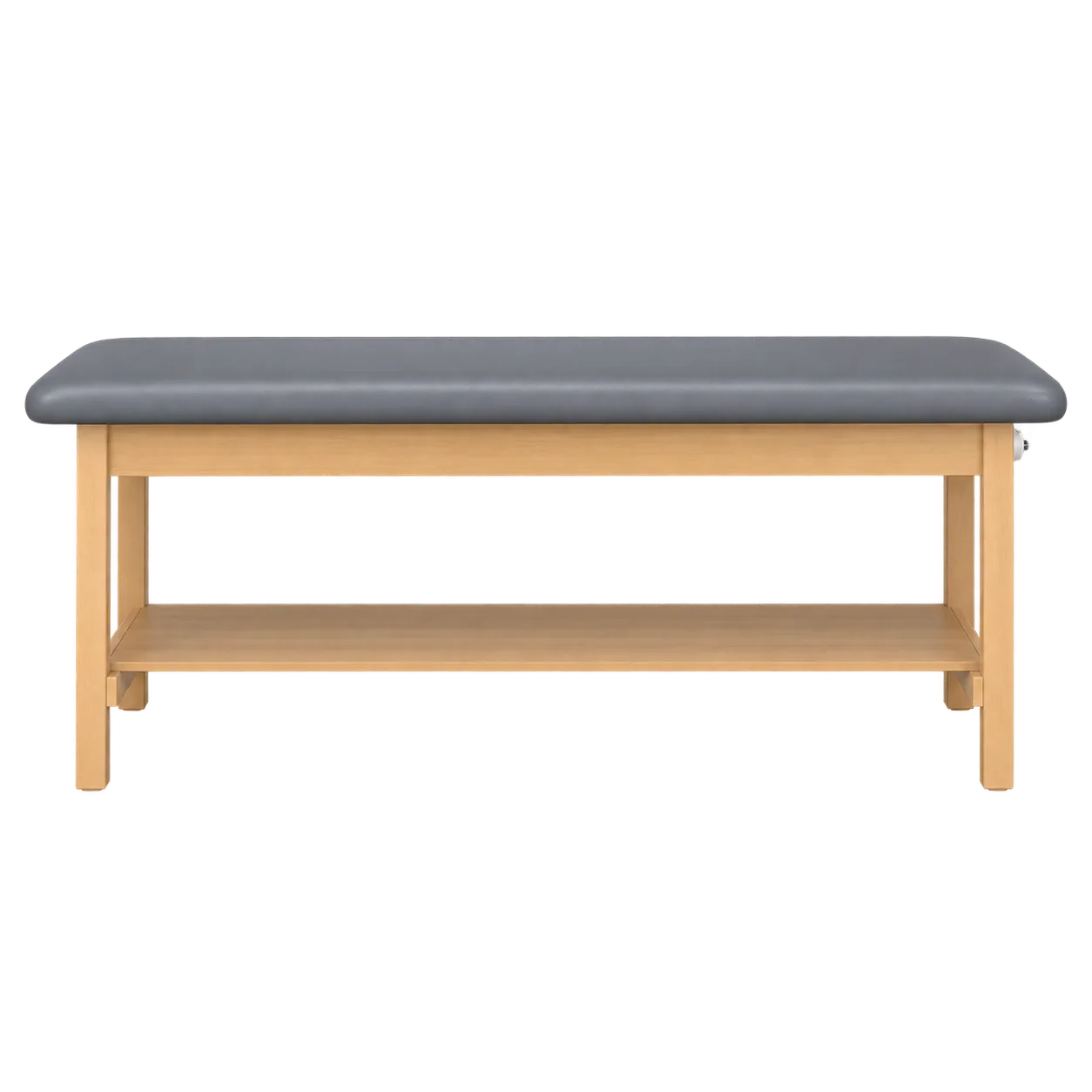
Treatment and examination couches carry out the routine work of a clinic, and a shelved version is aimed at rooms where storage is scarce and the clinician needs supplies within arm's length. Typical use covers general examination, minor procedures, injections and dressings, phlebotomy, and consulting room assessment.
The shelf changes how a consultation runs more than it changes what the couch does. Having a couch roll, gloves, dressings, or a diagnostic set within reach means a clinician does not leave a patient part-way through a procedure, which matters most where the patient is undressed, positioned, or at any risk of falling if they move unsupervised. That is a real workflow gain in a small room.
It comes with a corresponding discipline. Because the shelf is open and sits beneath the patient surface, what is kept there should be items in active use rather than clean stock held for later, and the shelf needs cleaning on the same schedule as the couch above it. Services with an infection prevention policy specifying enclosed storage for clean and sterile items should check this configuration against it before ordering.
The fixed working height sorts the applications as it would on any non-adjustable couch. Standing examination and procedures at arm's length are comfortable; sustained manual therapy is less so, and patients who cannot manage a step up will need help or a different couch.
Width selection follows the patient mix and how often clinicians reach across the table.