
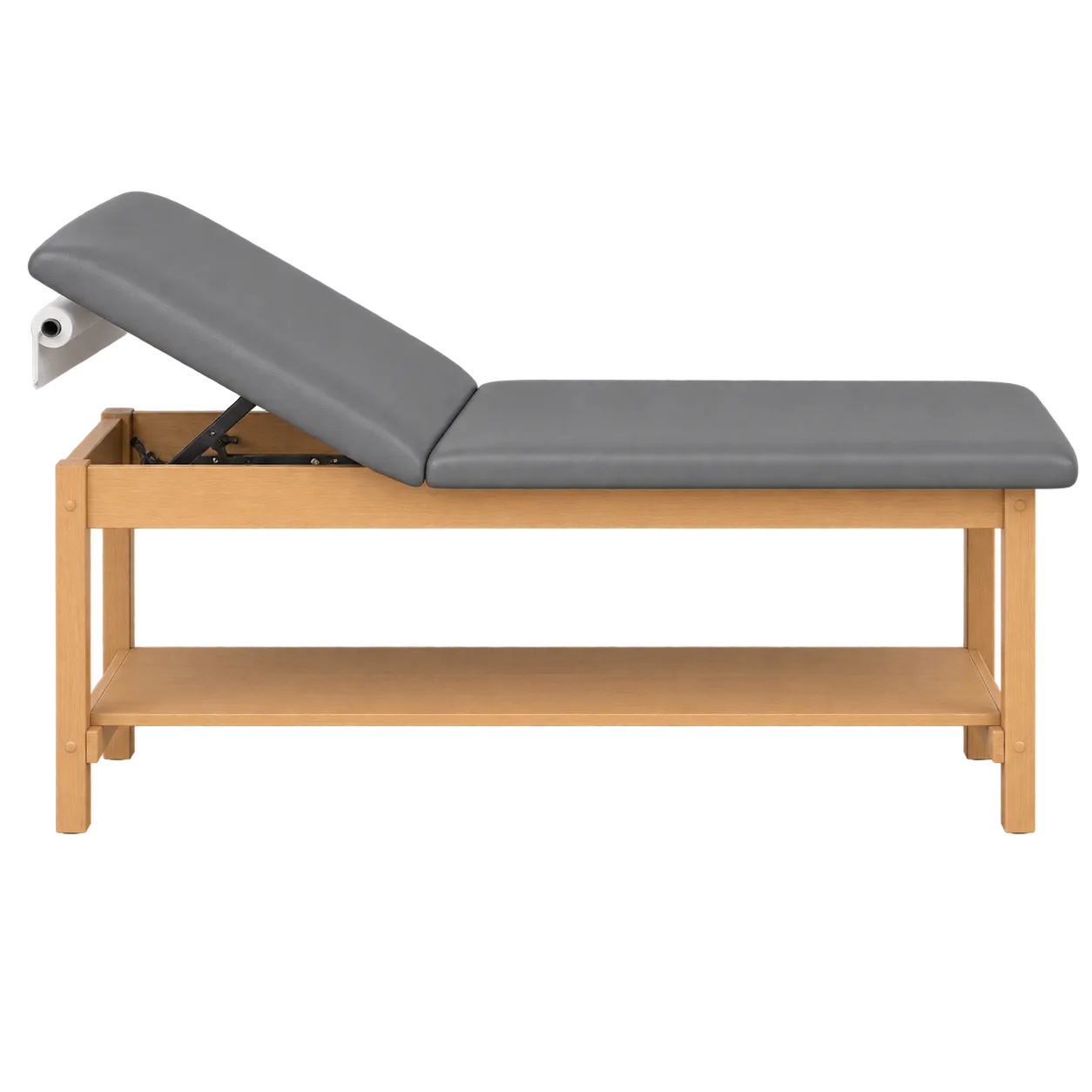
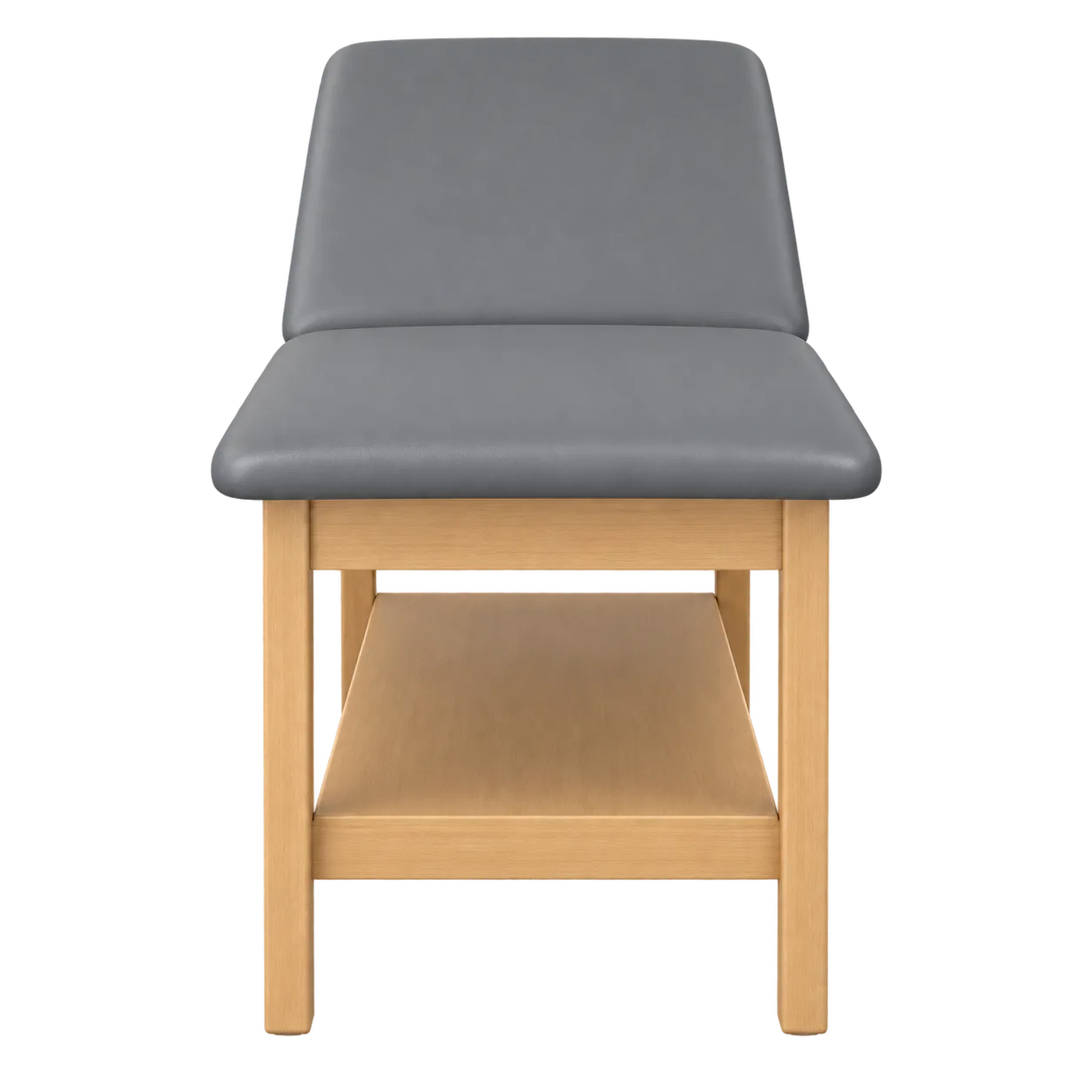
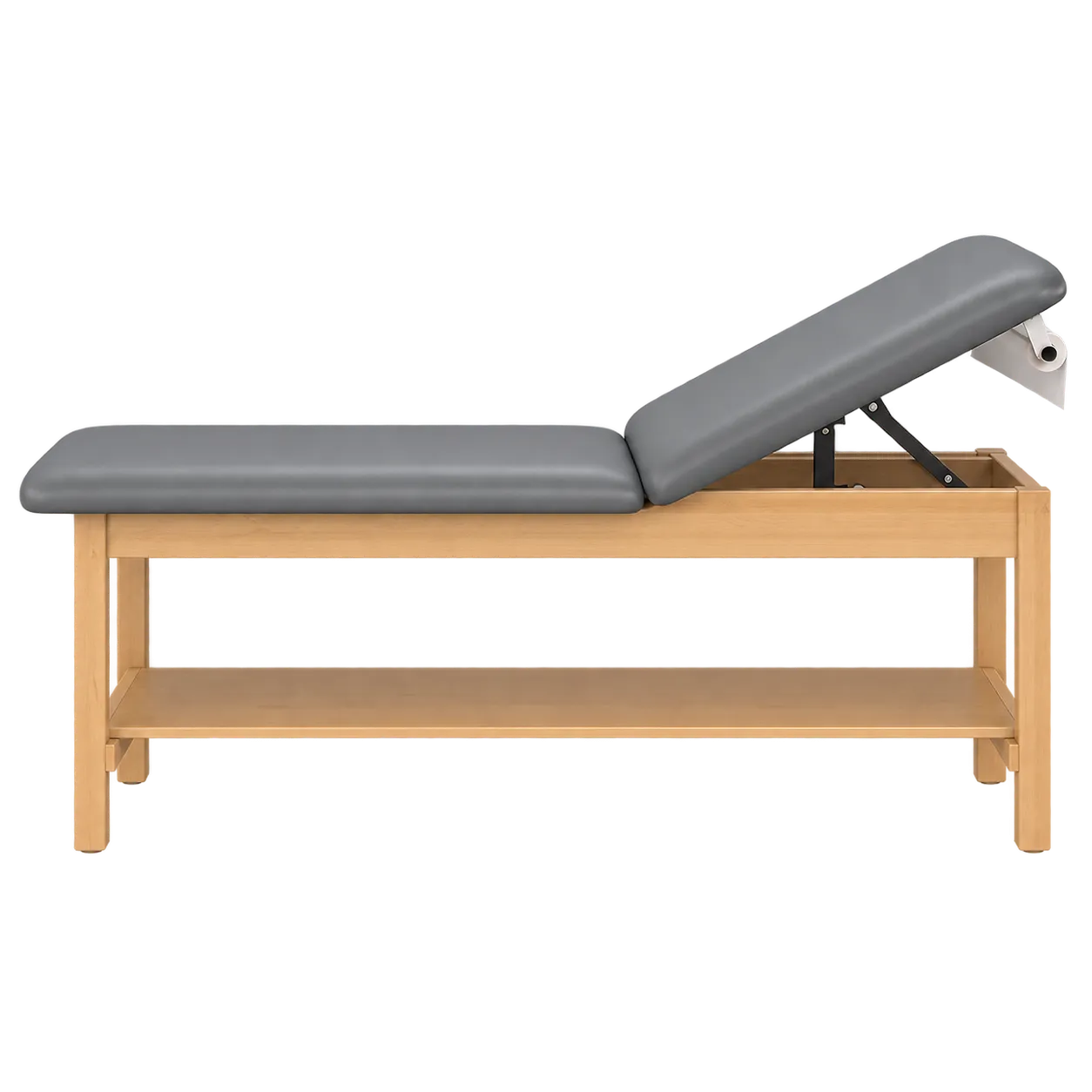
Treatment and examination couches carry out the routine work of a clinic, and a version pairing a raising back with under-couch storage is aimed at rooms doing varied work with limited space. Typical use covers general examination, respiratory assessment, minor procedures, injections and dressings, phlebotomy, consultation and counselling, and post-procedure observation.
The backrest widens, which gives patients the room to be properly accommodated. Orthopnoea associated with heart failure or advanced respiratory disease, late pregnancy, significant reflux, high body mass and anxiety at lying flat all make a supine position difficult, and a raising back means those consultations happen properly rather than hurriedly.
The shelf keeps equipment and bulk items at the couch rather than across the room. Both features are useful; the combination asks one question neither does alone, which is where the clinician stands when the back is raised.
Respiratory examination shows it most clearly. Auscultation of the posterior chest is performed from behind and to the side of a patient sitting forward, and that is precisely where a full-length shelf removes the space to stand close. Services doing mainly seated consultation and dressings at the side will barely register the interaction and will get the storage benefit without the postural cost.
Patient access remains the compound consideration. A fixed 790 mm surface is a substantial climb, and the patients who most benefit from a raised back are frequently those least able to manage it.