

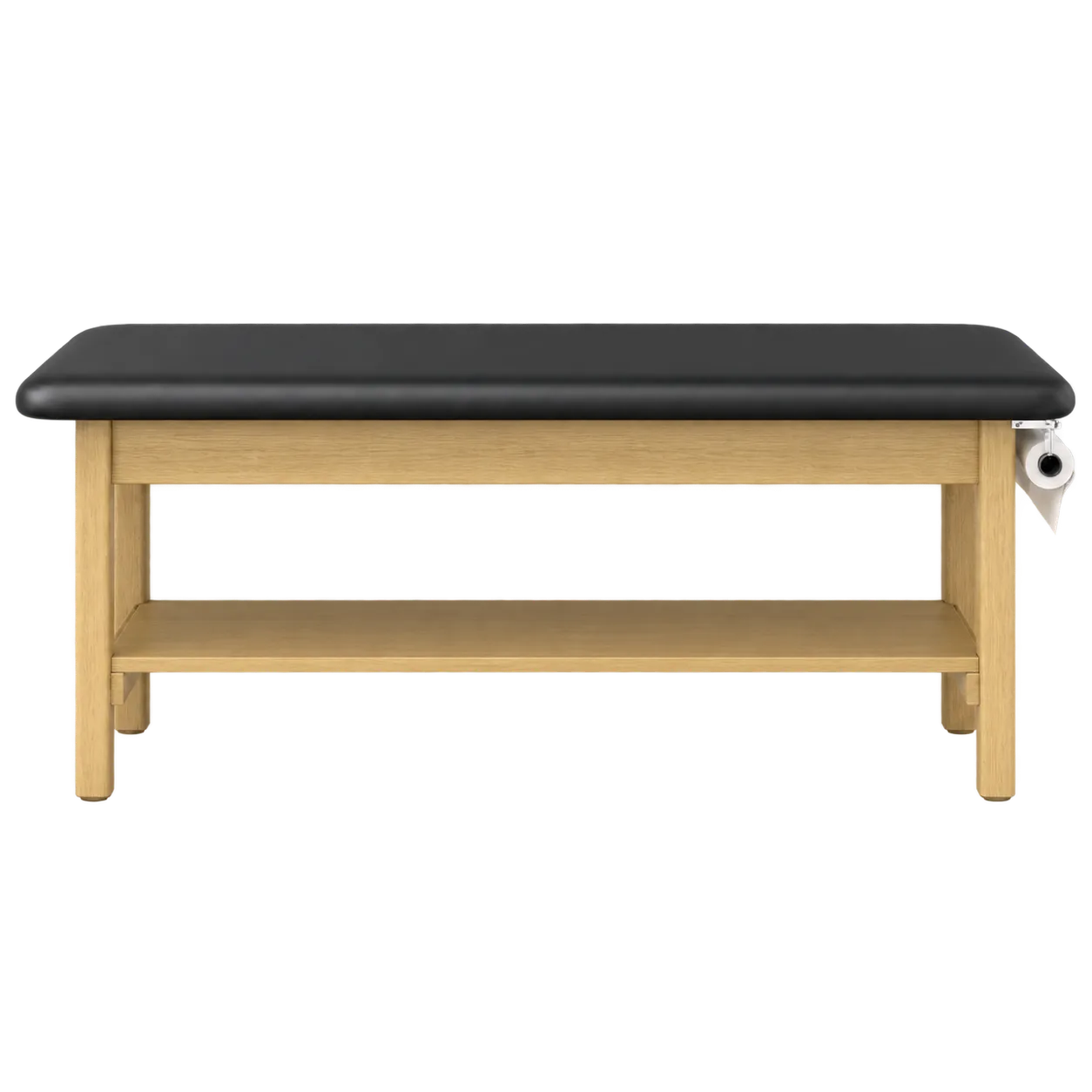
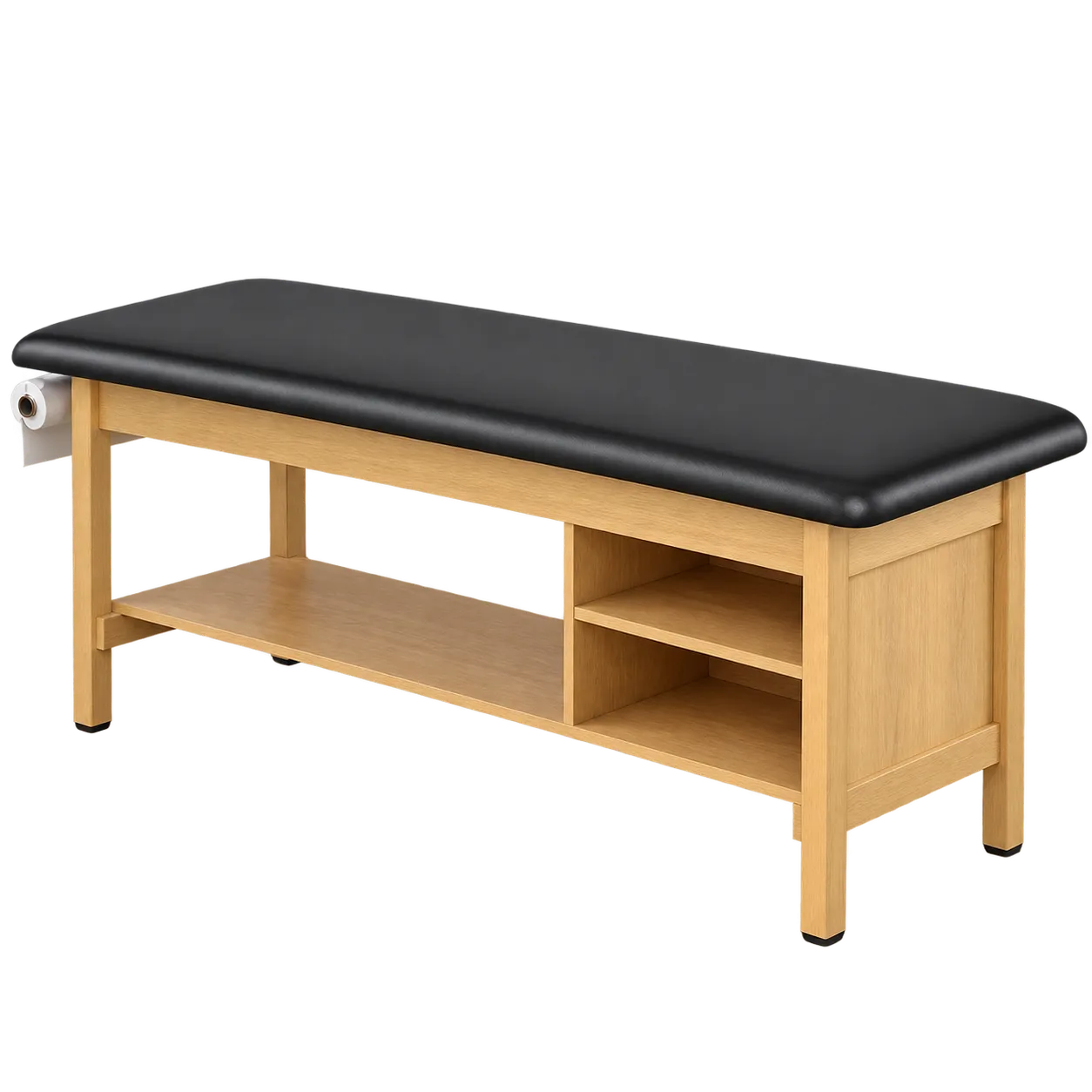
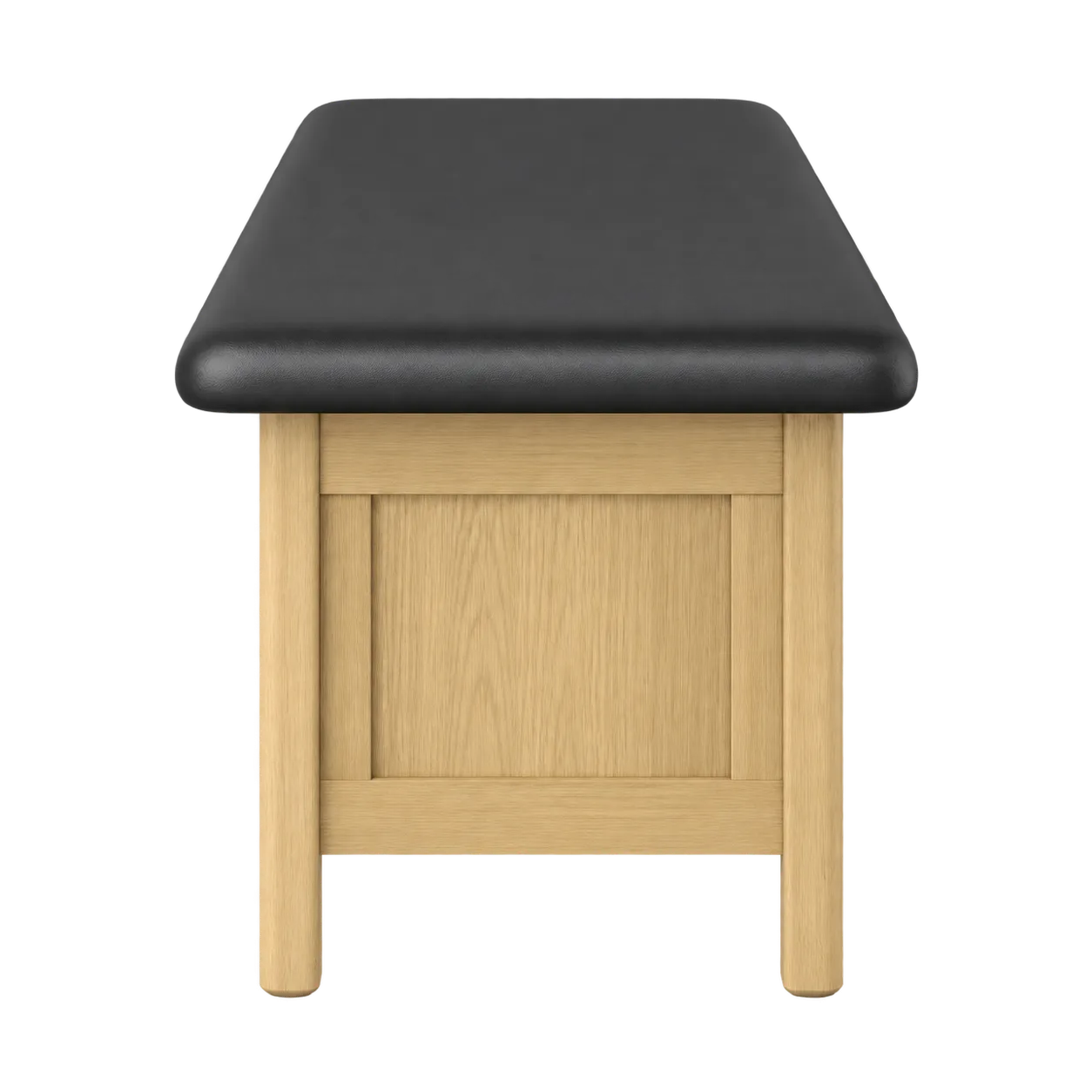
Treatment and examination couches carry the routine work of a clinic, and a version with compartmented storage is aimed at rooms where several categories of item need to be at the couch and distinguishable from one another. Typical use covers general examination, minor procedures, injections and dressings, phlebotomy, and consulting room assessment.
The organisational benefit shows most in rooms used by more than one clinician. Where a bay holds a known category of item, a colleague picking up the room mid-list finds what they need without opening cupboards, and stock levels are visible at a glance rather than discovered empty mid-procedure. That visibility is the practical argument for open compartments over a closed cupboard.
It is also the constraint. Visible means exposed, and exposed beneath a patient surface means the compartments suit equipment and consumables in active use rather than clean linen or sterile packs held for later. Services whose infection prevention policy specifies enclosed storage for clean and sterile items should check this configuration against it before ordering rather than after installation.
Cleaning deserves planning rather than assumption. A compartmented unit is a set of surfaces with corners, not a single panel, and cleaning it to a clinical standard takes longer. Where a room turns over quickly between patients, decide in advance what is wiped between every patient and what is cleaned on a scheduled basis.
The fixed working height sorts the applications as on any non-adjustable couch, and width selection follows the patient mix and how often clinicians reach across.