
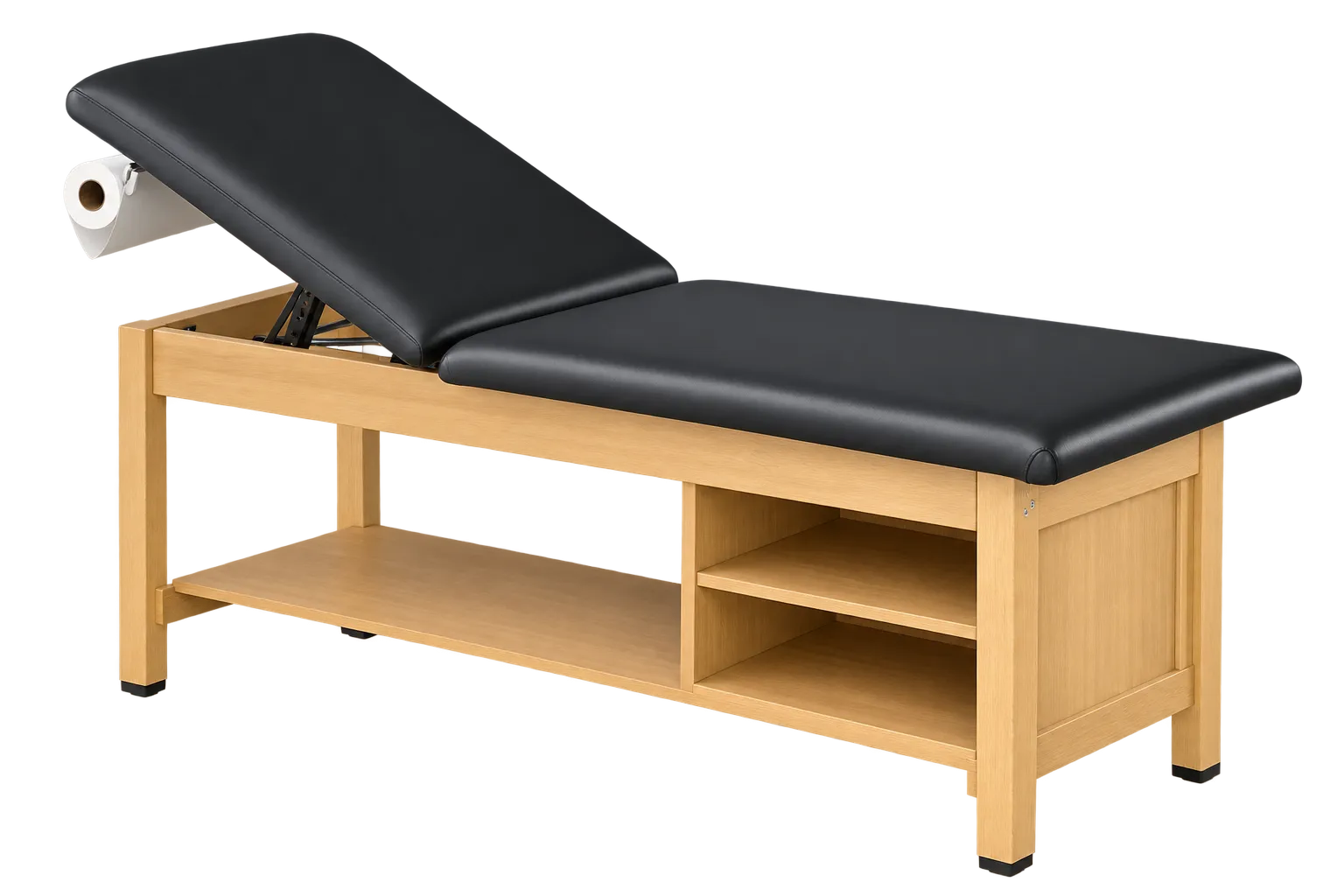
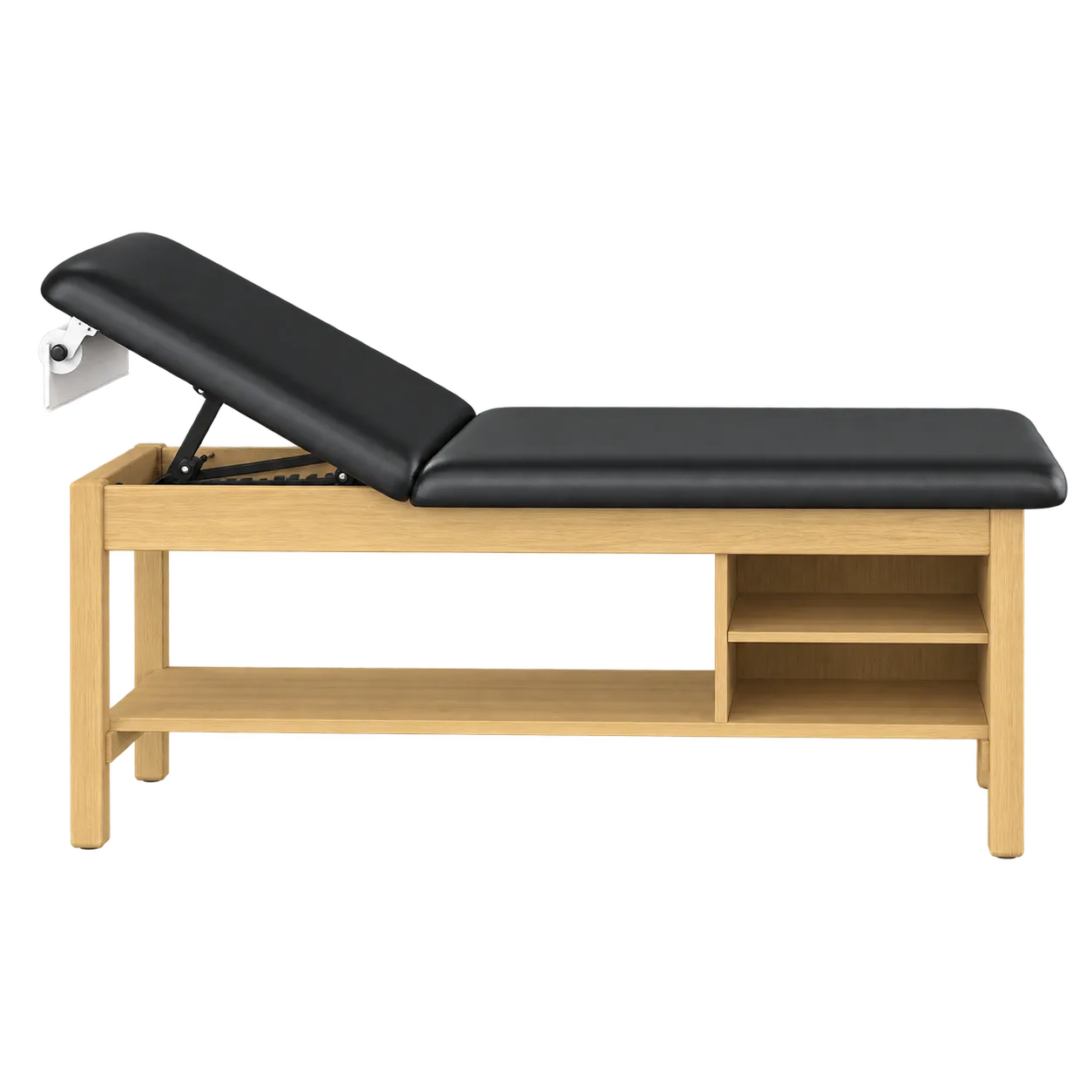
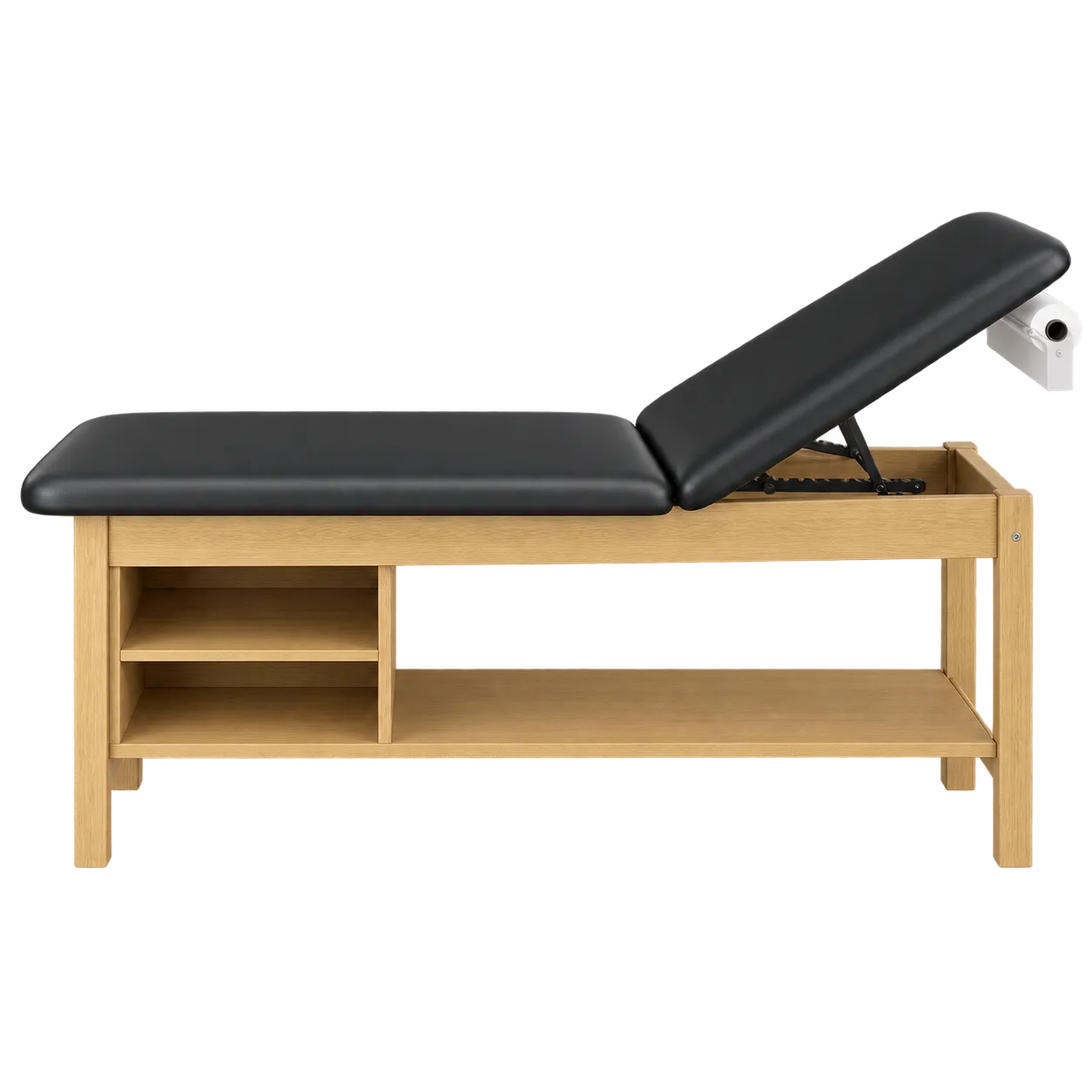
Treatment and examination couches carry out the routine work of a clinic, and a version pairing a raising back with divided storage is aimed at rooms running varied work where several categories of items need to be at the couch. Typical use covers general examination, respiratory assessment, minor procedures, injections and dressings, phlebotomy, consultation and counselling, and post-procedure observation.
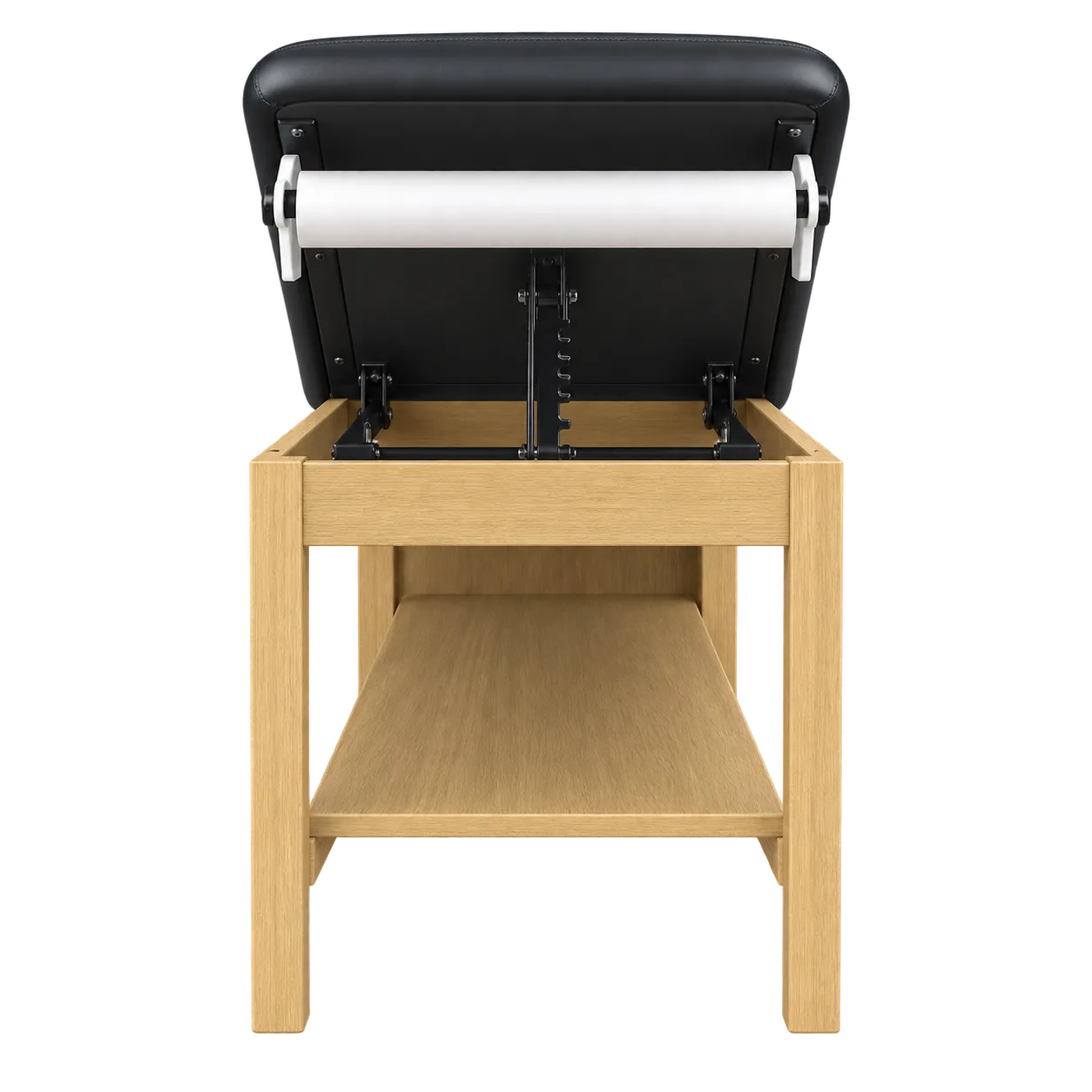
The backrest widens, which allows the room to accommodate. Orthopnoea associated with heart failure or advanced respiratory disease, late pregnancy, significant reflux, high body mass and anxiety at lying flat all make a supine position difficult, and a raising back means those consultations happen properly rather than hurriedly.
Divided storage suits rooms used by more than one clinician, since a bay holding a known category lets a colleague picking up the room mid-list find what they need, and makes stock levels visible without opening anything.
The two together introduce the geometry question. With the back raised, the clinician stands at the head end, so only bays near that position are reachable during a consultation — which makes shelving orientation and bay allocation worth settling at order rather than after delivery. Patient access remains the compound consideration: a fixed 790 mm surface is a substantial climb, and the patients who most benefit from a raised back are frequently those least able to manage it.