
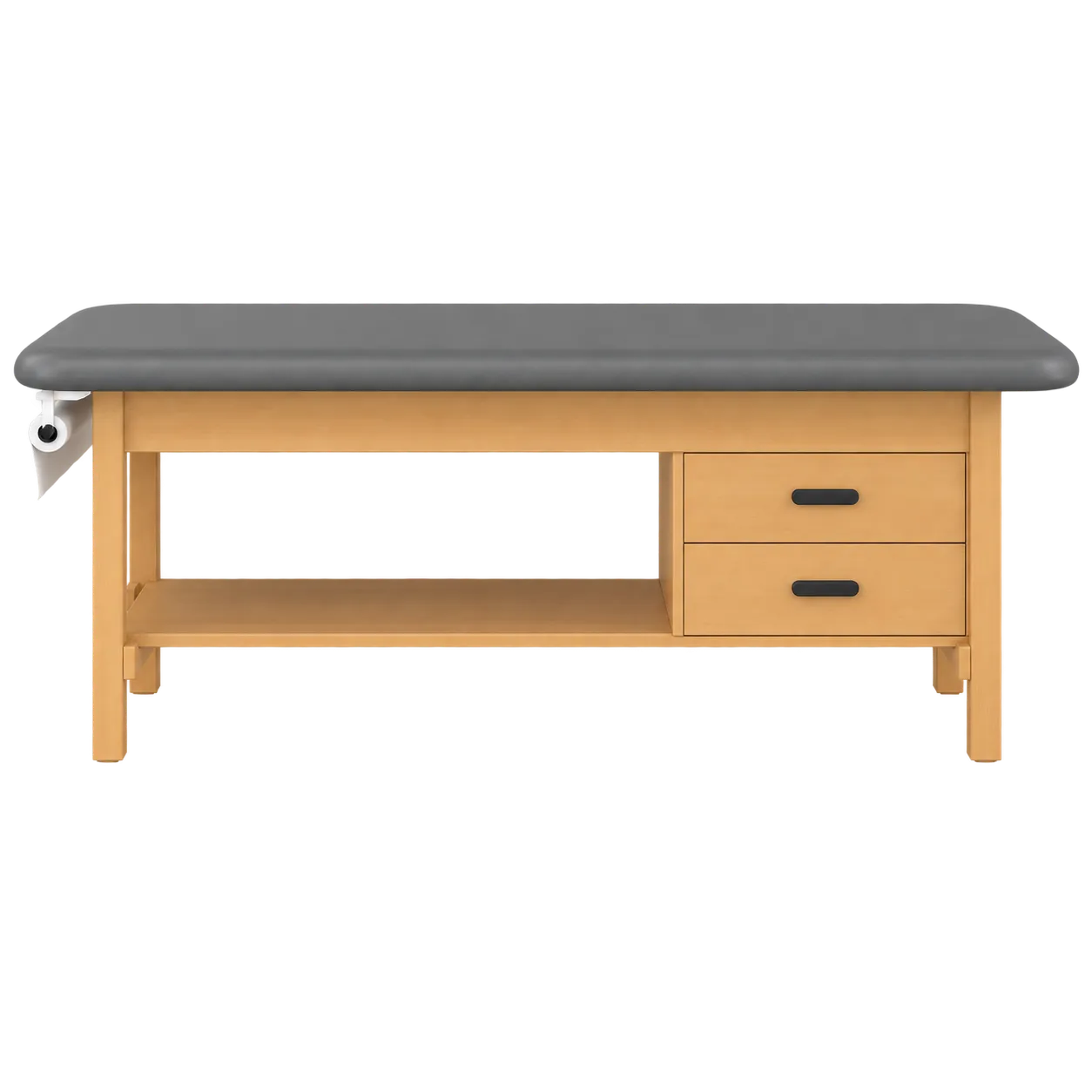
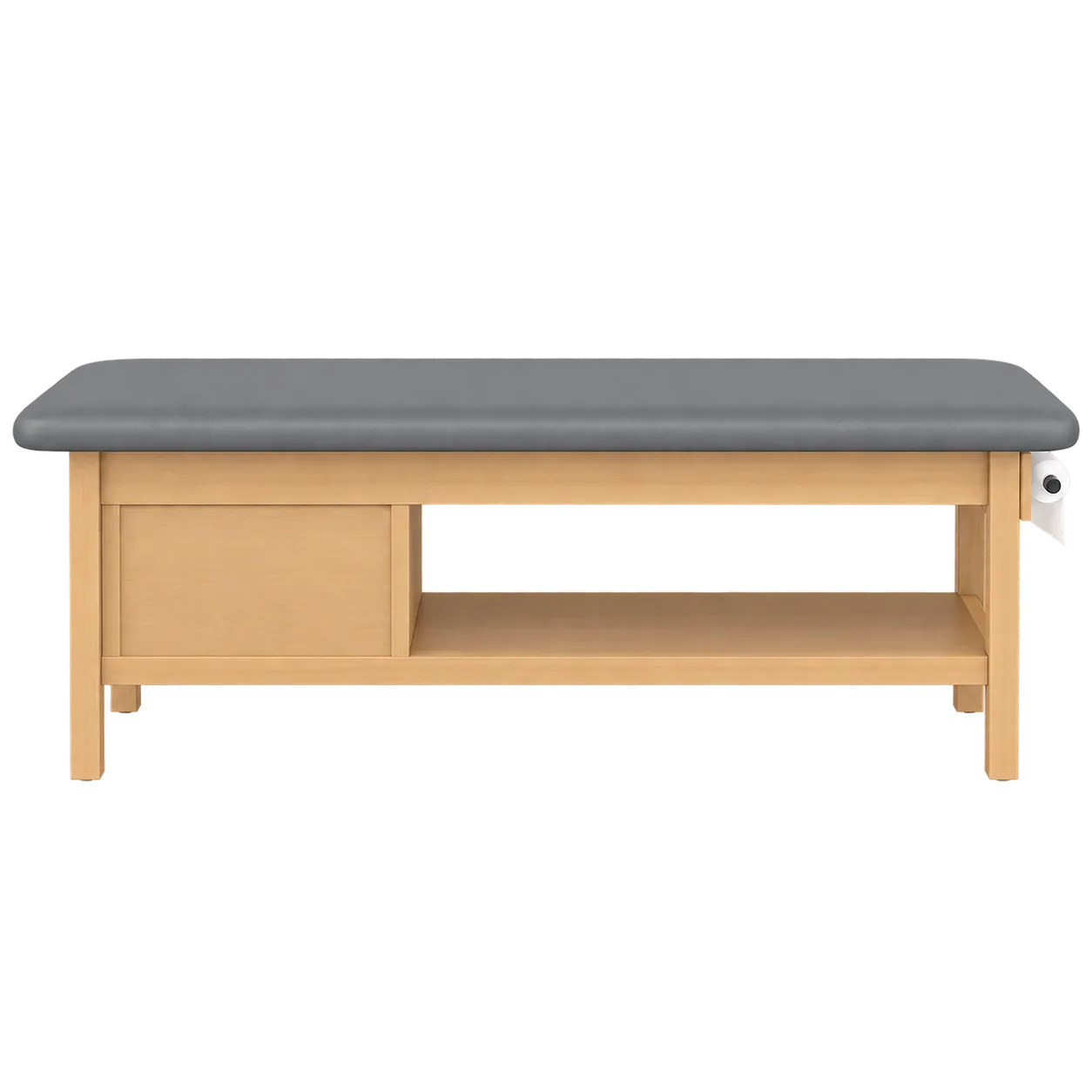
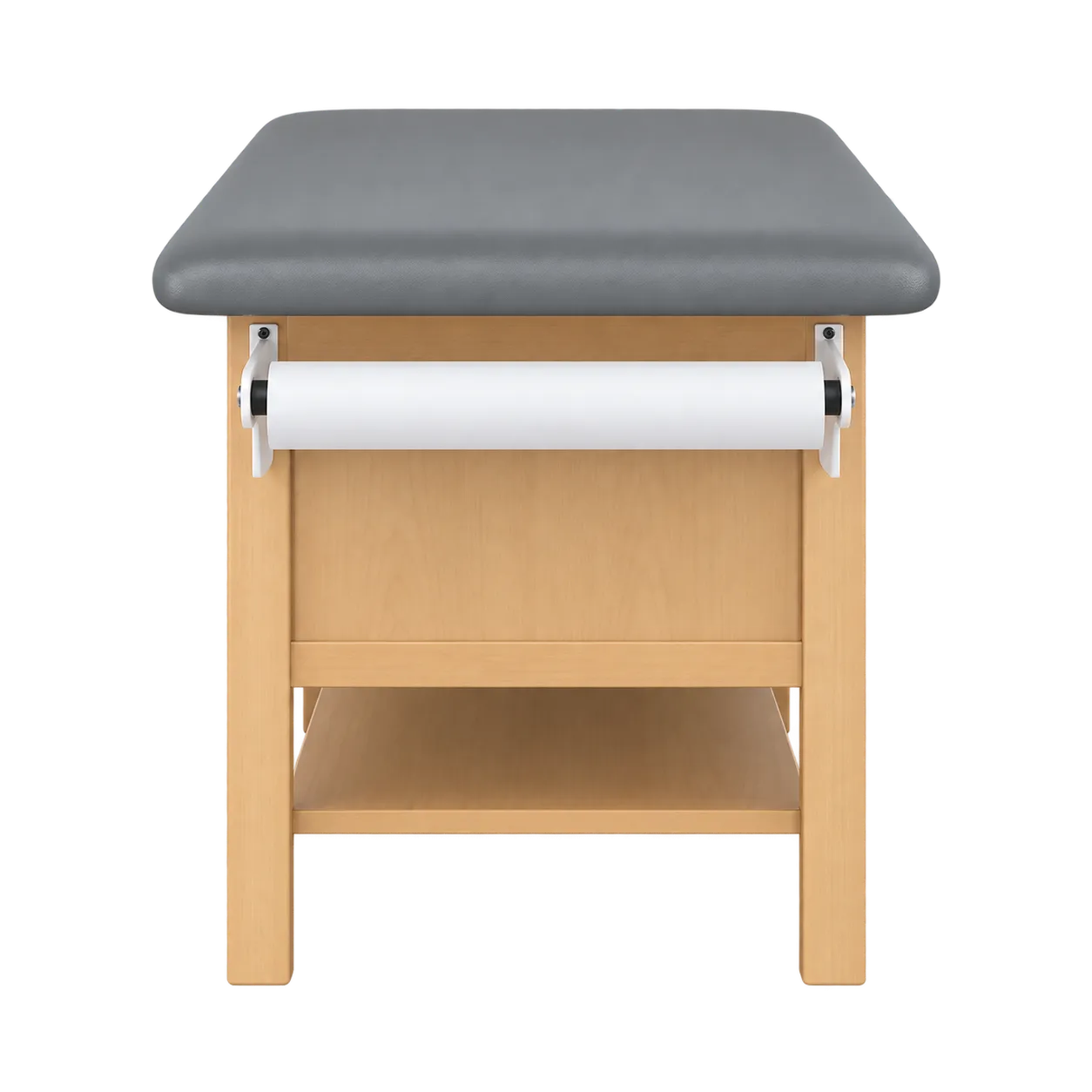
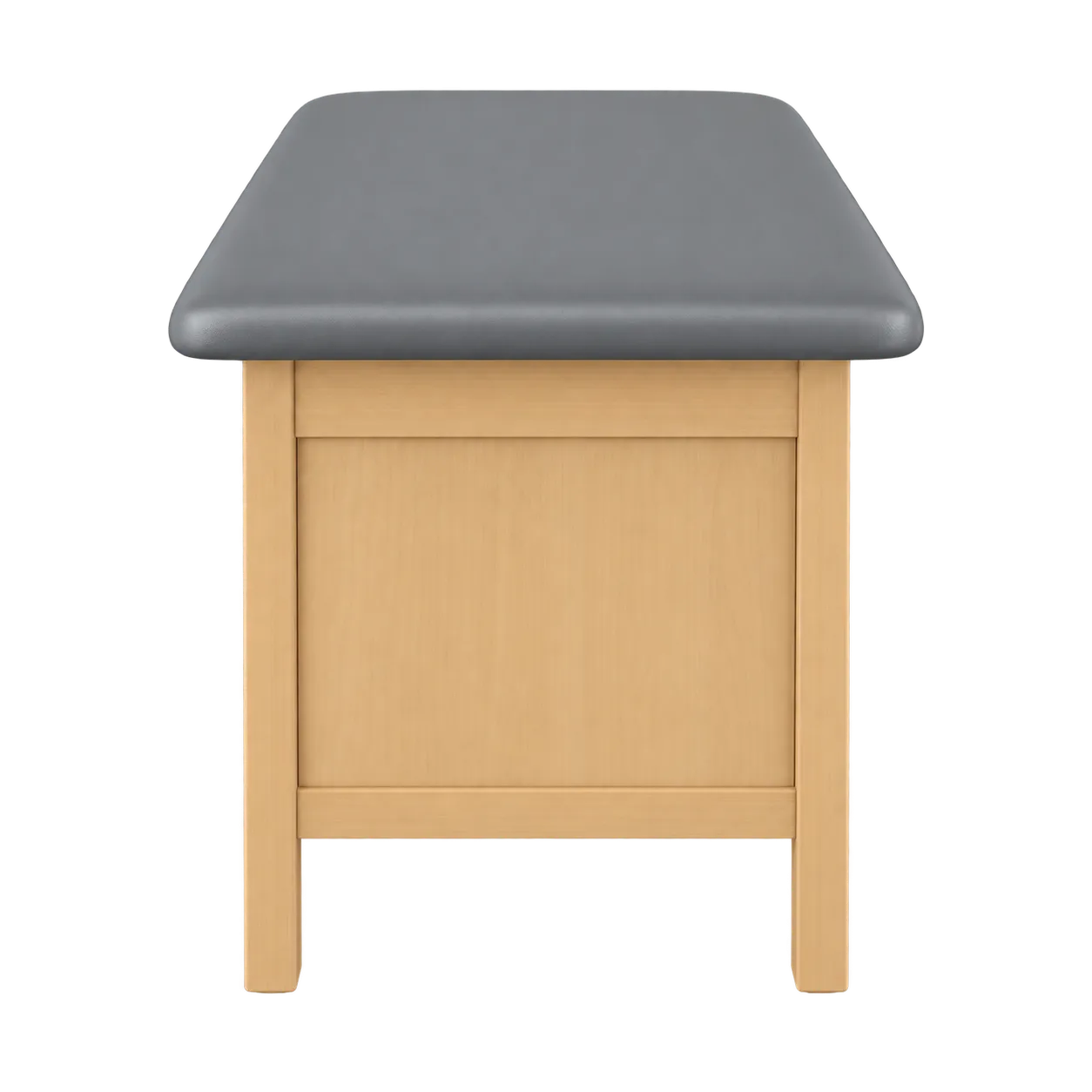
Treatment and examination couches carry out the routine work of a clinic, and a version combining enclosed and open storage is aimed at rooms where clean consumables and working equipment both need to be at the couch. Typical use covers general examination, minor procedures, injections and dressings, phlebotomy, and consulting room assessment.
The two storage types serve different stages of a consultation. Drawers hold the clean consumables a clinician opens as they go — dressings, gloves, swabs — protected from the surface above until the moment they are used. The open shelf holds equipment and bulkier items that are picked up, used and returned within the same appointment, where exposure matters less because the item is not sterile and is cleaned in its own right.
Getting that split right is what makes the configuration worth choosing. A room where both fill indiscriminately has paid for enclosed storage and is not using it, which is a common enough outcome that setting the convention explicitly is worth the five minutes it takes.
Security deserves consideration alongside. Rooms are left unattended between patients more often than staff tend to acknowledge, and whether the drawers lock determines what can safely be kept in them. If no lock is available, items requiring secure storage need a different home.
The fixed working height sorts the applications as on any non-adjustable couch, and width selection follows the patient mix and how often clinicians reach across.