
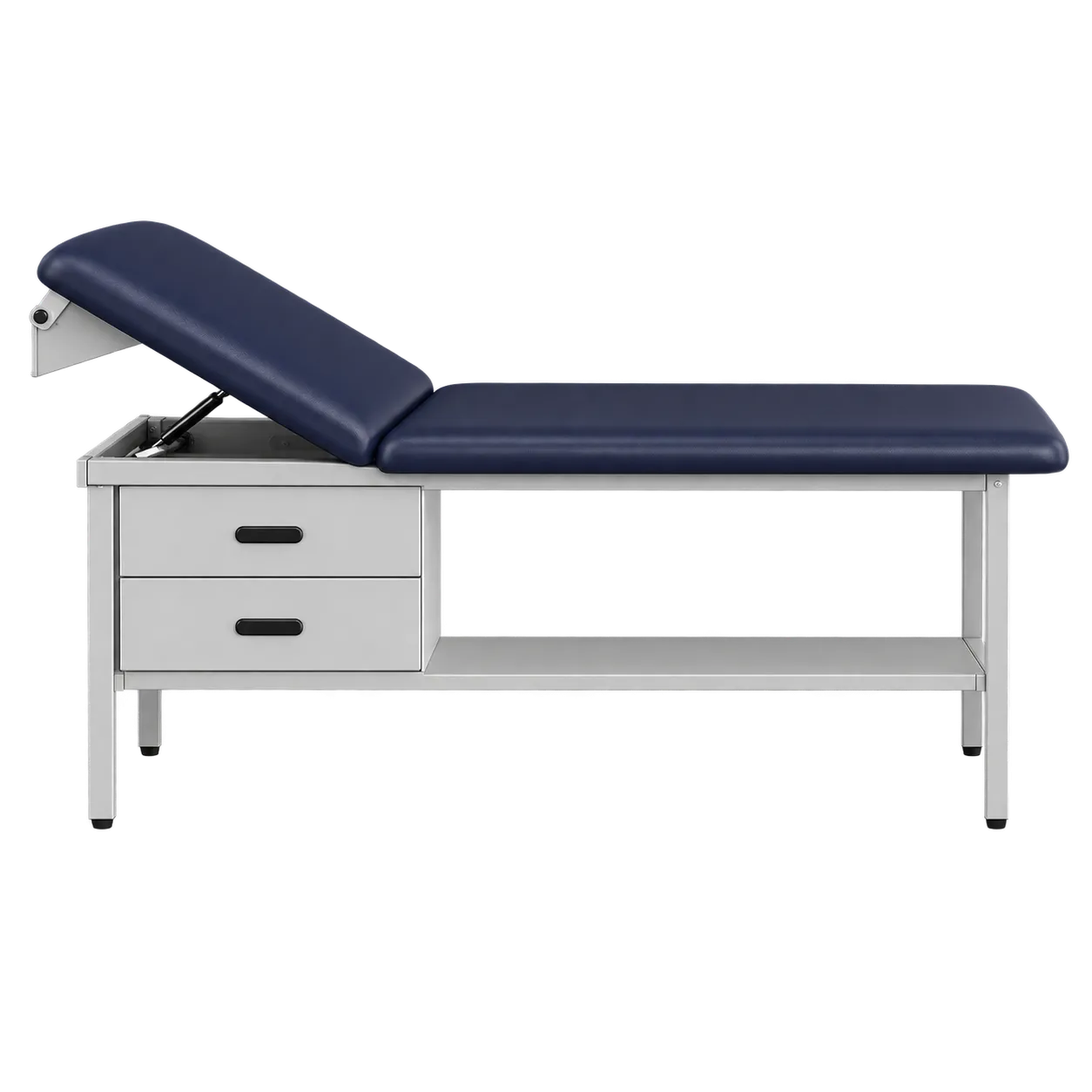
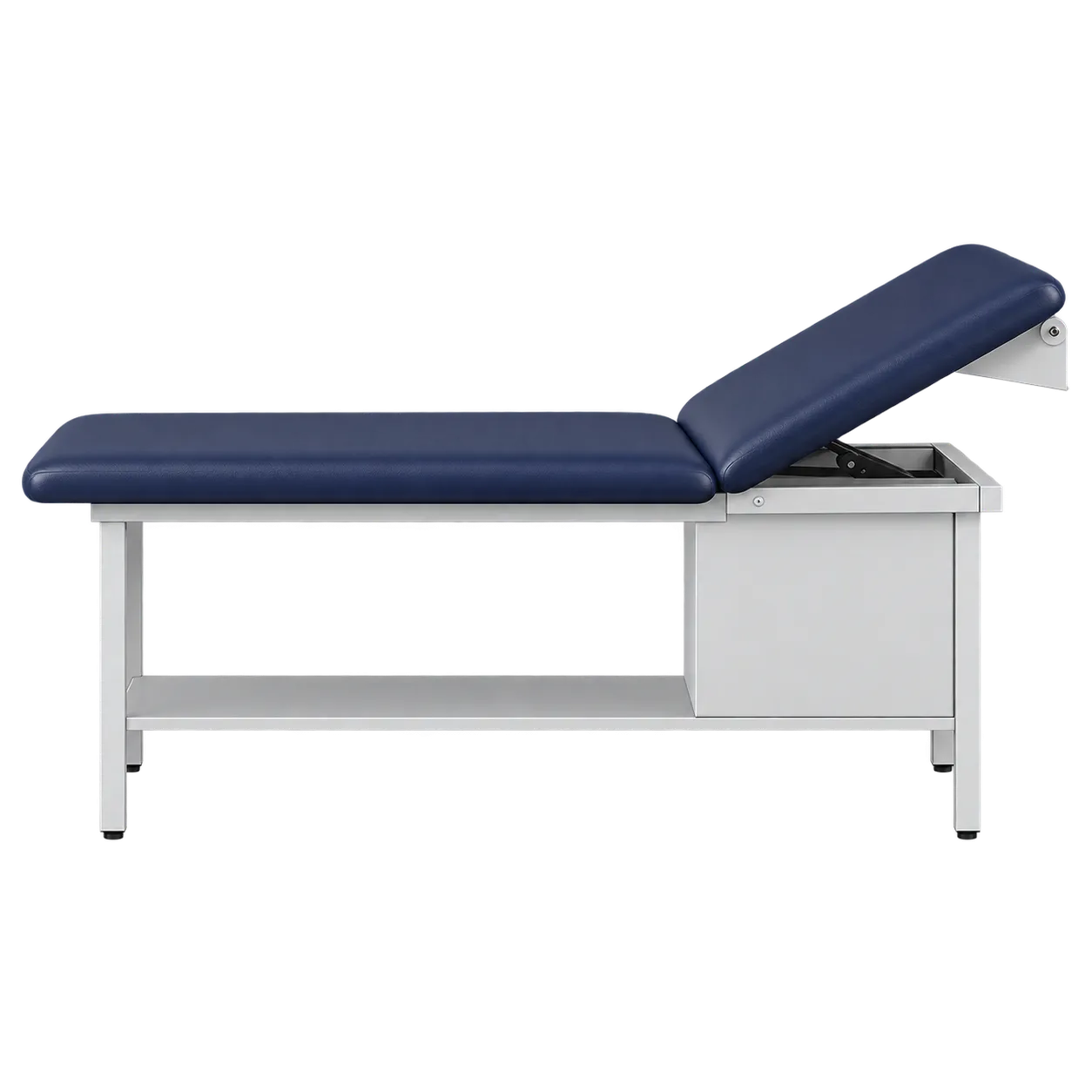
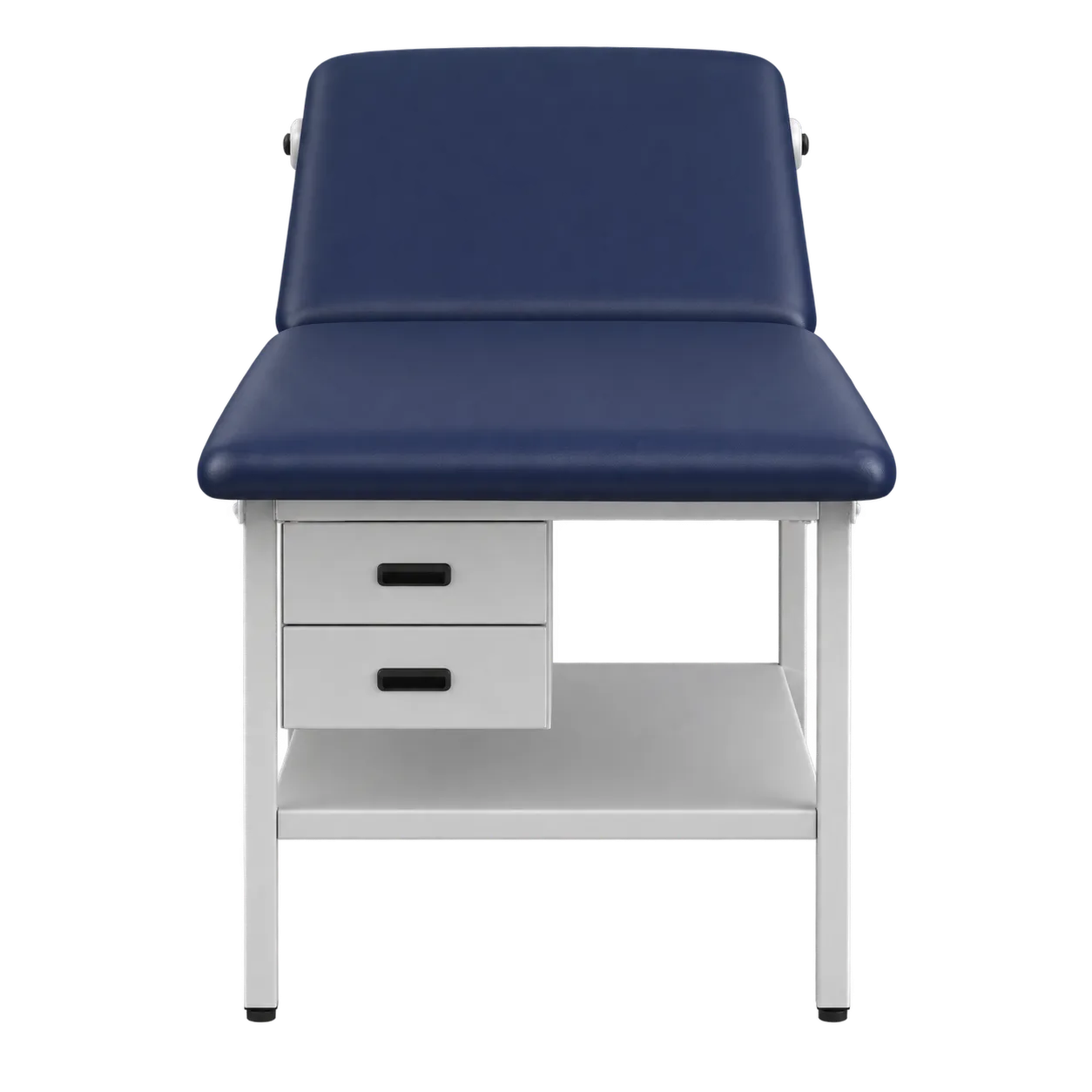
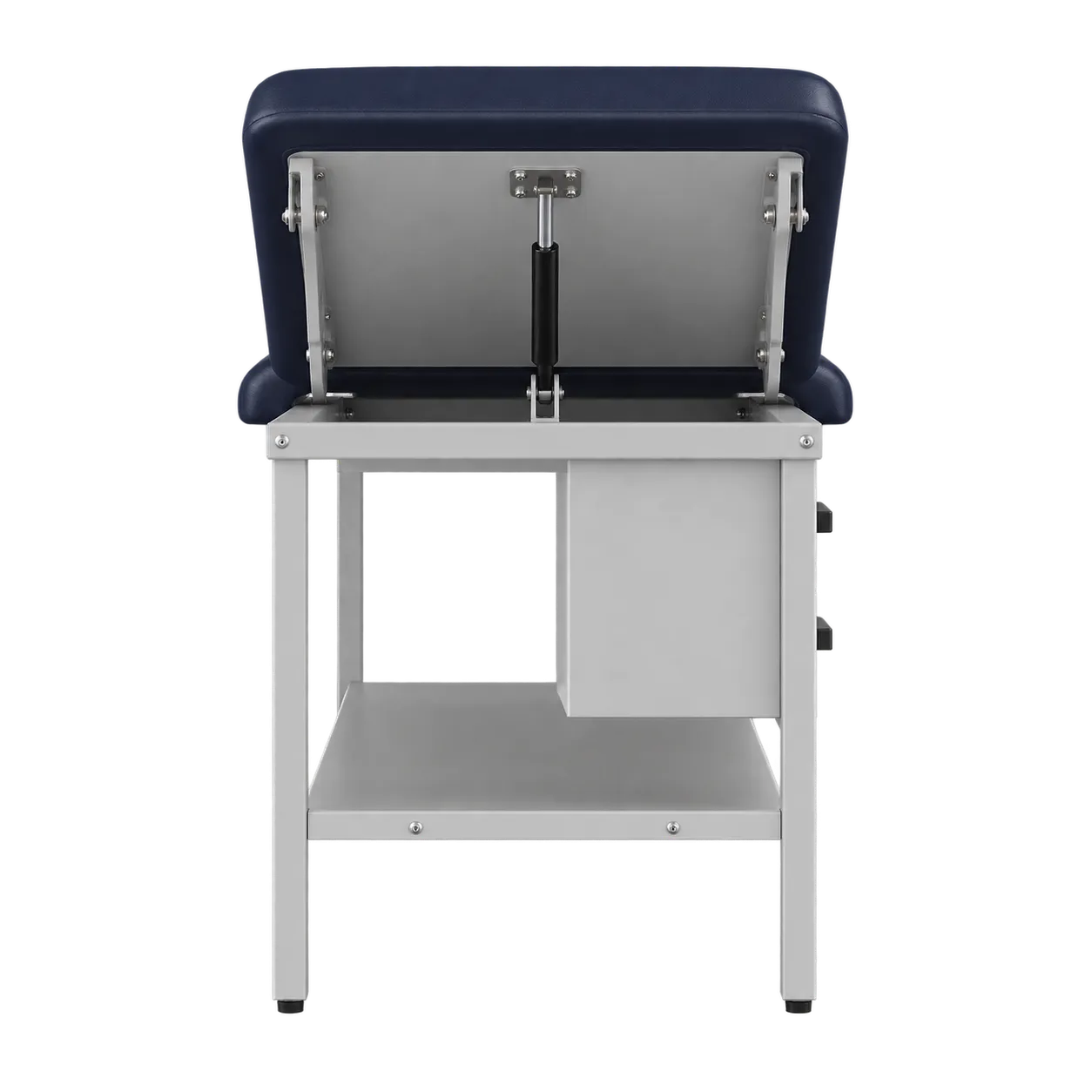
Treatment and examination couches carry out the routine work of a clinic, and the fullest configuration in this range suits rooms doing varied work where clean consumables, working equipment and a raising back are all needed in one place. Typical use covers general examination, respiratory assessment, minor procedures, injections and dressings, phlebotomy, consultation and counselling, and post-procedure observation.
The backrest widens, which allows the room to accommodate. Orthopnoea associated with heart failure or advanced respiratory disease, late pregnancy, significant reflux, high body mass and anxiety at lying flat all make a supine position difficult, and raising the back means those consultations happen properly rather than hurriedly.
The two storage types serve different stages: drawers hold clean consumables opened as the clinician goes, while the shelf holds equipment picked up, used and returned within the appointment. The geometry needs settling before the couch is placed — a drawer extends into the room when opened, and a raised back puts the clinician at the head end, so mounting side and extension distance together decide whether the drawers help or interrupt. Patient access remains the compound consideration: a fixed 790 mm surface is a substantial climb, and the patients who most benefit from a raised back are frequently those least able to manage it.