
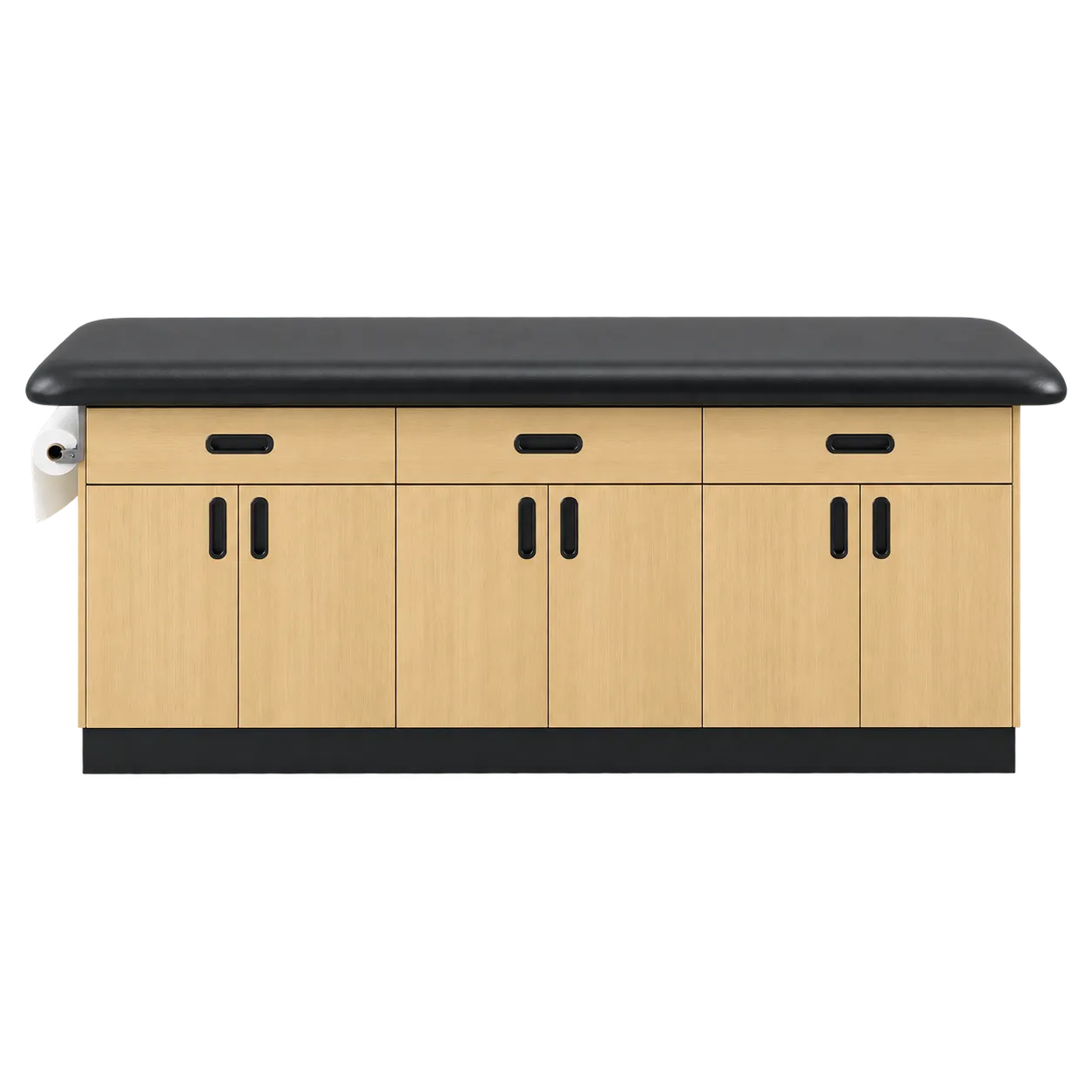
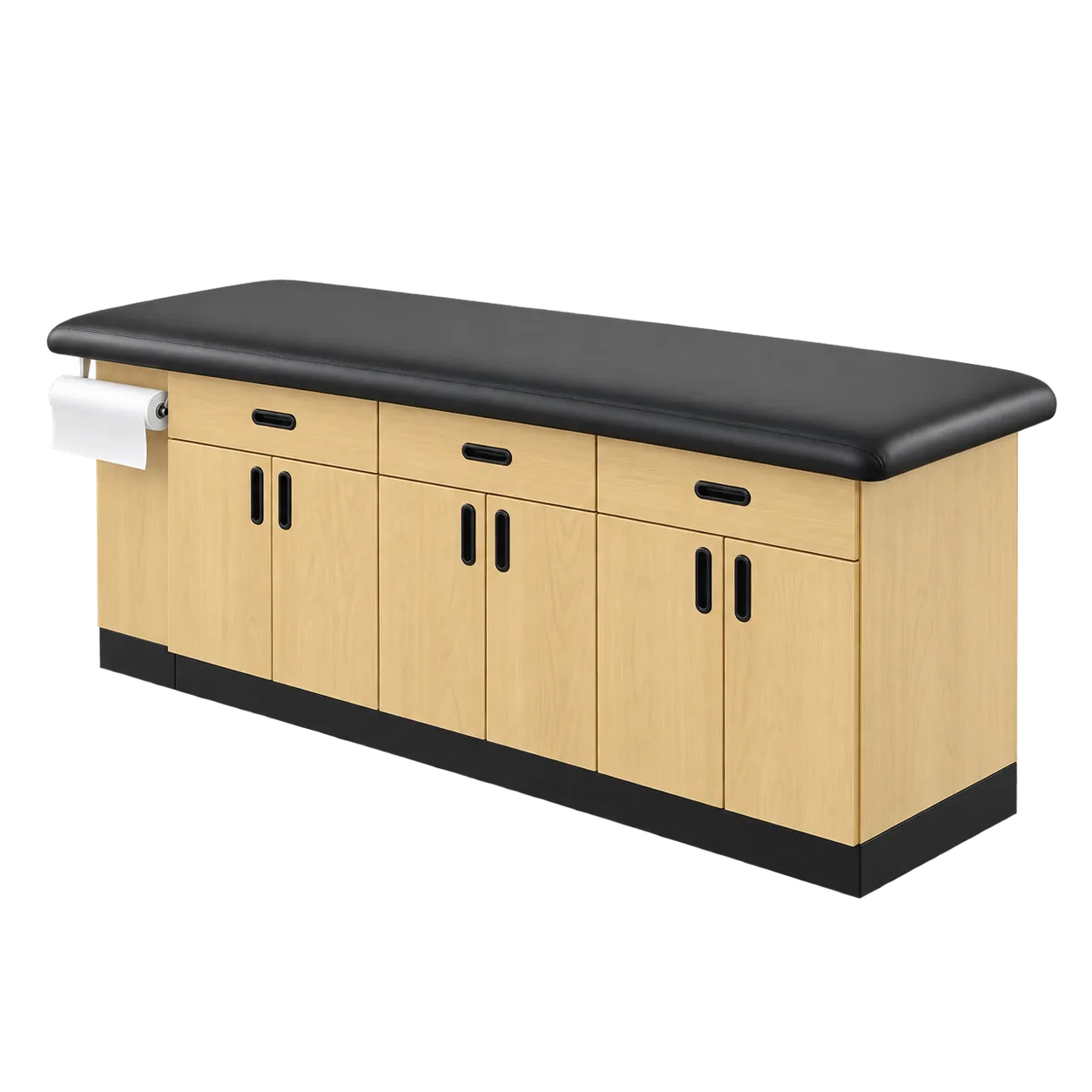
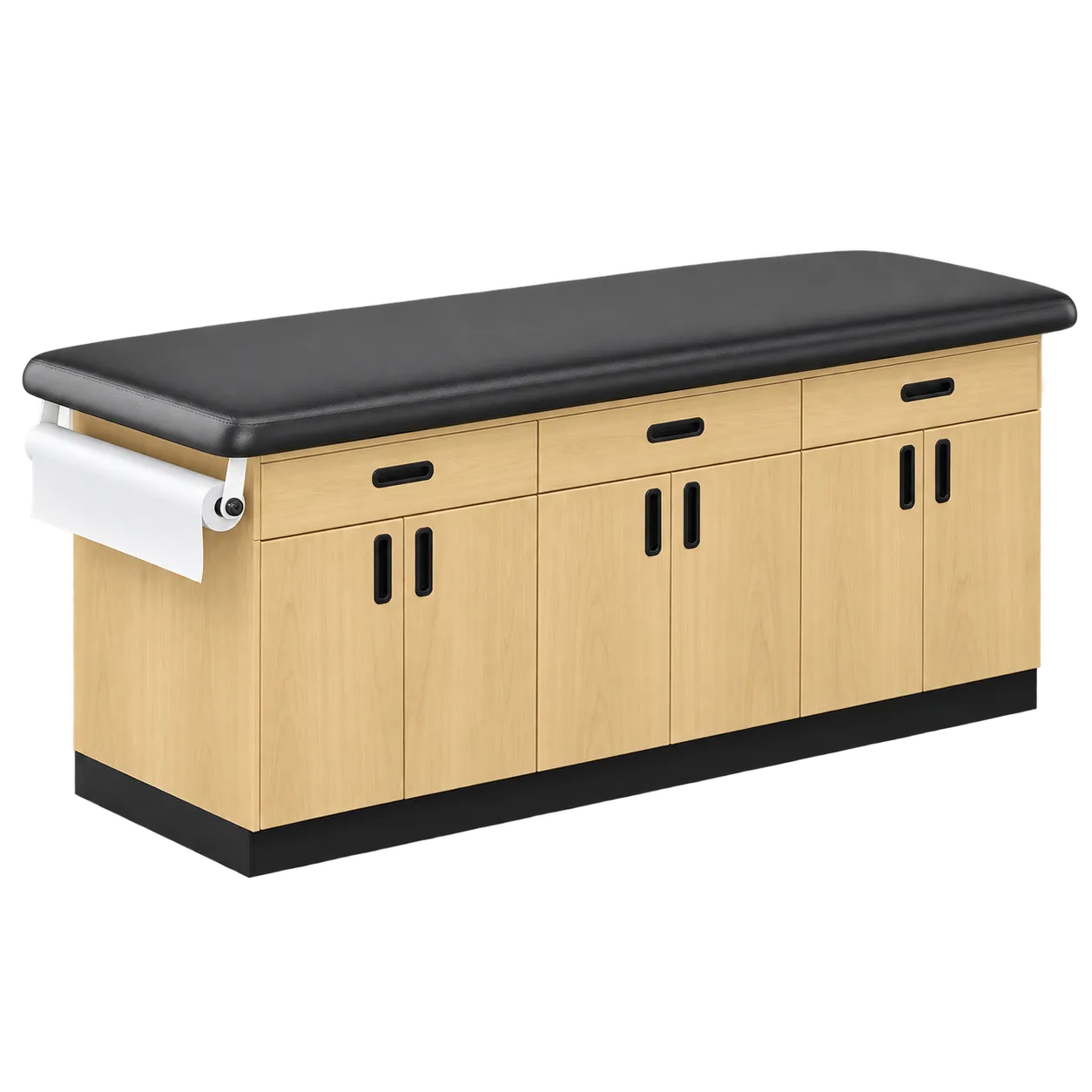
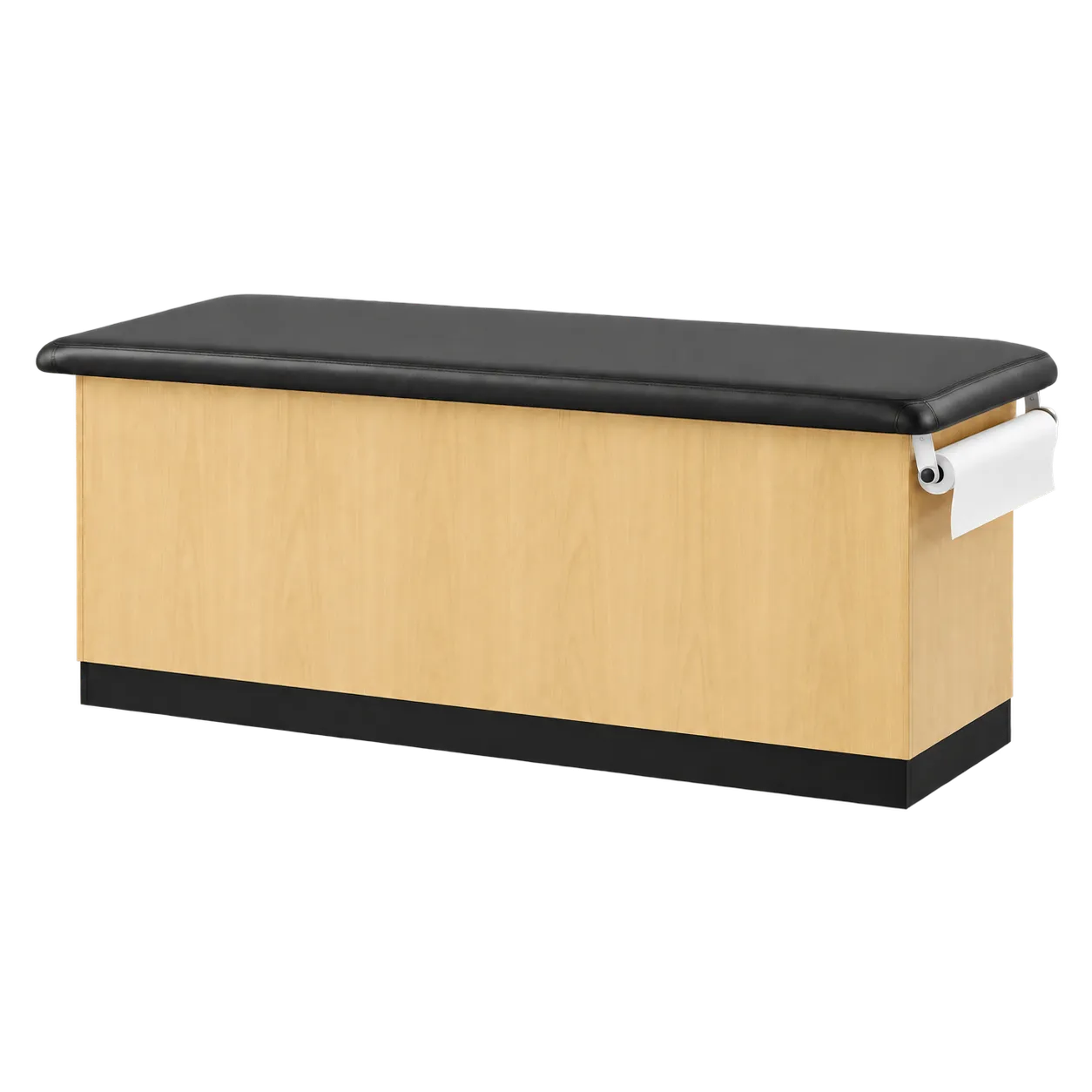
Treatment and examination couches carry out the routine work of a clinic, and a long cabinet-style table is aimed at rooms that need substantial enclosed storage and the surface area to match. Typical use covers general examination, minor procedures, injections and dressings, phlebotomy, consulting room assessment, and treatment of taller patients who are poorly served by a shorter surface.
The length changes what the table can do at the extremes. A patient lying fully extended without their feet overhanging is more comfortable through a longer appointment, and a clinician working at the foot end has a supported surface to work against rather than air. Side-lying positioning and knee support also benefit from the extra room.
Enclosed storage across three compartments and three drawers gives a room the equivalent of a run of base units without taking separate floor area. For a consulting room without fitted cupboards, that can be the difference between stock held properly and stock held wherever it fits.
Door clearance is the constraint that follows. Six outward-swinging doors need the length of the cabinet kept clear on whichever side they face, and a room plan that puts the couch tight against a wall will make part of the storage impractical. That is a decision to take at the layout stage.
Adjustable internal shelves suit services whose stock changes, since the compartment can be reset rather than worked around.