
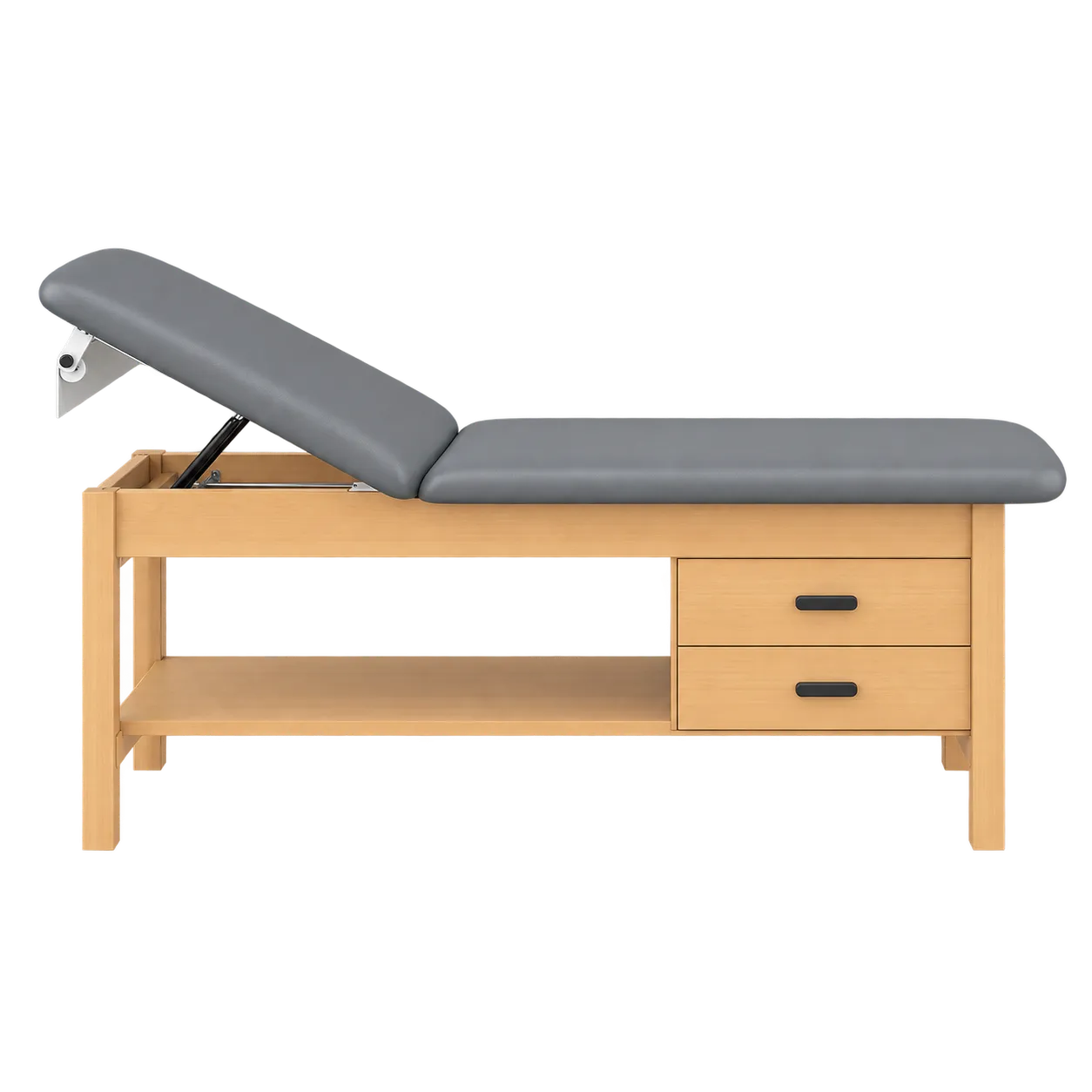
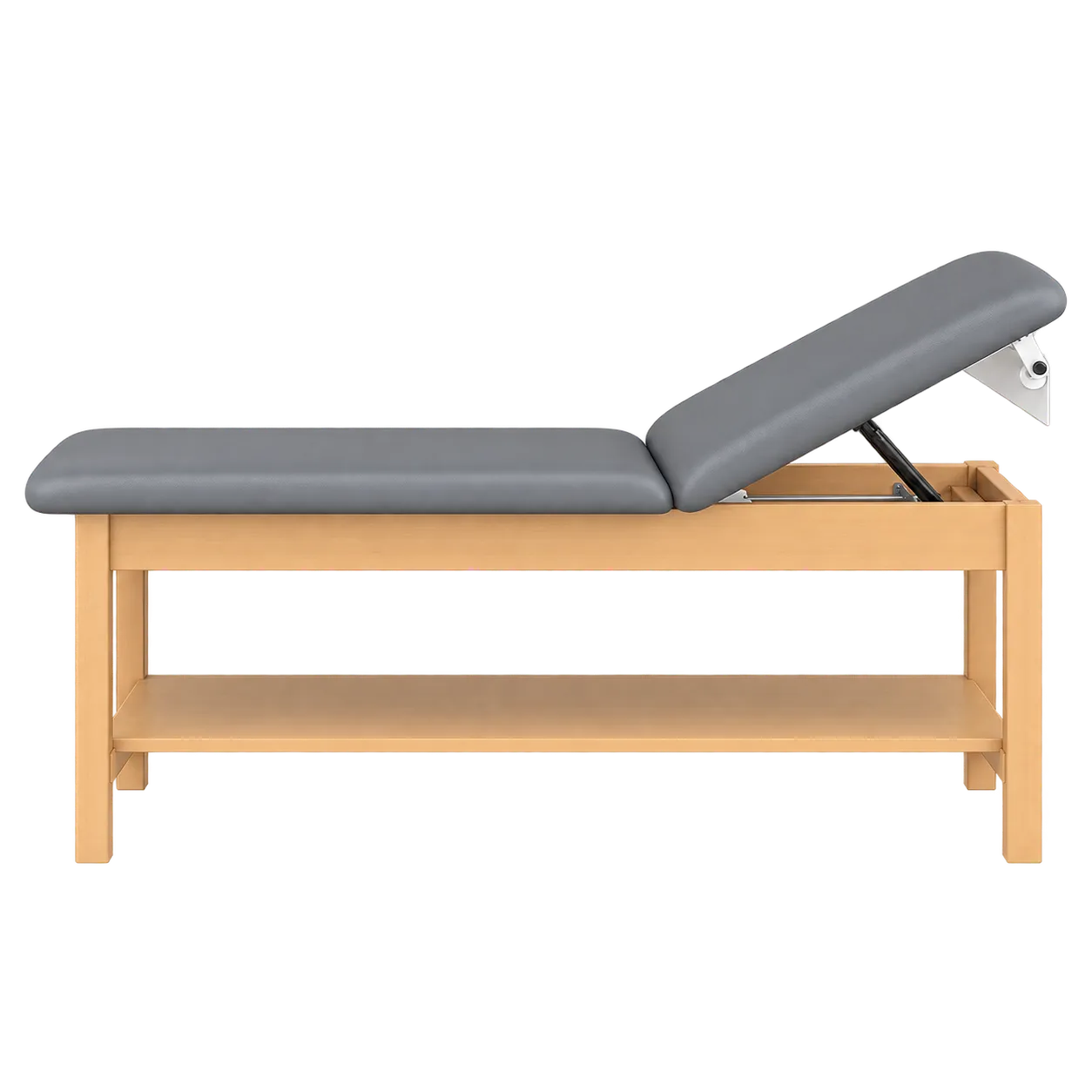
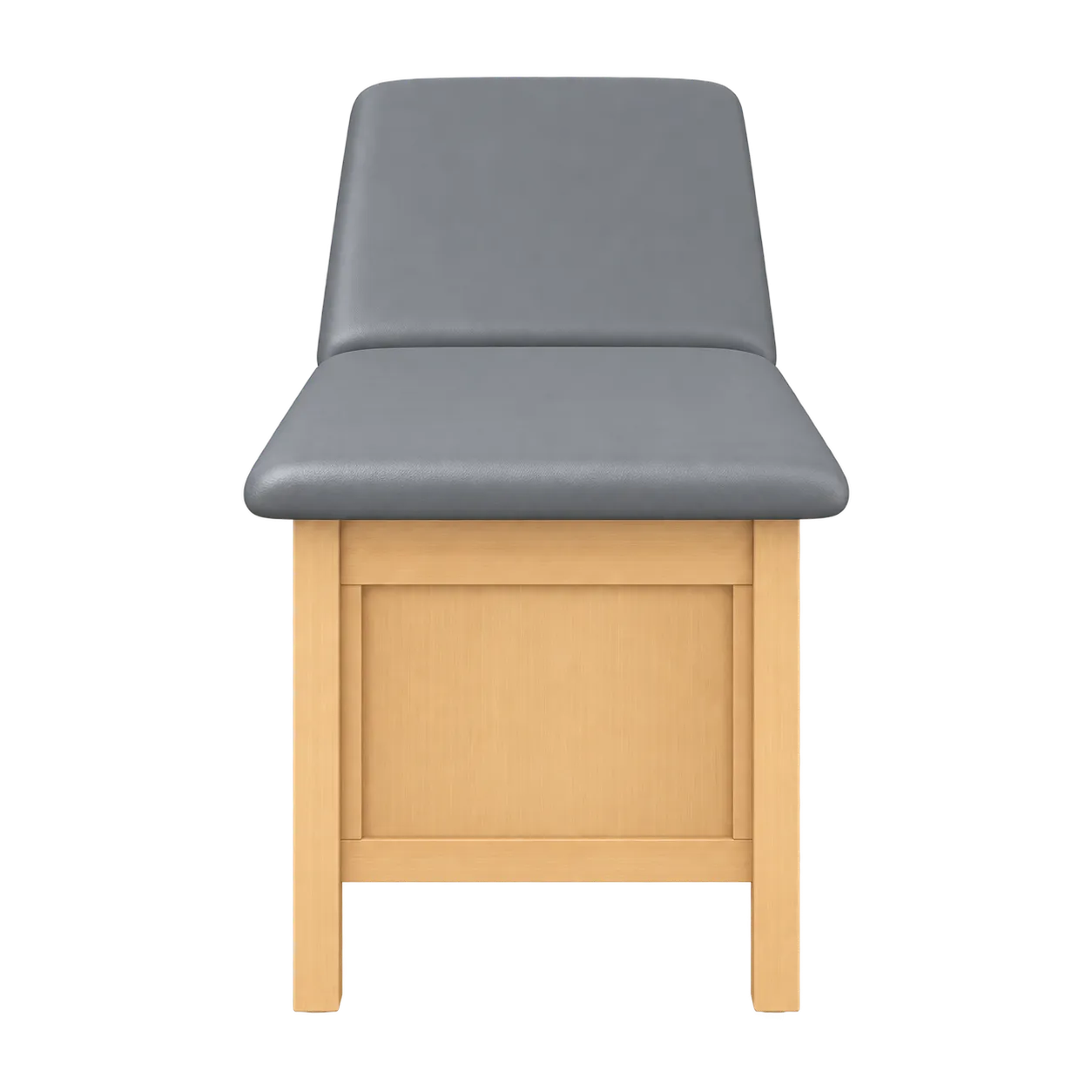
Treatment and examination couches carry the routine work of a clinic, and a timber-legged table is aimed at rooms where the furniture is part of the setting as well as the equipment. Typical use covers general examination, respiratory assessment, minor procedures, injections and dressings, phlebotomy, consultation and counselling, and post-procedure observation.
The material choice has a bearing on how a room reads to a patient. Consulting rooms in general practice, private clinics and community settings often carry timber joinery, and a table that matches it produces a less institutional impression than metal does — which is worth something with anxious patients, children and anyone attending a first appointment. Two finish options make that matching more achievable.
The backrest widens which patients the room can accommodate. Orthopnoea associated with heart failure or advanced respiratory disease, late pregnancy, significant reflux, high body mass and anxiety at lying flat all make a supine position difficult, and a raising back means those consultations happen properly rather than hurriedly.
Combined drawer and shelf storage serves different stages of a consultation — drawers for clean consumables opened as the clinician goes, the shelf for equipment picked up and returned within the appointment.
Maintenance is where a timber-legged, bolted table differs in practice. The frame is adjustable rather than fixed, which extends its working life, but that depends on the bolt check actually happening. Build it into the schedule at the point of purchase rather than adding it later.