
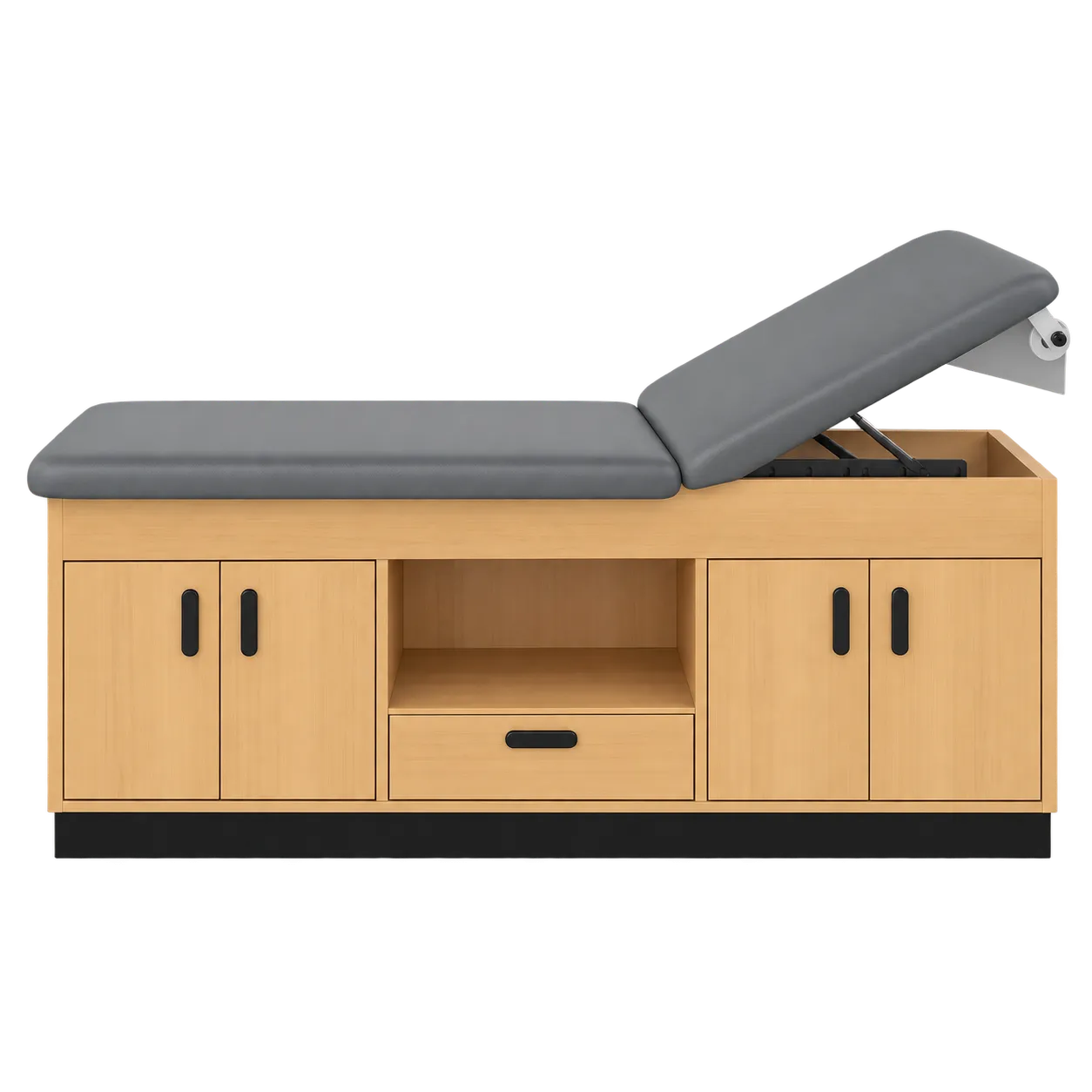
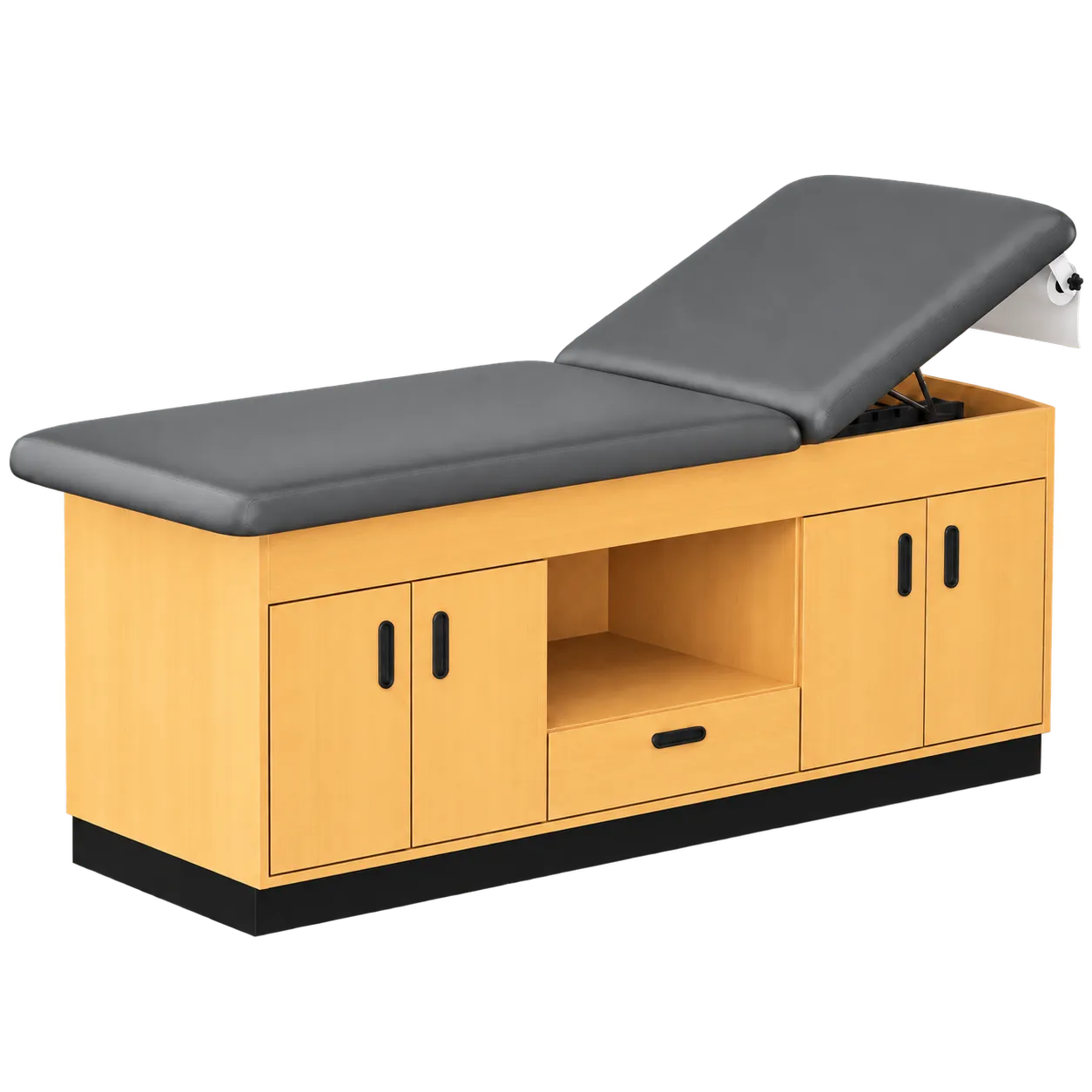
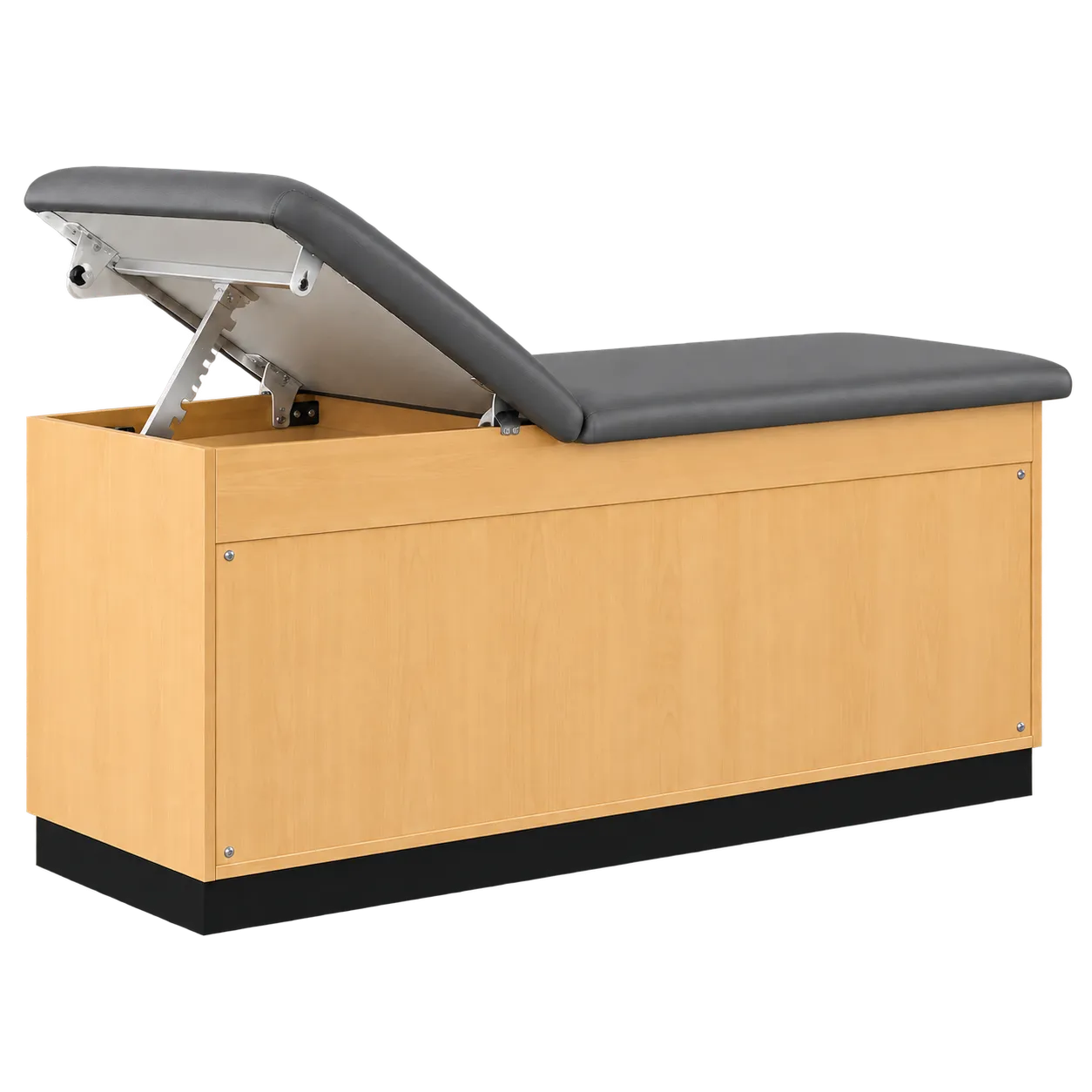
Treatment and examination couches carry out the routine work of a clinic, and a cabinet-style table is aimed at rooms where storage has to be substantial and out of sight. Typical use covers general examination, respiratory assessment, minor procedures, injections and dressings, phlebotomy, consultation and counselling, and post-procedure observation.
Fully enclosed storage changes what the couch base can properly hold. Where open shelving beneath a patient surface is exposed to whatever comes off the couch, a closed carcase is not — which makes it suitable for clean consumables and stock held for later rather than only for equipment in active use. For a room without separate cupboards, that is the difference between storing things properly and storing them where they happen to fit.
The counterpart is airflow, or the lack of it. Anything returned to a sealed cabinet before it has dried will stay wet, so a drying step before items go away is worth building into the routine rather than assuming the cabinet will look after itself.
The presentation matters in patient-facing rooms. A flat-panel laminate carcase in a domestic-looking finish reads as fitted furniture rather than clinical equipment, which suits private practice, aesthetic and wellbeing settings, and any room where a patient's first impression is part of the service.
Soft-close hardware belongs in the same category. A door that closes quietly rather than banging is a small thing until a patient is dozing after a procedure or hearing difficult news.