
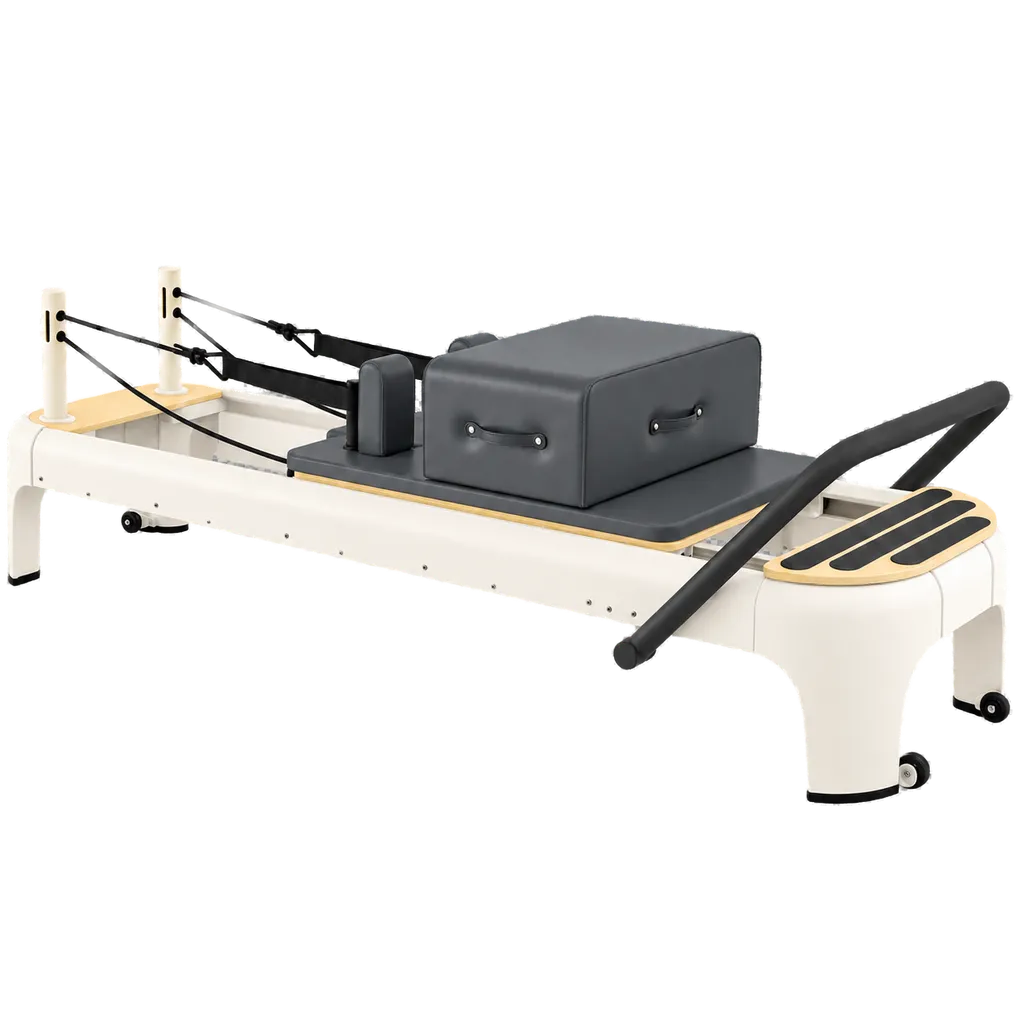
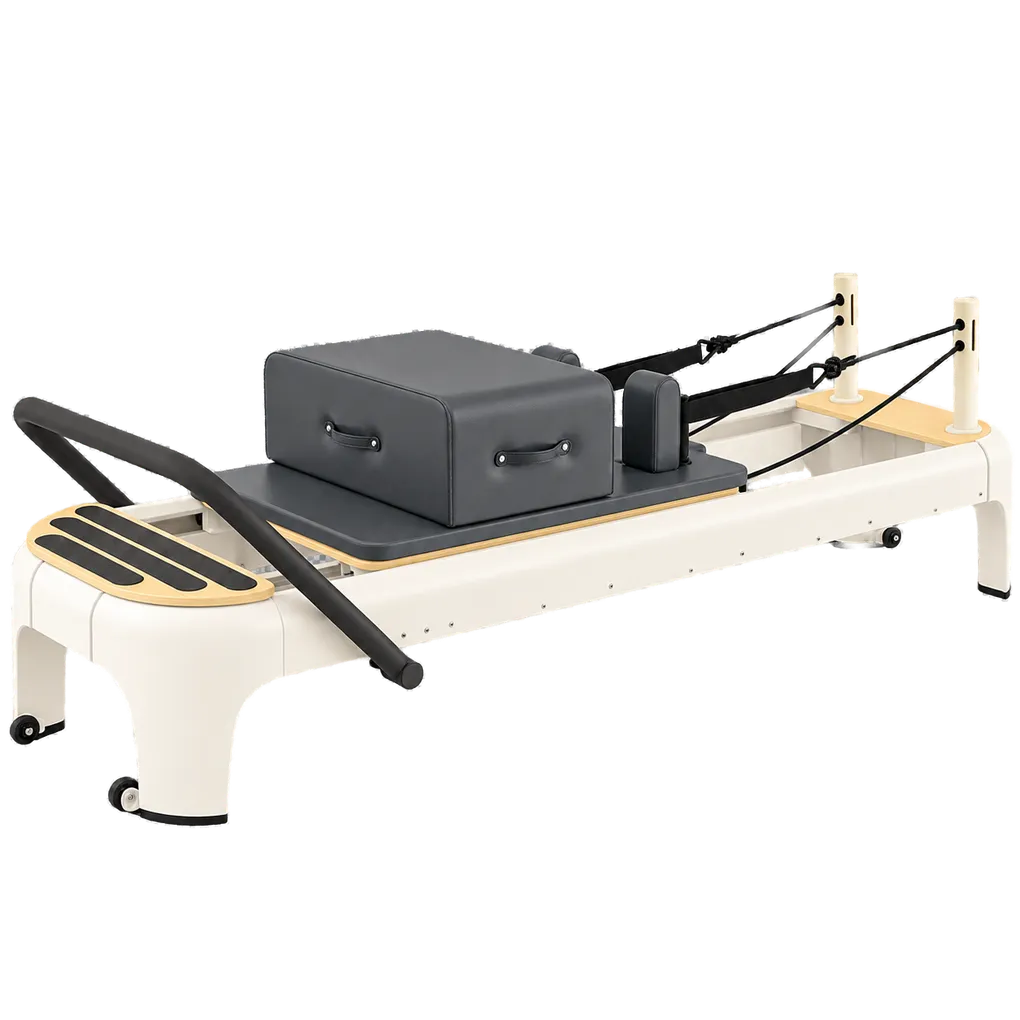
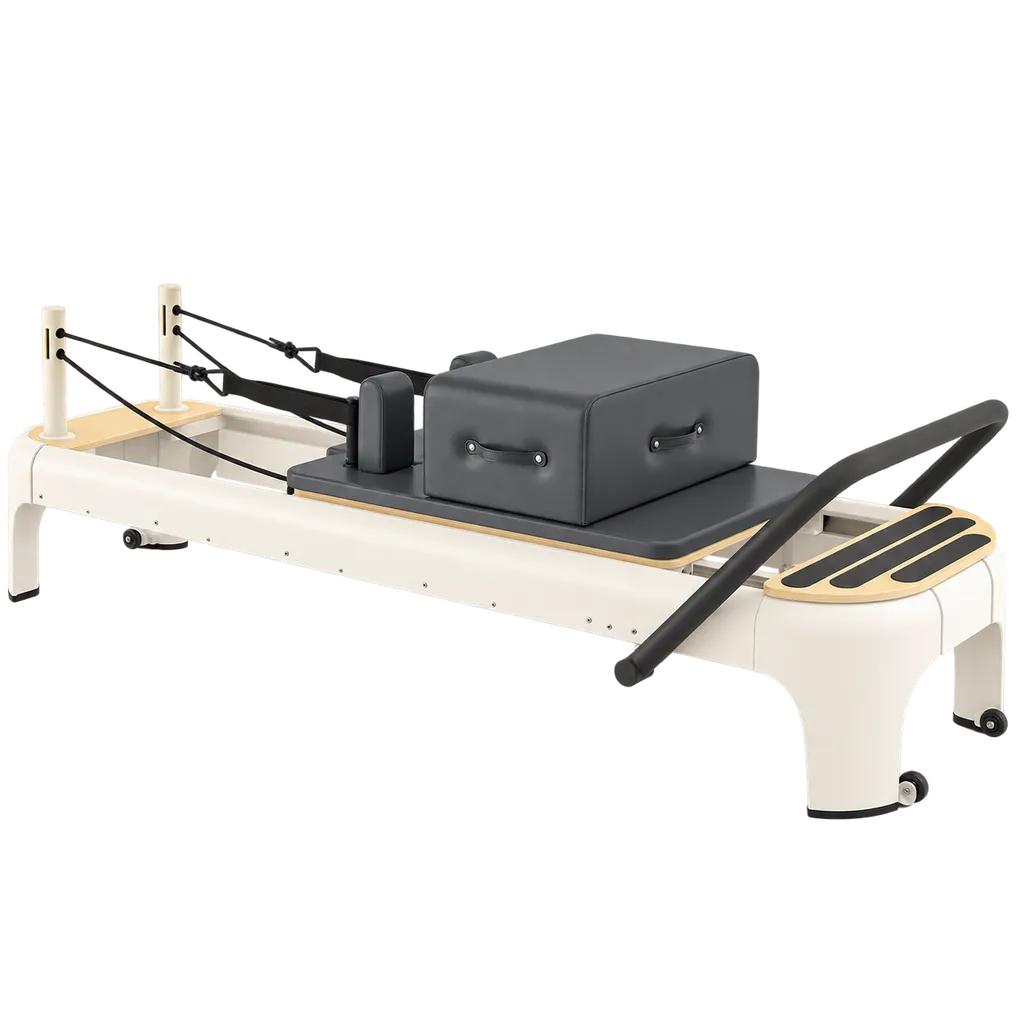
Reformer-based Pilates has an established place in UK physiotherapy and rehabilitation, and a metal-framed machine suits settings where hygiene and low maintenance carry weight. Typical use covers spinal rehabilitation and core stability programmes, post-operative recovery following joint surgery, chronic low back pain management, neurological rehabilitation focused on controlled movement, pre- and post-natal work, and supervised conditioning.
The material choice has practical consequences in a treatment room. An aluminium frame is dimensionally stable through seasonal humidity changes, has no biological failure modes, and presents a continuous surface that takes repeated cleaning. For a clinic wiping equipment between every patient, that removes a maintenance concern rather than deferring it.
The foot bar is where the specification asks a question of the buyer. Three positions suit group and class work run to a consistent format, where setups repeat rather than being tailored. One-to-one rehabilitation works the other way: the setup is matched to the individual's limb length and current range, and advanced in small steps. A clinic whose caseload is predominantly individual rehabilitation should confirm the three positions against its patient range before committing.
Spring configuration bears on the same question. A single light spring limits the increments available at the end where early post-operative and neurological work is concentrated, so establishing whether additional light springs are available is worth doing at order.
Room planning follows the pattern of any full-length reformer: the footprint needs therapist access along both sides and clearance behind the carriage for springs at extension.