
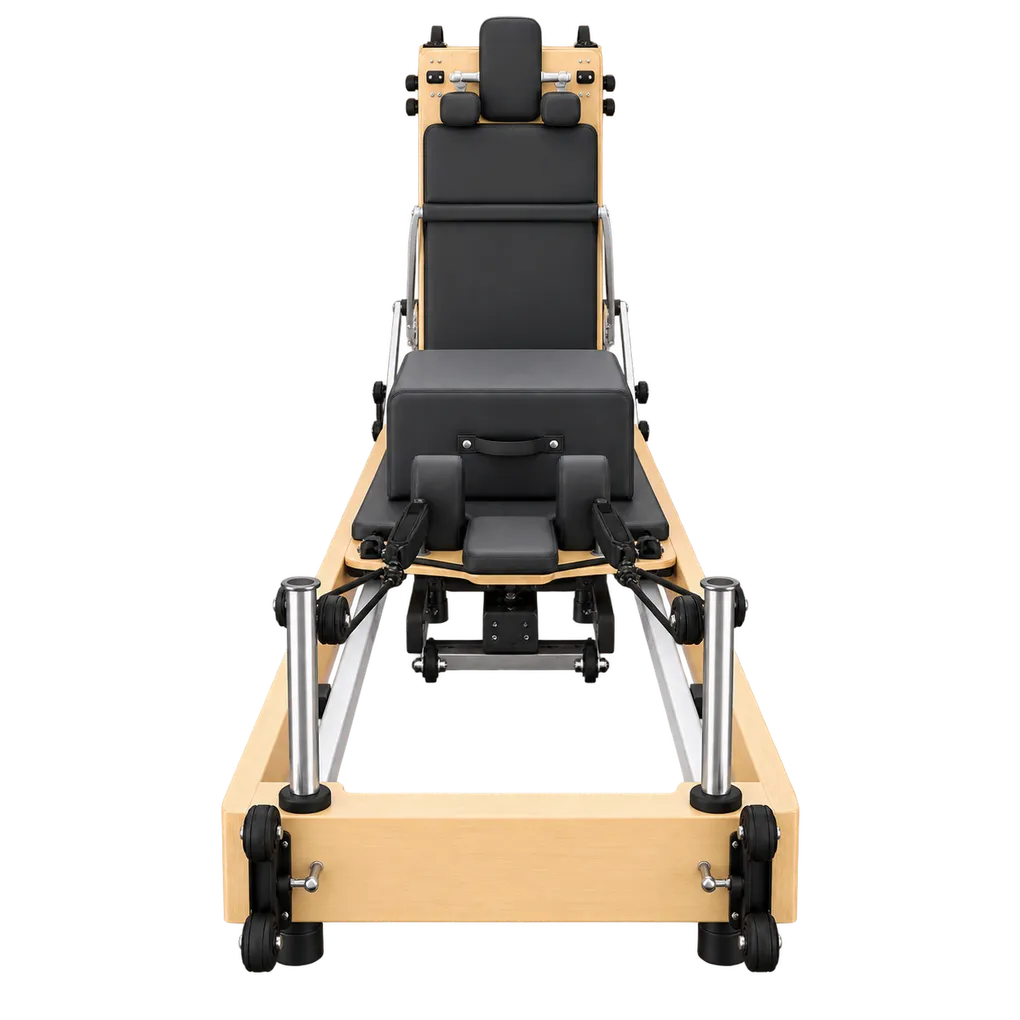
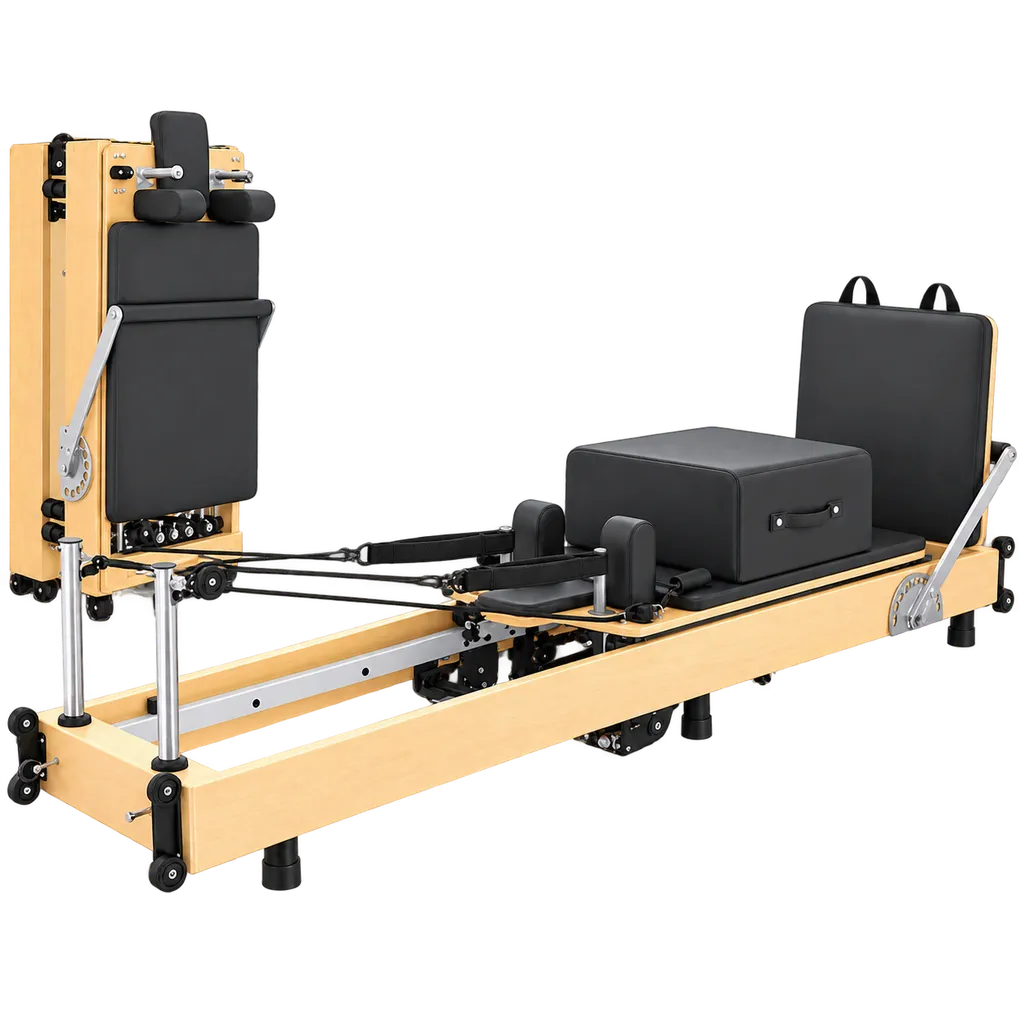
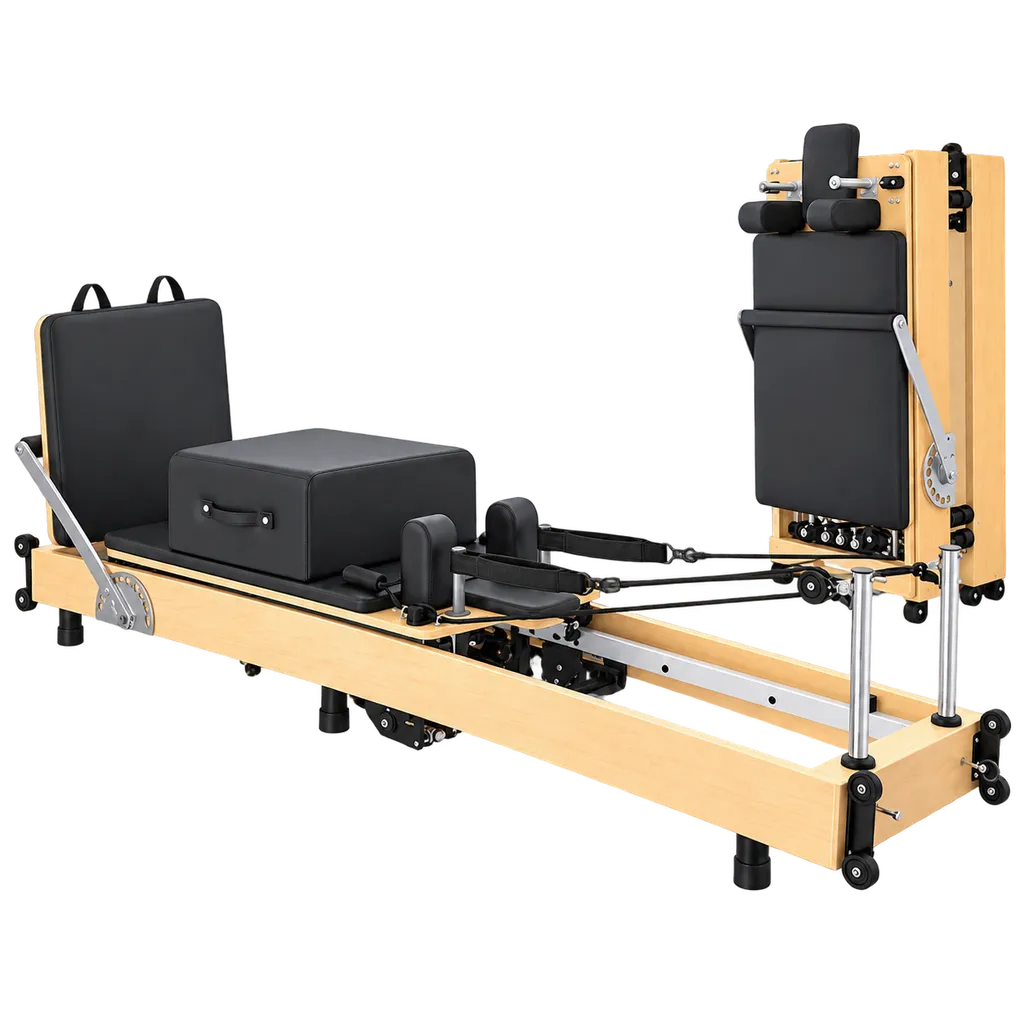
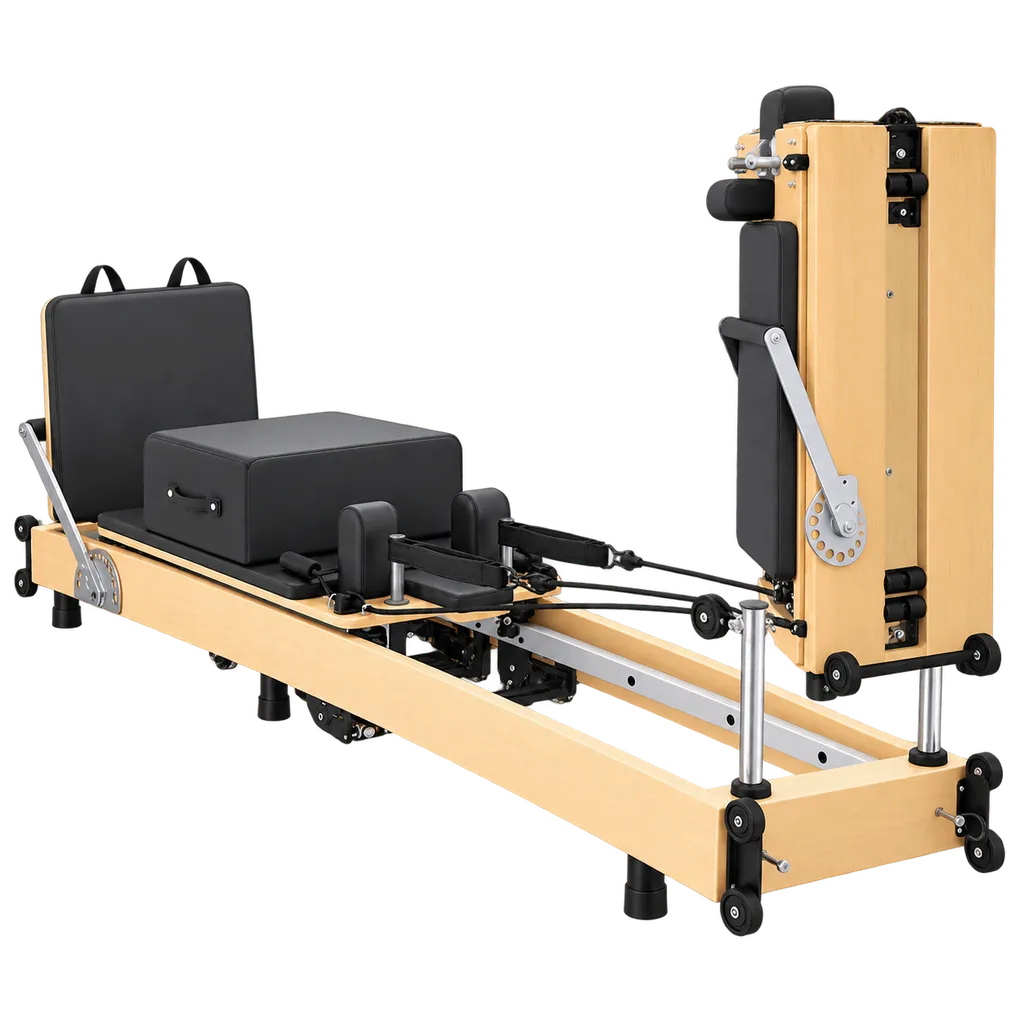
Reformer-based Pilates has an established place in UK physiotherapy and rehabilitation, and a folding machine is aimed at clinics where the treatment room does other work between sessions. Typical use covers spinal rehabilitation and core stability programmes, post-operative recovery following joint surgery, chronic low back pain management, neurological rehabilitation focused on controlled movement, pre- and post-natal work, and general conditioning under supervision.
The spring system is what makes a reformer clinically useful rather than simply an exercise machine. Graded resistance allows a therapist to unload a movement a patient could not perform against gravity and then progress it incrementally, which suits early post-operative work where range matters more than load. That progression only works if the resistance values are known, which is why the spring rates behind the colour coding are worth obtaining.
Accessibility deserves thought at the specification stage. Working height determines whether a patient can transfer onto the carriage independently, and the optional telescopic legs bear directly on that. A clinic seeing wheelchair users or patients with limited hip and knee range should settle the height range before ordering rather than adapting afterwards.
The folding capability suits a room shared between one-to-one treatment, group classes and general assessment. Whether it delivers depends on the folded footprint, which is not published, and on the unit weight, which determines whether one person can fold and reposition it safely under your manual handling arrangements.
Infection control applies as it does to any treatment surface. Confirm compatible cleaning agents before purchase, since a reformer wiped down between every patient will meet disinfectants many times a day for years.