
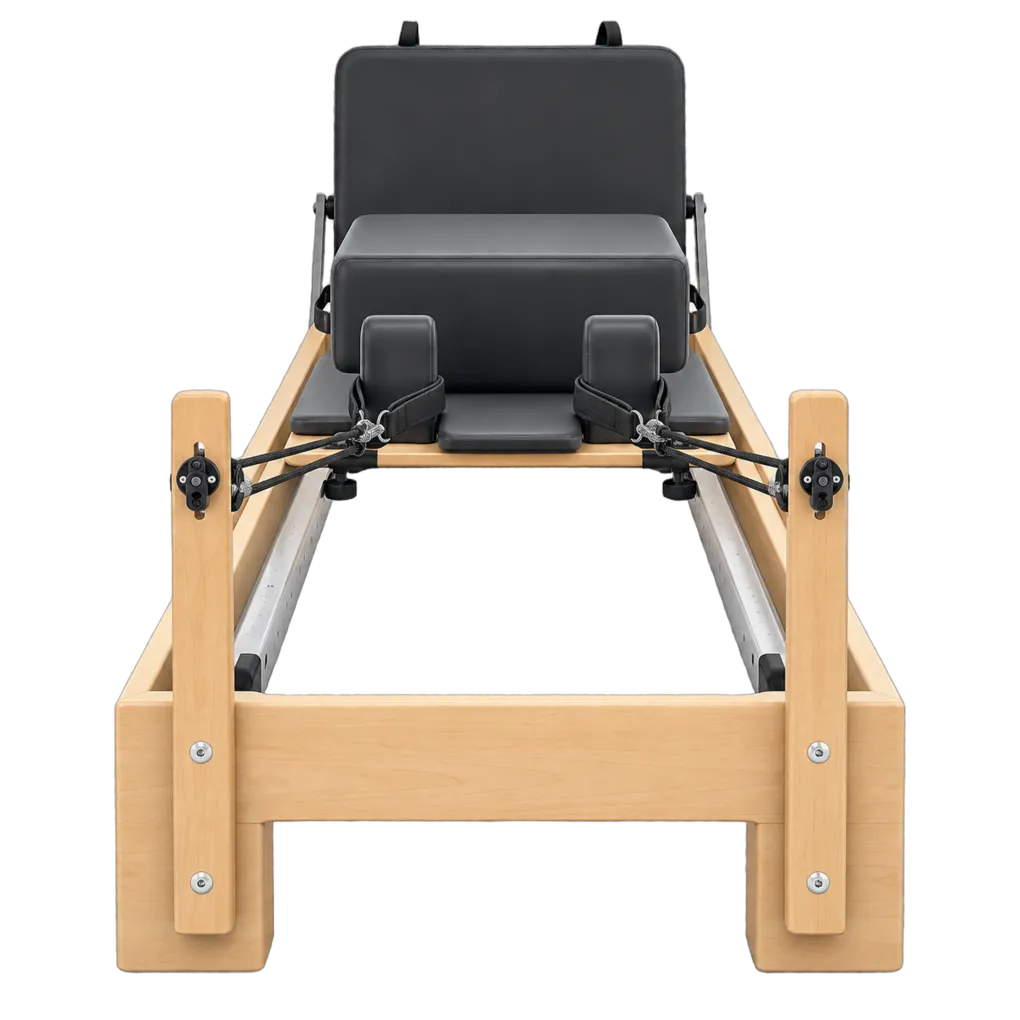
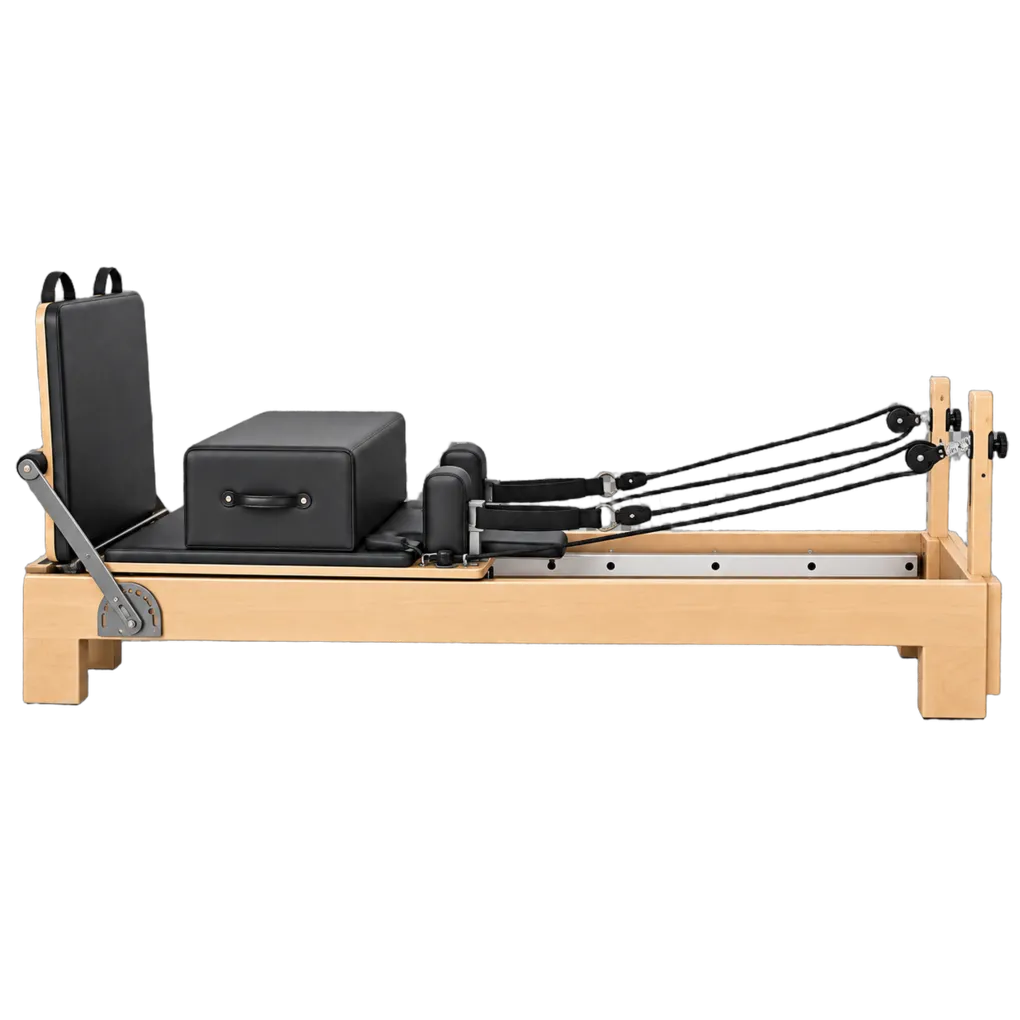
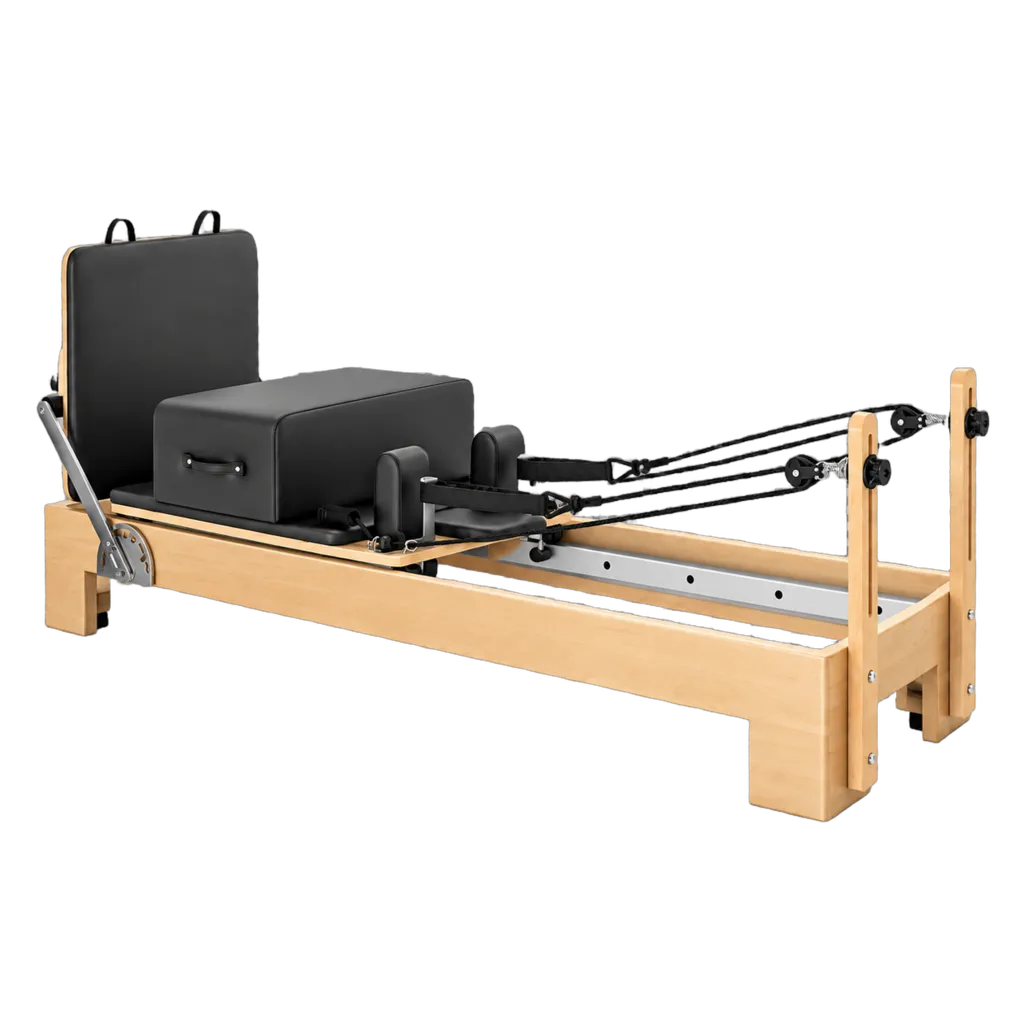
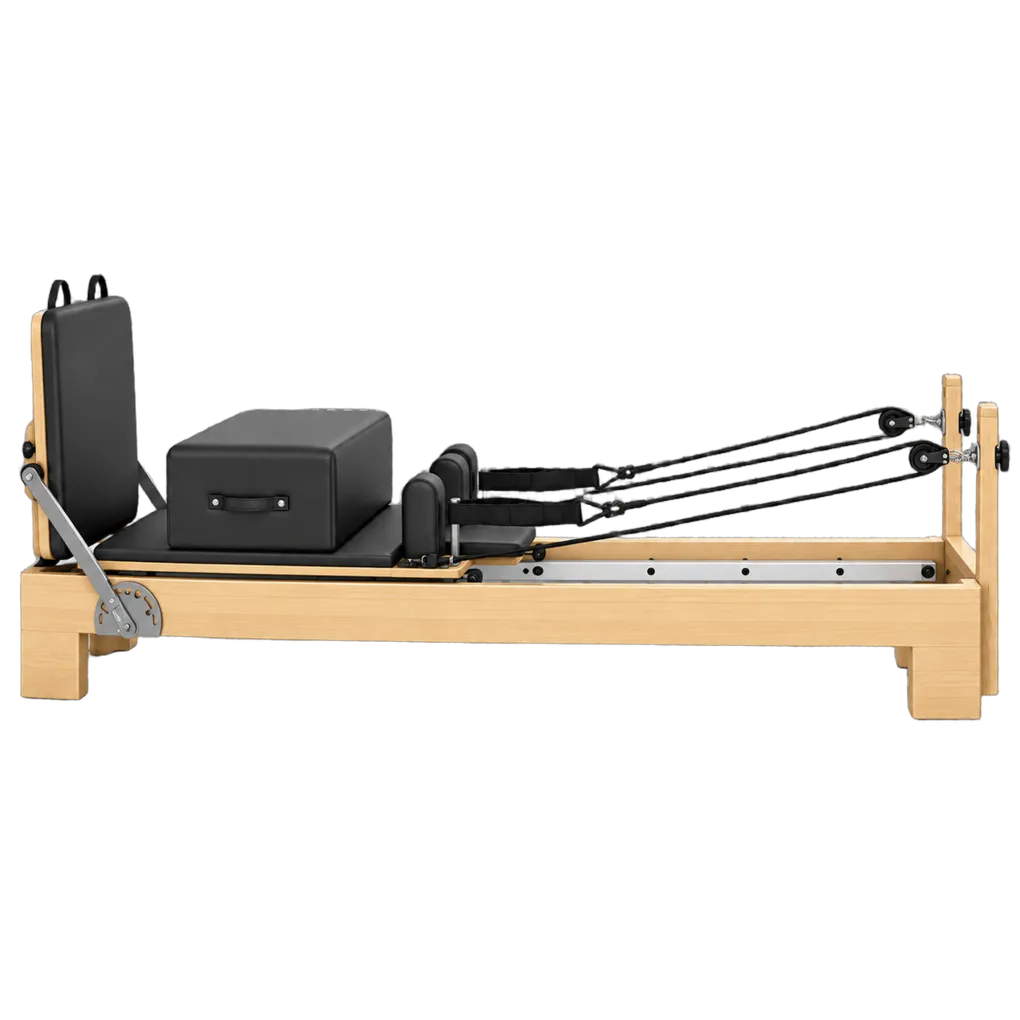
Reformer-based Pilates has an established place in UK physiotherapy and rehabilitation, and a full-size fixed machine suits a clinic with the room to commit to it. Typical use covers spinal rehabilitation and core stability programmes, post-operative recovery following joint surgery, chronic low back pain management, neurological rehabilitation focused on controlled movement, pre- and post-natal work, and supervised conditioning.
The spring configuration deserves matching against your caseload before ordering. Graded resistance is what makes a reformer clinically useful — a therapist unloads a movement the patient cannot yet perform, then adds load as recovery allows. Early post-operative and neurological work concentrates at the light end of that range, so a set carrying a single light spring warrants a conversation about whether additional light springs are available.
A fixed frame suits high-volume studio use. Where a reformer is in near-continuous use across a working day, there is nothing gained by folding it and something lost in the mechanism that makes folding possible. Rigidity comes from the structure, and the components that wear on a folding machine simply are not present.
Room planning is the counterpart. The footprint is permanent, and the clearances around it — behind the carriage for springs at extension, at the foot bar end, and along both sides for the therapist — are part of the space the machine needs rather than optional. Measure against a scale plan before committing.
Infection control applies as to any treatment surface, with particular attention here since the frame, the adjusting risers and one foot platform are all timber, and timber finishes respond differently to disinfectants than metal or plastic.