
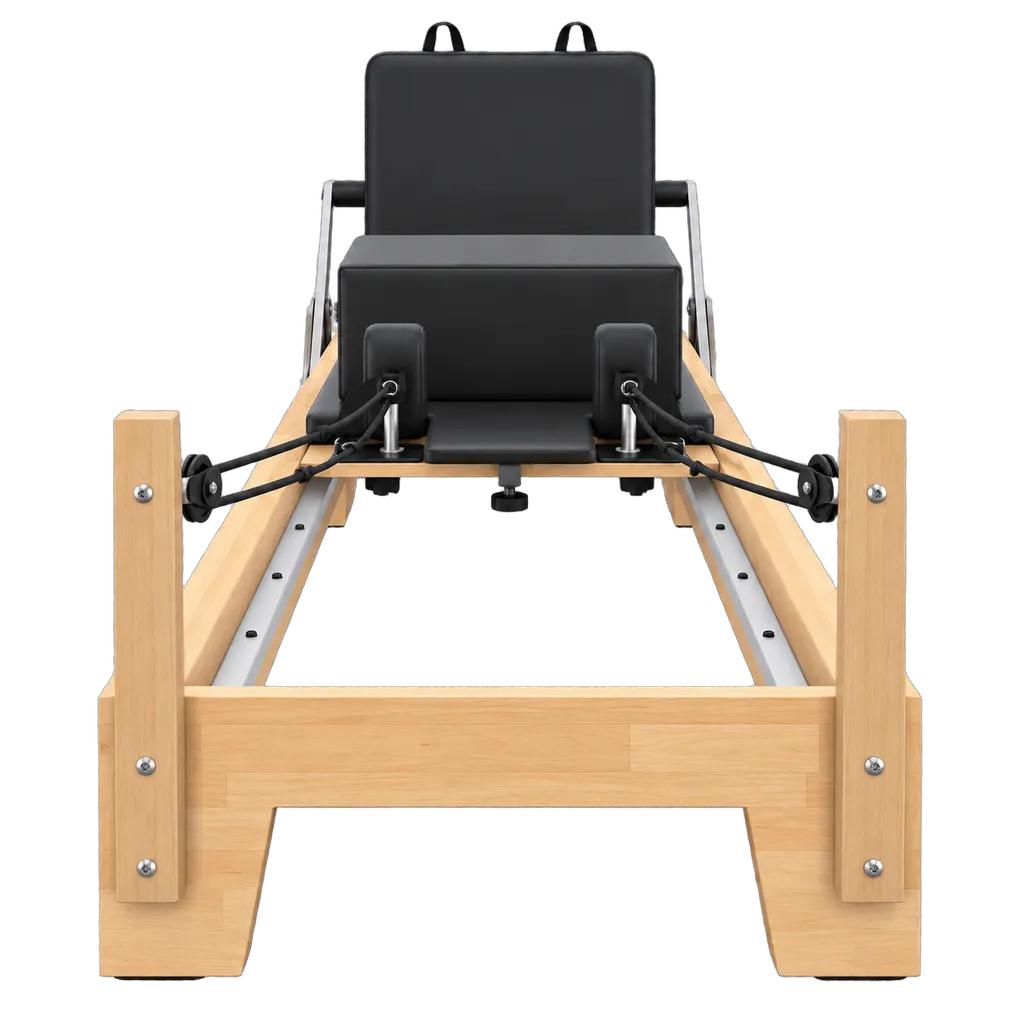
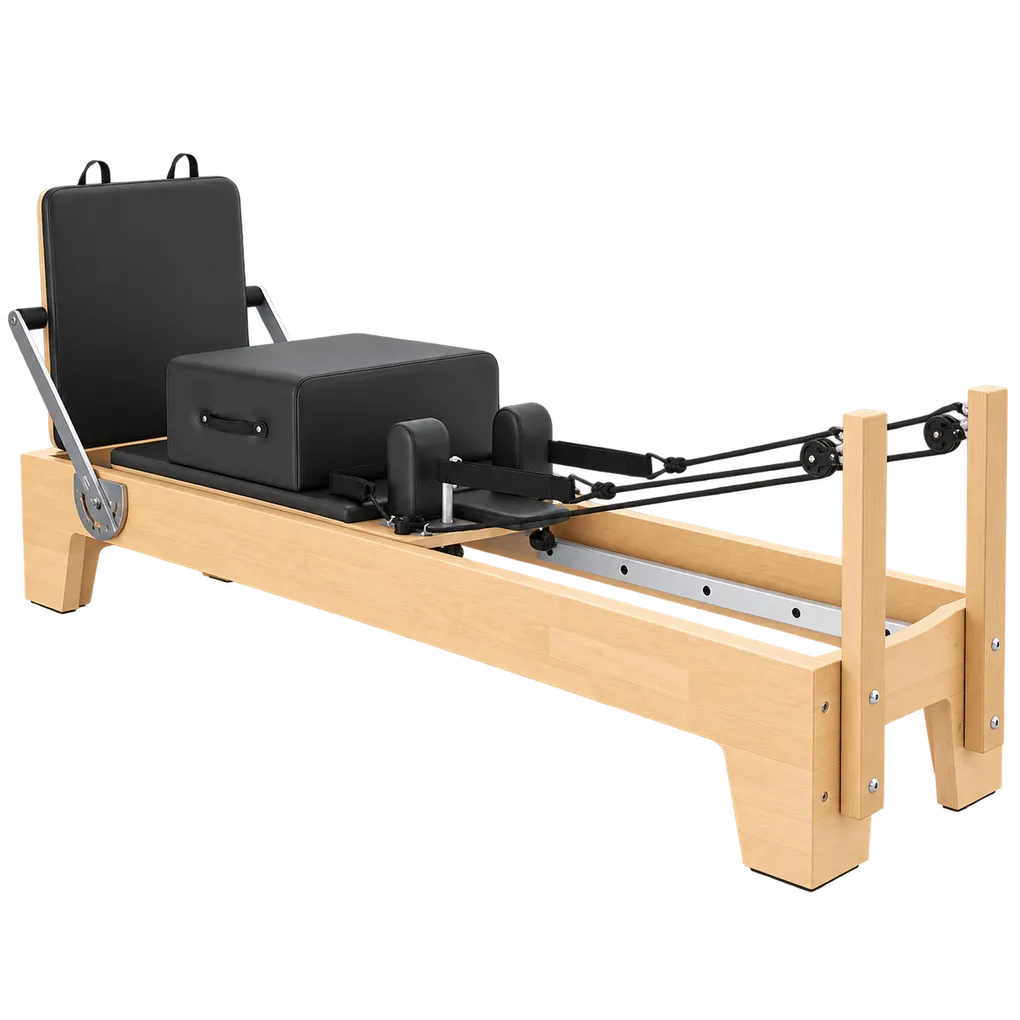
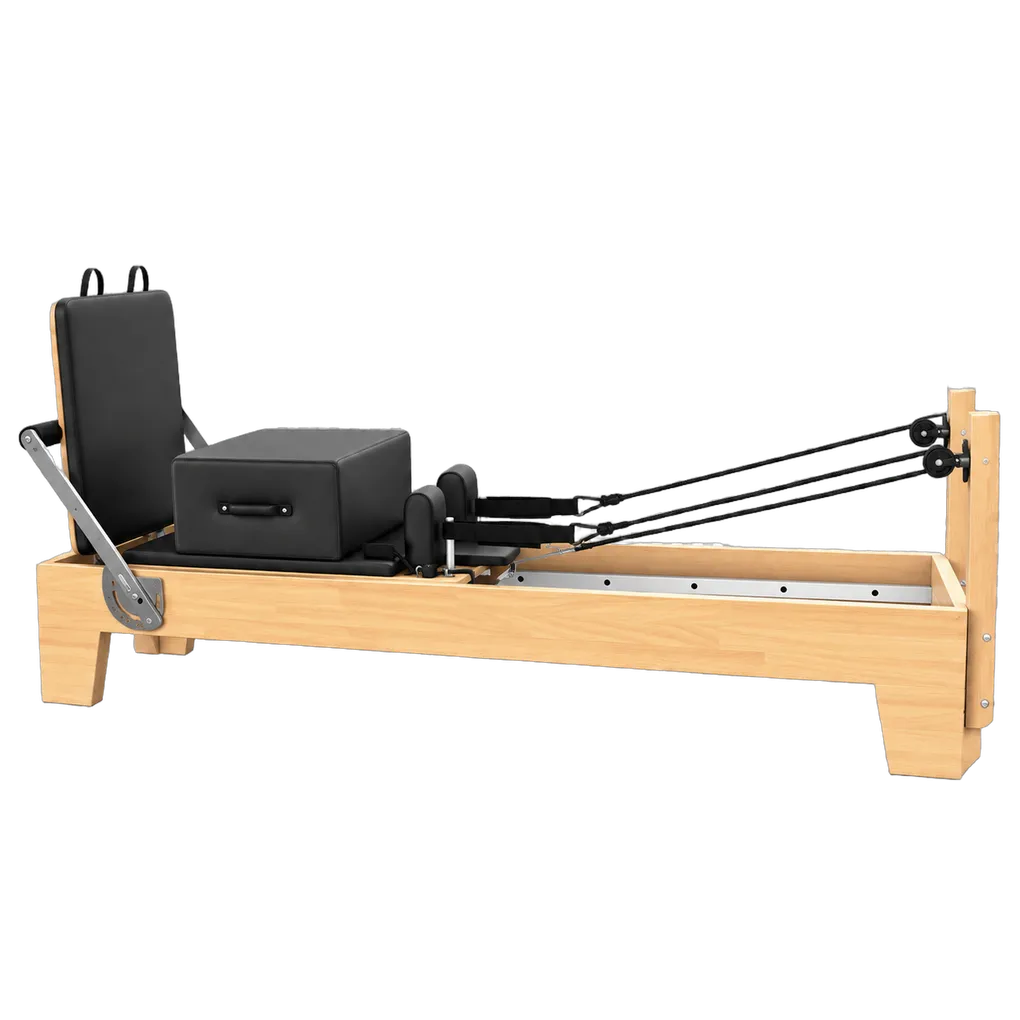
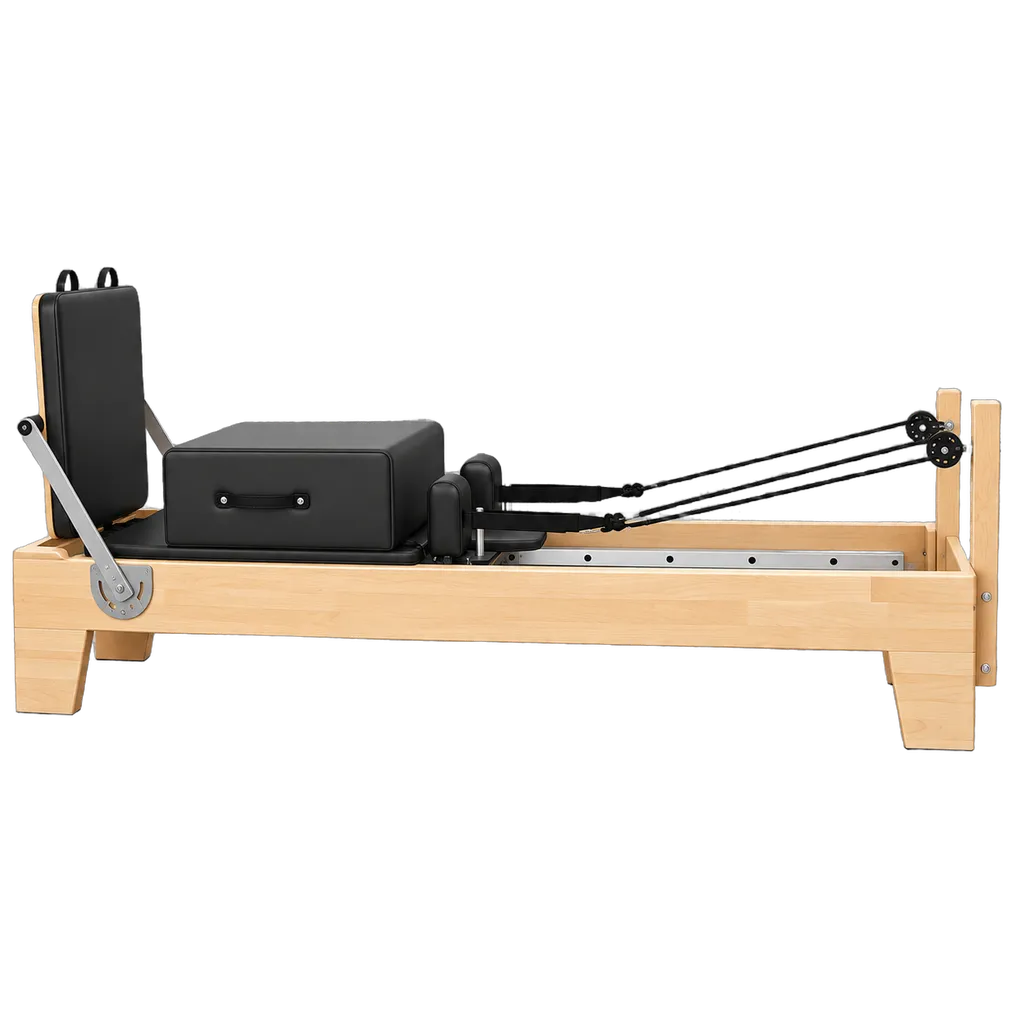
Reformer-based Pilates has an established place in UK physiotherapy and rehabilitation, and a wide, long-travel machine suits clinics working across a broad patient range. Typical use covers spinal rehabilitation and core stability programmes, post-operative recovery following joint surgery, chronic low back pain management, neurological rehabilitation focused on controlled movement, pre- and post-natal work, and supervised conditioning.
Carriage travel bears directly on clinical outcomes at the later stages of a programme. Full-range exercises are bounded by how far the carriage runs, so a patient who reaches the end of travel before reaching the end of their own range is being limited by the equipment — which matters most with taller patients and with well-recovered ones returning to full function, exactly when the goal shifts from protecting a healing structure to restoring normal range.
Carriage width serves a different group again. Kneeling, quadruped and side-lying positions need somewhere confident for hands and knees, and larger patients benefit from more carriage beneath them. Shoulder rest spacing locates the individual patient and should be confirmed on its own.
Daily handling falls disproportionately on the risers, which is why the missing riser specification is worth resolving before purchase rather than after. In a clinic running back-to-back sessions, rope adjustment happens dozens of times a day, and the component taking that wear should be a known quantity with a known replacement route.
Room planning needs the width accounted for. The footprint still needs therapist access along both sides and clearance behind the carriage for springs at extension, so measure against a scale plan rather than the stated dimensions alone.