
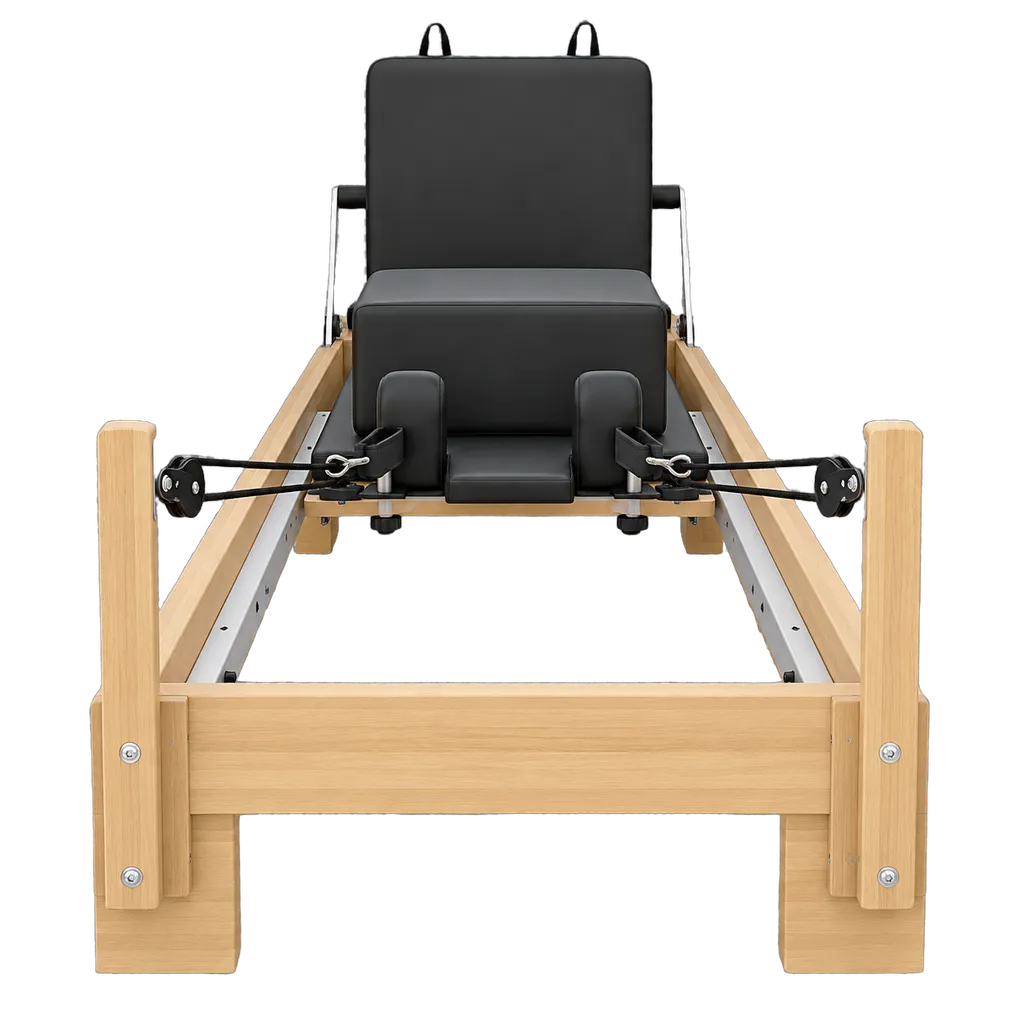
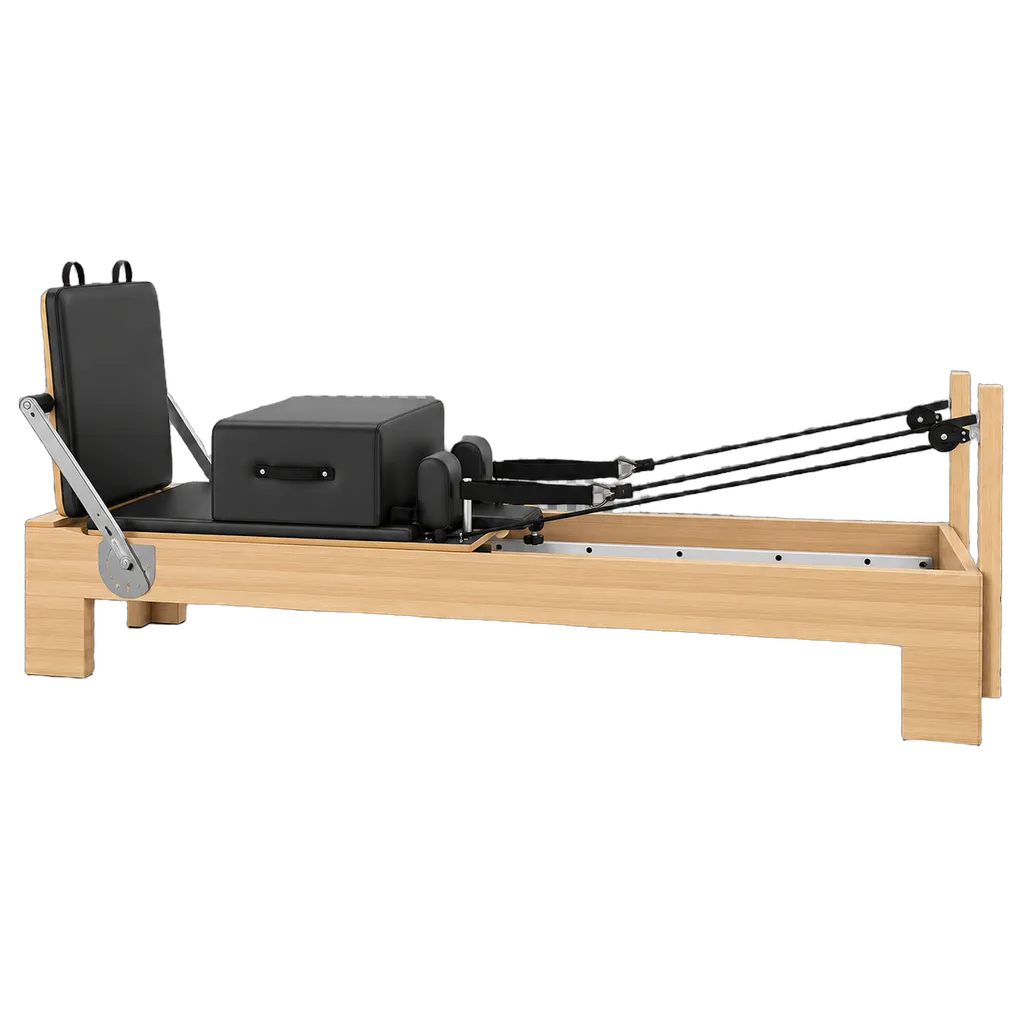

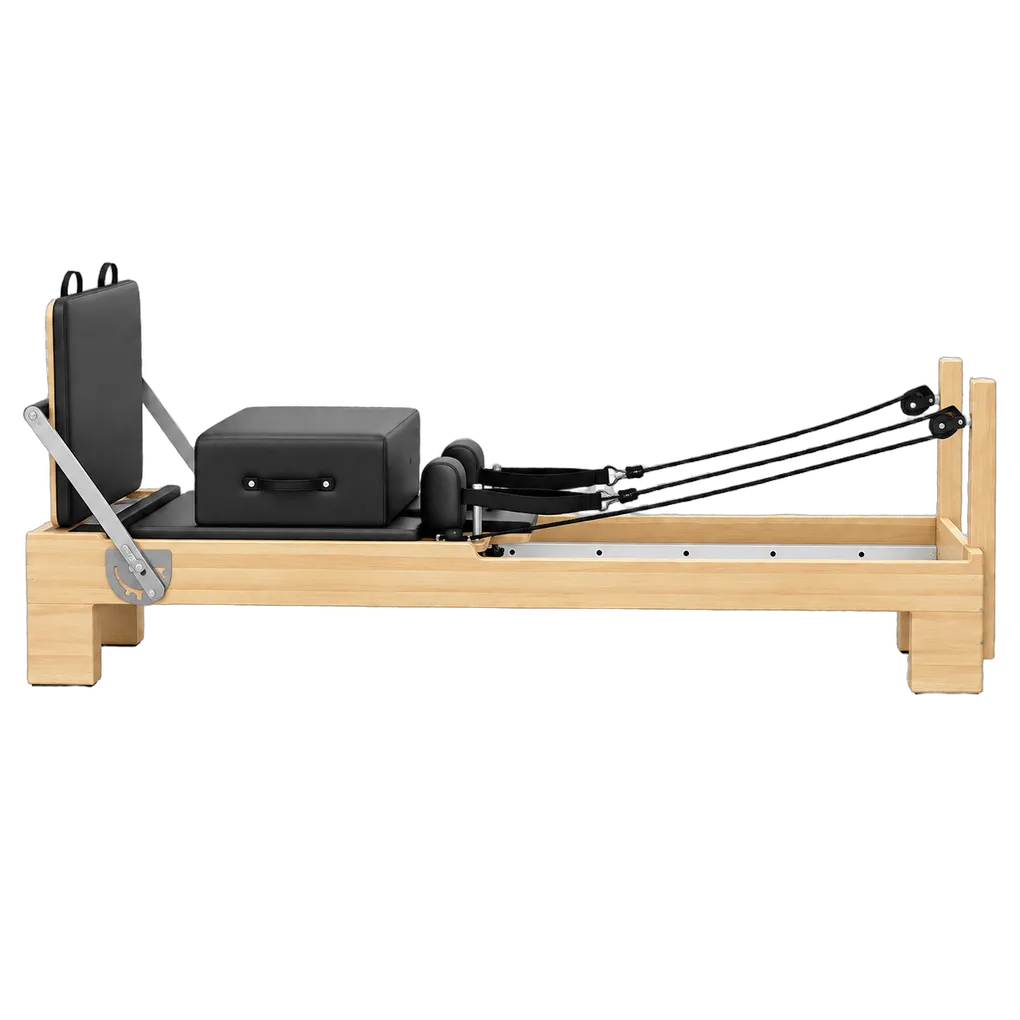
Reformer-based Pilates has an established place in UK physiotherapy and rehabilitation, and a wide, long-travel machine is aimed at clinics working across a broad patient range. Typical use covers spinal rehabilitation and core stability programmes, post-operative recovery following joint surgery, chronic low back pain management, neurological rehabilitation focused on controlled movement, pre- and post-natal work, and supervised conditioning.
Carriage travel is where this specification bears most directly on clinical work. Full-range exercises are bounded by how far the carriage runs, so a patient who reaches the end of travel before reaching the end of their own range is being limited by the equipment. That shows up first with taller patients and with well-recovered ones returning to full function, which is exactly the point at which a rehabilitation programme is trying to restore normal range rather than protect a healing structure.
Carriage width serves a different group. Kneeling, quadruped and side-lying positions all need somewhere to place hands and knees confidently, and a larger patient benefits from more carriage beneath them. Shoulder rest spacing should be confirmed separately, since that is what locates the individual patient on the carriage.
Spring configuration supports graded progression. Two light springs allow both a very light setting for unloading a movement and a small increment between light settings, which is where early post-operative and neurological work spends most of its time.
Room planning needs the extra width accounted for. A 700 mm carriage sits within a footprint that still needs therapist access along both sides and clearance behind for springs at extension, so measure against a scale plan rather than the stated dimensions alone.