
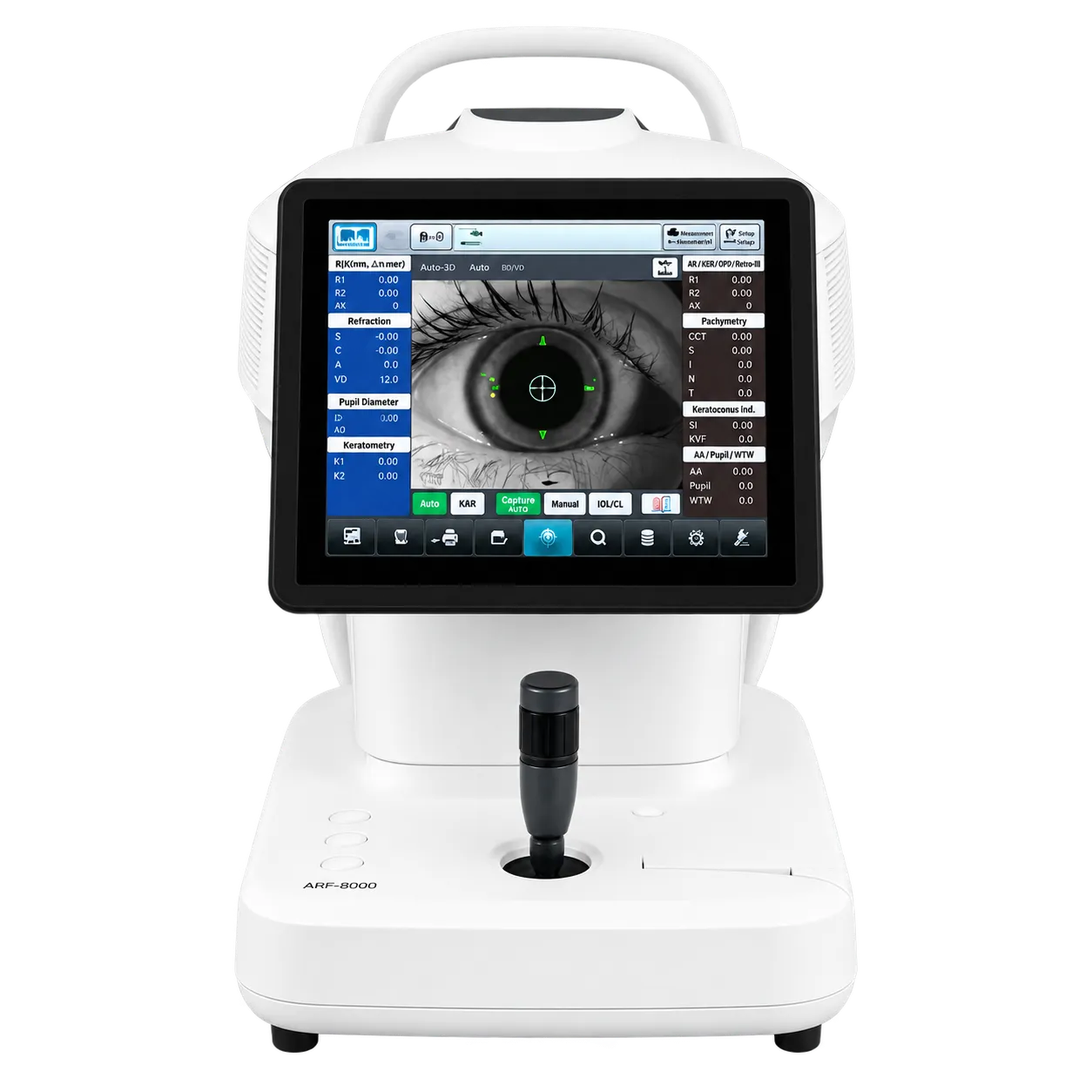
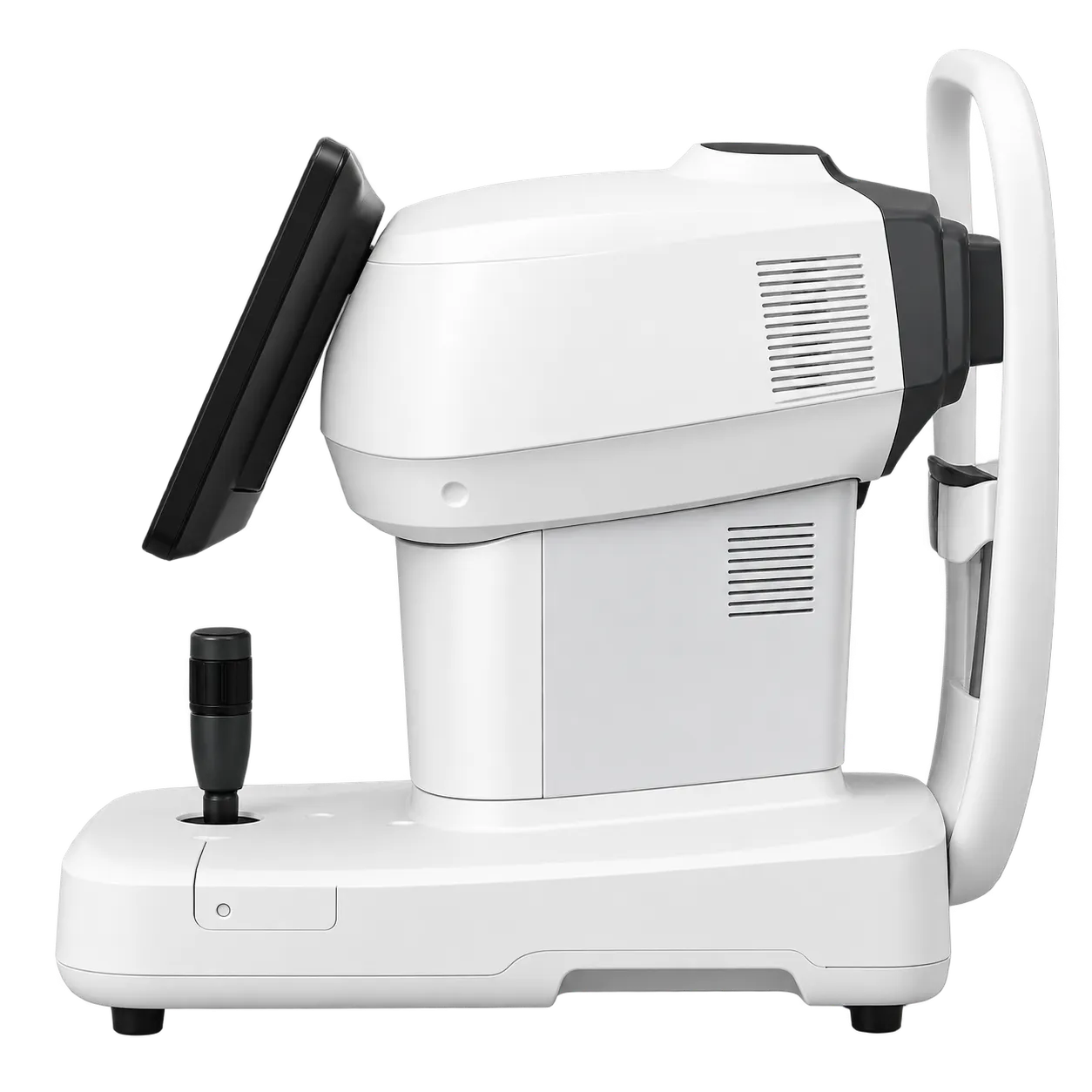
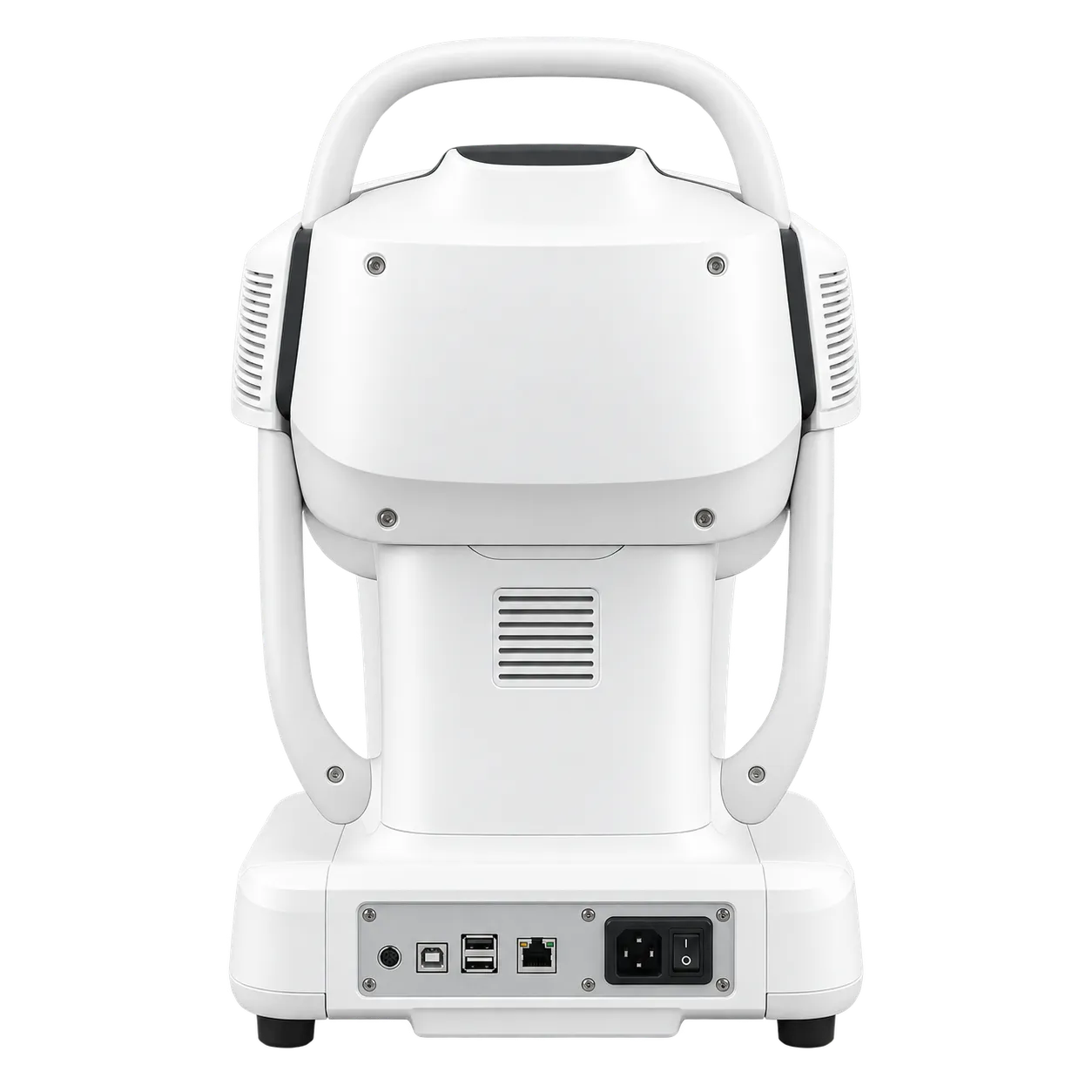
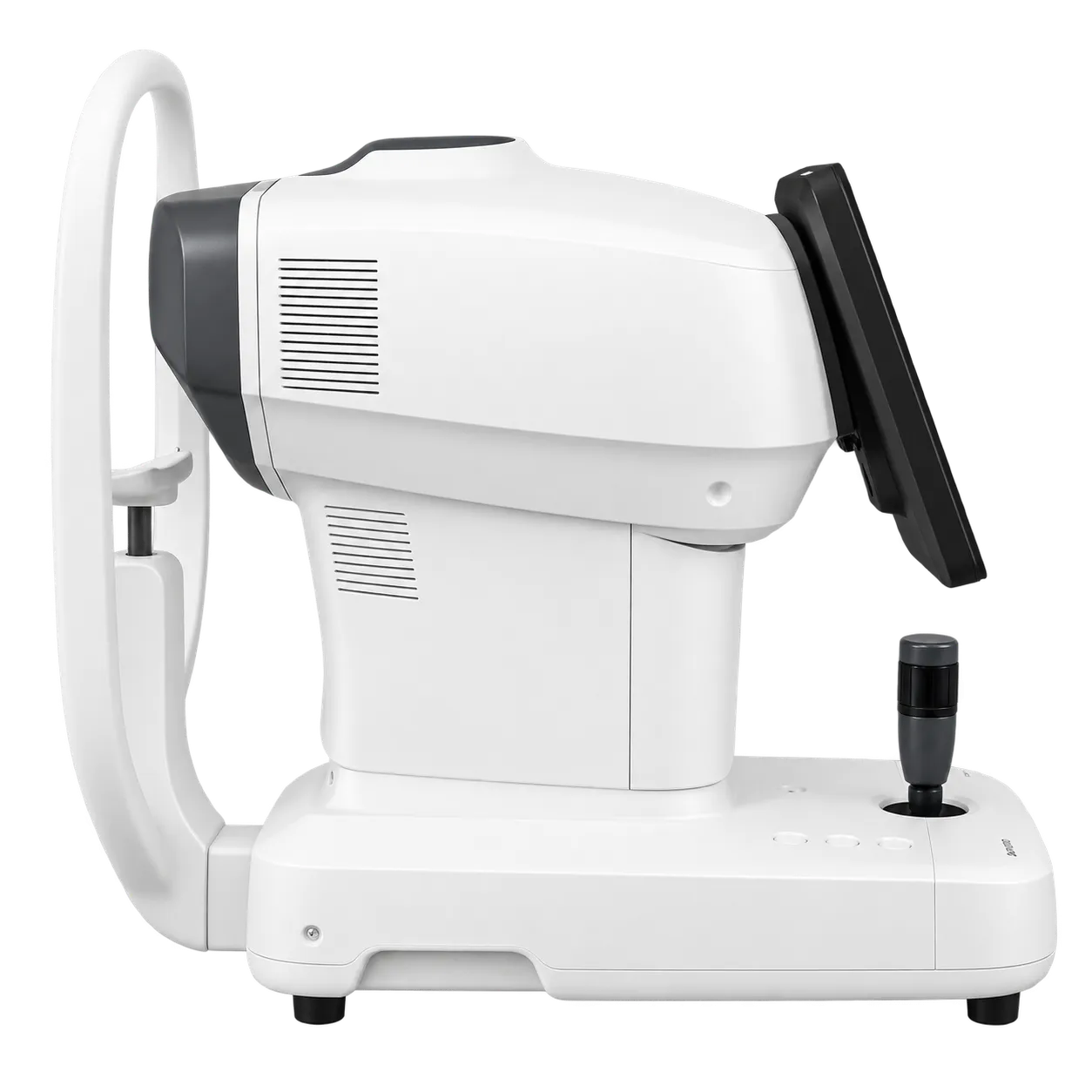
In optometry pre-examination, the MR-6000 brings objective refraction and corneal measurements to the same patient position. Sphere, cylinder, and axis provide a starting point for refractive assessment, while keratometry adds the curvature of the anterior cornea. The selectable sequence suits a room where a trained operator gathers measurements before the clinician reviews them. Automatic alignment supports acquisition, and the motorised chin rest accommodates positioning at the instrument.
Ophthalmology consultations can use the pressure and pachymetry functions together. Air-puff tonometry supplies intraocular pressure, while central thickness provides the input for a thickness-adjusted reference value. This combination supports the pressure-assessment component of glaucoma screening. Each result retains its own meaning, so measured pressure, central thickness, and the calculated reference remain distinct parts of the examination.
For corneal and contact-lens assessment, the topographic maps show how anterior surface curvature varies across the measured area. White-to-white and pupil measurements add visible-eye dimensions to that surface record. Fourier presentation supports review of the shape components, and the clinician can relate these findings to the planned refractive or lens assessment. The electrical cone exchange keeps the selected measurements within the same examination position.
Ocular-surface consultations use the included meniscus, gland, redness,s and blink observations to examine tear-related characteristics. Infrared gland images and the 10-second blink recording contribute different views of the surface system. An optional TSAS licence adds ring-reflection stability analysis during sustained eye opening. Stored data, image export, rt and printed results give the reviewing clinician a record of the selected examinations, whether the session centres on refraction, corneal shape, pressure, or ocular-surface observation.