
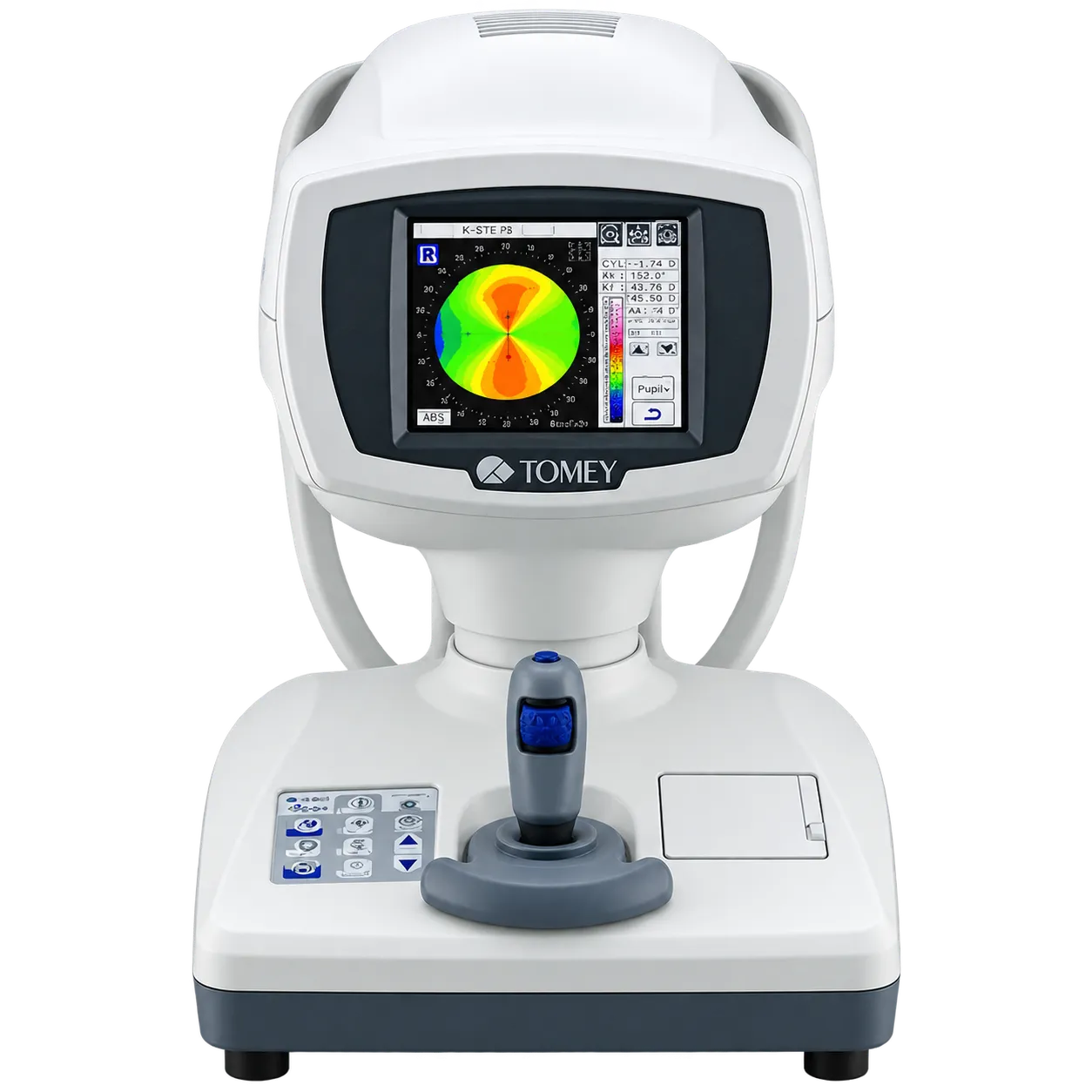
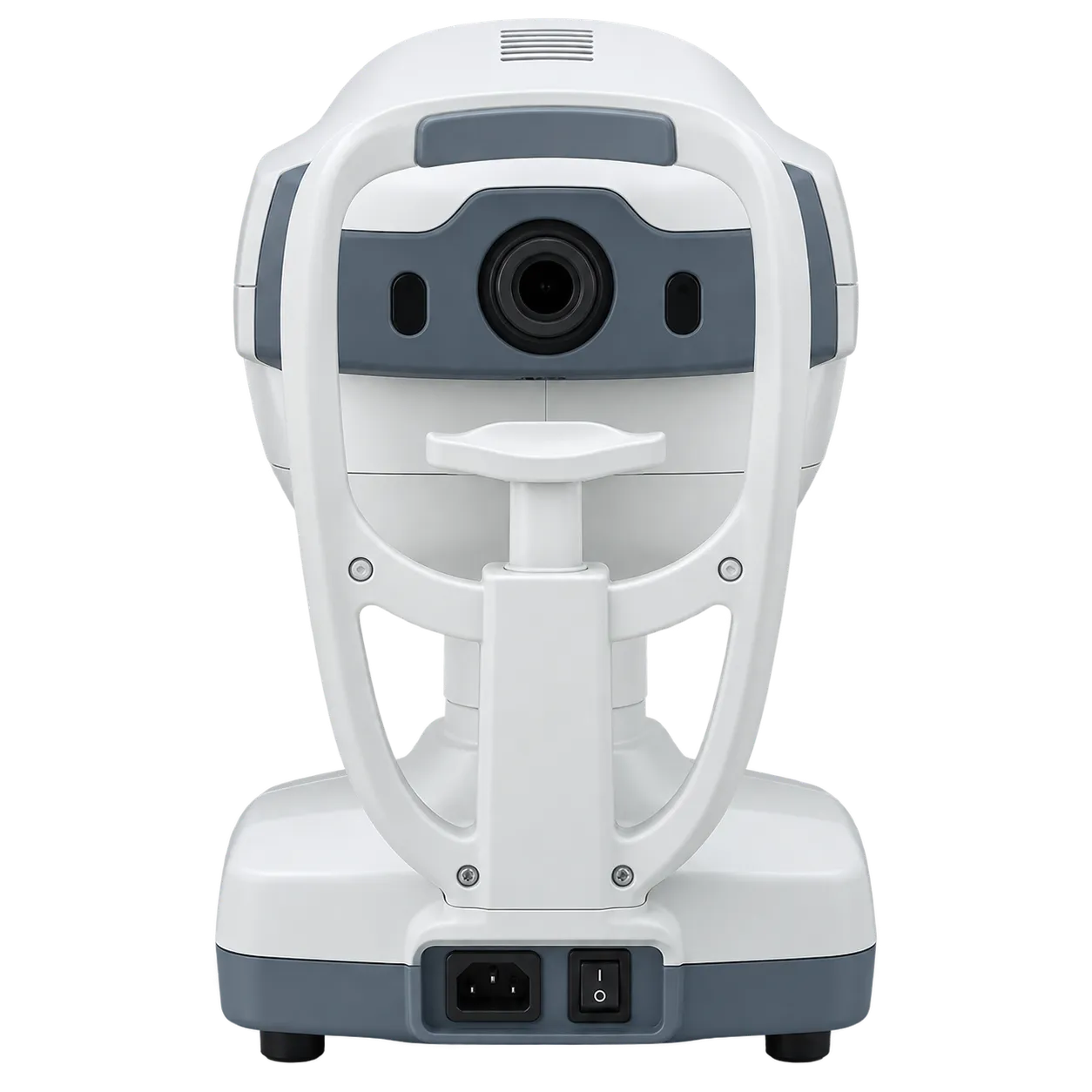
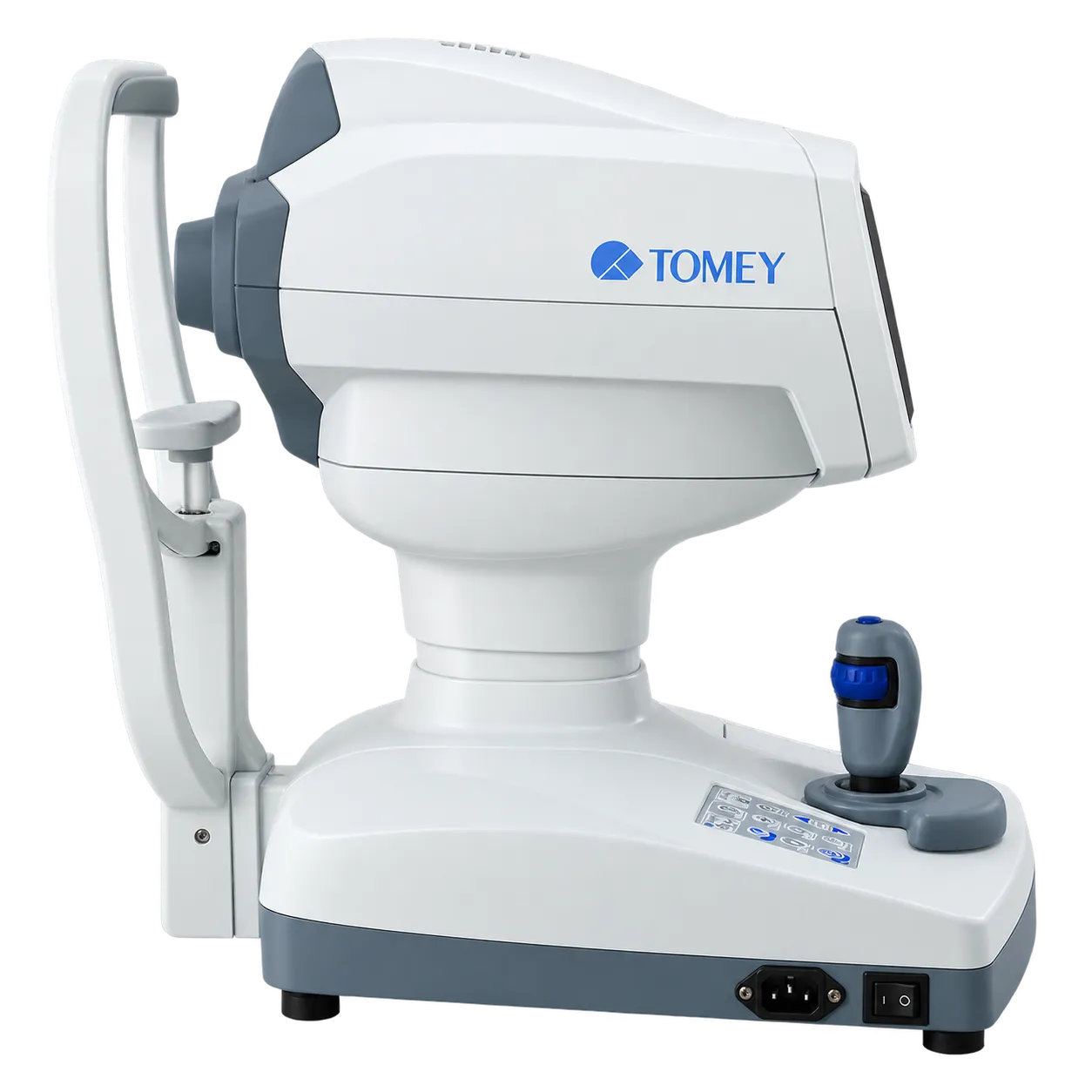
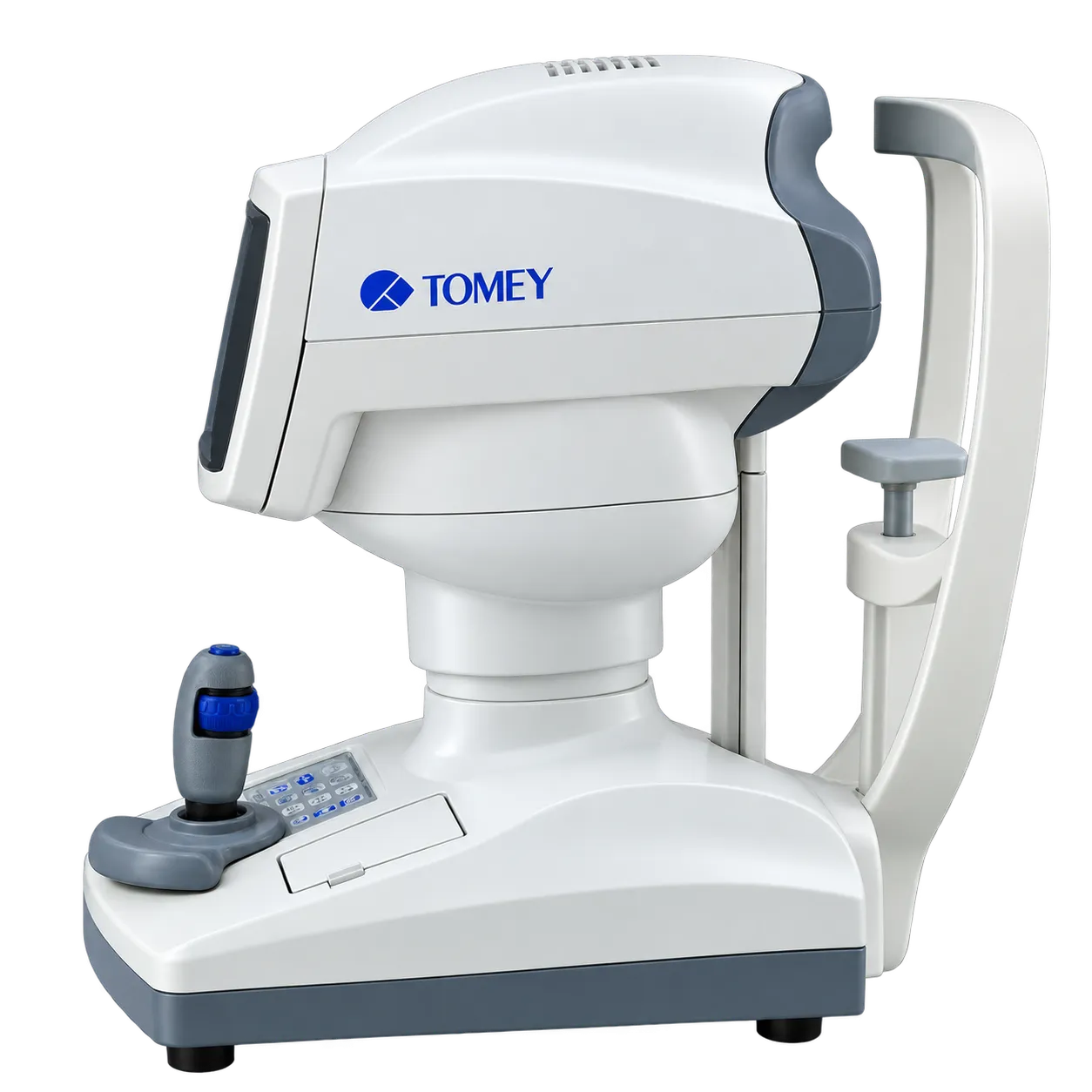
Optometry and ophthalmology clinics, optical practices, cataract services, and contact lens practices use the RT-7000 to combine refraction, keratometry, and topography in one station. Optometrists, ophthalmologists, and trained technicians align the eye on the 6.4-inch touch screen, take the refraction in 0.2 seconds, and move to the corneal map with a single touch, keeping the examination short for the patient.
For refractive assessment, sphere ranges from −25.00 to +22.00 D, cylinder from -10.00 to +10.00 D, and axis from 0 to 180°, with vertex distance chosen from six settings between 0 and 16.0 mm. The system measures pupillary distance from 50 to 86 mm in the same session, and the dual CCD cameras separate observation from measurement. For eyes with an intraocular lens, the IOL and cataract mode switches on automatically, so the operator follows one routine across the whole clinic day.
For corneal assessment, keratometry reads radius from 5.00 to 11.00 mm in steps of 0.01 mm, and topography maps power from 9 to 100 D. Colour maps, the corneal irregular astigmatism display and the KAI and KRI indices give the practitioner a view of regularity, and Fourier analysis separates power into spherical, regular astigmatism, asymmetry and higher-order irregularity. Sliders set the corneal and pupil diameter on screen, so a practitioner can review the area that matters for the case.
For contact lens work, the Corneal Eccentricity Index supports Ortho-K lens fitting, and fitting simulation shows a pseudo-fluorescein pattern drawn from a built-in lens database. A built-in thermal printer records results for the patient file, and a LAN port and four USB ports pass data to other systems. The unit weighs approximately 20 kg and measures 490 × 307 × 466 mm.