
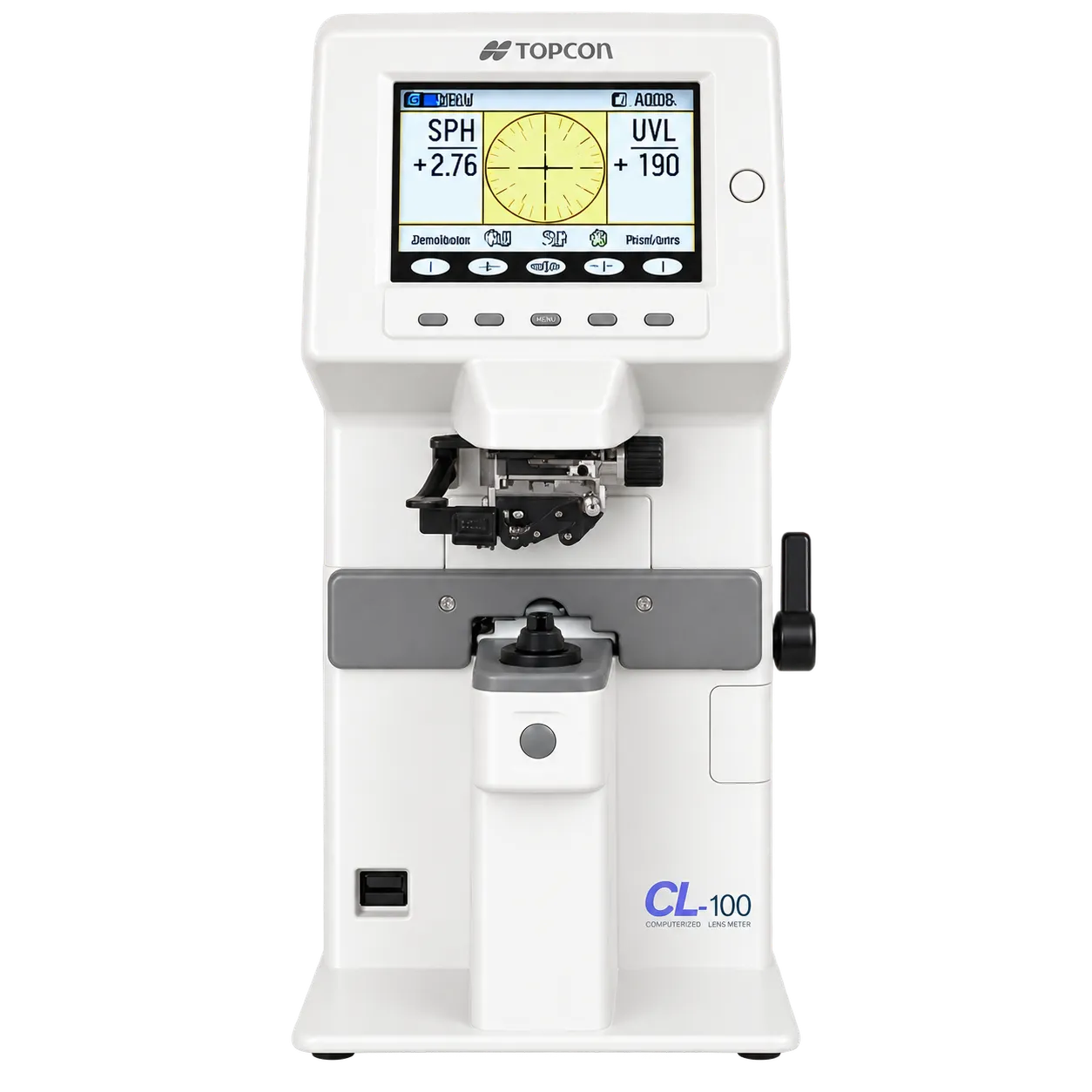
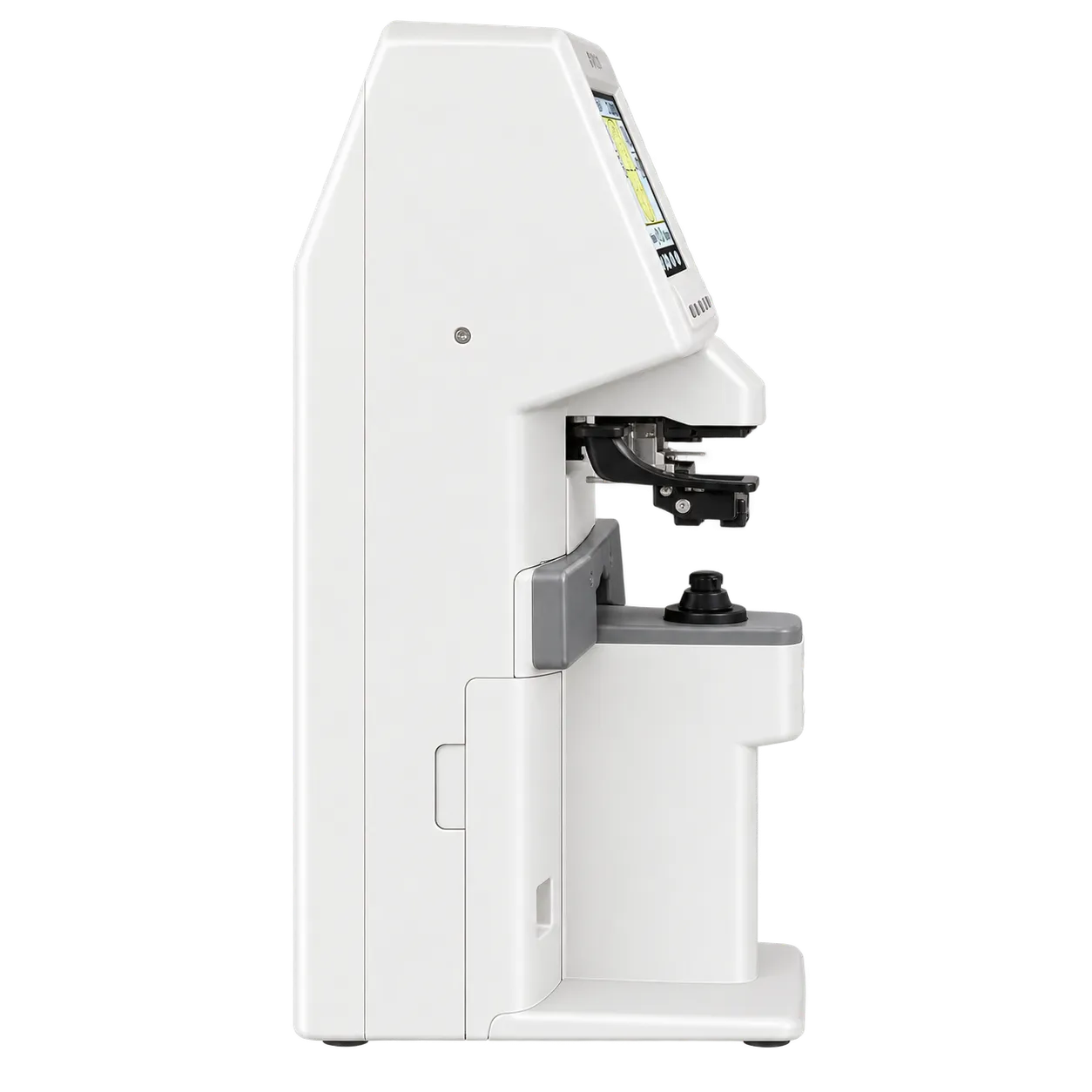
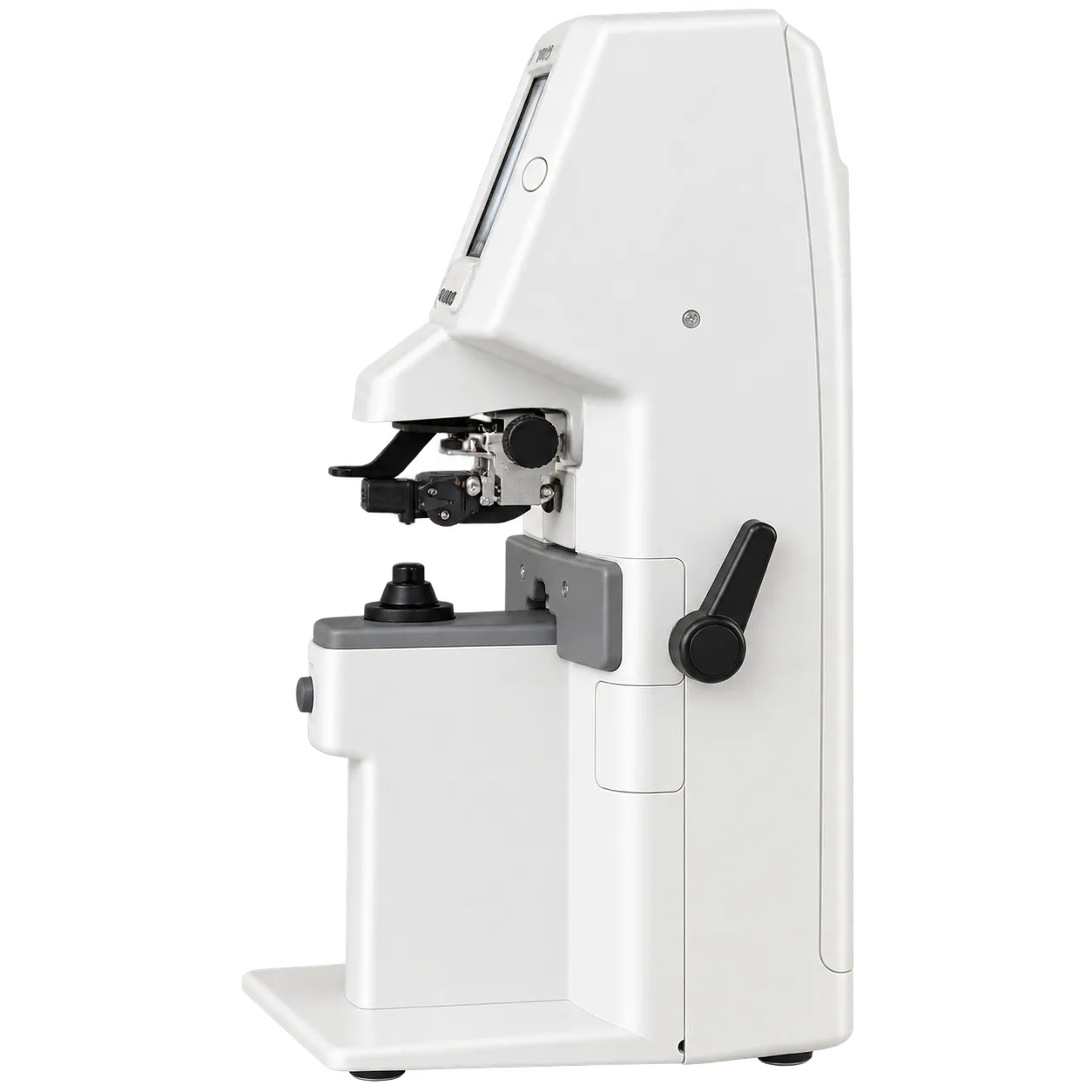
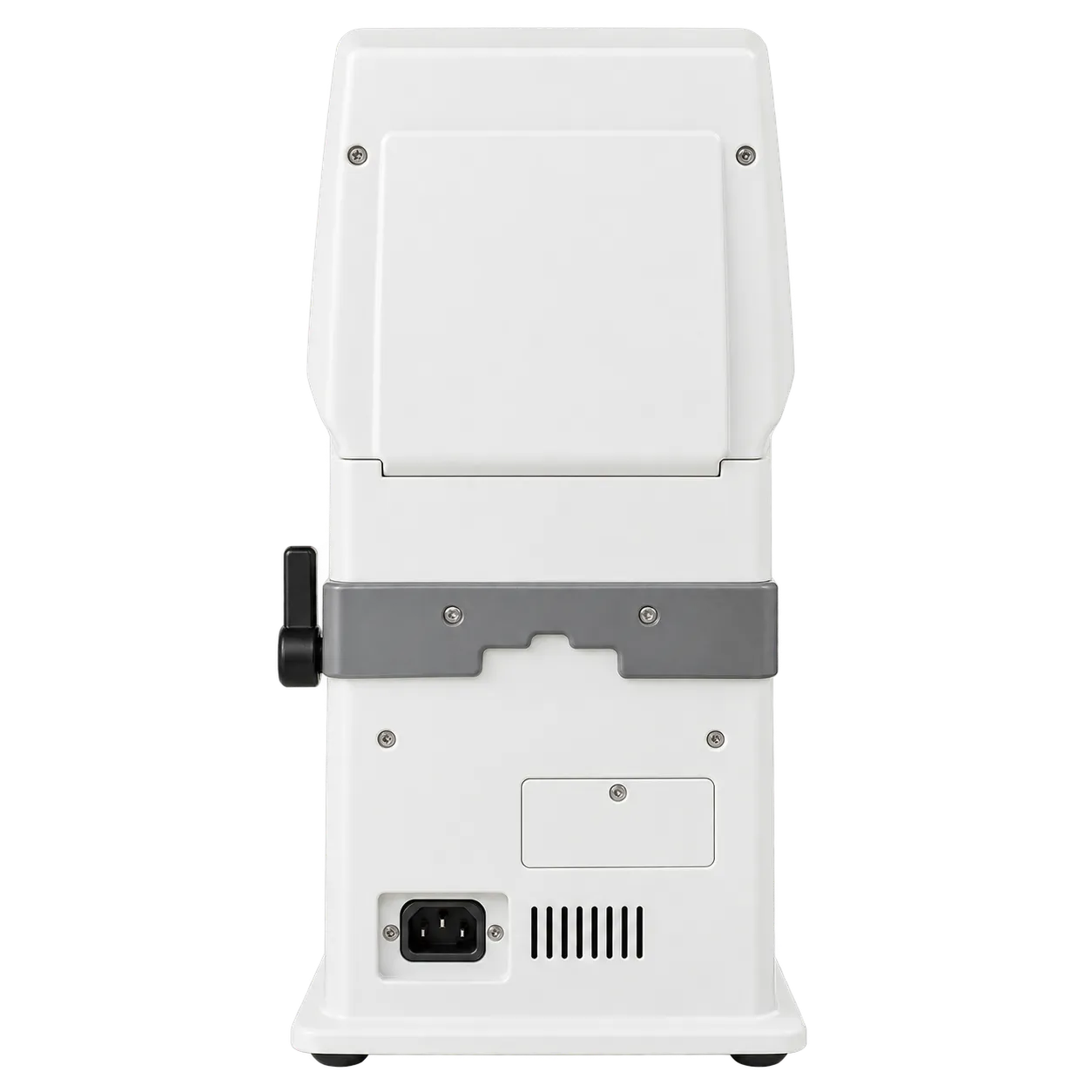
The CL-100 serves optical practices, optometry clinics, dispensing counters, contact lens clinics, and glazing workshops. Optometrists, dispensing opticians, optical assistants and lens technicians use it to read the spectacles a patient arrives in, to verify new pairs against the prescription and to mark lenses before edging.
Its upkeep suits a busy bench. Ink cartridges, thermal paper, lens protection pads and fuses are each ordered by part number and changed by the operator, and a silicone cloth for the cover glass comes in the box. Refills come three cartridges to a set, which keeps a spare on hand when one is used up. A practice that stocks those few items keeps the lensmeter measuring, marking and printing through the working week.
Framed spectacles move through the routine with little handling. With AUTO R/L on, the right lens is memorised once centred and the instrument turns to the left as the frame moves, with a buzzer if the team wants one. Progressive lenses are judged automatically: a graphic guide leads the operator through the far zone, the screen changes to near-vision measurement by itself, and the bar-meter shows where the addition peaks. Prescribed prism is aligned against the displayed prism values, and the millimetre arrows show how far to move the lens to reach its optical centre.
Contact lens wearers are served at the same bench, with hard and soft lenses read on the contact lens plate and fine-movement ring. Each thermal printout carries the shop's own heading and, if set, a sequence number for the patient record. RS-232C passes the same results to Topcon's computerised vision tester or a computer.