
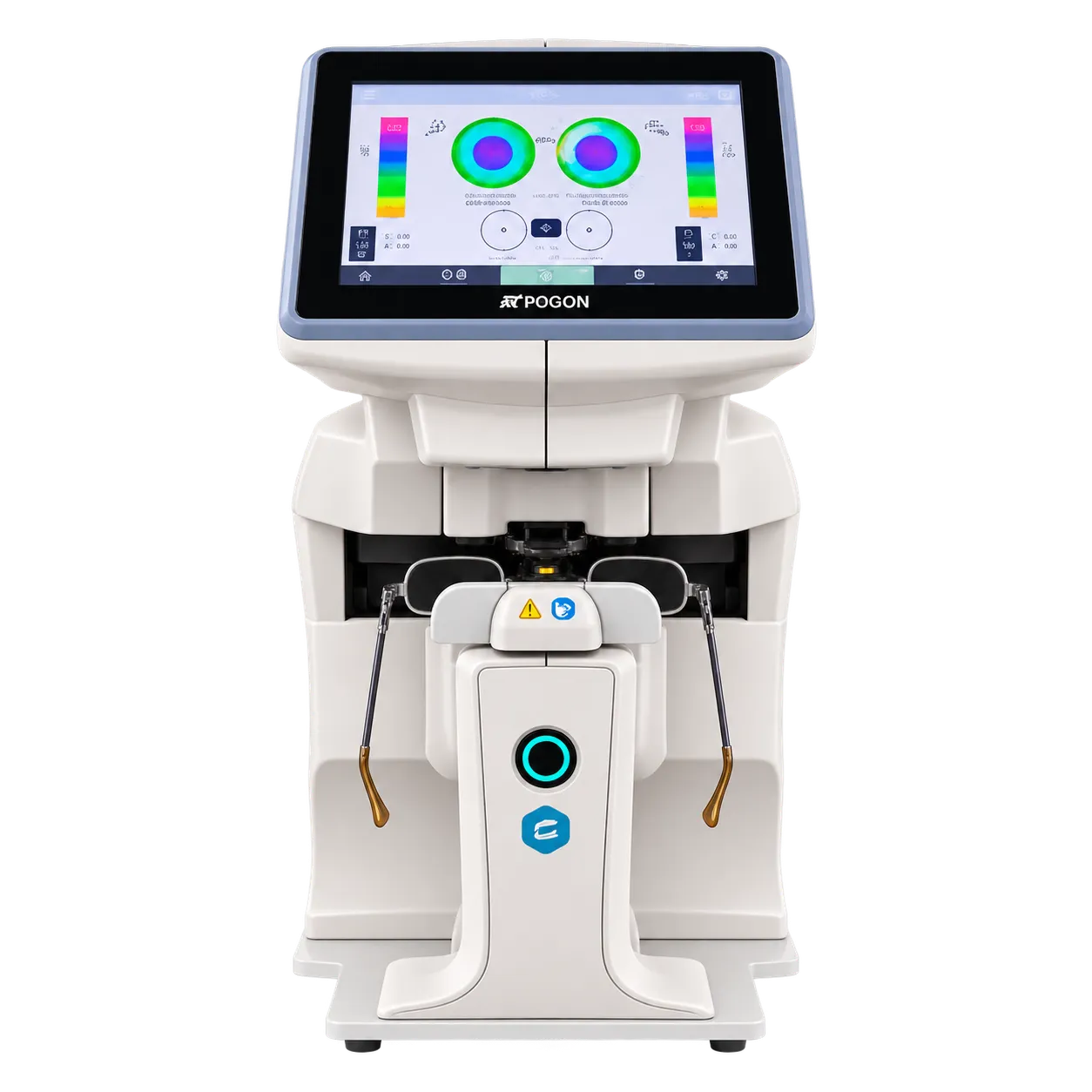
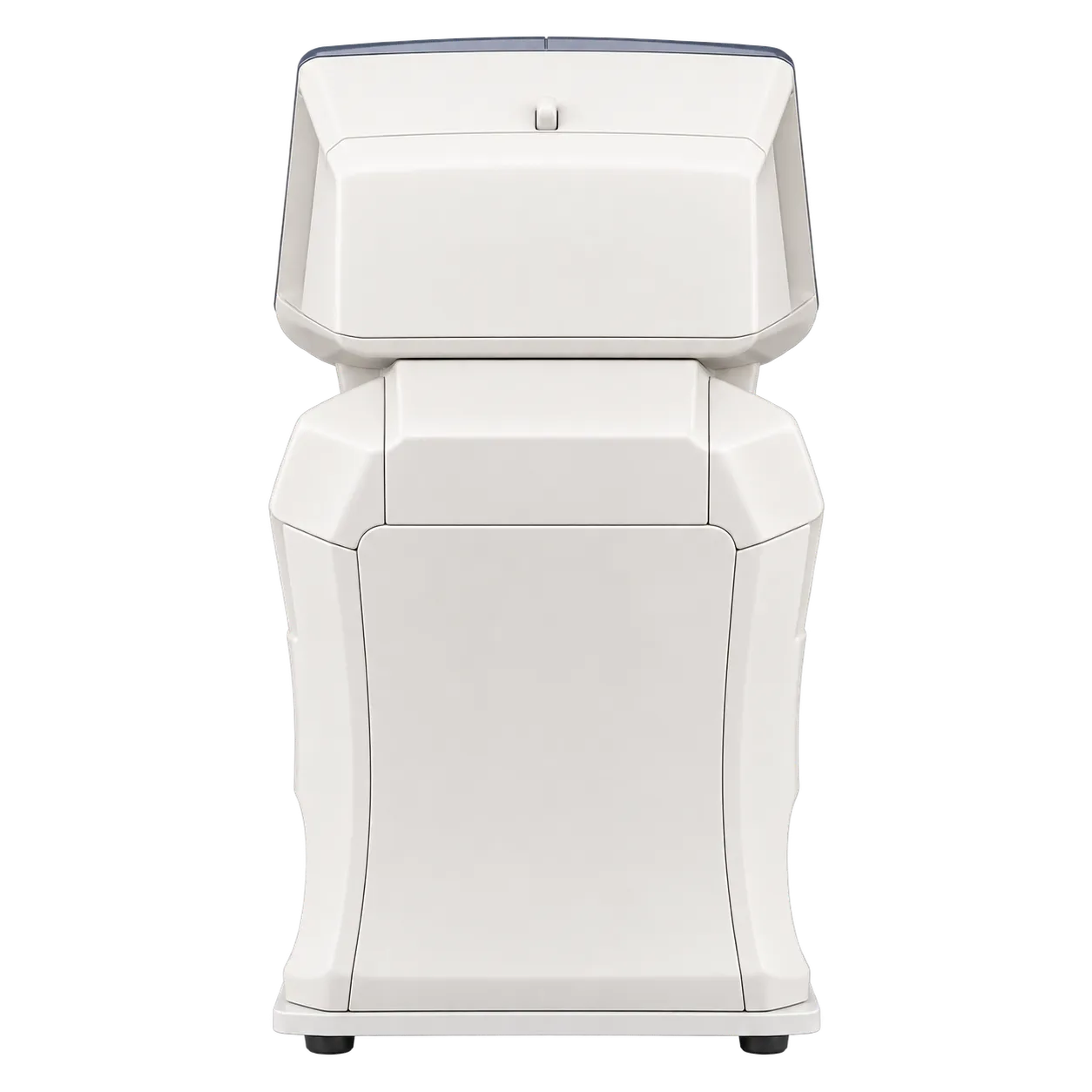
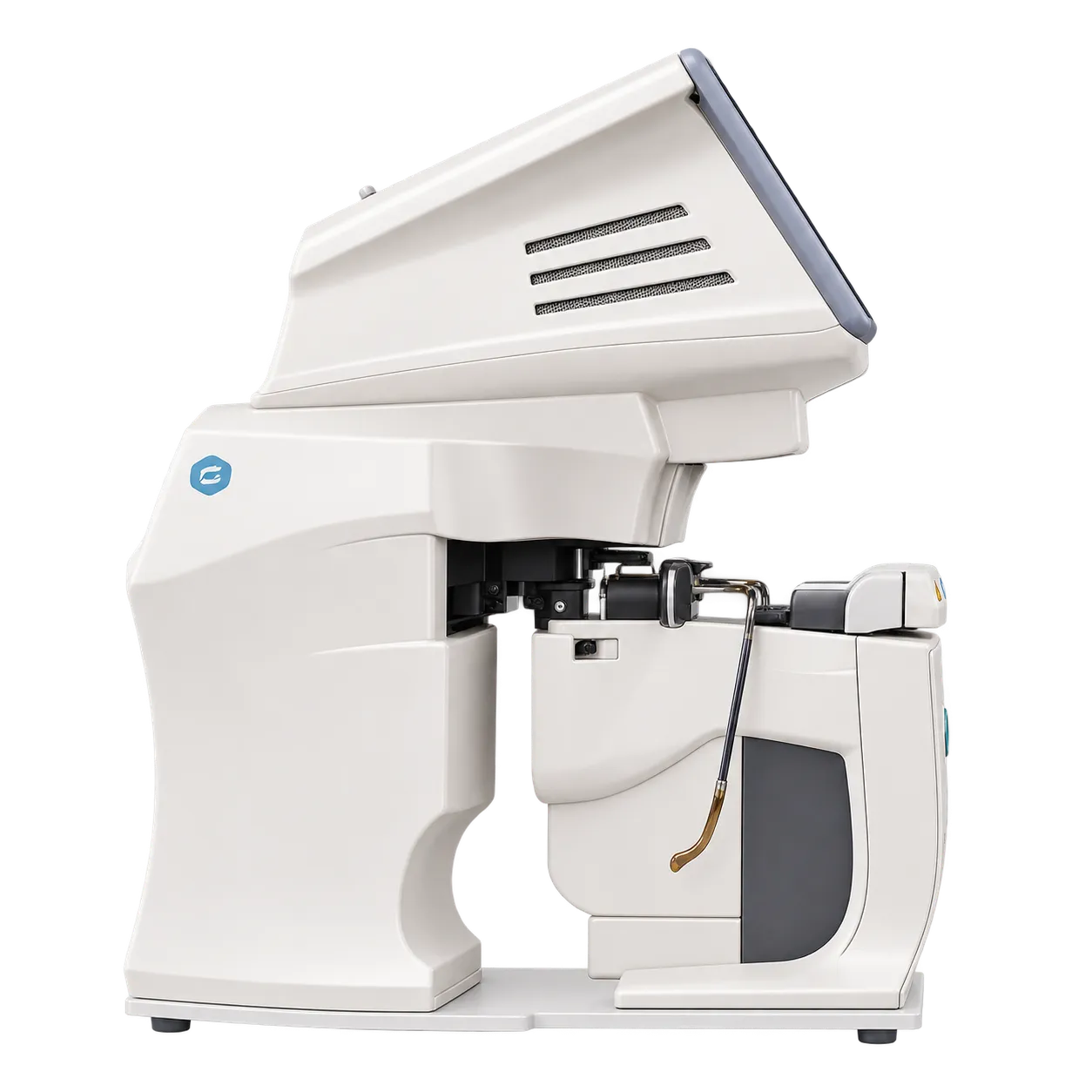
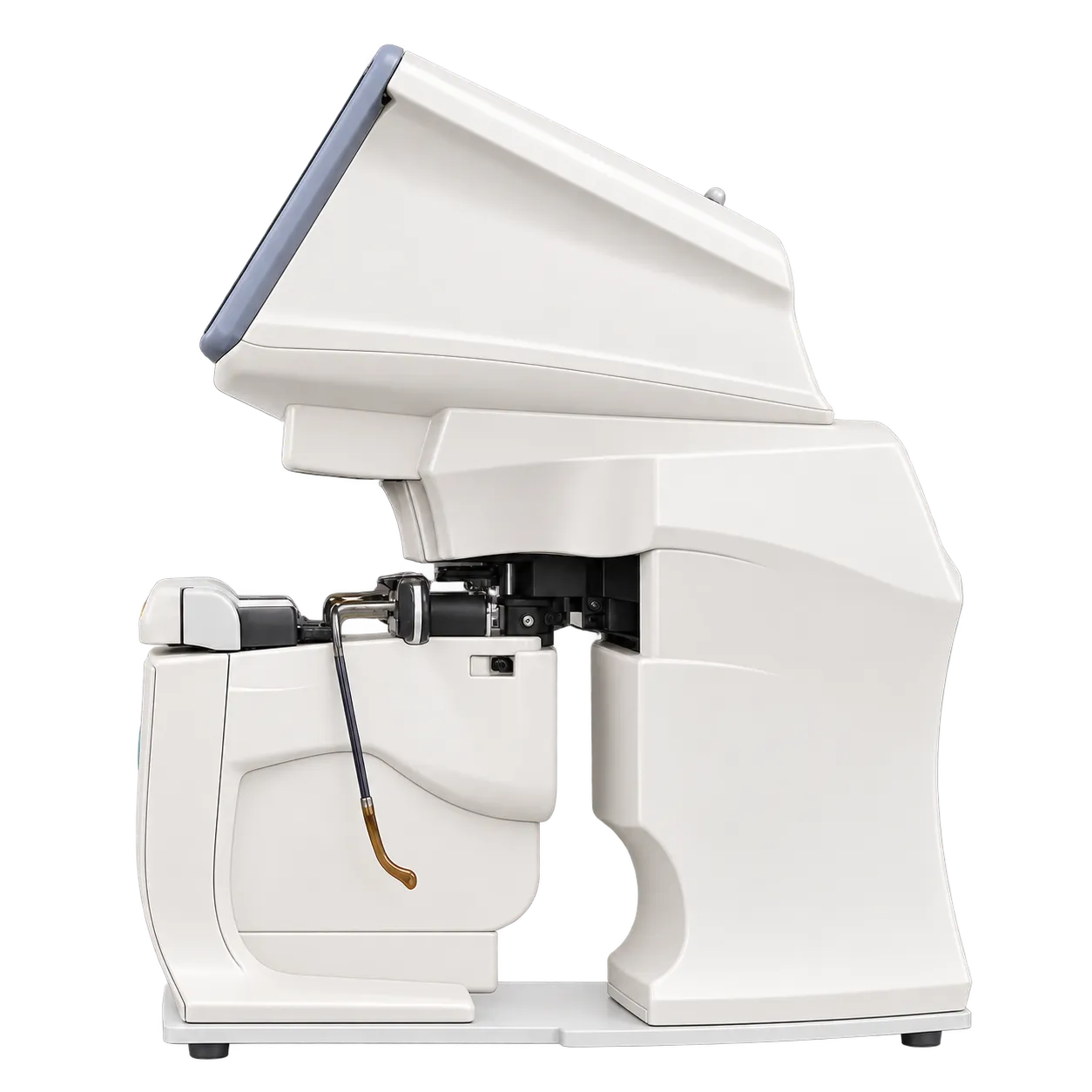
The SOLOS serves optometry practices, ophthalmology clinics, optical dispensaries, and lens-finishing benches. An operator places a pair of glasses on the stage and touches the screen. The instrument positions each lens, detects its type, measures both lenses in the frame and marks the optical centre and axis, so one action replaces positioning, type selection and marking at the bench.
Before an examination, the measured power of a patient's current spectacles gives the examiner a reference. After glazing, the same measurement confirms that the finished pair matches the order, and lens mapping shows how power runs across a progressive lens. Uncut lenses follow the same routine, which suits the stage when blanks arrive from the laboratory.
Transmittance is the second reason to use it. The spectrometer measures UV-A, blue light, and visible light from 315 to 800 nm, and CIE chromaticity describes a lens's tint. A dispenser can show a patient a measured coating or tint value, and the printed or PDF record keeps that value with the file.
In a connected practice, LAN and Wi-Fi send results to an EMR, the Topcon CV-5000S digital phoropter, or the Chronos binocular refraction system. Hence, figures reach the refraction room without retyping. The same instrument reads pupillary distance in mono or bino form, and the 7-inch touchscreen keeps every result in view.
For a dispenser handling many pairs a day, the savings come from fewer separate actions. Each pair needs a single touch, where positioning, lens identification, and marking were once three tasks, and the measured values, map, and transmittance figures stay on one screen.