
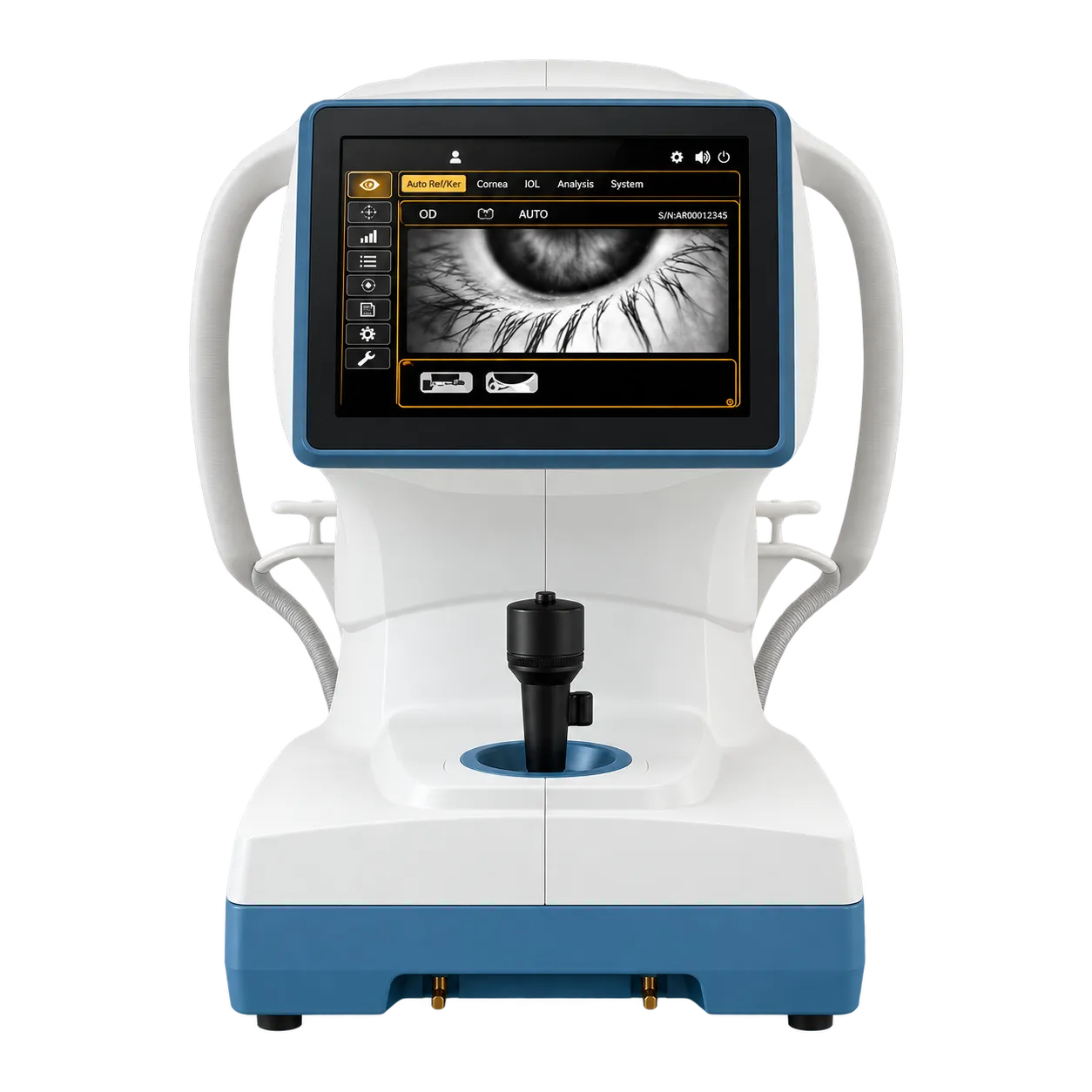
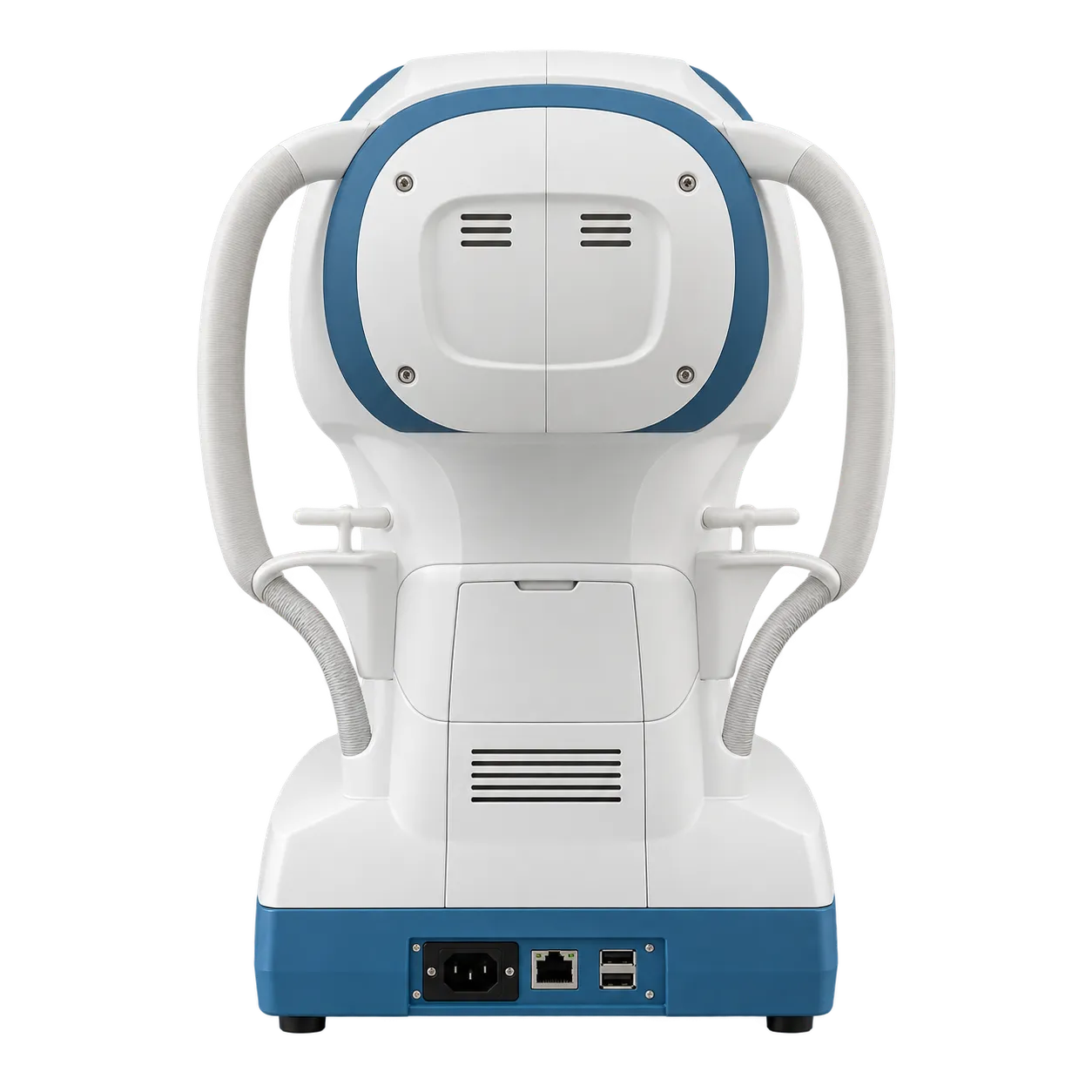
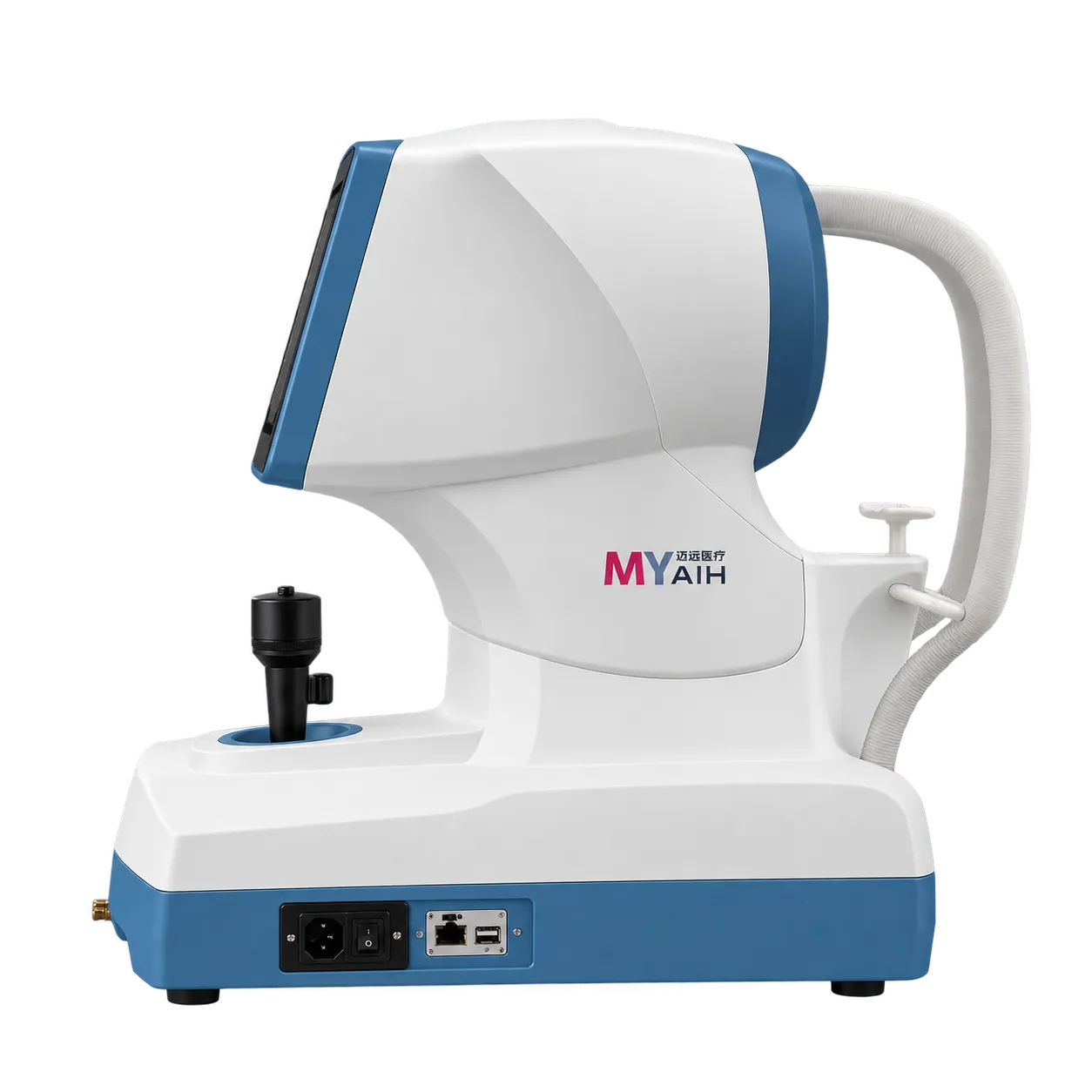
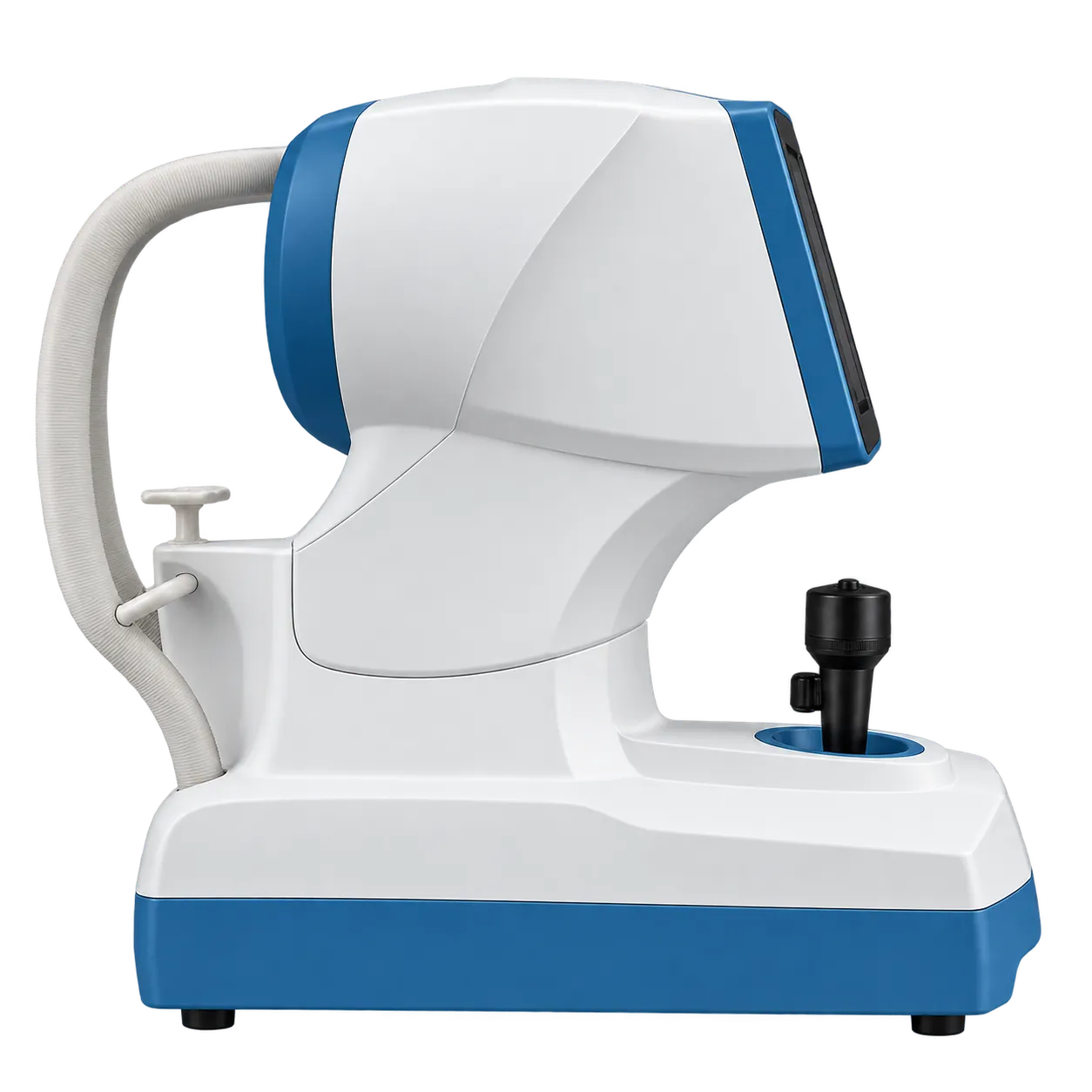
Myopia management clinics, dry eye clinics, optometry practices and contact lens practices use the MYAH to measure the eye and track change between visits. Optometrists, ophthalmologists and ophthalmic technicians operate it from the touch screen, and the results inform myopia follow-up, ocular surface assessment and lens fitting.
Myopia management rests on repeat measurement. Axial length from 15.00 to 36.00 mm is captured at 0.01 mm resolution with ±0.03 mm in vivo repeatability, and Rx/AL trend analysis plots axial length against refraction for each patient. Progression reports and corneal power trends sit beside the topography, so each visit adds a point to a record kept in the same platform.
Dry eye work uses the same instrument. Non-invasive tear break-up time, meibography, tear meniscus height and blink analysis cover the ocular surface, and fluorescein image and video add a record of the tear film. Meibomian gland area of loss is reported as a percentage, which gives a figure that can be compared from one visit to the next.
Contact lens practices draw on the topography and the lens database. Conventional RGP and Ortho-K lenses can be selected, fluorescein simulation shows the fit, and topography can be exported to third-party calculators. Keratoconus screening, Zernike analysis and pupillometry in four lighting modes complete the corneal and pupil record.
The unit weighs 18 kg and works at 10 to 40 °C and 8 to 75% relative humidity, non-condensing, so it sits on a stable table in a consulting or pre-test room. Records can be reviewed from any connected PC on the network, and reports can be printed or saved as a PDF, which lets the results of each visit reach the clinician and the patient file.