
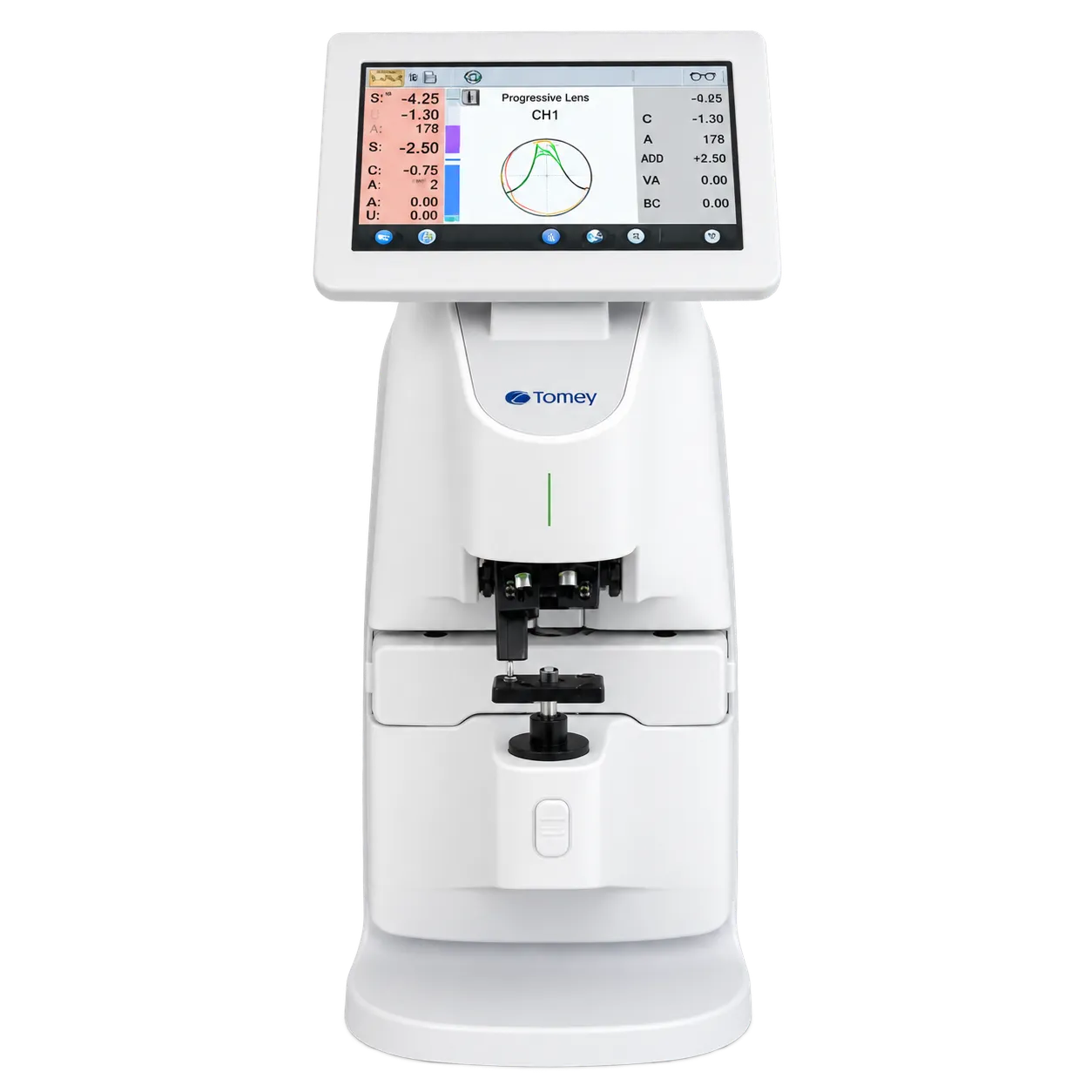
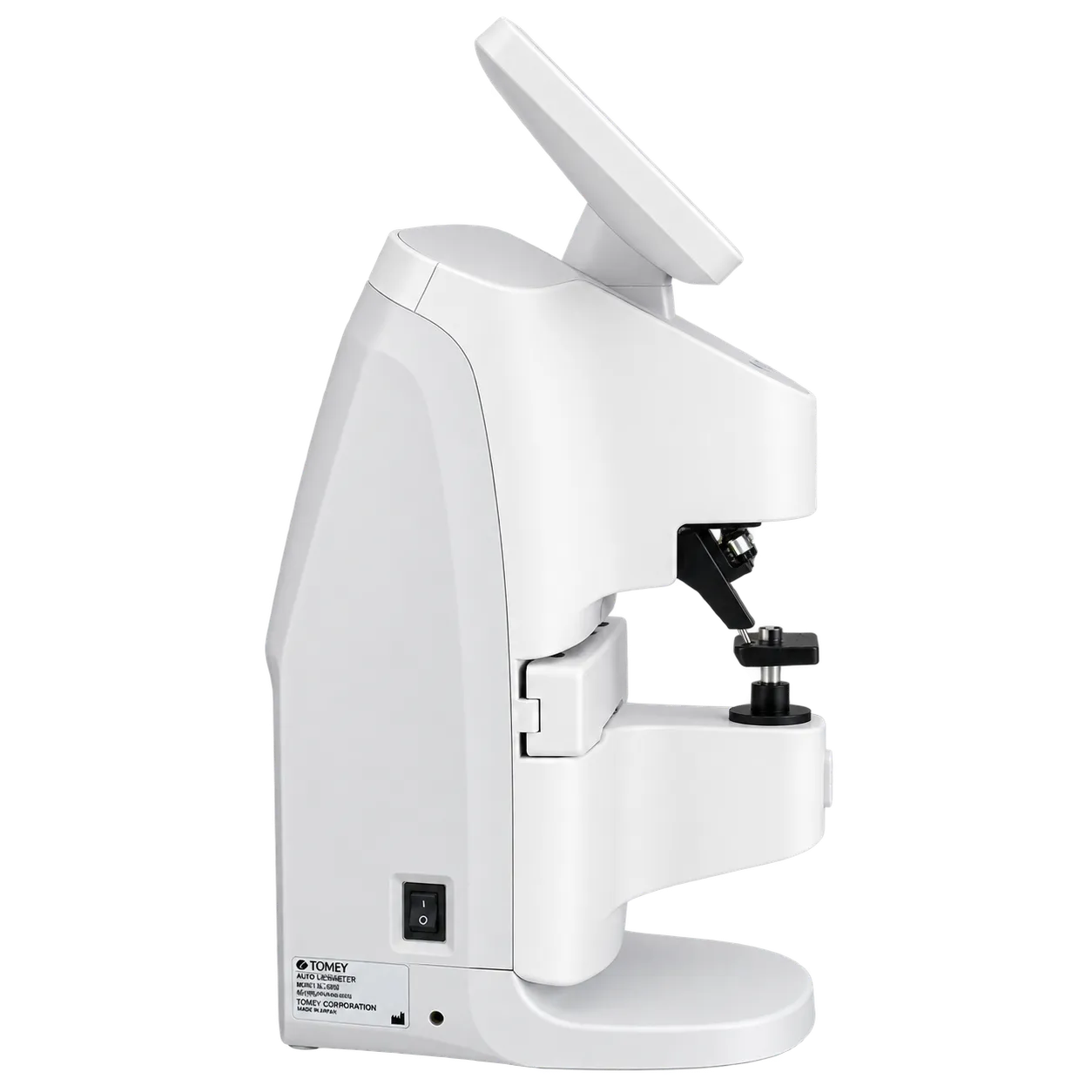
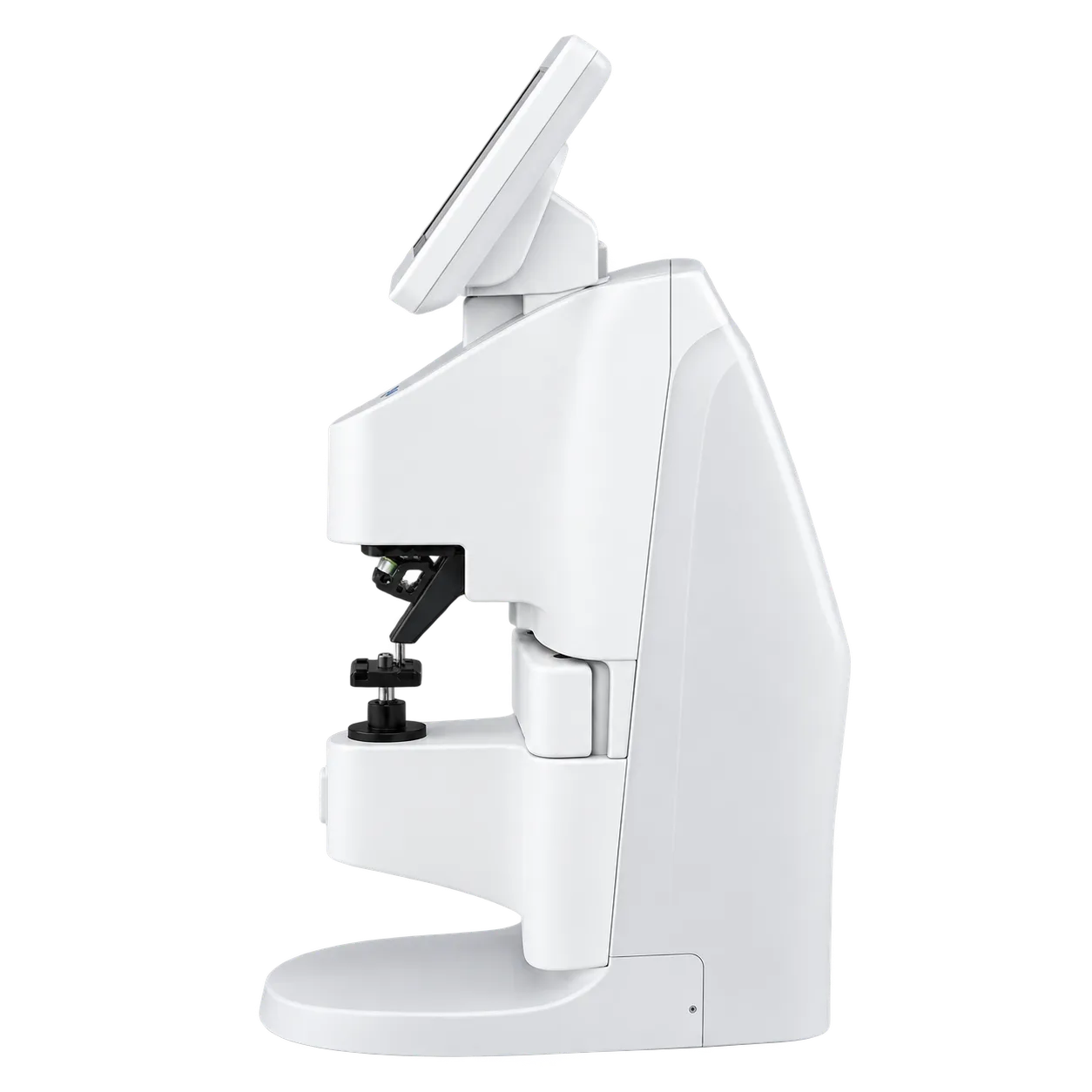
Optometry practices, ophthalmology clinics, dispensing opticians and optical retail use the SOLOS wherever spectacles and lenses are measured, checked or marked. Optometrists and ophthalmologists read a patient's current spectacles before refraction, dispensing staff check a finished pair at collection, and glazing technicians mark uncut lenses before edging.
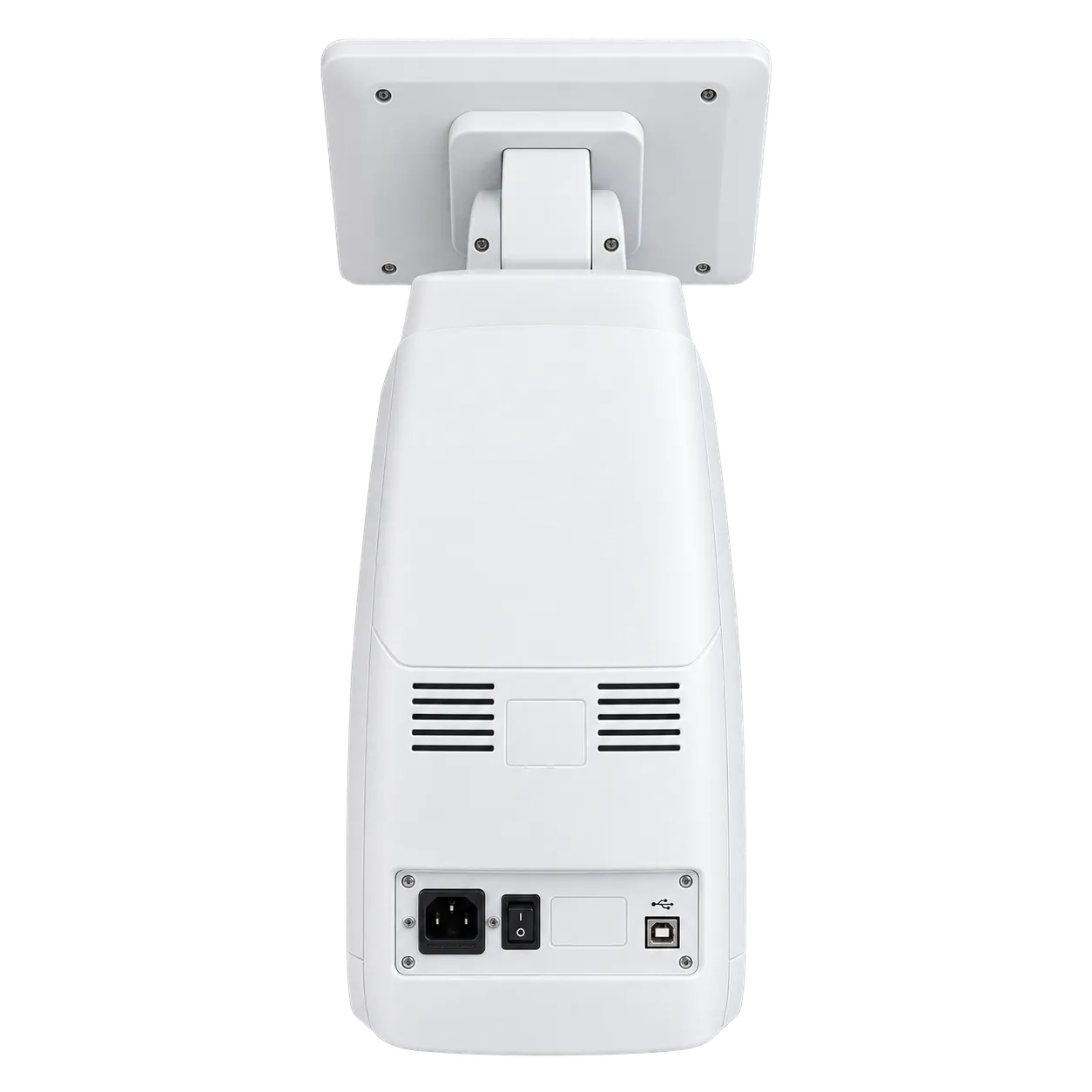
The value for a busy practice lies in what the instrument takes over. Because it handles positioning, lens recognition, measurement, and marking itself, trained support staff can take the readings. Every reading follows the same automated steps, whoever starts it, which suits practices that spread measuring across several staff. Results travel over LAN or Wi-Fi to the EMR, a CV-5000S digital phoropter or a Chronos binocular refraction system, which keeps the figures in the record exactly as measured. Single lens, spectacle, and comparison reports are left as PDFs or printed on the internal thermal printer.
Progressive lenses get particular attention. Power and distortion maps show where vision stays clear and where it distorts, and comparison mode sets two lenses side by side, so a practitioner can show the wearer how a new design differs from the old pair. The spectrometer then quantifies UV-A, blue, and visible light transmittance from 315 to 800 nm, and its graph turns a conversation about protective coatings into figures the wearer can see. Chromaticity values give a tinted or sun lens a measured colour.
Sphere reaches ±20 D, cylinder ±10 D, and addition ±4 D, and single lenses from 22 to 80 mm fit, framed or uncut. Its 245 × 354 mm footprint suits a dispensing bench or a pre-test room, with LAN or Wi-Fi carrying results onward.