
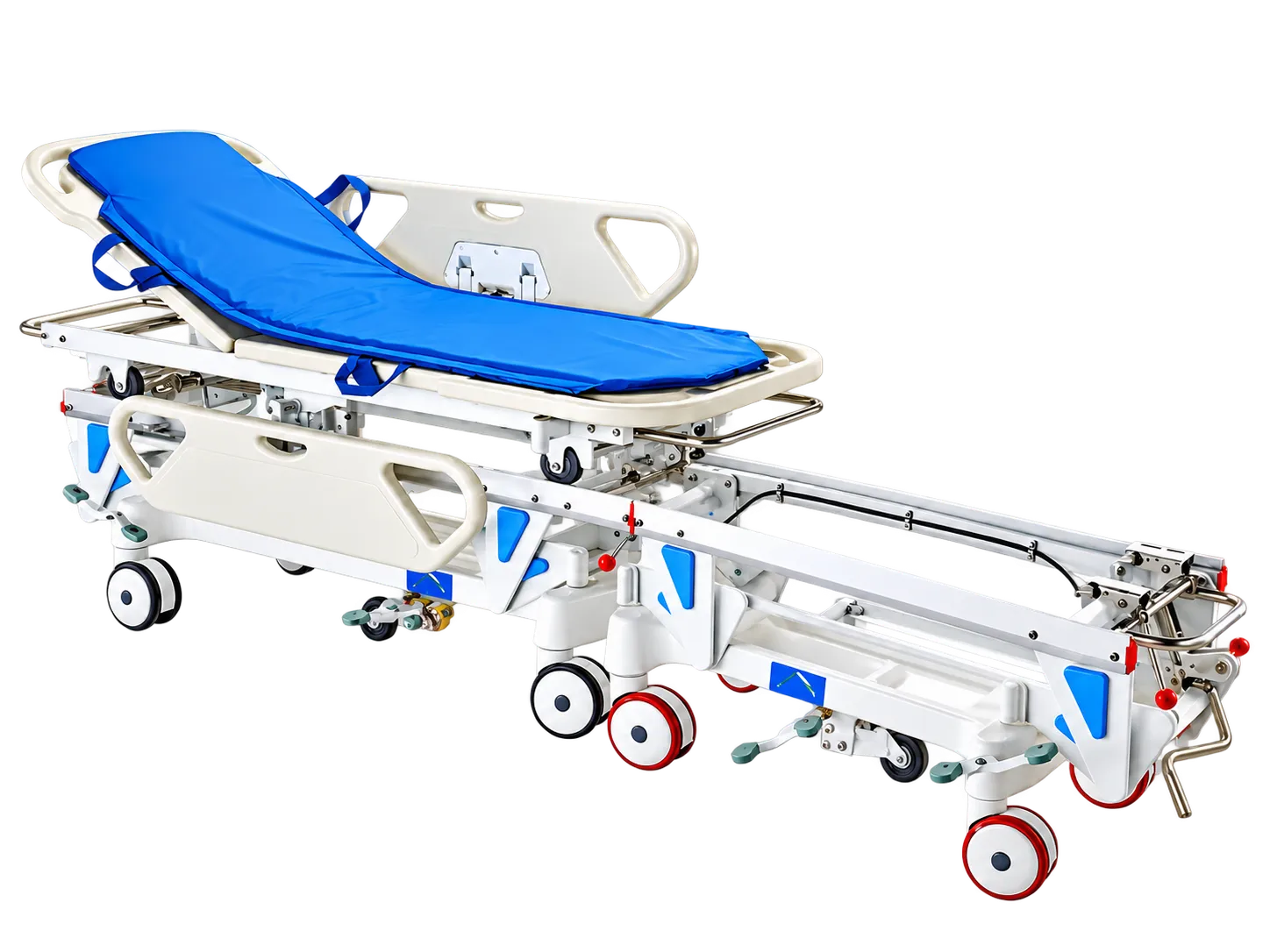
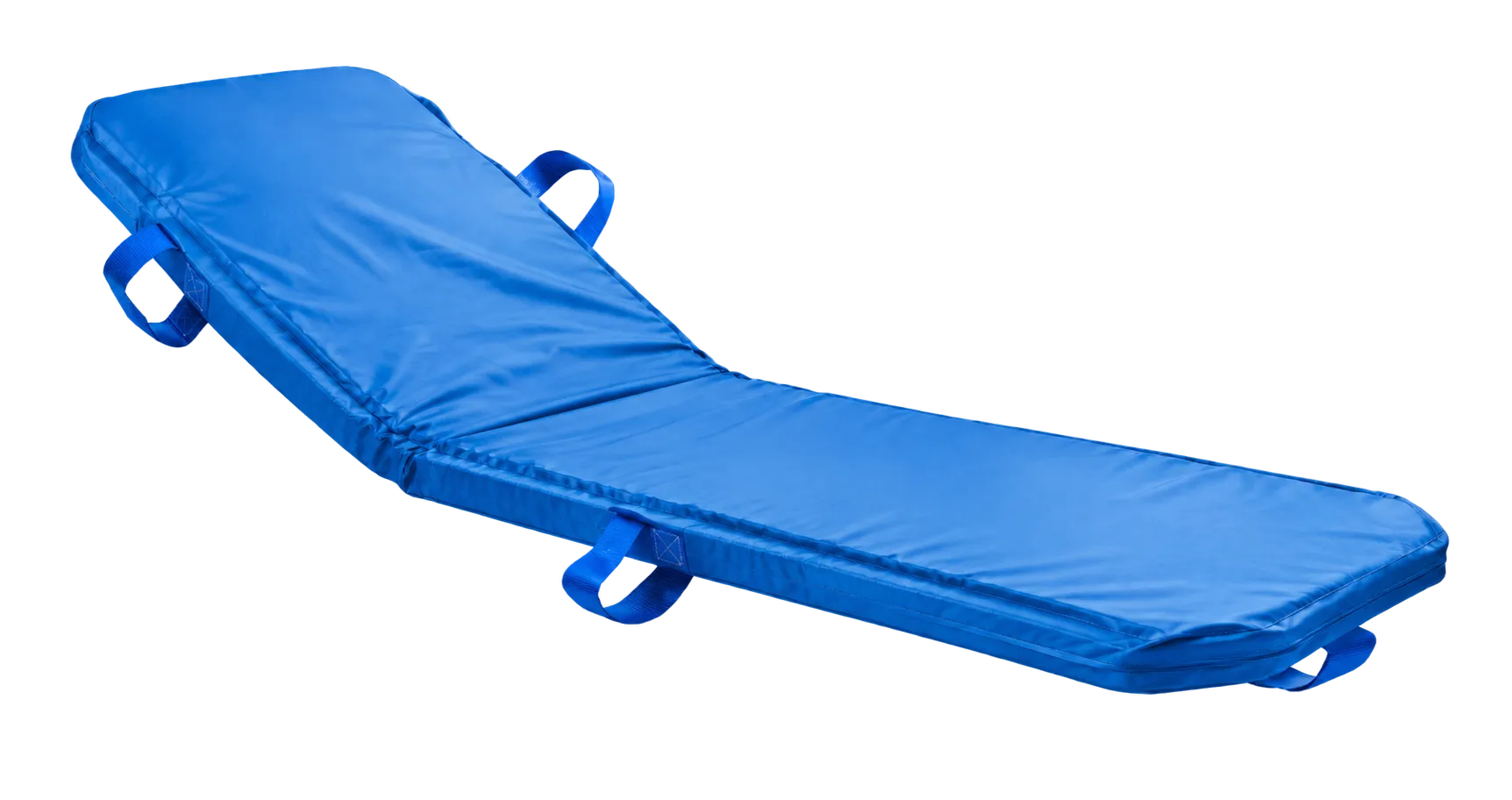
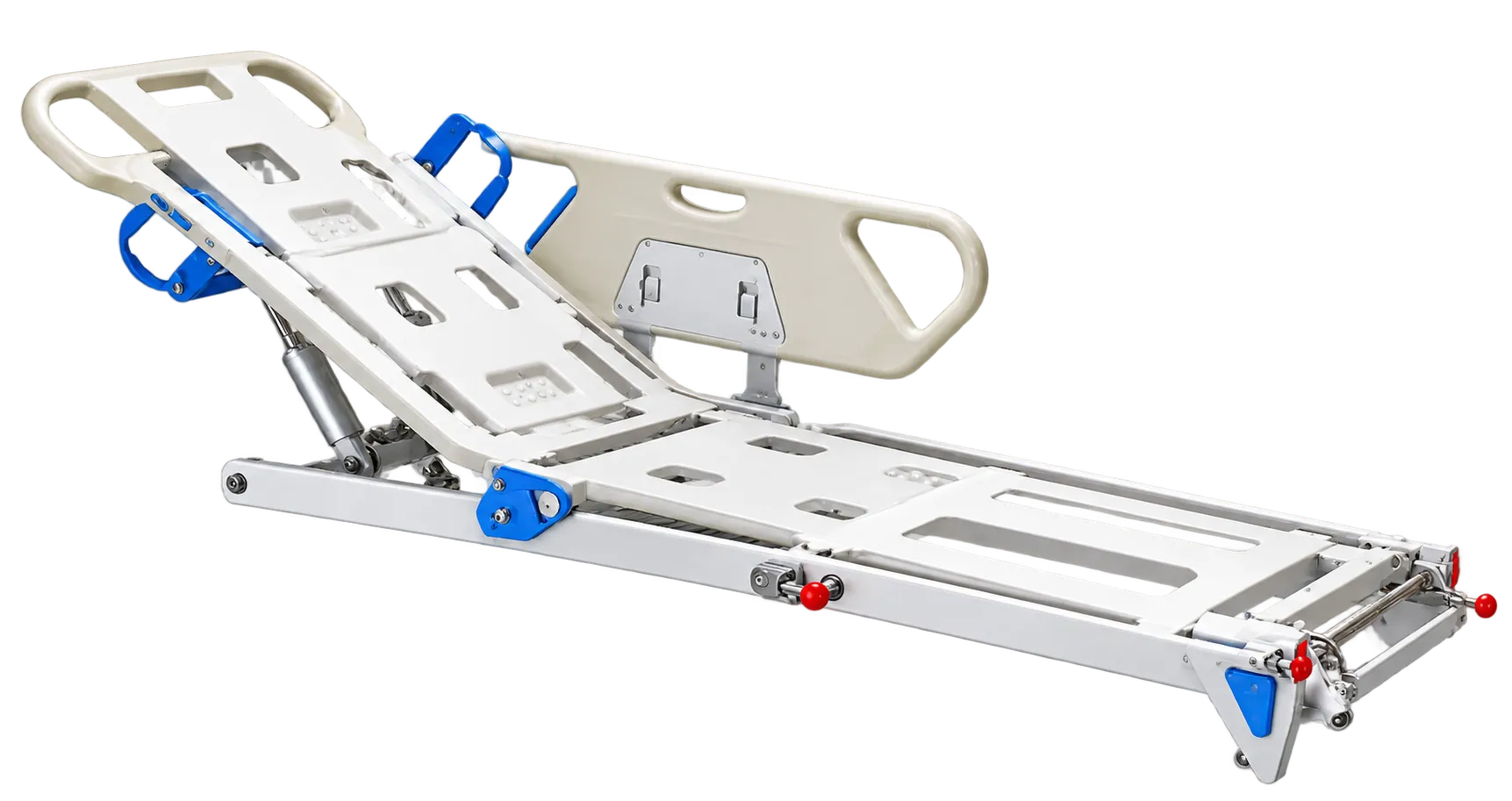
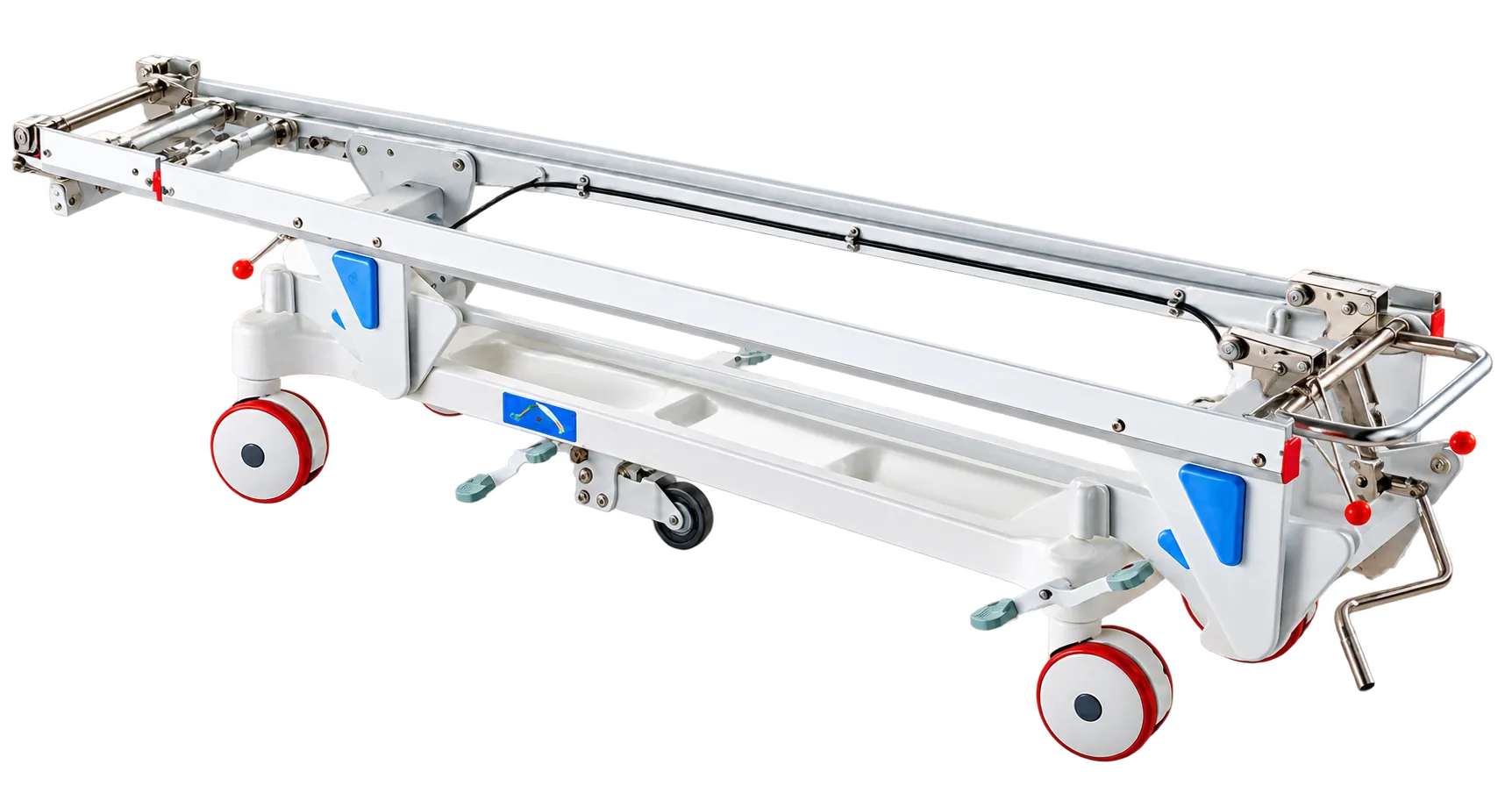
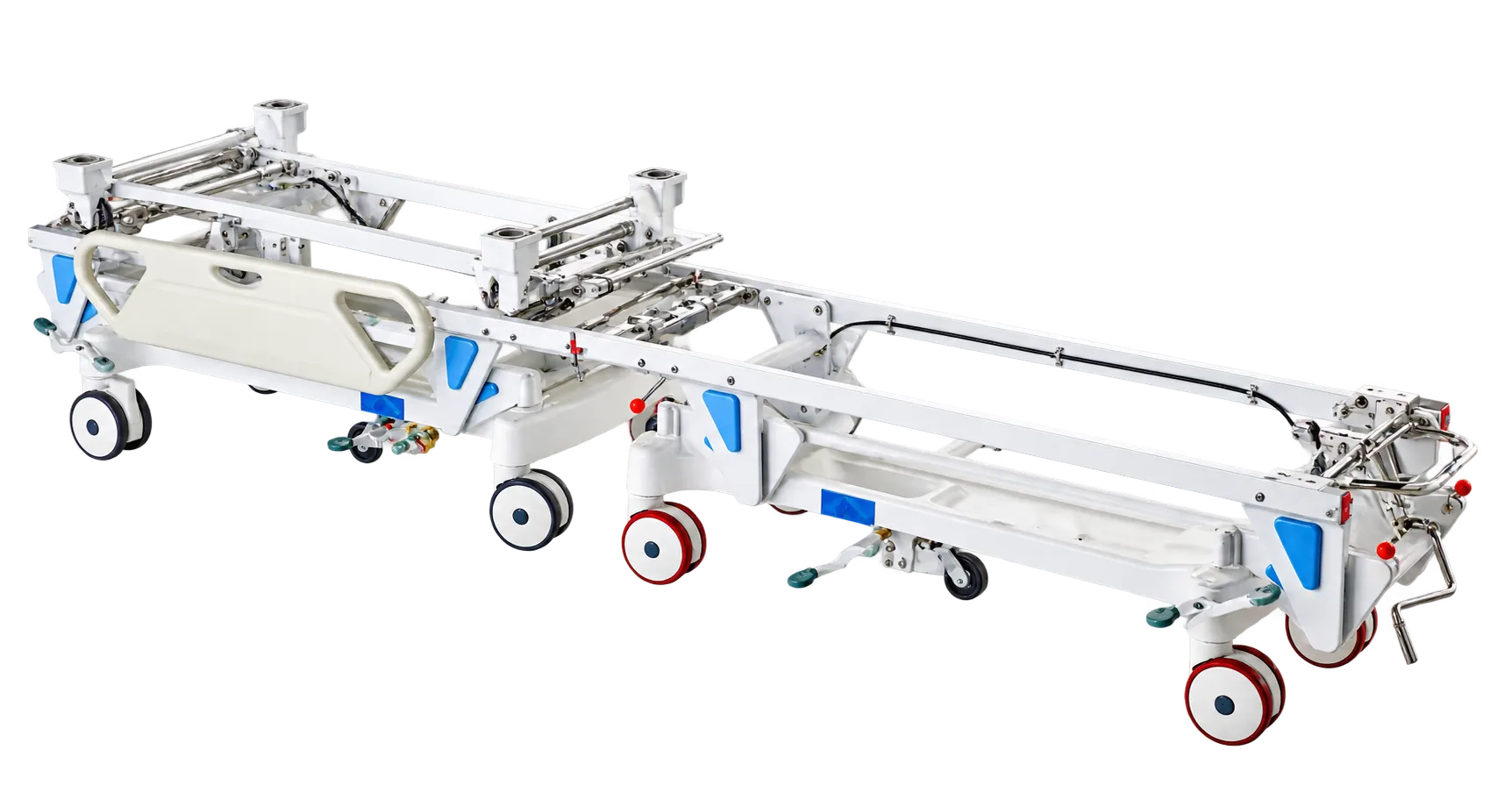
The E-1 is specified for the theatre transfer point: the boundary where a patient leaves ward equipment and continues on theatre equipment, in departments that operate a transfer zone under local policy.
The manual handling case is the strongest one. Lateral transfer of a sedated or premedicated adult is consistently identified as the highest-risk moment in the theatre pathway for both patient and staff, and a patient crossing the boundary without a docking system may be moved laterally twice before reaching the table. A docking system replaces the first of those with a slide between two frames locked together at matched height, removing the lift rather than sharing it among more staff.
Equipment control is the second case. A frame that stays theatre-side is cleaned between cases to a theatre standard, maintained on a theatre schedule and inspected as theatre stock, rather than circulating through general ward use where its condition is nobody's particular responsibility.
Flow is the third. With two frames, the outside trolley can be released back toward the ward while the inside frame stays with the patient through reception and induction, which matters in a department running a tight list.
The infection-control case is the weakest, and departments should know that before buying. The Healthcare Infection Society found only very weak evidence that theatre trolley transfer systems affect contamination or surgical site infection, and made no recommendation in their favour. The conformity documentation that trust, Integrated Care Board and NHS Supply Chain procurement routes require is issued by the manufacturer and provided by the seller.