
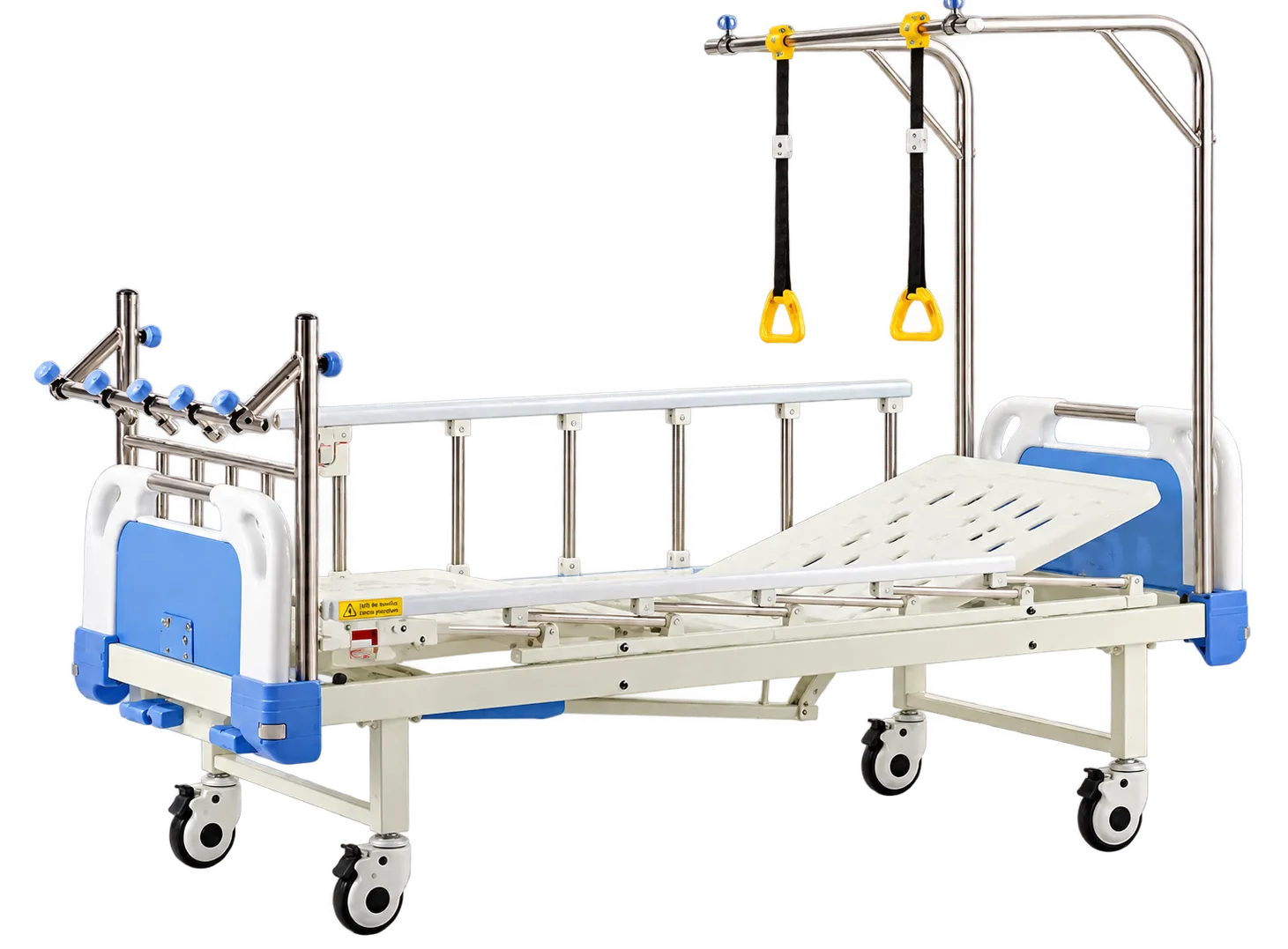
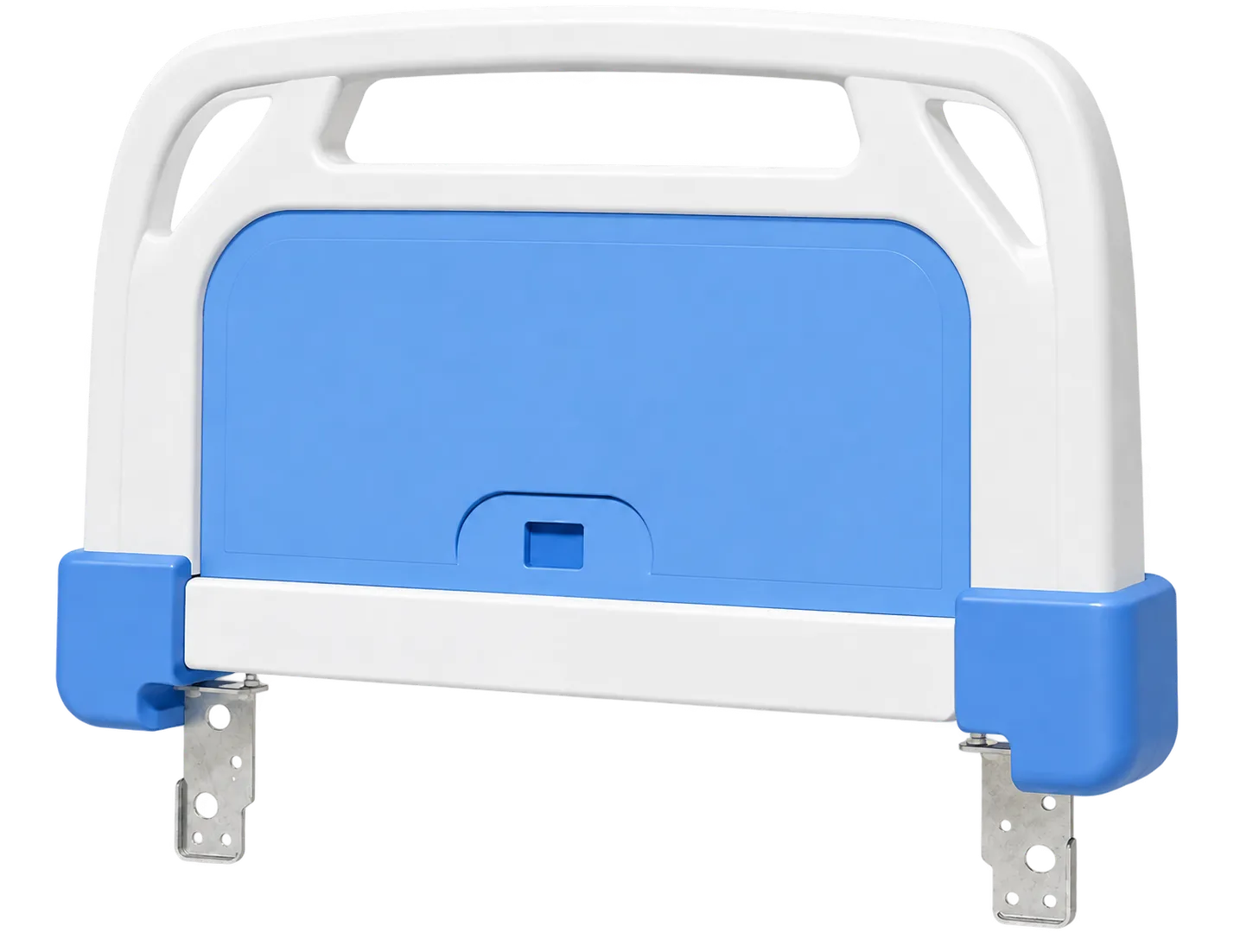
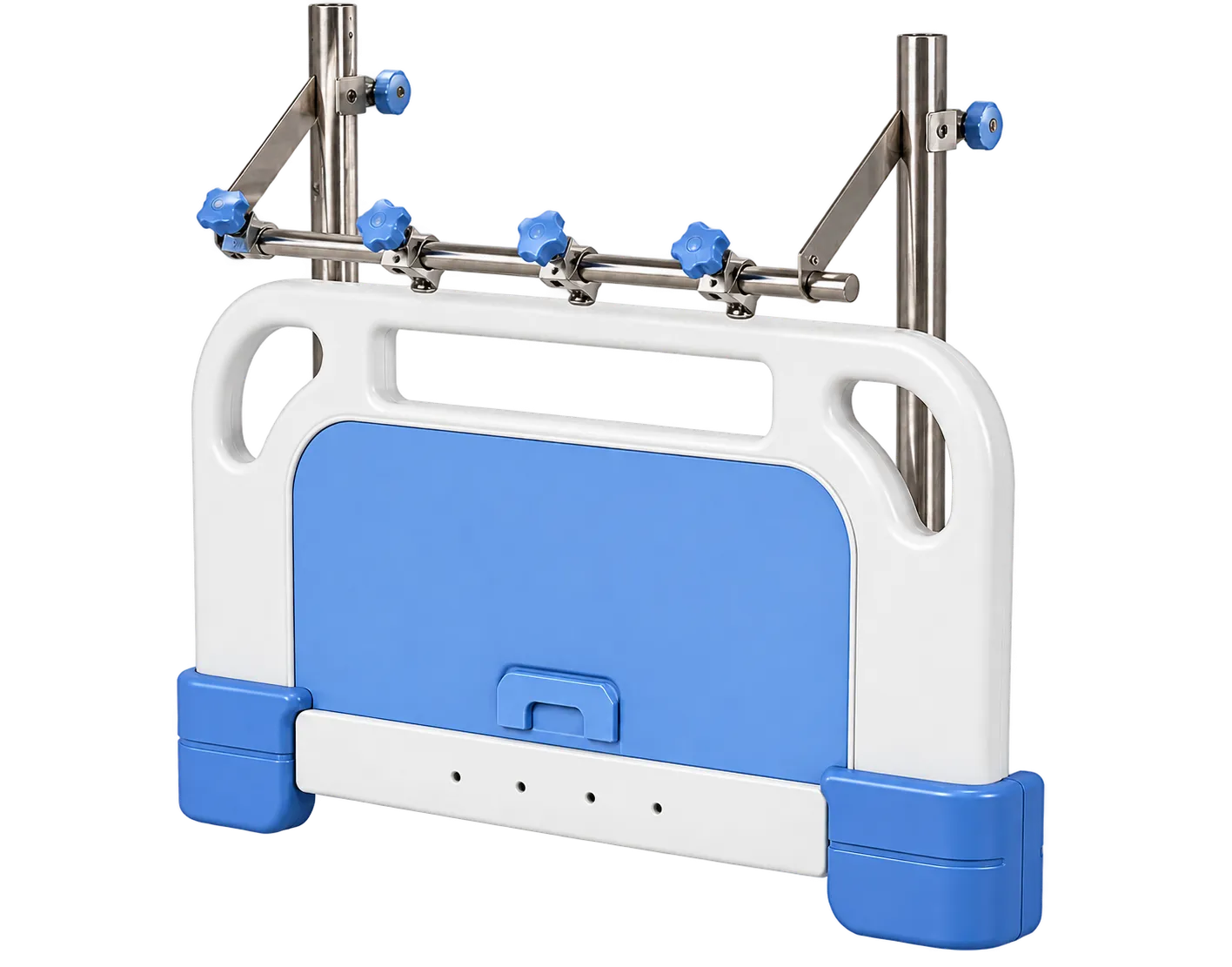
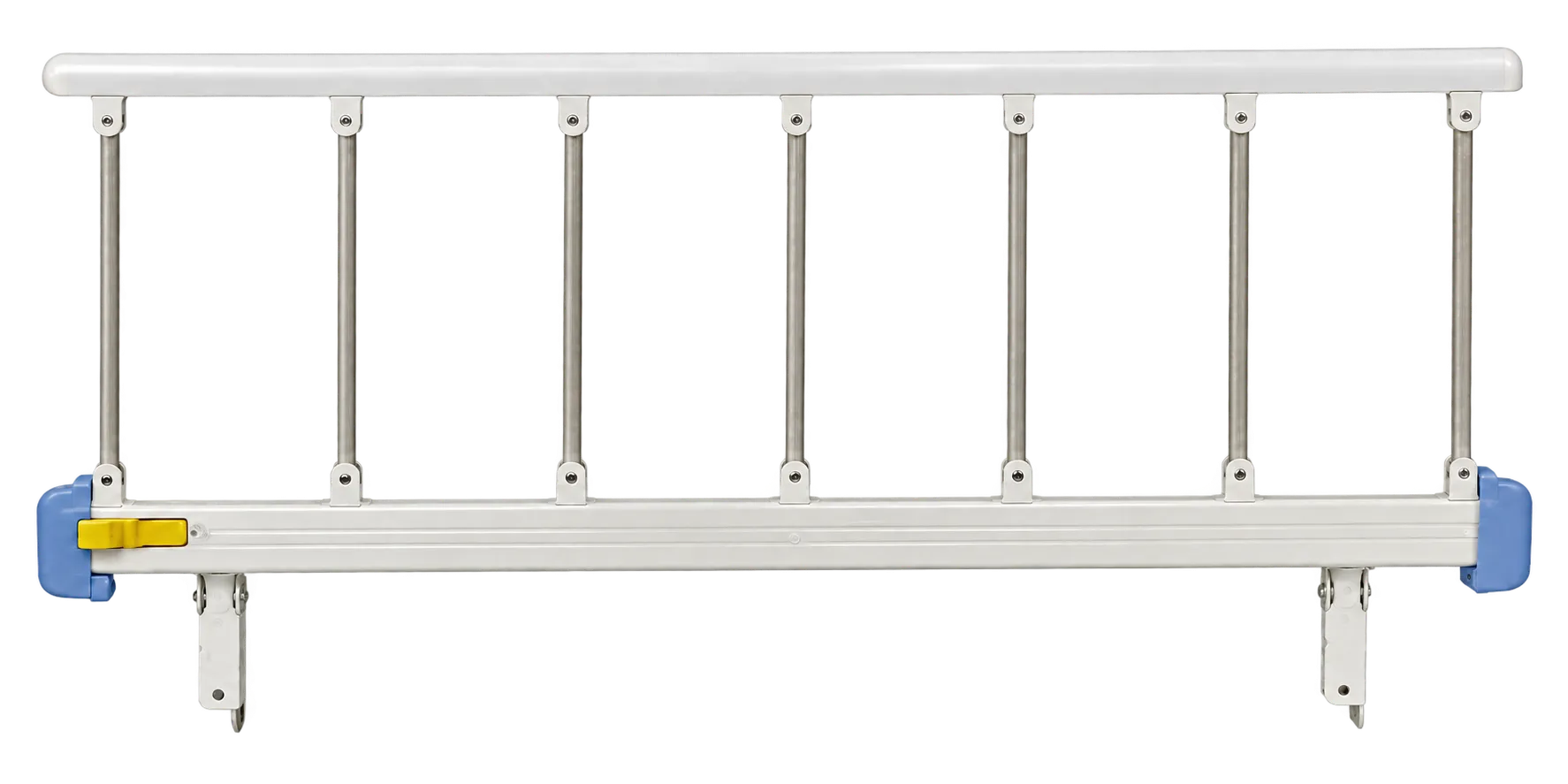
The QY-2 is specified for orthopaedic and trauma inpatient care: adults under fracture management, in skin or skeletal traction, or recovering from lower-limb surgery where the admission runs for weeks rather than days.
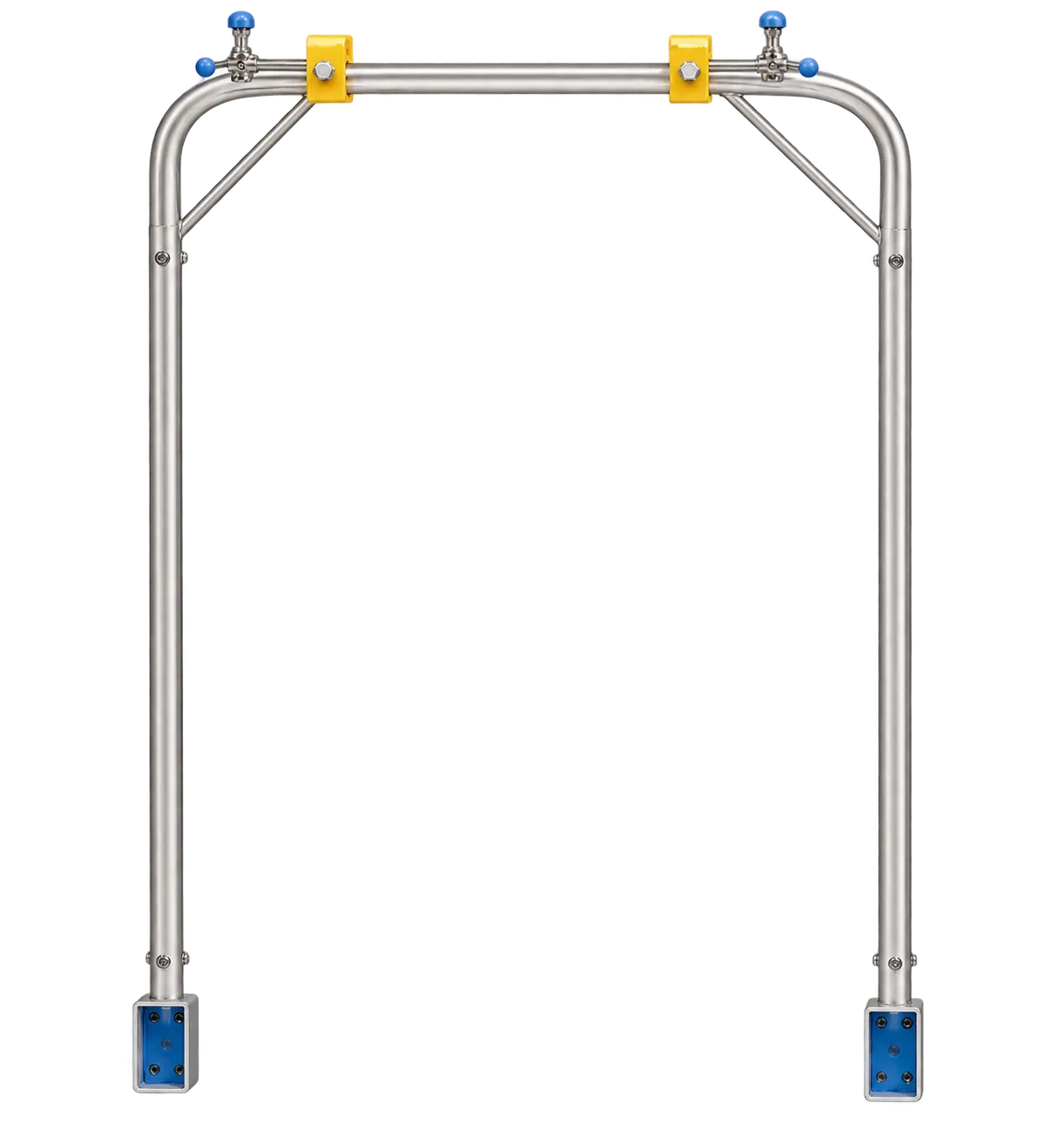
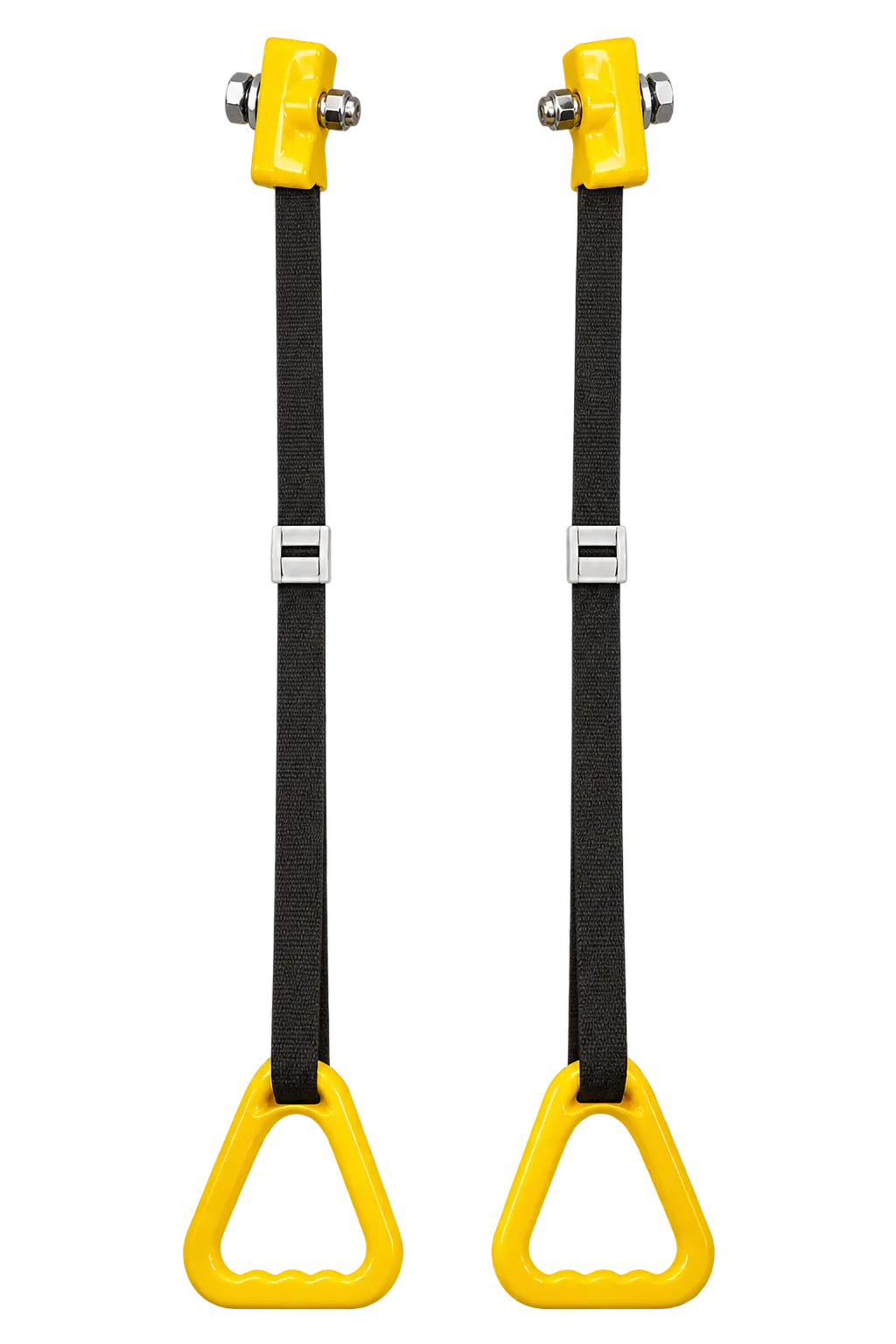
The overhead frame carries the clinical case. A patient immobilised by a fracture stays in the same bed for a long stretch, and every repositioning, bedpan use, and pressure-relief manoeuvre either involves staff or does not. Two triangle grips suspended within reach let a patient with adequate upper body strength lift their own weight and take load off their sacrum between scheduled turns. Over six week,s that is a large number of small moments of self-direction, and a large number of interruptions the ward does not absorb. The frame is also the mounting structure for traction apparatus, fixed on uprights rather than clamped on.
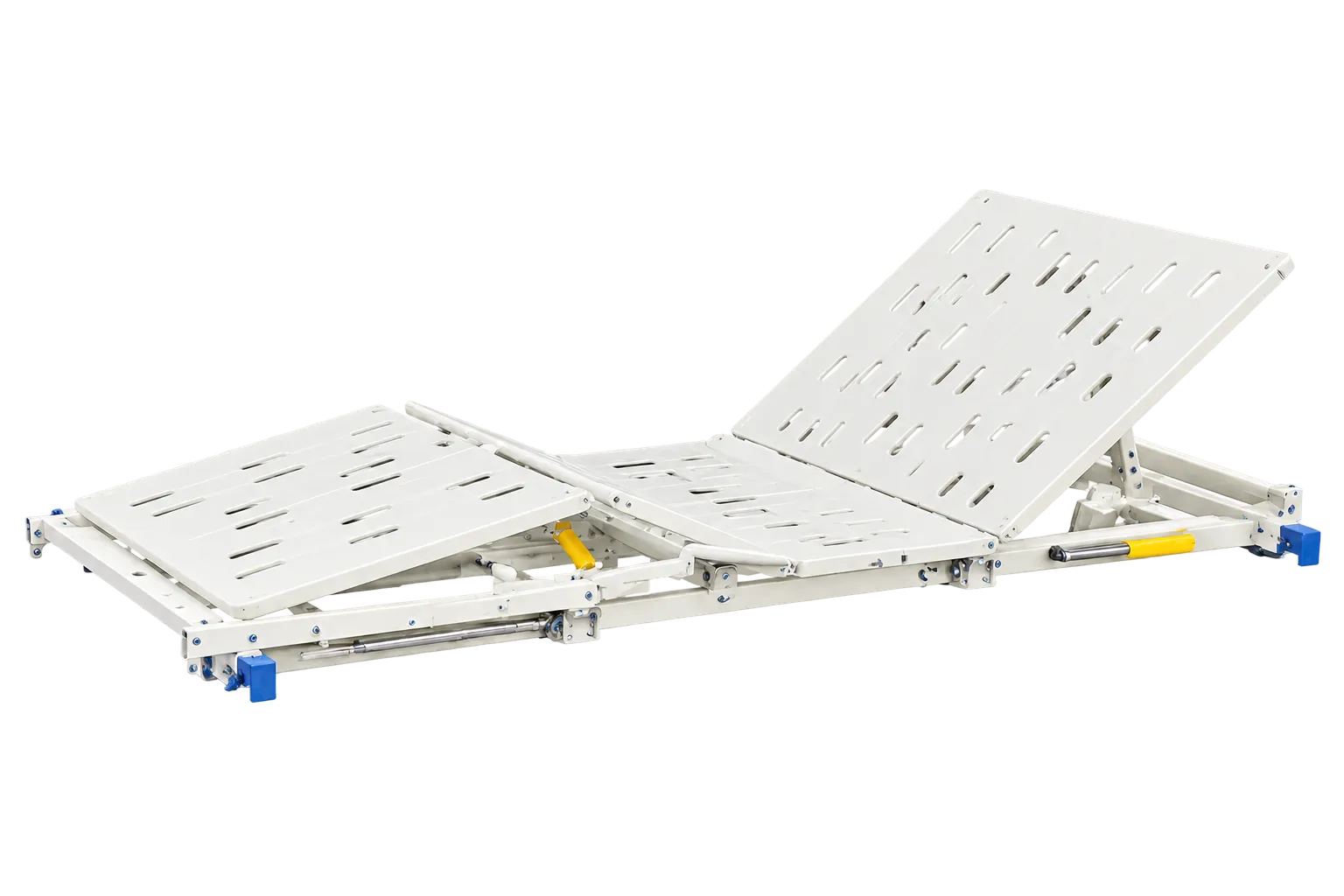
A backrest reaching the full Fowler sitting range supports eating, drinking, medication, respiratory comfort and conversation with visitors — all harder at a reclined angle, and all part of what a long orthopaedic admission is measured on.
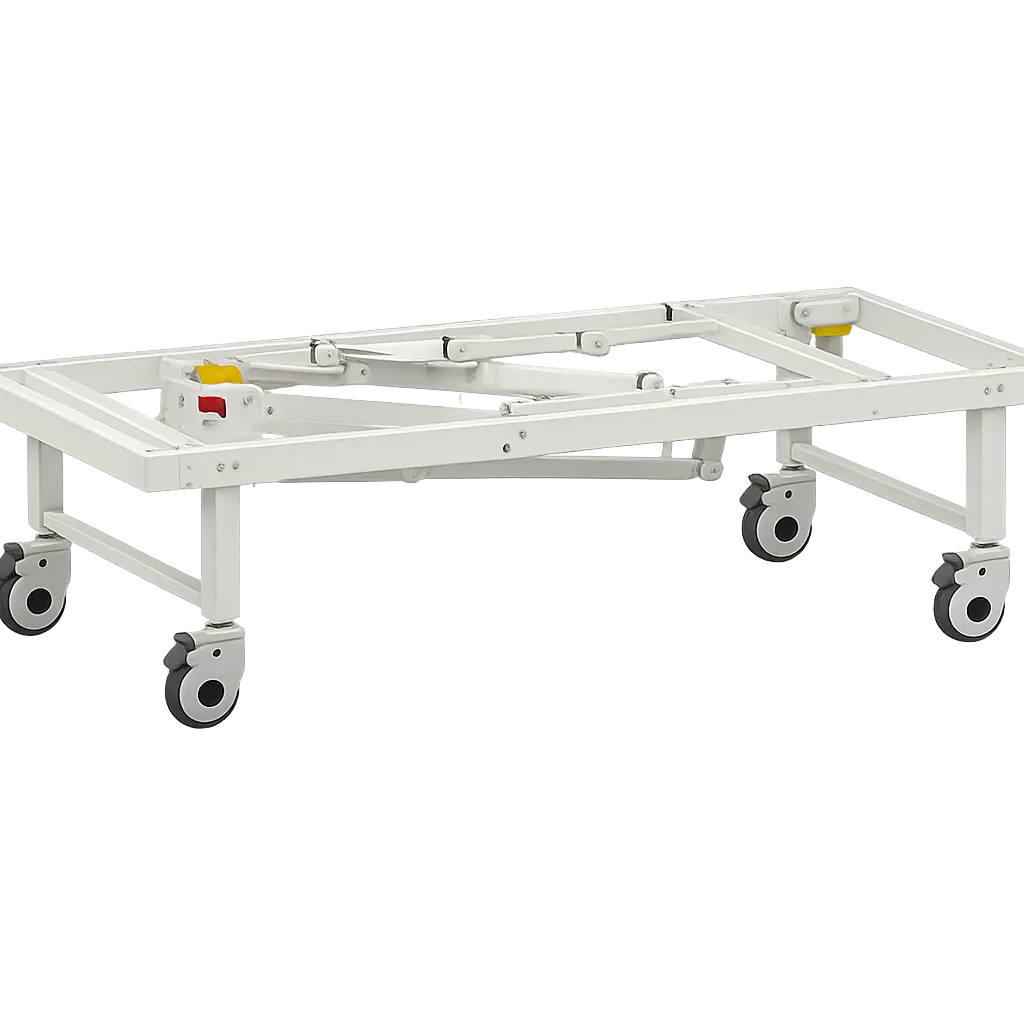
The fixed 500 mm deck is the counterweight and belongs in the assessme, notan the footnotes. With no carer-height position, personal care, wound care and pressure-relief work is delivered at one height throughout the admission. Wards with an established slide sheet and hoist regime absorb that; wards where staff deliver personal care unaided should weigh it carefully.
The longer footprint and overhead structure make this a poor fit for general ward use. The conformity documentation that the Trust, Integrated Care Board and NHS Supply Chain procurement routes require is issued by the manufacturer and provided by the seller.