
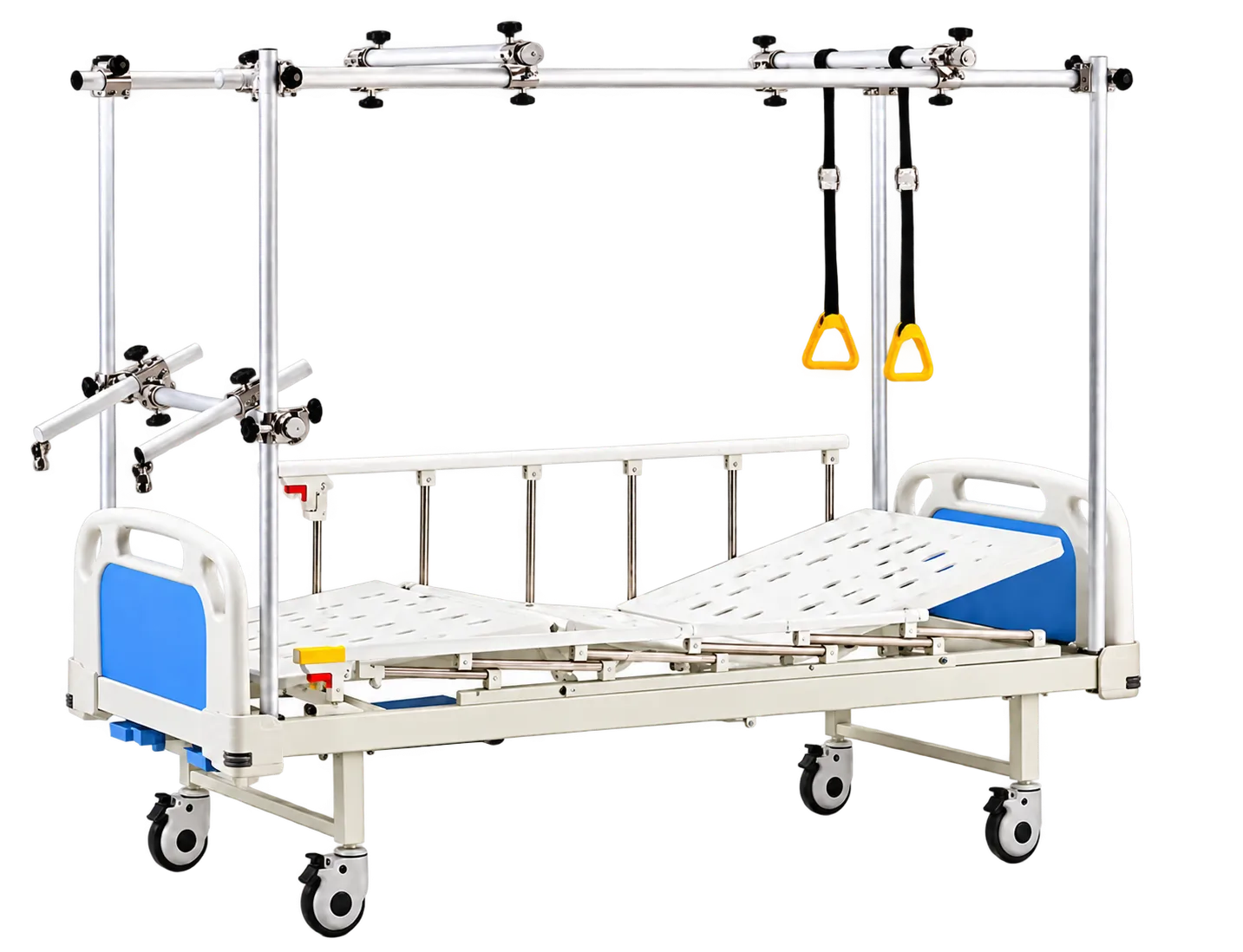
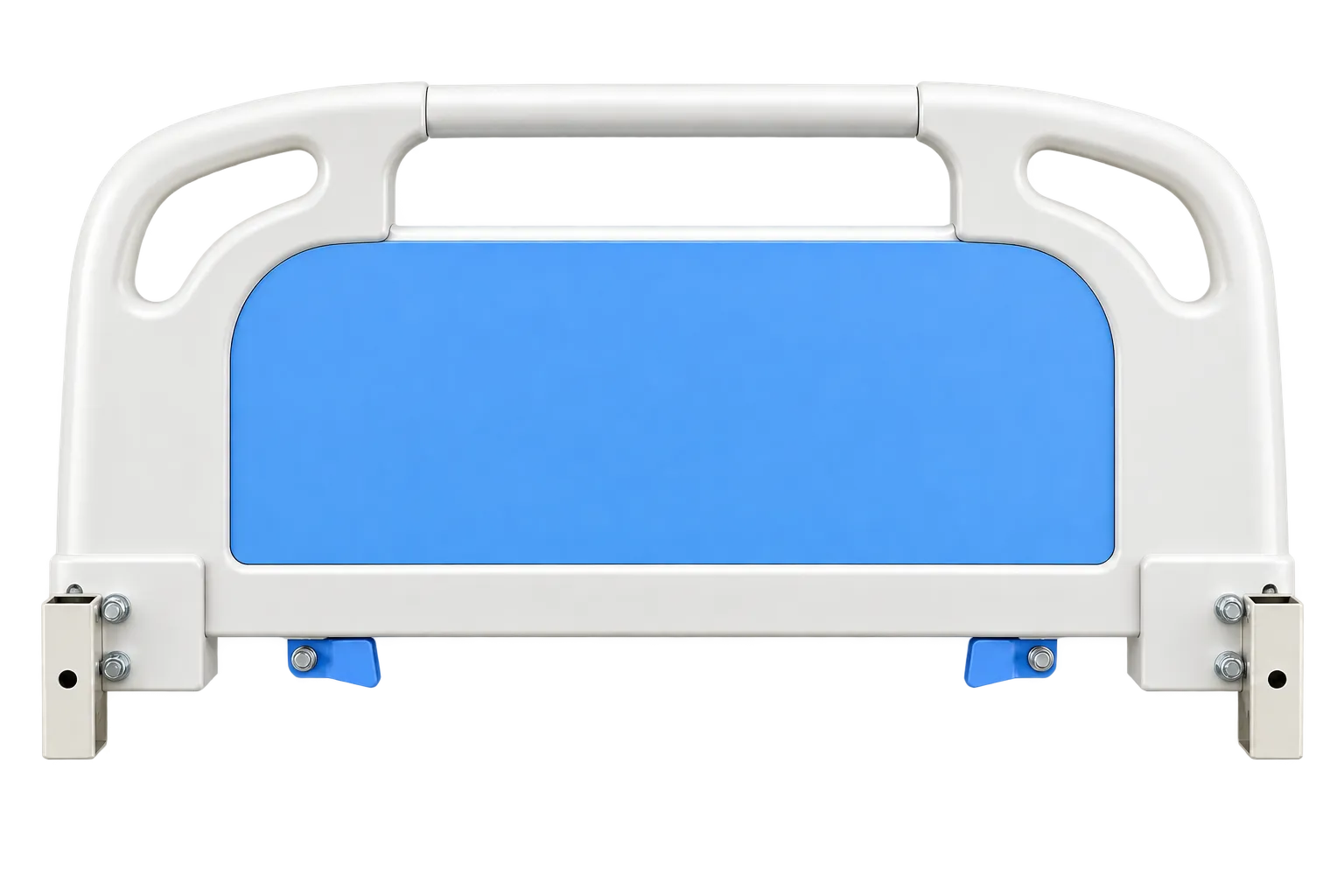
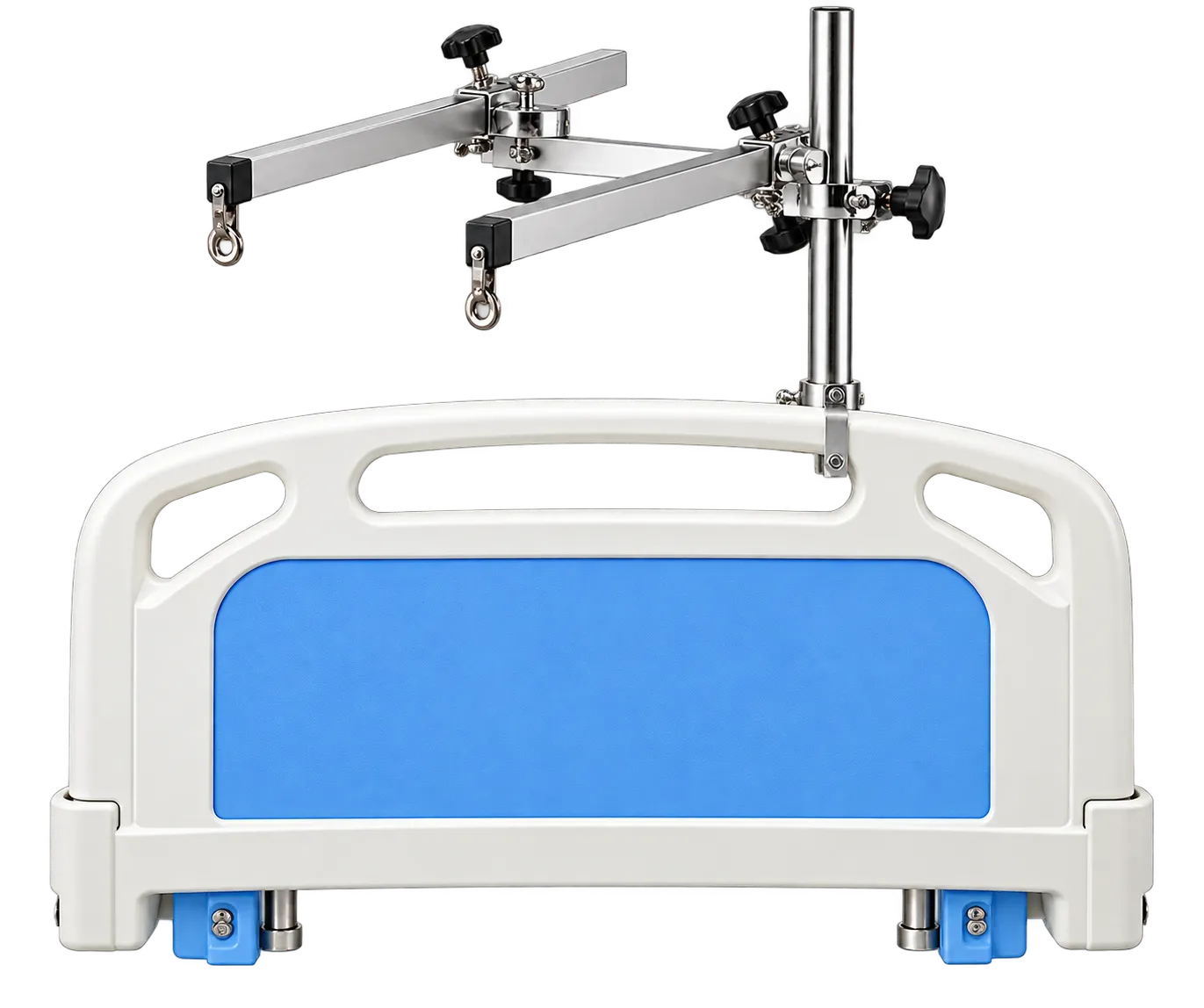
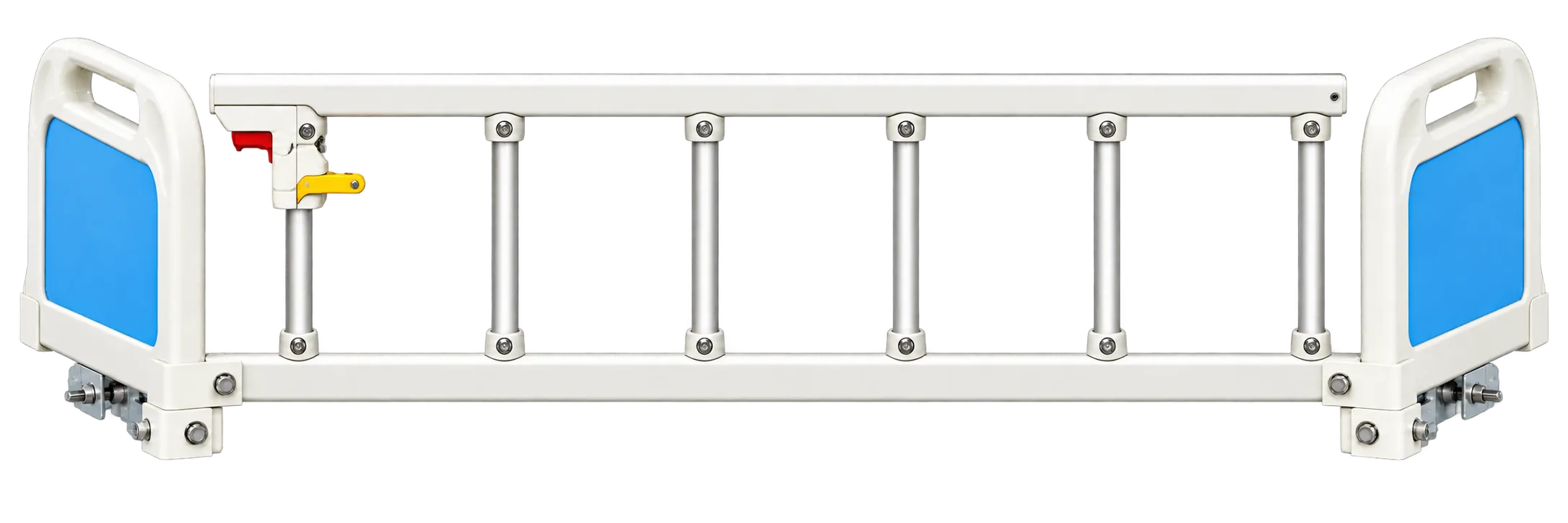
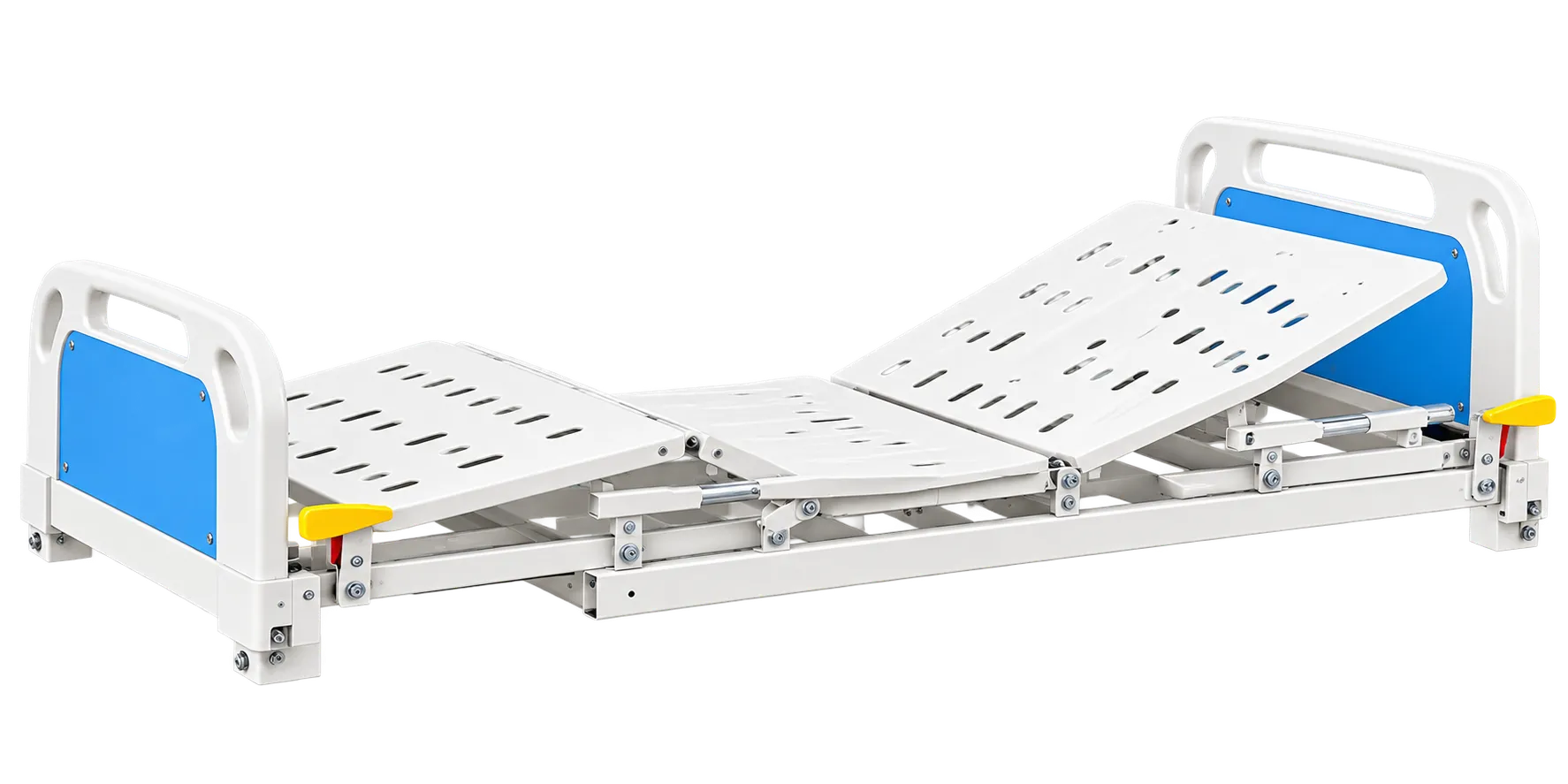
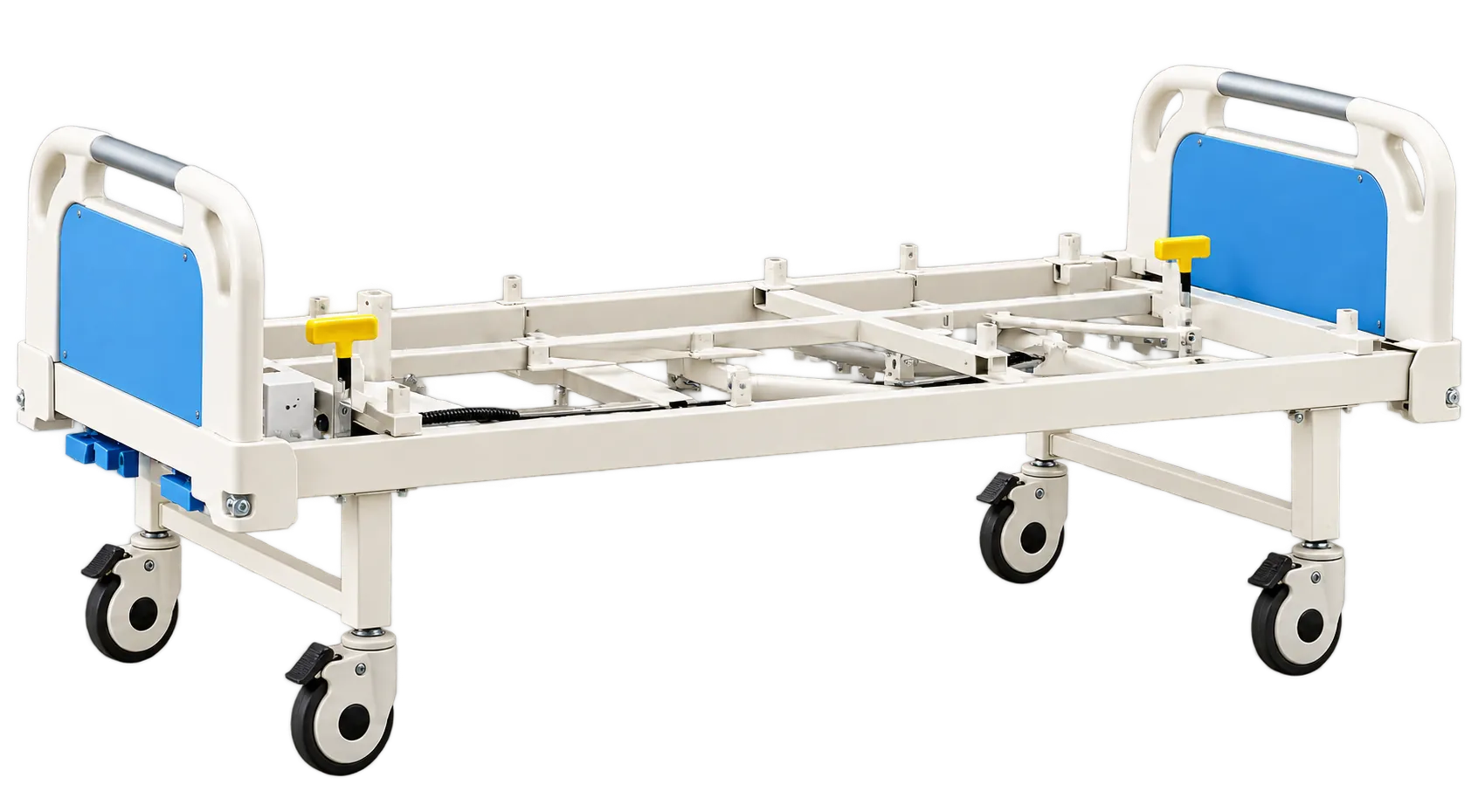
The QY-3 is specified for orthopaedic and trauma inpatient wards where traction apparatus is used routinely rather than occasionally: fracture management, skin and skeletal traction, and post-operative lower-limb care where admissions run for weeks.
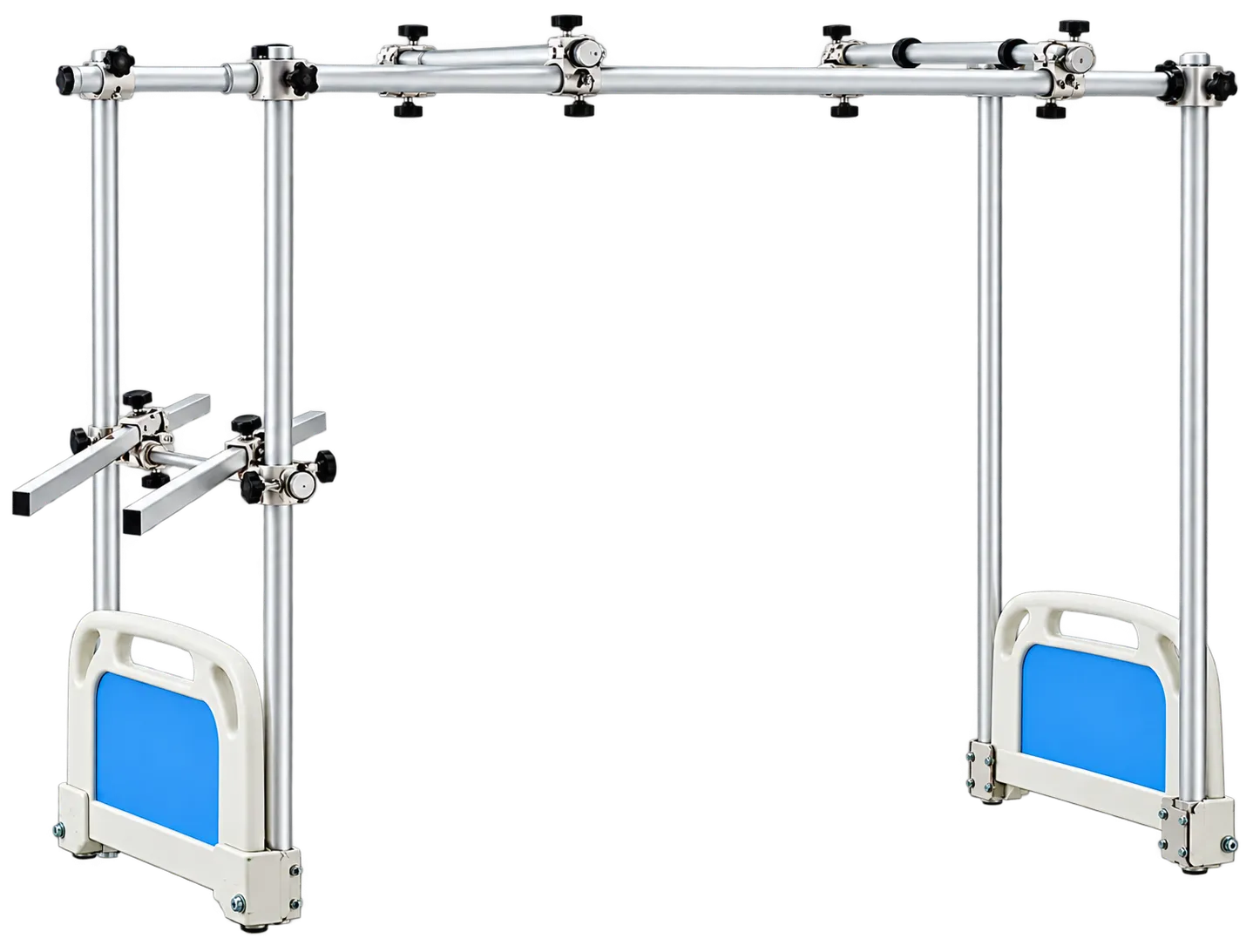
The adjustable mounting is the clinical argument. Traction is only effective along the correct line of pull, and force applied at the wrong angle fails to reduce a fracture properly and can worsen alignment. A frame assembled from uprights and crossbars that accept clamps along their length lets the ward choose the mounting point to suit the injury, limb length, and required angle. Adjustable mounting lets the ward set that angle directly, which is what a purpose-built orthopaedic frame exists to allow.
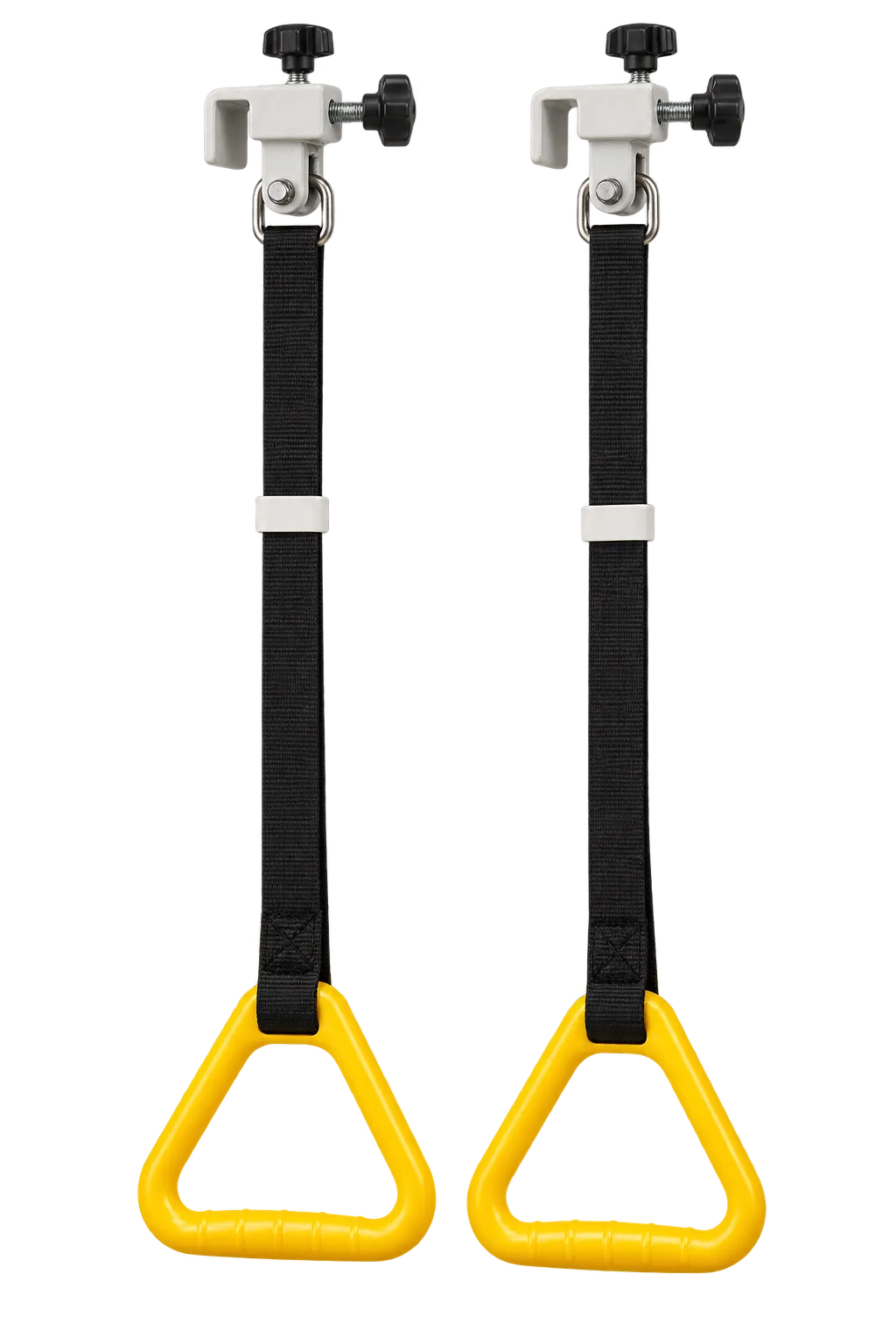
Suspended triangle grips let a patient with adequate upper body strength lift their own weight for repositioning and pressure relief. Across an immobilisation period period measured in weeks, this returns a measure of self-direction and reduces the number of times the ward is called.
Leg-section elevation supports limb elevation for post-operative oedema, and a backrest reaching the full Fowler sitting range supports eating, medication, respiratory comfort and time with visitors.
The fixed 500 mm deck is the counterweight and belongs in the assessment. With no carer-height position, personal care and wound care are delivered at one height for the whole admission. Wards with an established slide sheet and hoist regime absorb that; wards where staff work unaided should weigh it carefully. The conformity documentation that the Trust, Integrated Care Board and NHS Supply Chain procurement routes require is issued by the manufacturer and provided by the seller.