

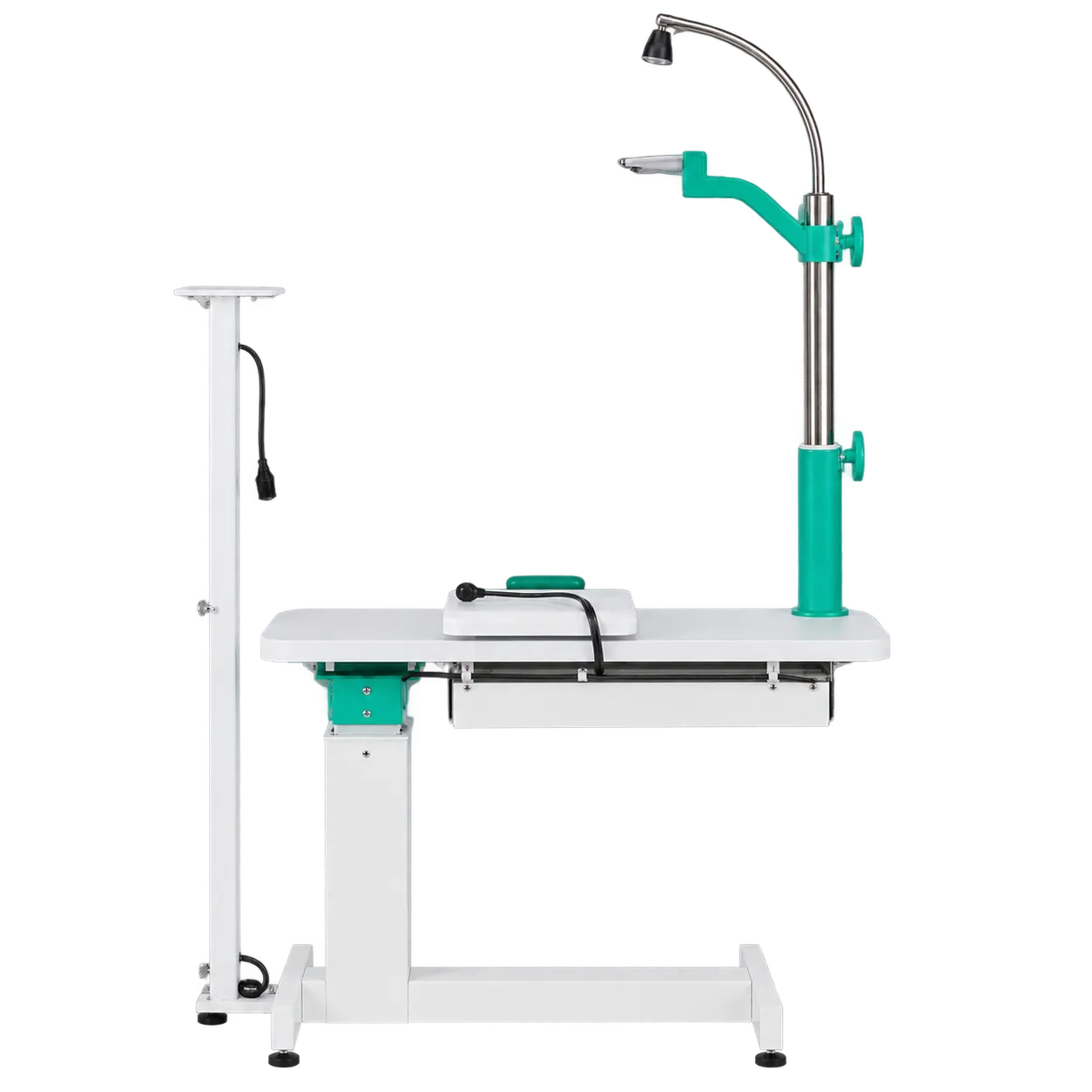
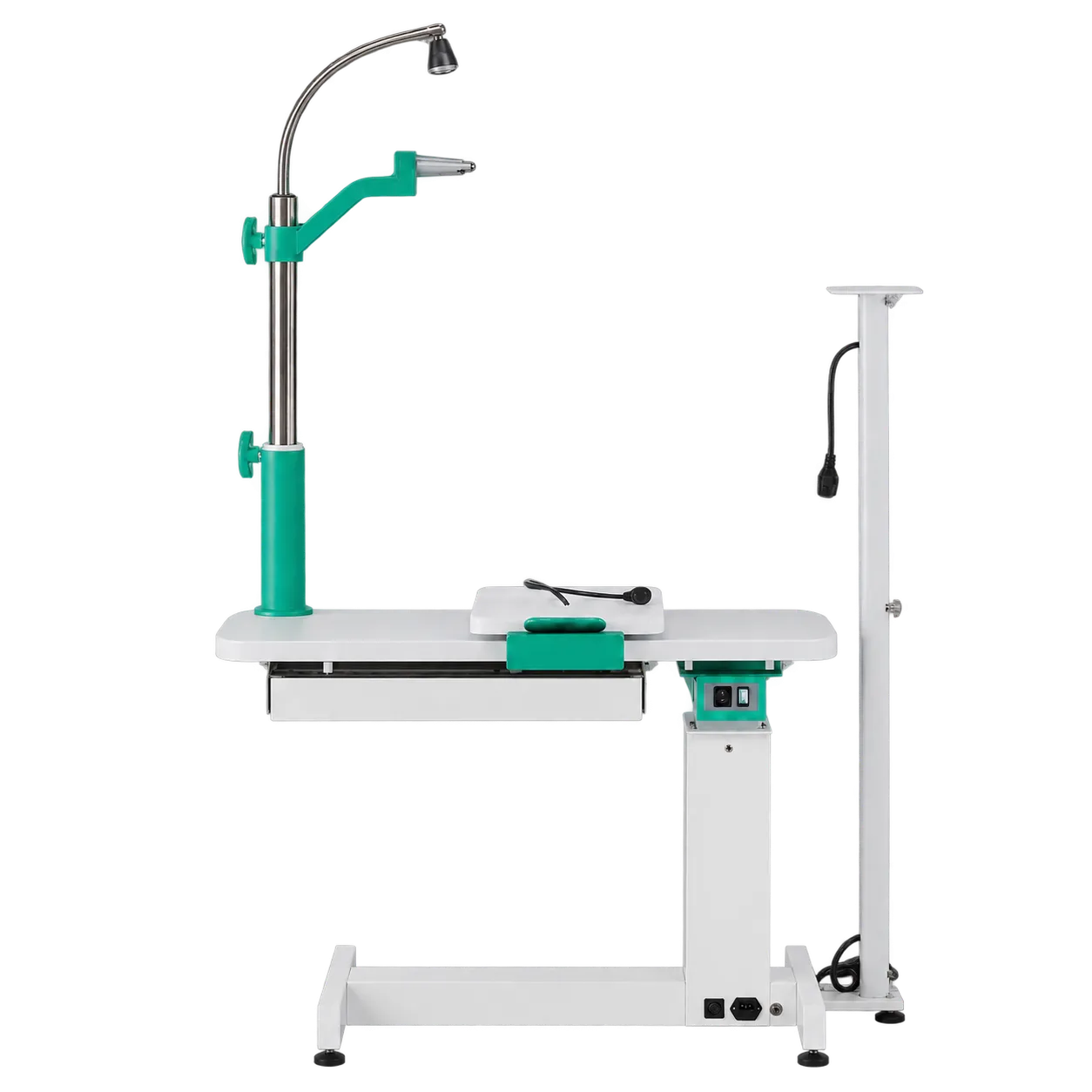
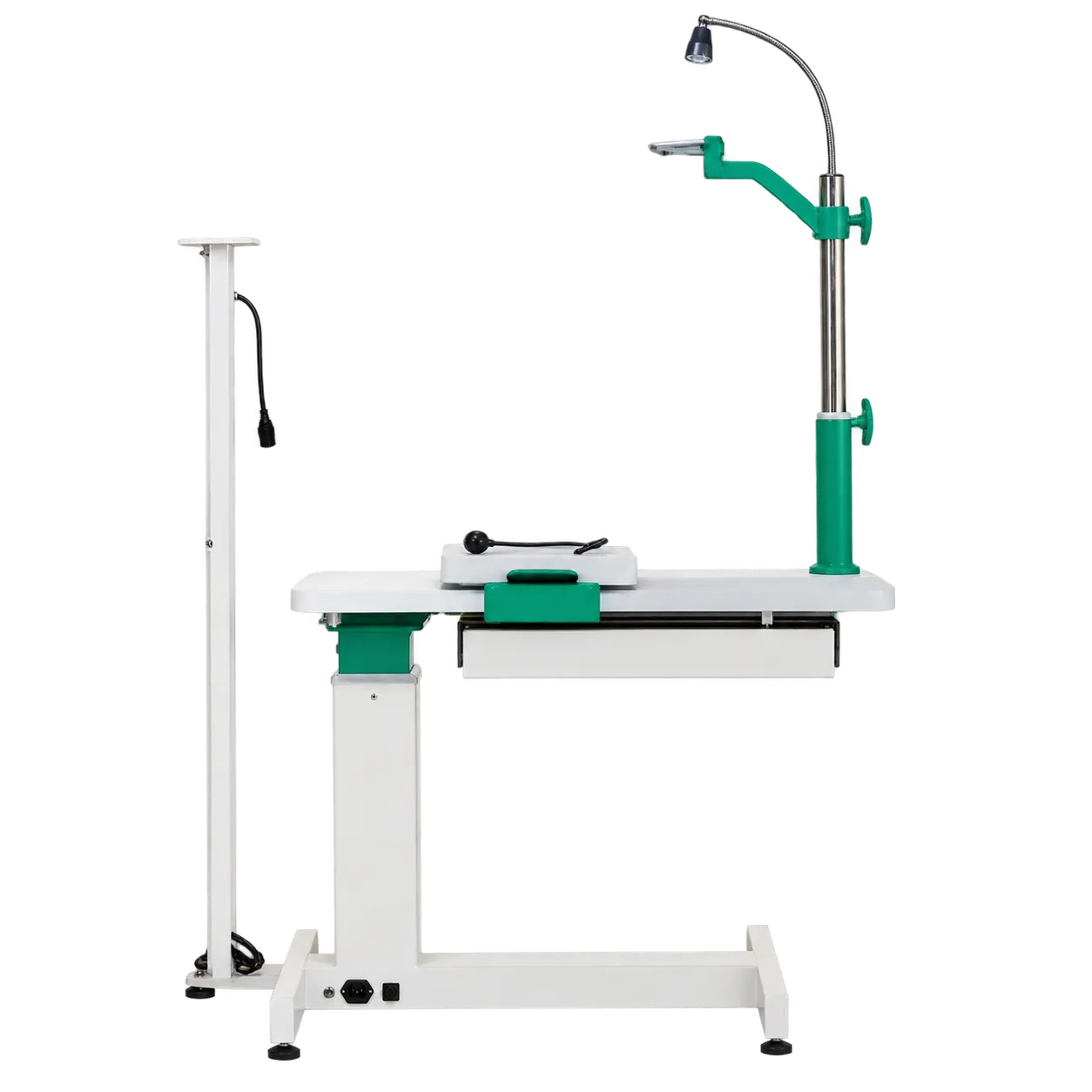
Practices that do not control their building gain most. A chart projector has to be mounted somewhere, and a wall bracket in leased premises means landlord consent, a permanent fixing and a reinstatement obligation at the end of the term. Community clinics, borrowed rooms and short leases all run into that, and a self-supporting pillar supplied with the table is the alternative that works without anybody's permission.
Fit-outs benefit from the procurement side. A projector mount is otherwise a second purchase, a second delivery and frequently a second trade attending to fix it — and the geometry between chart position and worktable then has to be established on site rather than arriving already set. One delivery replaces three transactions.
Difficult premises suit the weight and height together. At 65 kg this is the lightest unit in this range and at 1600 mm among the lowest, so upper floors, period buildings and rooms with restricted headroom remain viable — and unusually, the chart position travels with it rather than being left behind on a wall.
The published 650 to 820 mm working height band with 170 mm of table lift lets a room be planned against a real figure rather than a travel distance alone.
Three things need settling before ordering, and two are specification anomalies rather than judgement calls. The drawer is listed as 530 × 30 × 60 mm, which is not a usable width and needs confirming. No chair appears in either the illustrations or the specification, so whether one is supplied must be established. And no stability figure is published for a 65 kg unit carrying a tall pillar — mass at the base matters more when there is height above it, so ask specifically about stability with a projector fitted.