
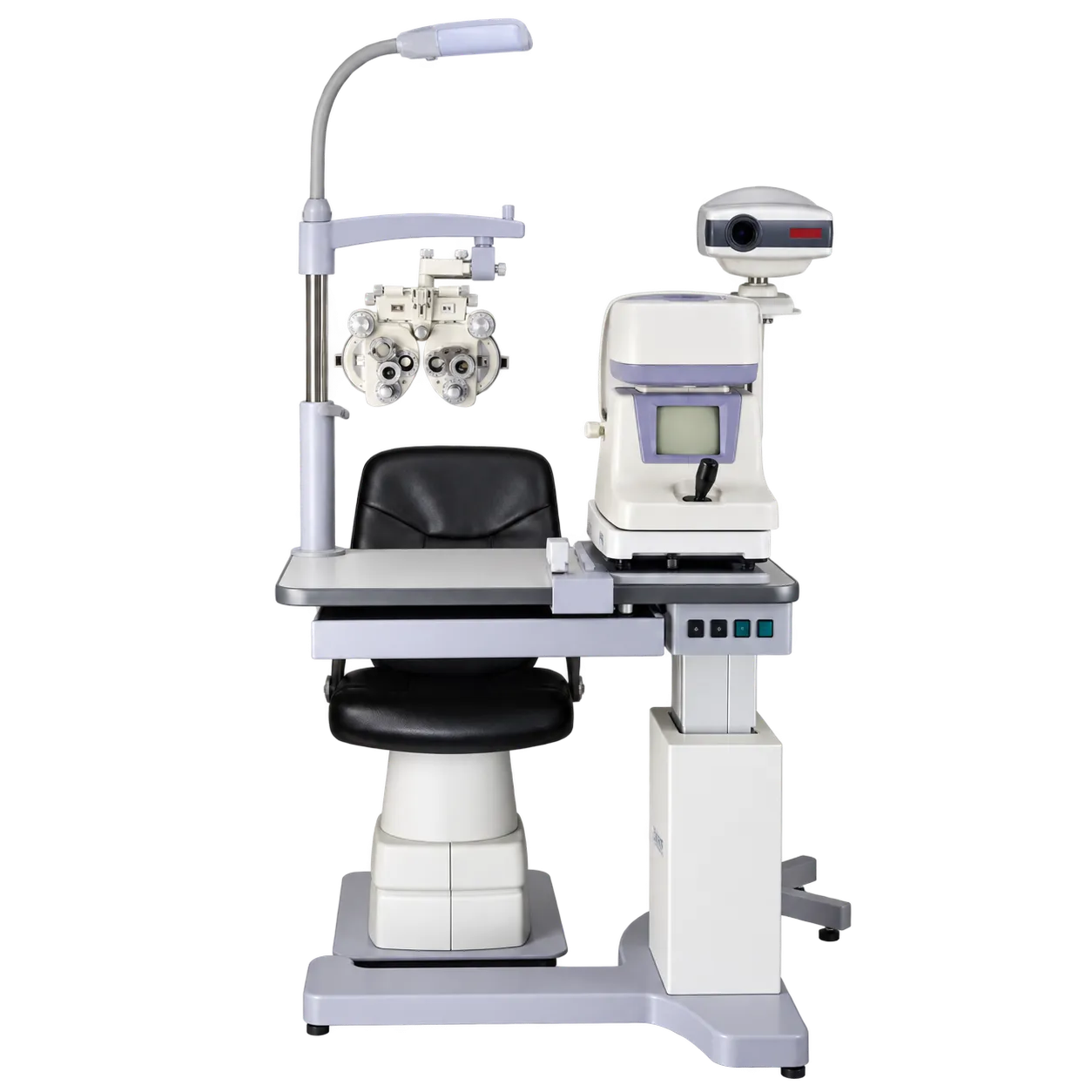
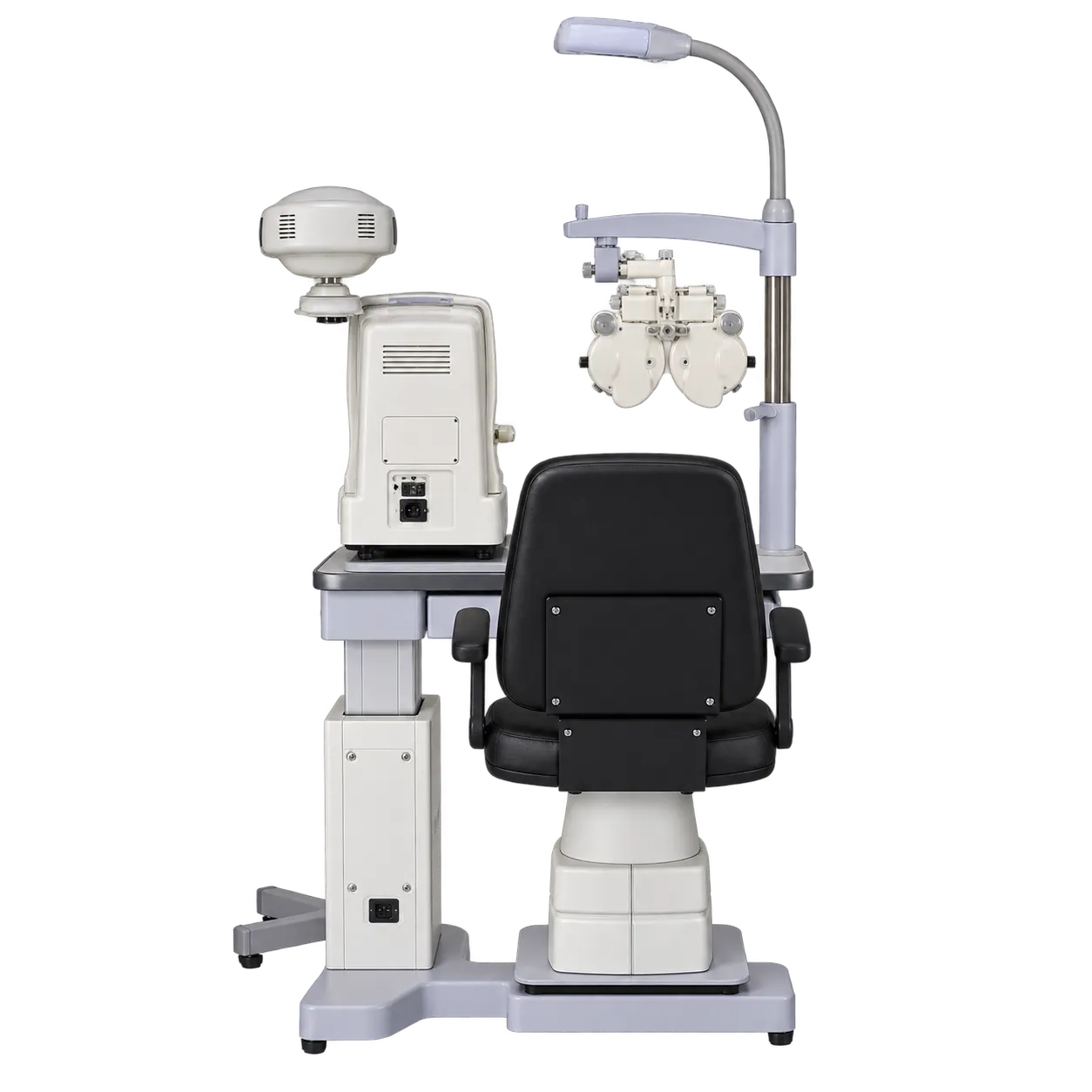
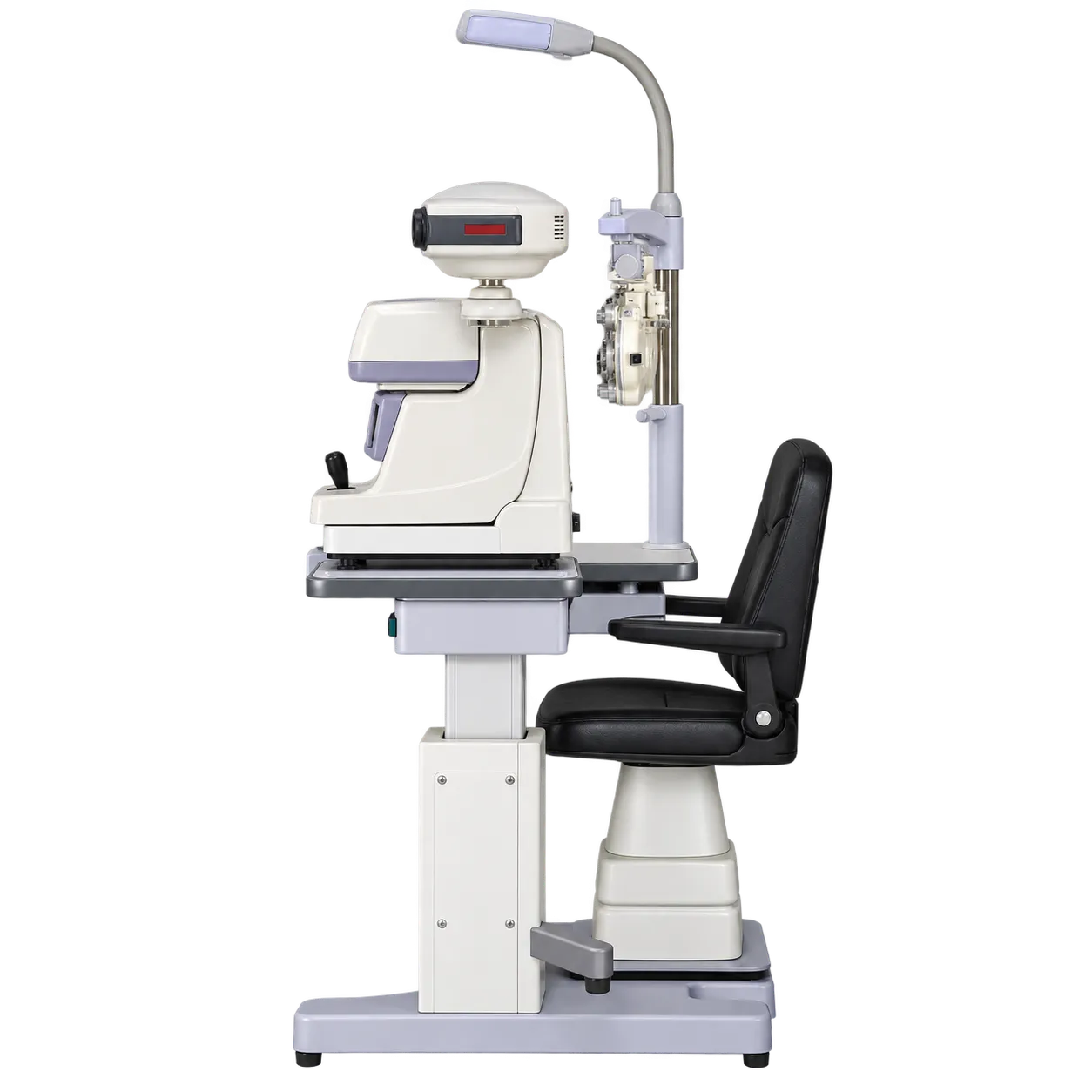
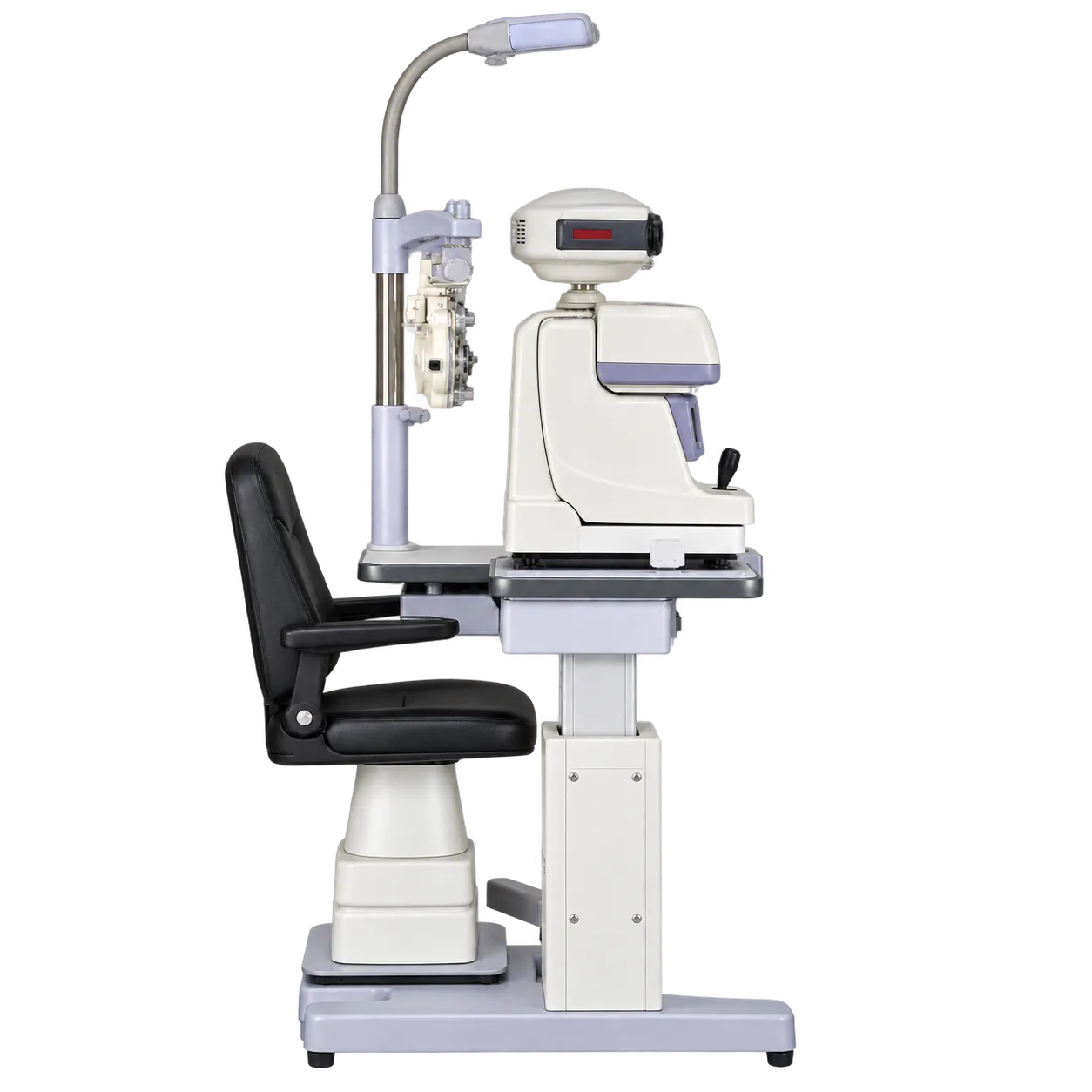
Services working in borrowed rooms are the clearest application, and the constraint they face is not space but tenure. A community optometry session, a prison or secure unit clinic, a care home service operating from a fixed base — in each case the room is available on certain days and belongs to somebody else the rest of the week. Equipment that can be set up and taken away is the only kind that fits, and at 72 kg this is the only unit in this range that genuinely can be.
Practices reconsidering room layouts benefit from the same property. A 200 kg unit is positioned once and the decision is effectively permanent; moving it means hired lifting help and a cleared route. At 72 kg two people carry it through a doorway, so a practice that wants to swap two rooms over, or move the testing position after living with it for a year, can simply do so.
Difficult delivery access is served by both the weight and the 1600 mm height. Upper-floor premises, period buildings with narrow staircases and rooms with sloping ceilings or ductwork all become viable where heavier or taller units do not.
Working height is set rather than fixed: 170 mm of table lift across a published 680 to 850 mm band is the largest table travel in this range, which suits shared rooms where several clinicians use one position.
Two things belong in the decision. No stability figure is published, and 72 kg is light for a unit of this size — if a heavily loaded table or sustained high-magnification work is central, a heavier unit is the right choice. And the chair is 460 mm wide, narrower than most here, with loading unpublished; confirm both together.