
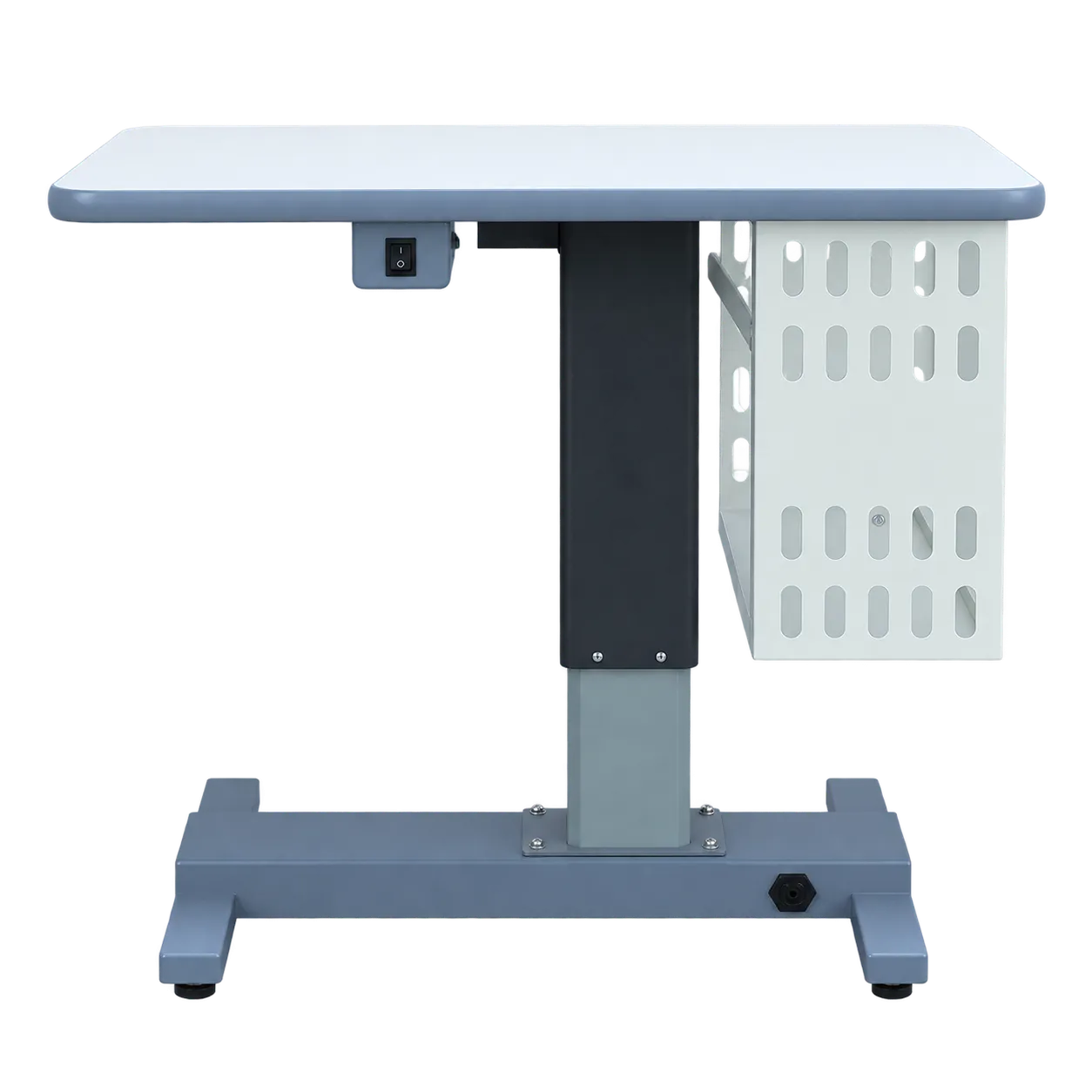
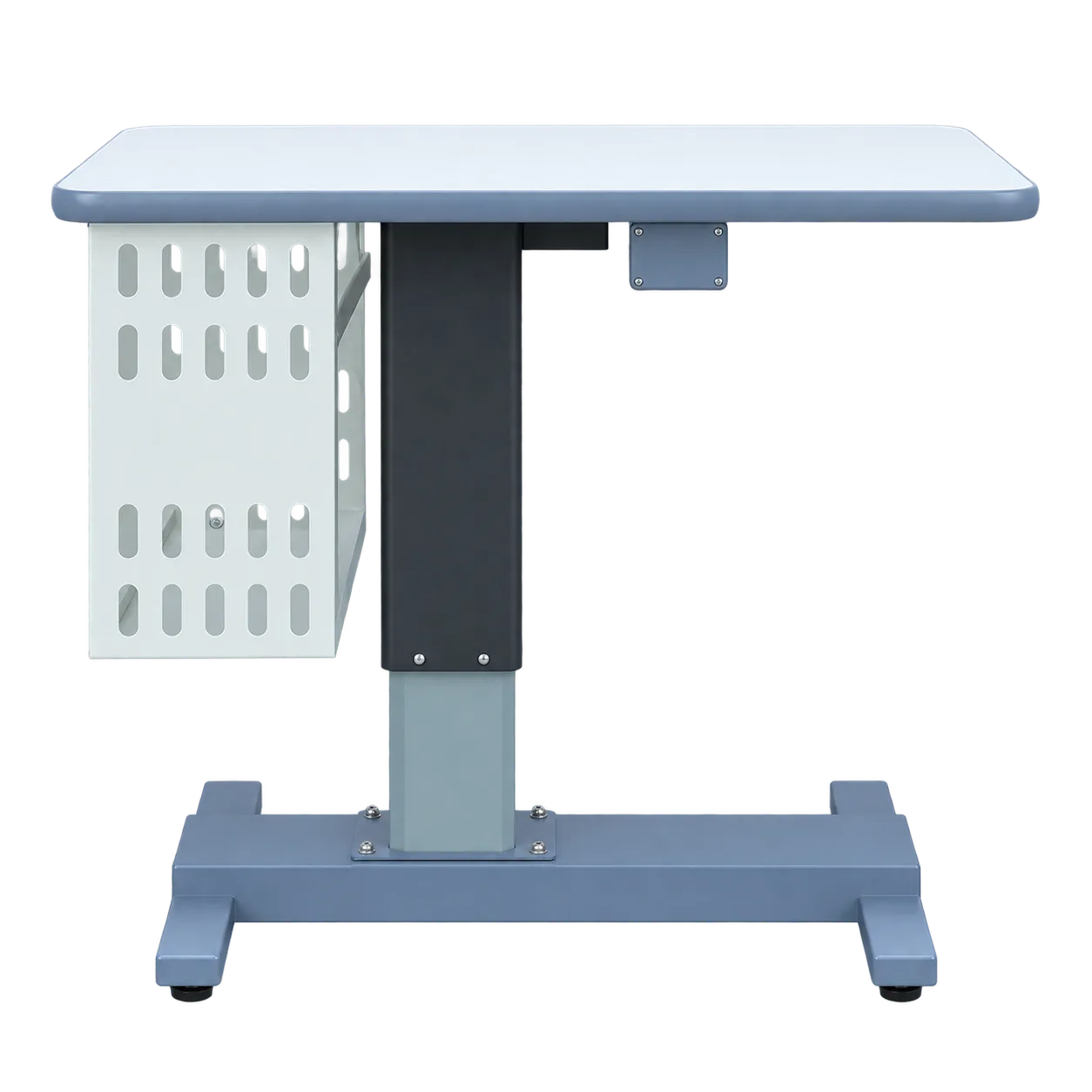
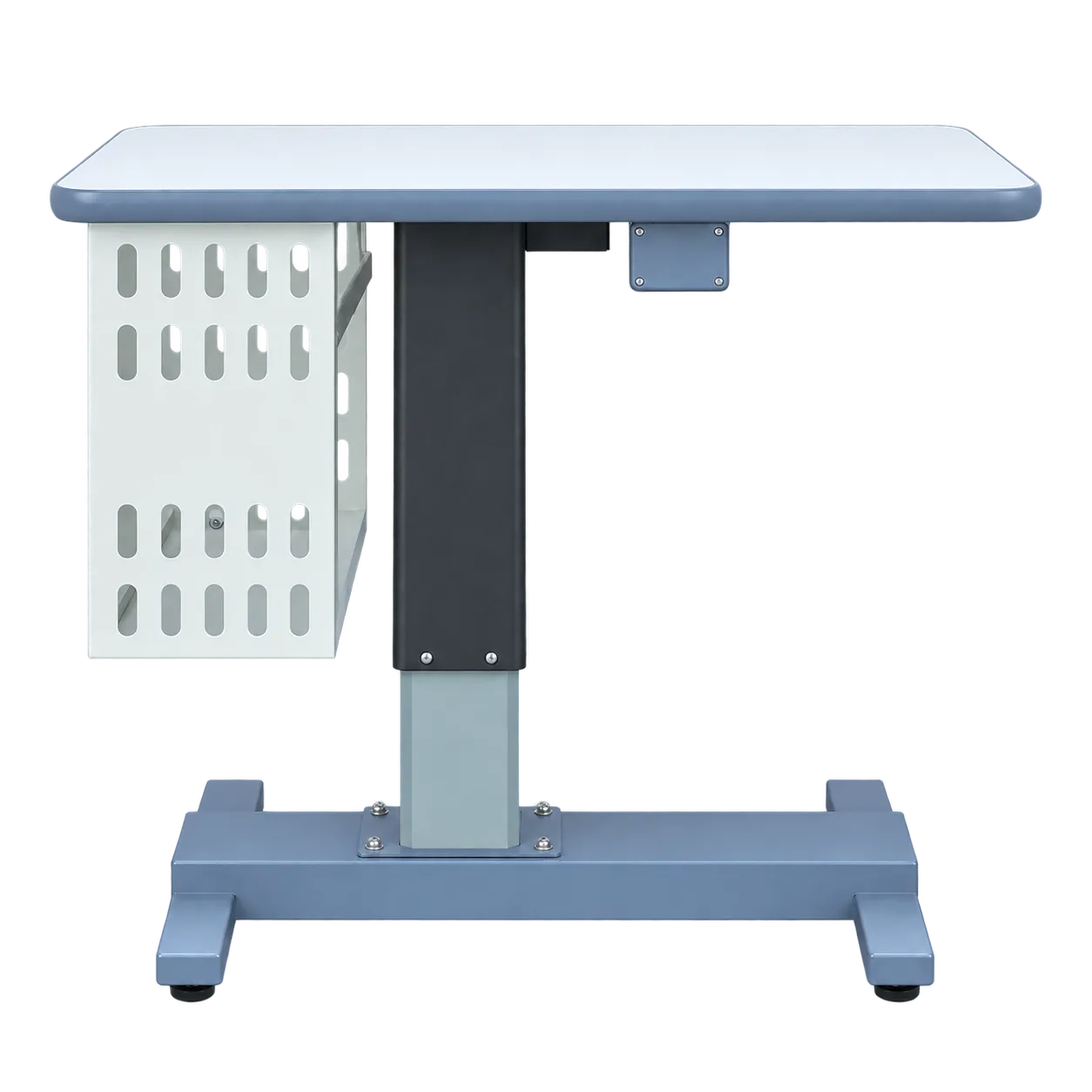
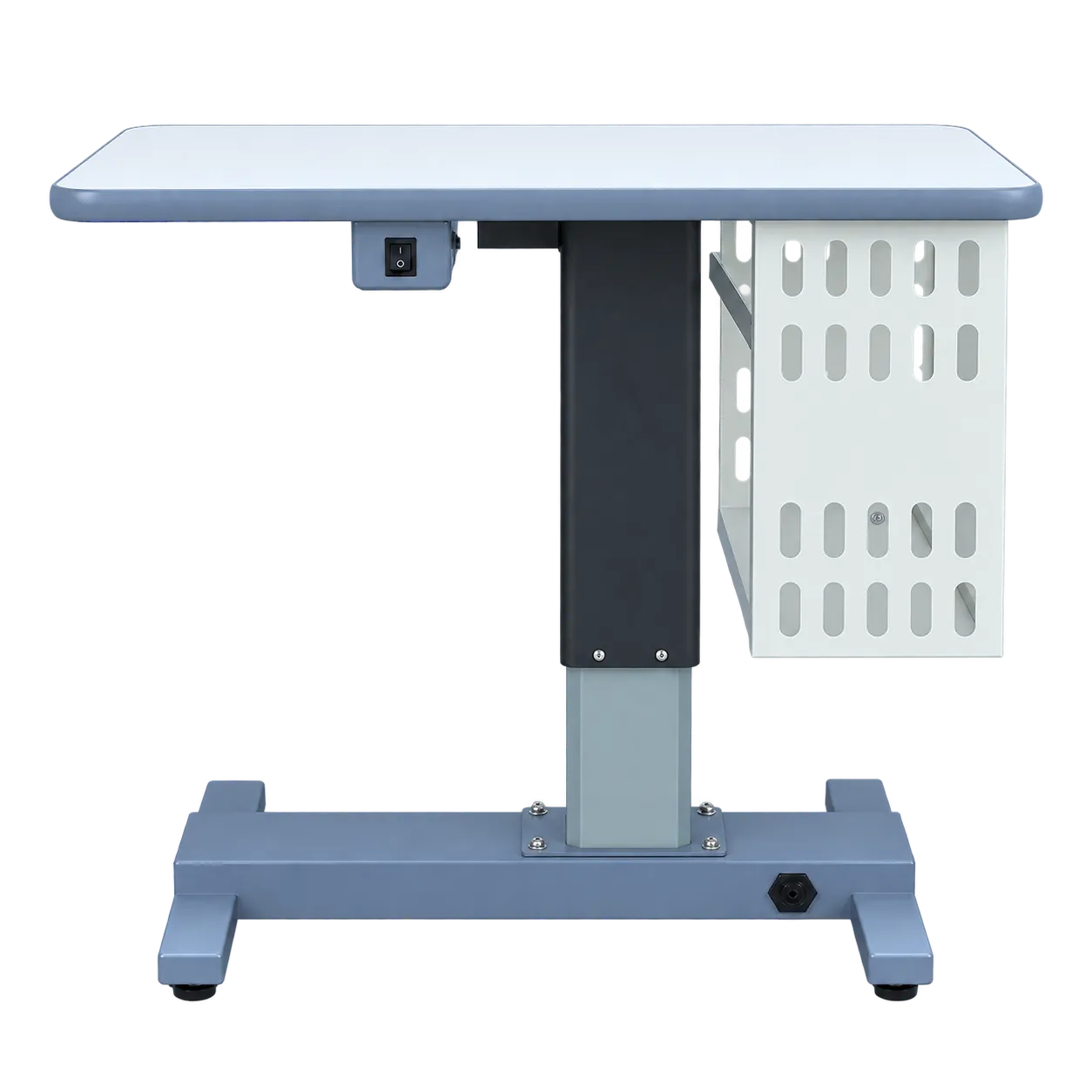
Pre-test rooms with connected instruments are the natural home. Autorefractors, keratometers and tonometers increasingly send results straight to the practice record system, which puts a computer next to the instrument. With the C-220, that computer hangs beneath the top instead of sitting on the floor, so the room stays tidy and the cables stay slack at every height.
Infection control benefits from a clear floor. With nothing standing beneath the table except its H-frame, cleaning staff can mop right through without moving a computer or unplugging leads. That supports the cleaning routines CQC inspectors expect to see in a clinical room.
Imaging with compact cameras suits the layout where the camera needs its own computer. The machine sits in the cage and the display on the desk or a wall mount, keeping the station to one table's footprint.
Small consulting rooms gain from the 900 mm width. With the computer beneath the top, there is no need for a second desk or floor-standing computer, leaving room for the patient's chair.
Busy multiple-practice pre-test lines can standardise on the C-220, giving each station the same layout with the computer in the same place, which simplifies IT support and training.
Hospital outpatient rooms and university clinics with networked instruments can use it for the same reasons: a tidy station, a clear floor and no cable strain.
Paediatric pre-test should check the lower end of the range, since 680 mm may need a raised seat for younger children.
Wheelchair users are partly served. The height range suits many, but the column, cage and H-frame limit knee and footplate clearance, so practices with many wheelchair users usually keep a dedicated accessible position as well.