
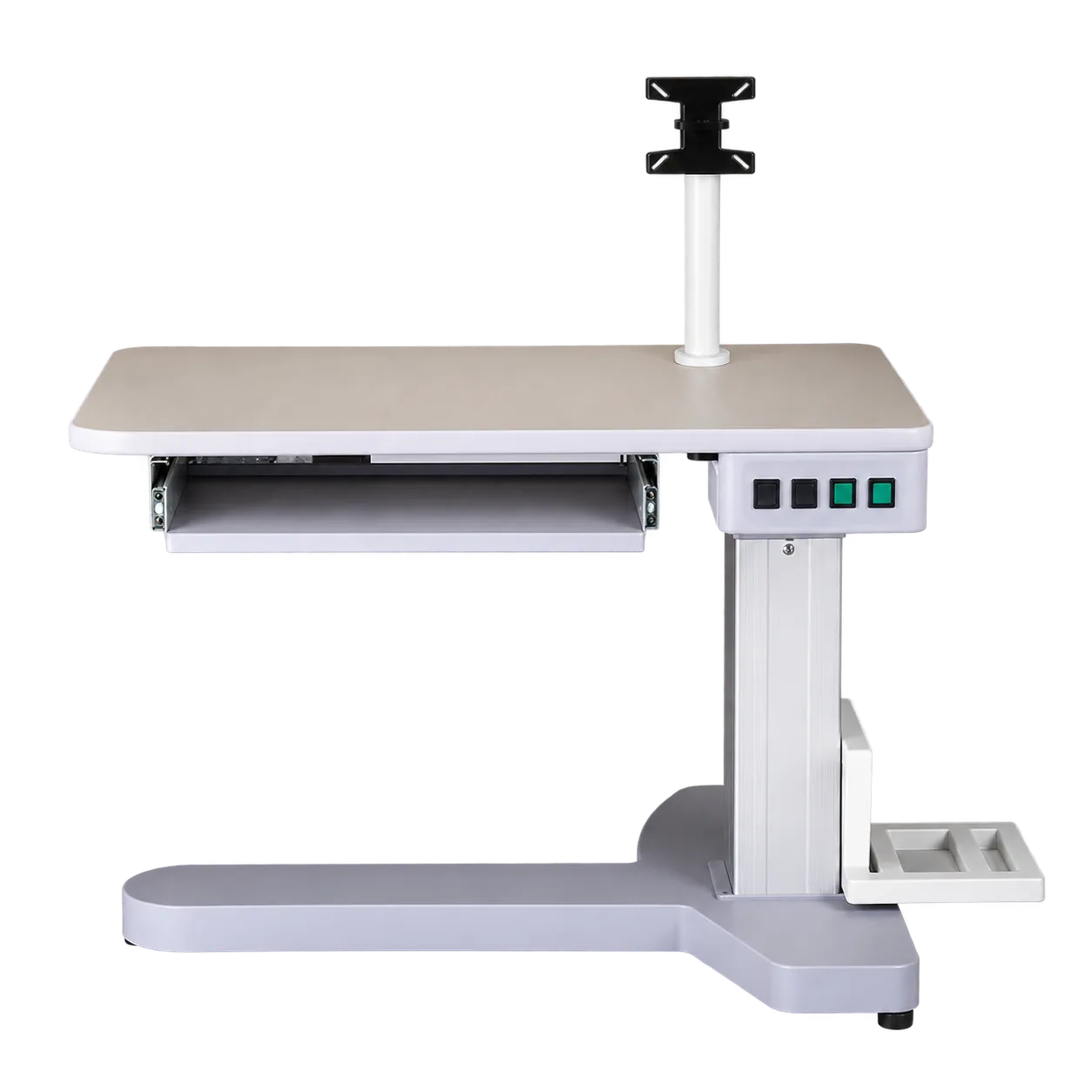
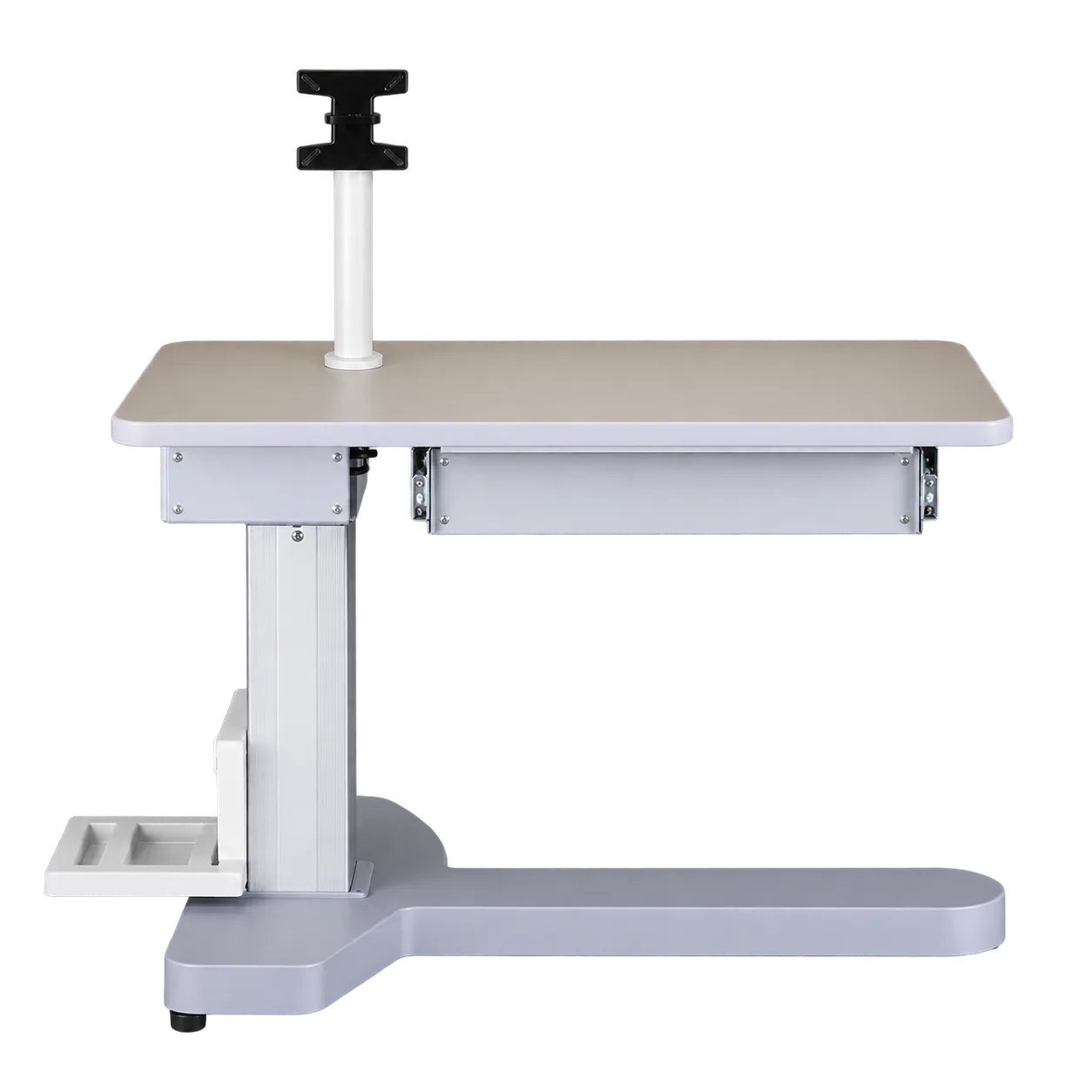
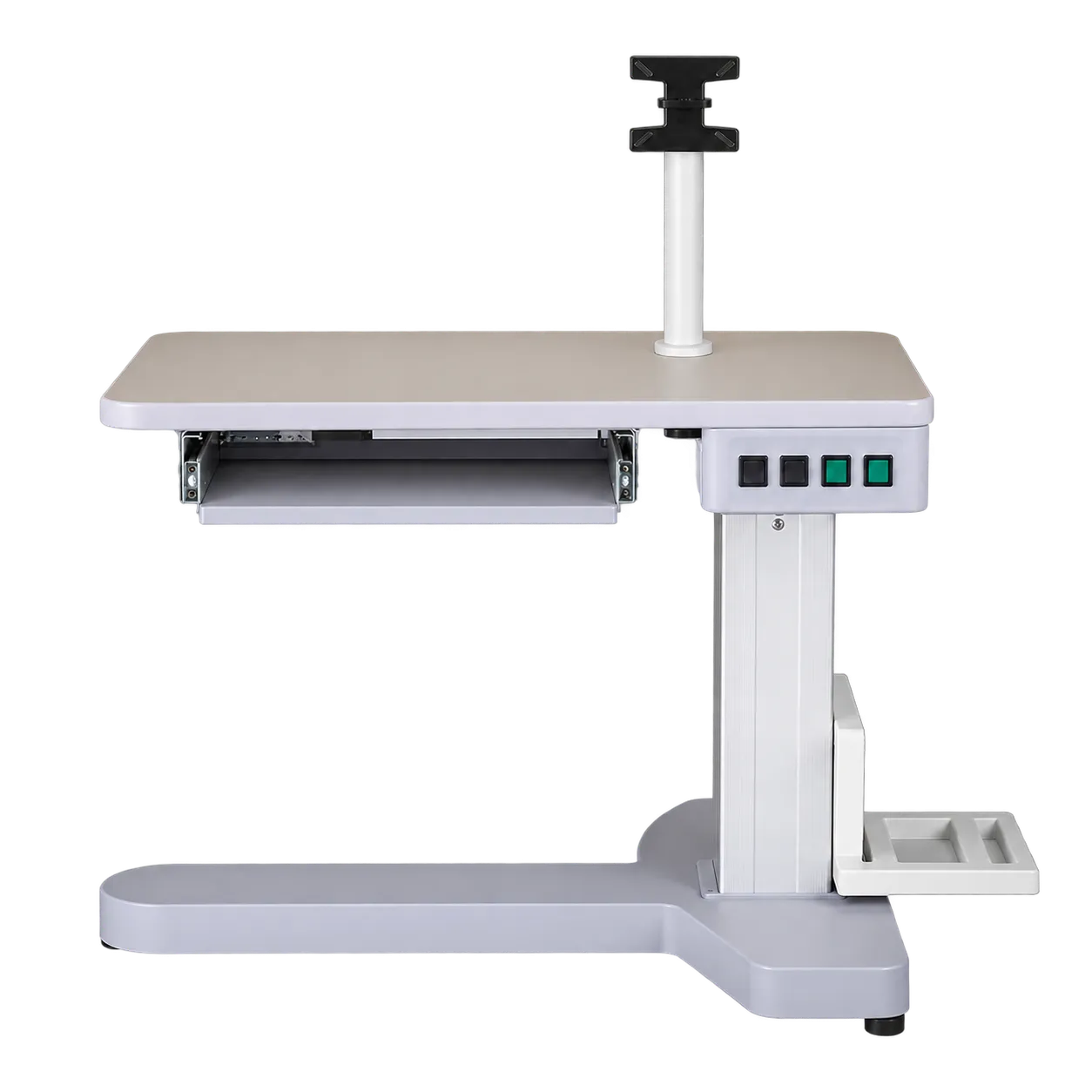
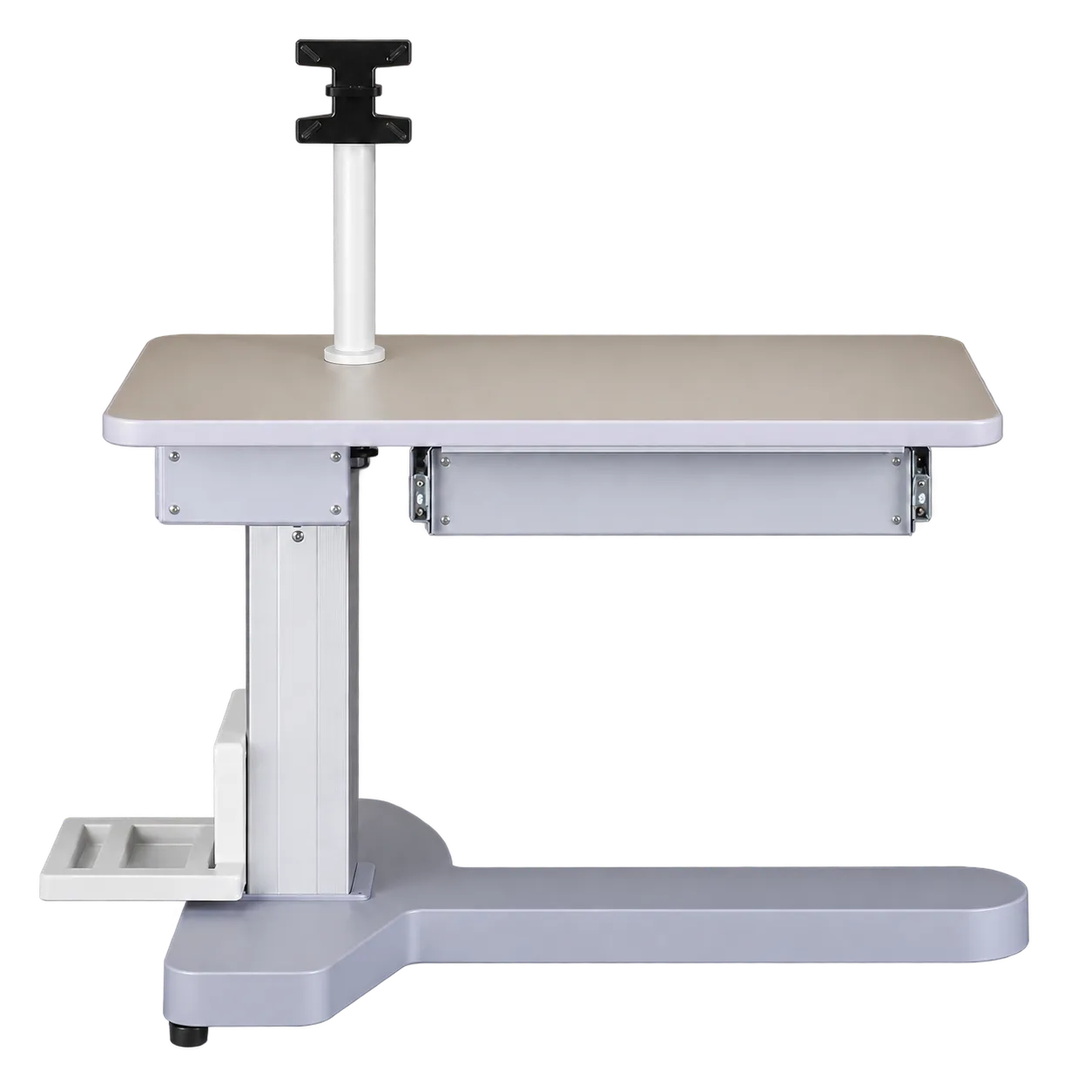
High-street pre-test rooms are the natural home. Many practices carve pre-test booths from narrow spaces, and a table under a metre wide leaves room for the patient's chair and a clear route in and out. With the instrument on the top and the screen on the pole, the booth holds a complete station without a second piece of furniture.
Connected autorefractors and keratometers benefit from the display mount. Where results pass straight to the practice record system, the assistant can check the entry on the pole-mounted screen and type into the keyboard stored in the drawer without leaving the patient. That supports the accurate, complete records the GOC expects.
Non-contact tonometry fits well, with the tonometer on the top and results visible on the screen. The compact footprint means a second C-260 can sit alongside for a two-instrument pre-test line in the same space as one conventional wide table.
Compact retinal cameras can use the pole to raise their display to the operator's eye line, provided the camera's footprint and weight suit the top and the confirmed loading.
Trial framing and quick checks can use the drawer for a trial lens tray, keeping lenses to hand beside a lensmeter or autorefractor.
Small hospital outpatient rooms and university clinics with limited space can use it to add an instrument position without rearranging existing furniture.
Paediatric pre-test benefits from the lower end of the range, since a child on a raised seat reaches a chinrest set near 660 mm comfortably.
Wheelchair users are partly served. The height range suits many, but the column, drawer and long foot limit knee and footplate clearance, so practices with many wheelchair users usually keep a dedicated accessible position as well.