
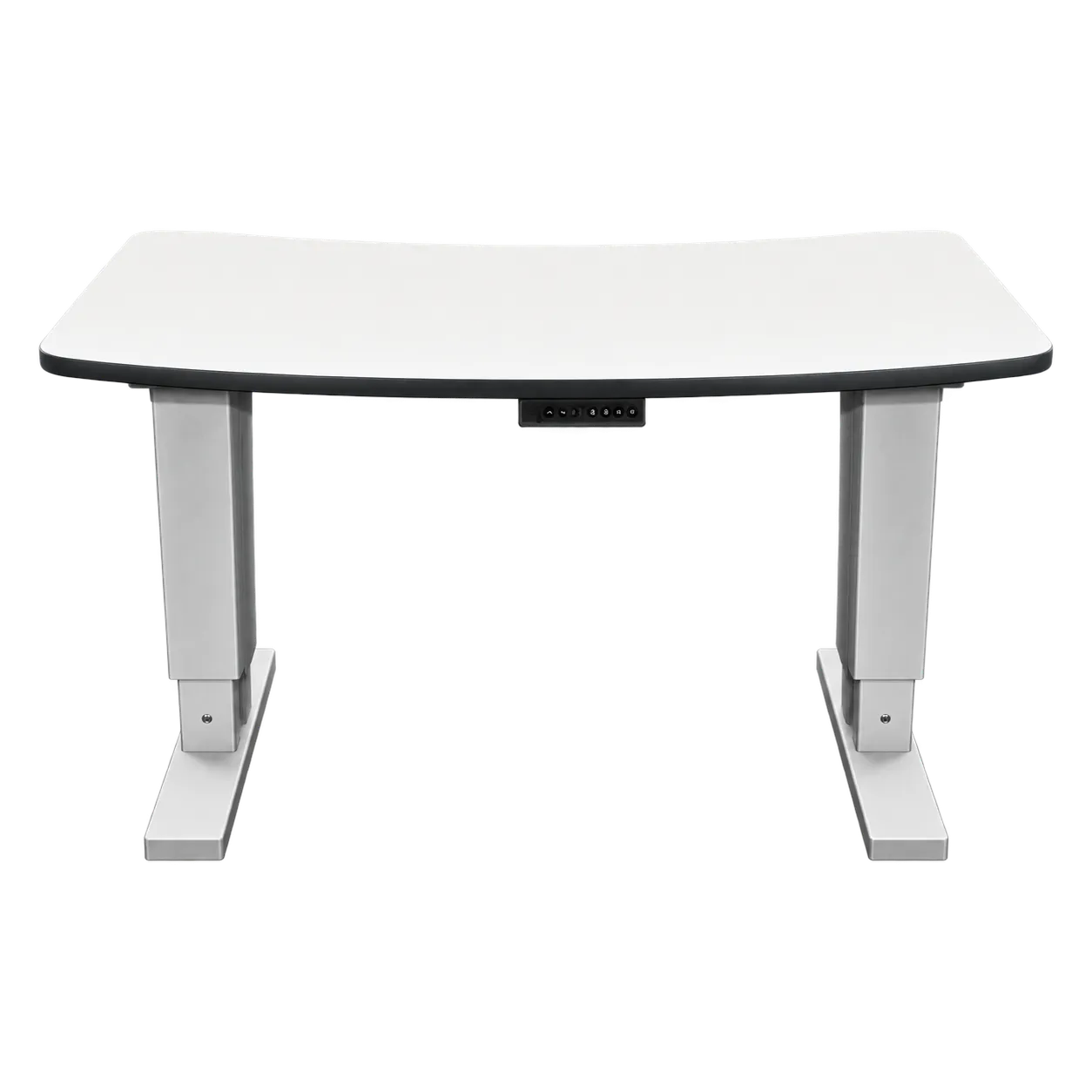
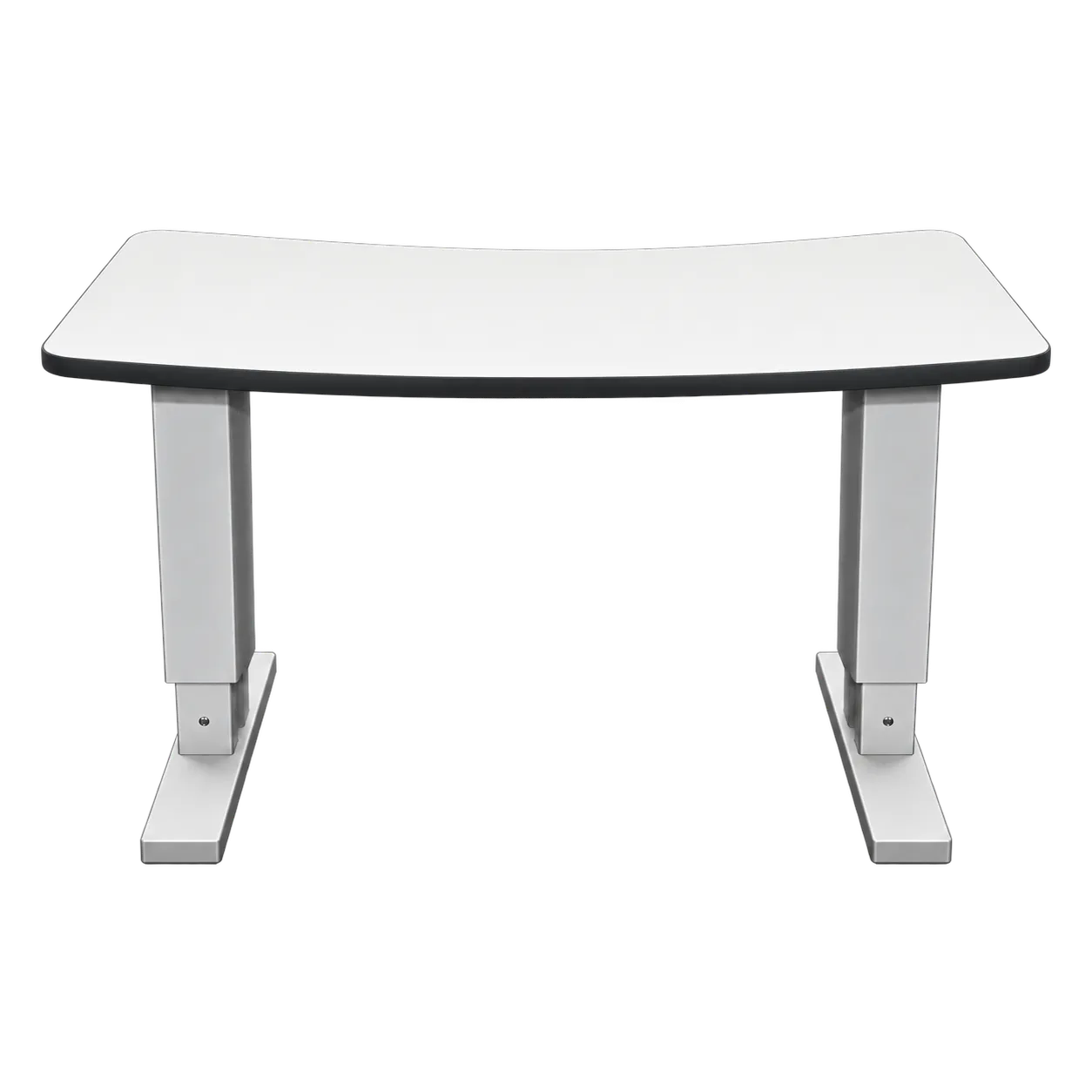
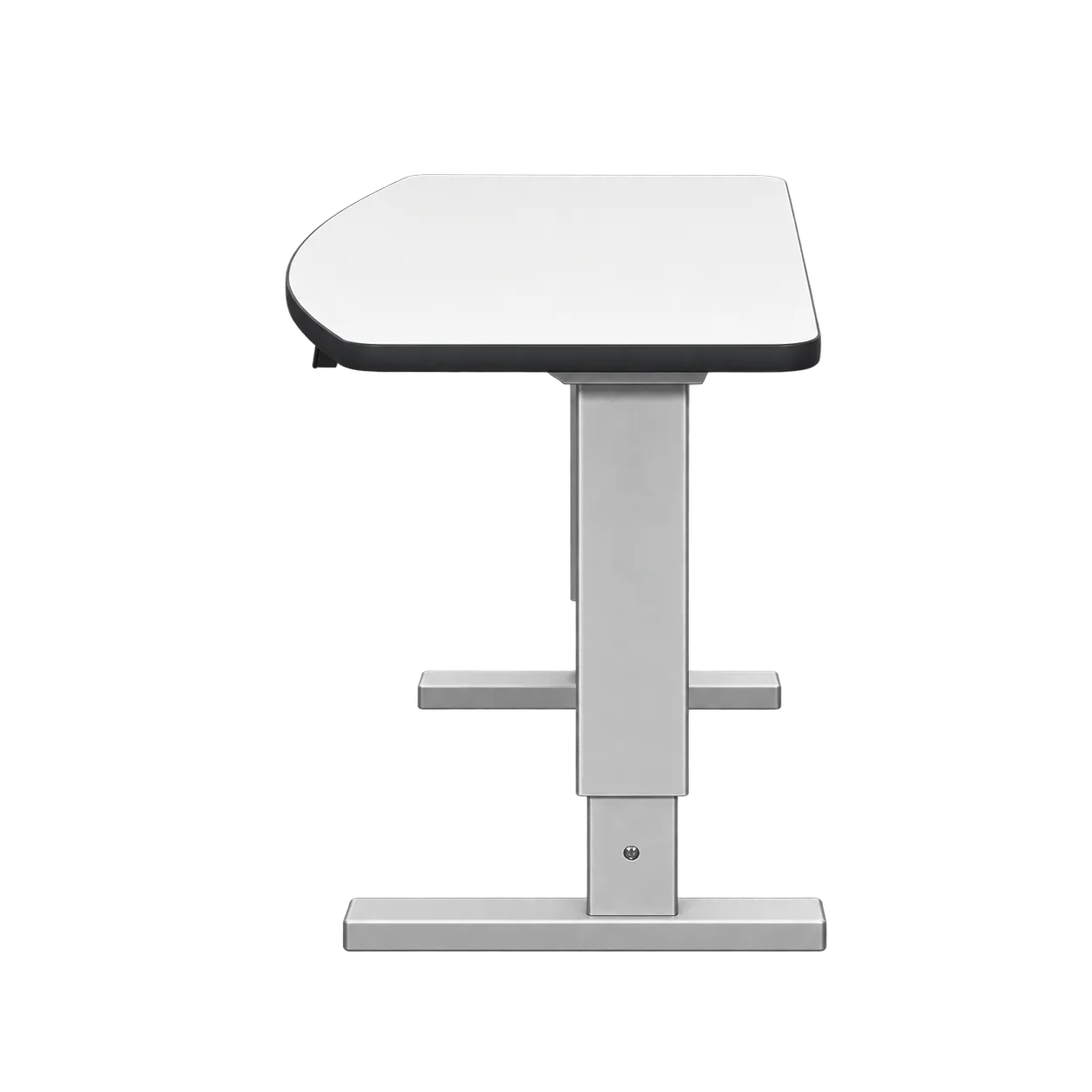
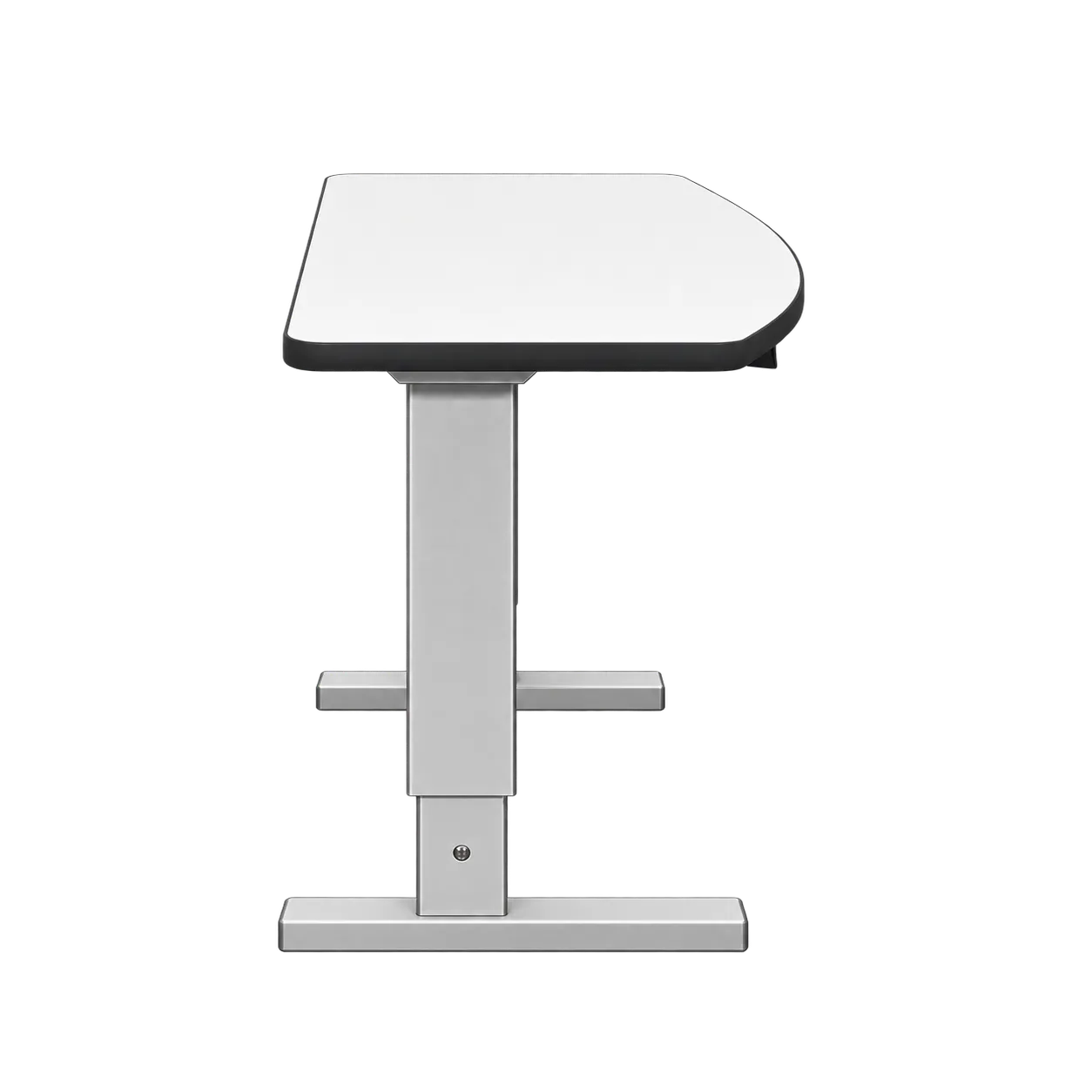
Accessible examination and pre-test positions are the natural home. Under the Equality Act 2010, service providers must make reasonable adjustments so that disabled people are not put at a substantial disadvantage. For many practices, an instrument position a wheelchair user can reach without transferring is one of the most practical adjustments available. Twin-column tables are an established way to provide it, because nothing stands beneath the centre of the top. Confirm the height range and clear width against the wheelchairs your patients use before relying on it.
Multi-instrument pre-test stations benefit from the 1200 mm worktop. An autorefractor and a non-contact tonometer, or a keratometer and lensmeter, can share one top, so an assistant moves the patient along a single station rather than between tables. Confirm the loading for your combined setup.
Hospital eye service outpatient clinics see many patients who arrive in wheelchairs or who find transfers difficult, including older patients and those recovering from surgery. A position that lets them stay seated shortens the appointment and reduces handling.
Care home residents and patients with reduced mobility visiting community practices gain the same benefit, consistent with the GOC's requirement that registrants treat patients fairly and without discrimination.
Slit lamp positions can use the wide top for a slit lamp alongside an imaging unit or tonometry accessories, with the twin columns giving a broad base beneath.
Paediatric clinics can seat a child in a buggy or supportive seating beneath the top, subject to confirming the lowest height.
Practices planning a single accessible room should weigh the 1200 mm width and 65 kg weight. This is a fixed station rather than a table moved daily, and it needs its space planned.