
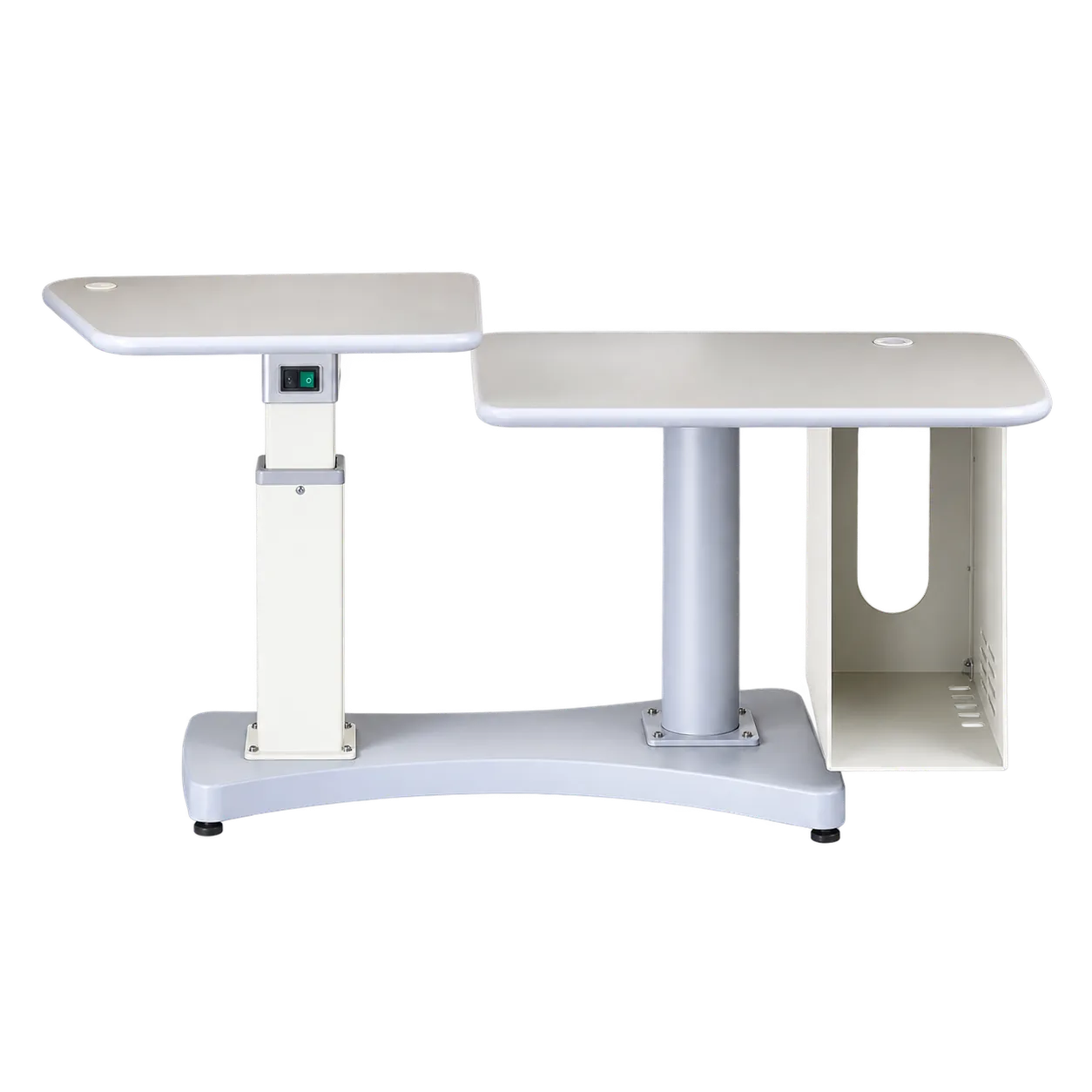
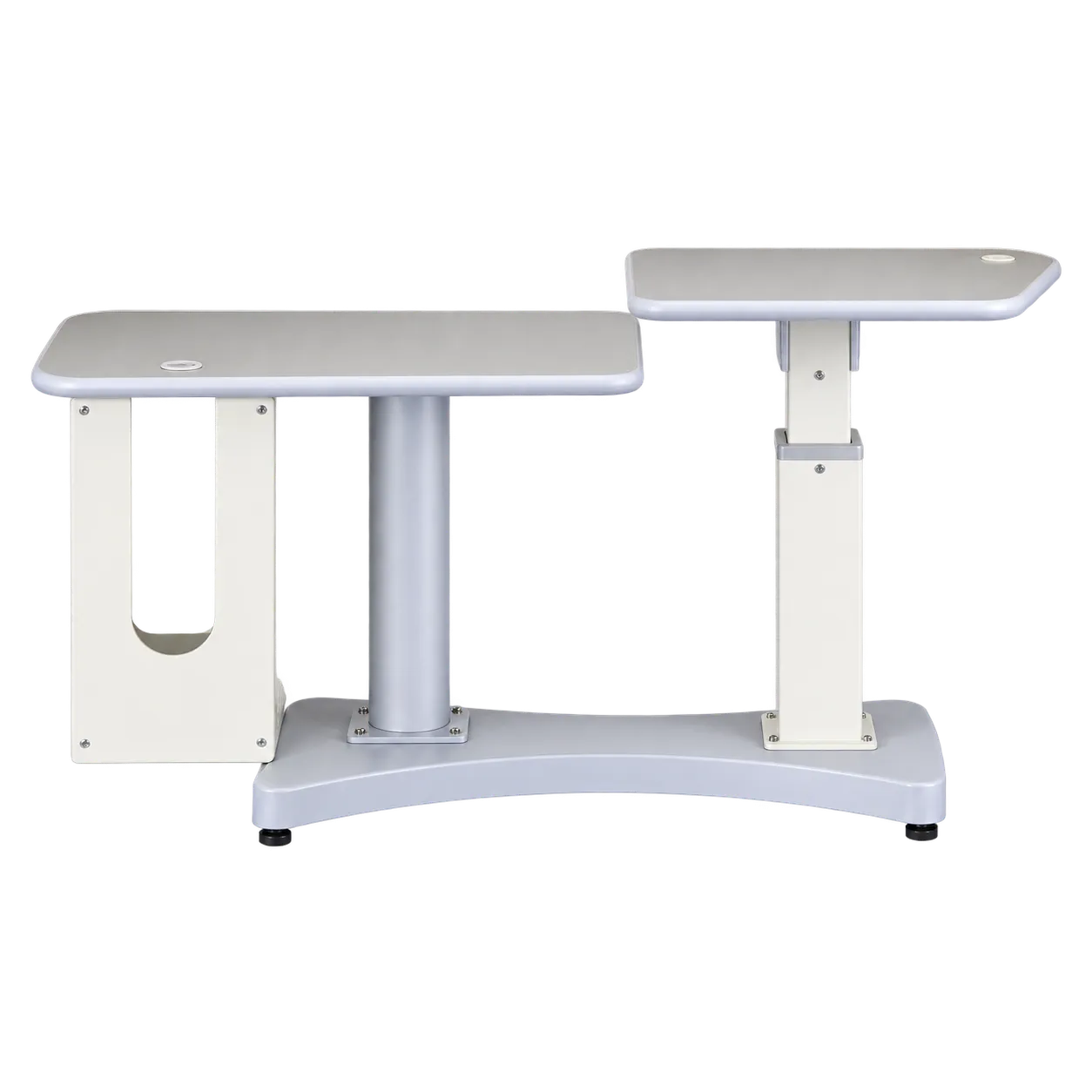
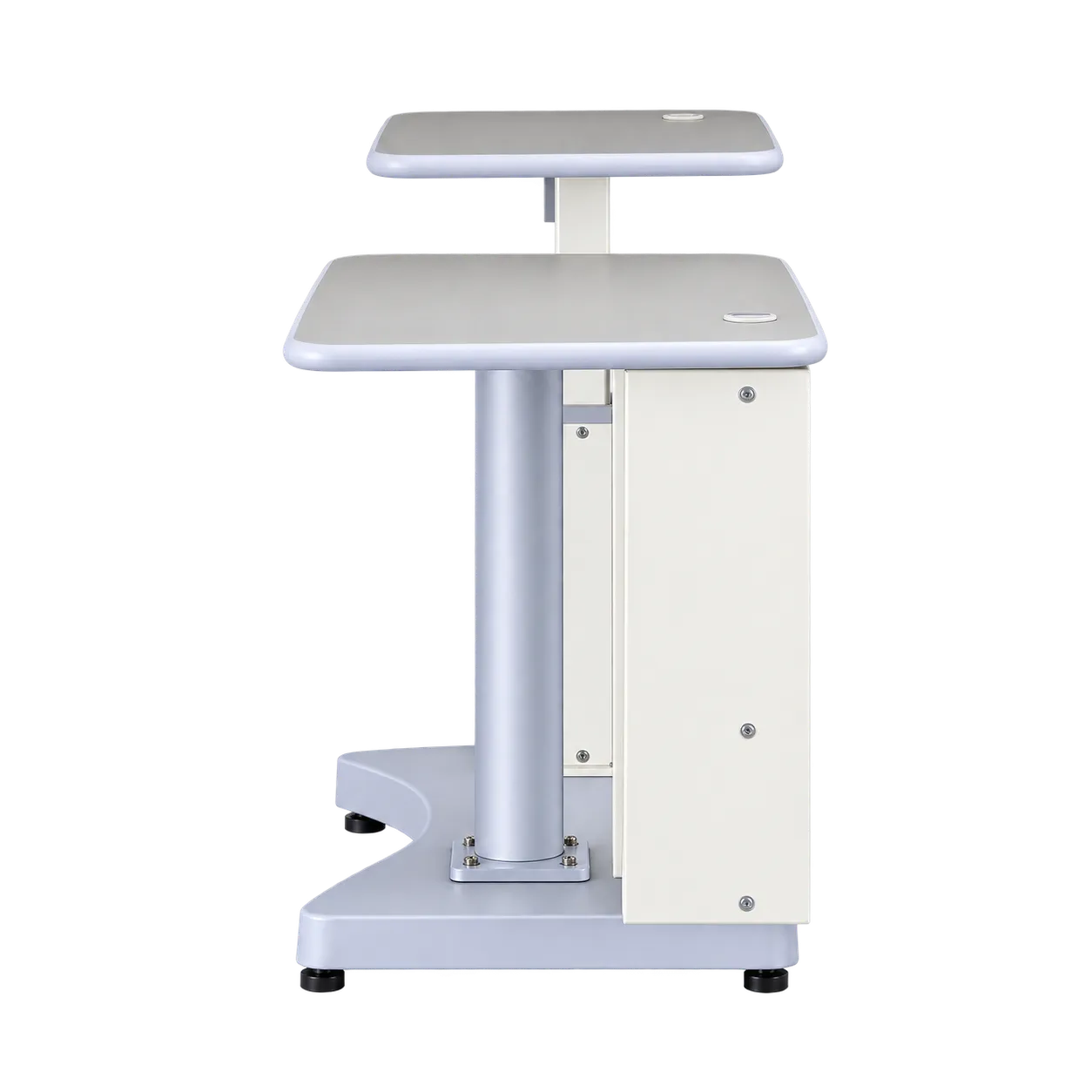
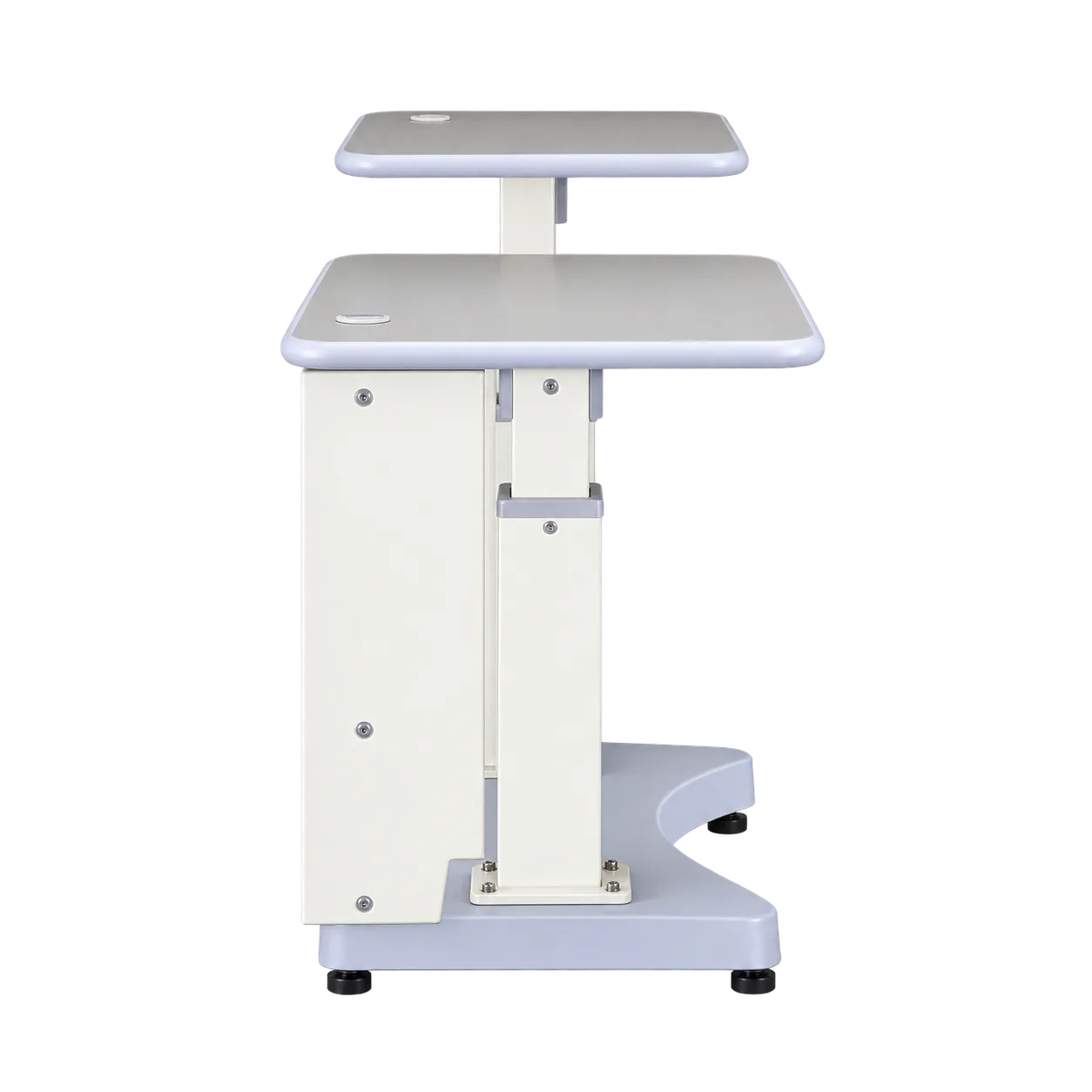
Community optometry consulting rooms are the natural home. Most practices now keep electronic patient records, and the clinician moves between examining and typing many times an appointment. With the instrument on its own lifting top and the keyboard on a fixed desk, neither job disturbs the other, supporting the clear, contemporaneous records the GOC expects.
Pre-test rooms with connected instruments benefit particularly. Autorefractors and tonometers often print results or send them to a computer, so a fixed desk with a printer or computer tower beneath keeps the chain of equipment together. The enclosure's suitability for your machine is confirmed at order.
Small consulting rooms gain floor space. One combined station replaces a separate instrument table and desk, leaving room for the refraction chair and a clear route for the patient.
Staff comfort is a practical benefit. The Health and Safety (Display Screen Equipment) Regulations 1992 require employers to assess workstations used by staff who use screens habitually. A desk that stays at a set height, rather than moving with the instrument, makes that assessment simpler to satisfy.
Hospital eye service outpatient rooms can use it where clinicians document at the point of care, with the instrument top set for each patient and the desk left for the record system.
Dispensing and contact lens rooms can place a slit lamp or keratometer on the lifting top and a lensmeter, records and paperwork on the desk.
Wheelchair users are partly served. The instrument top's range covers many needs, but the single column and long floor base limit footplate and knee clearance, so practices with many wheelchair users usually keep a dedicated accessible position as well.