
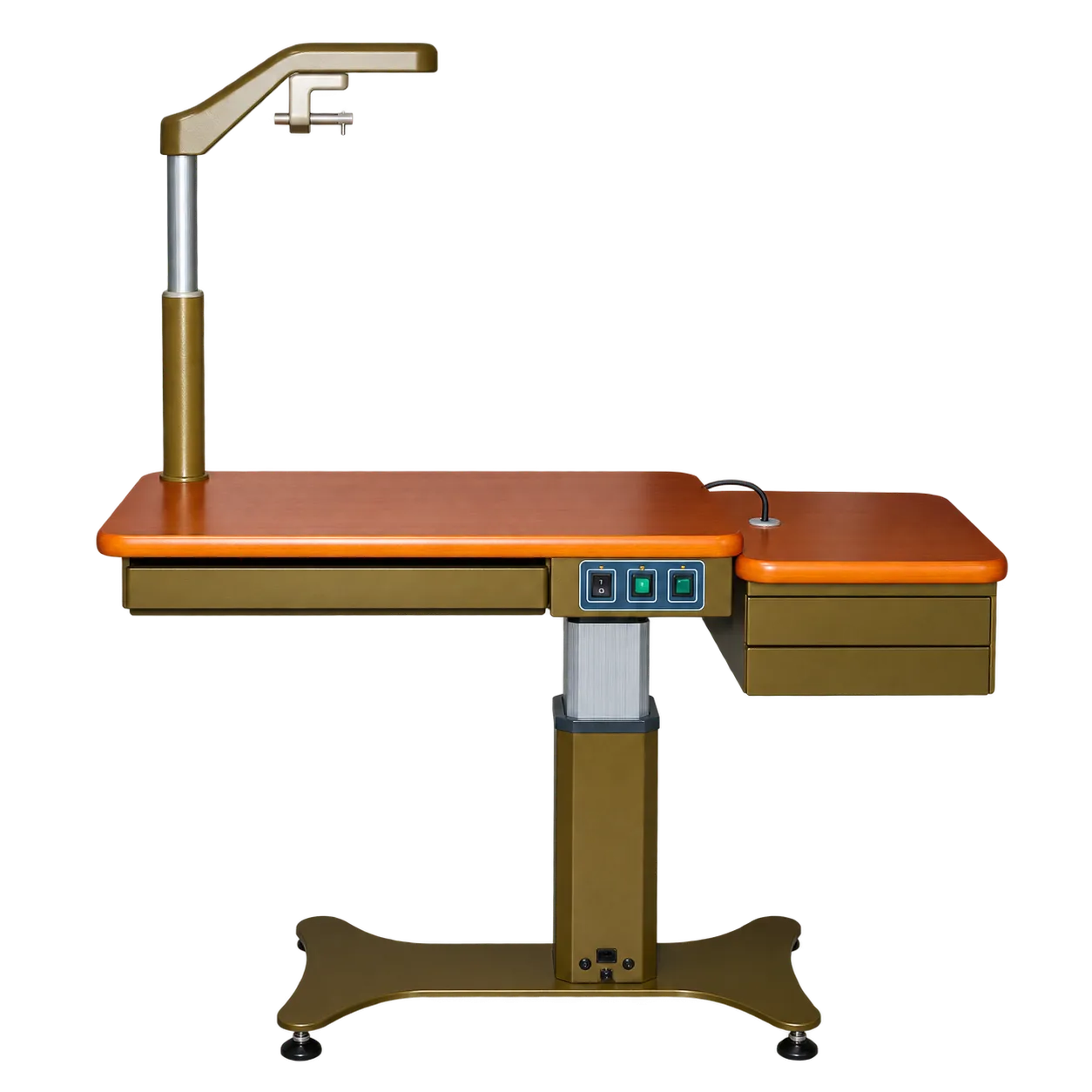
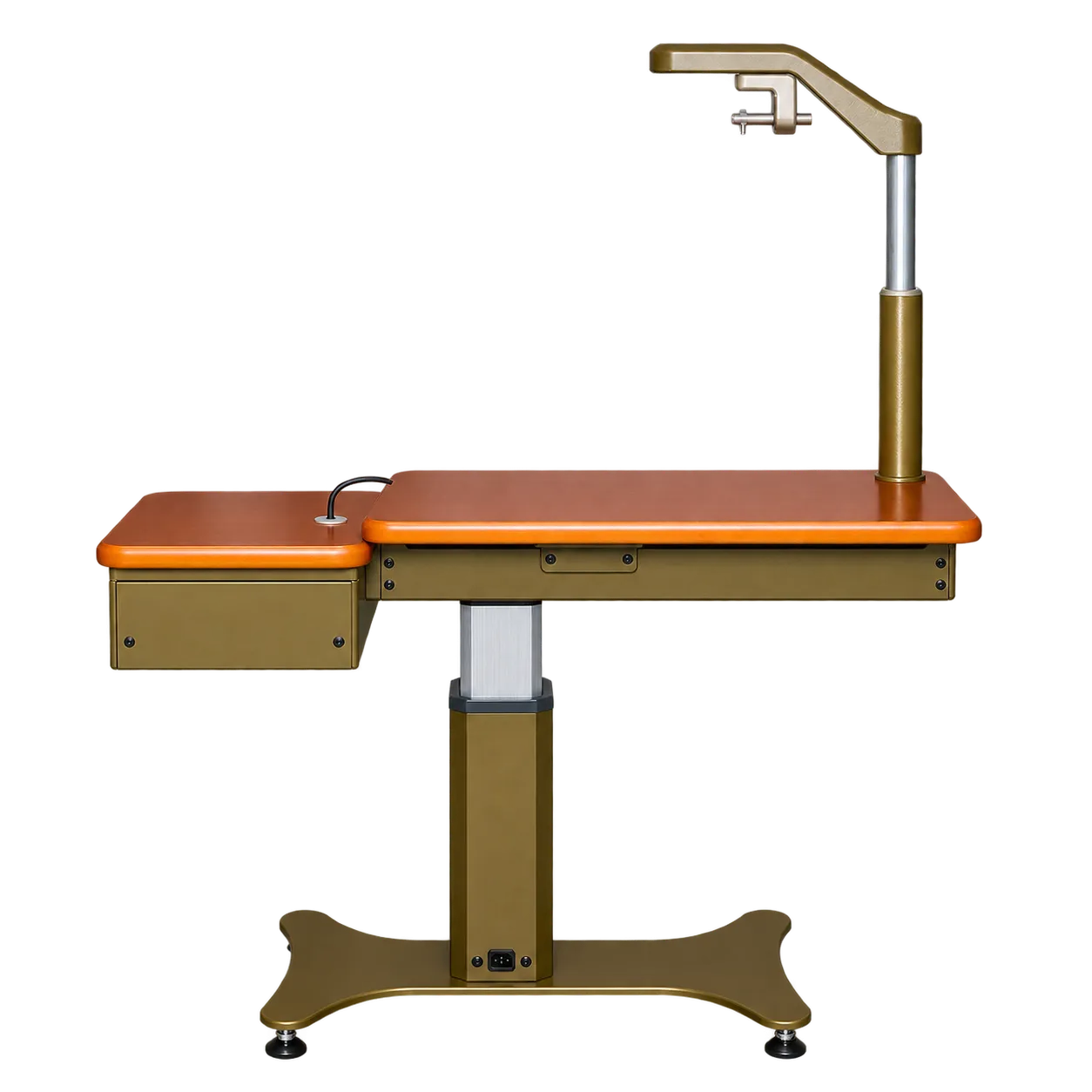
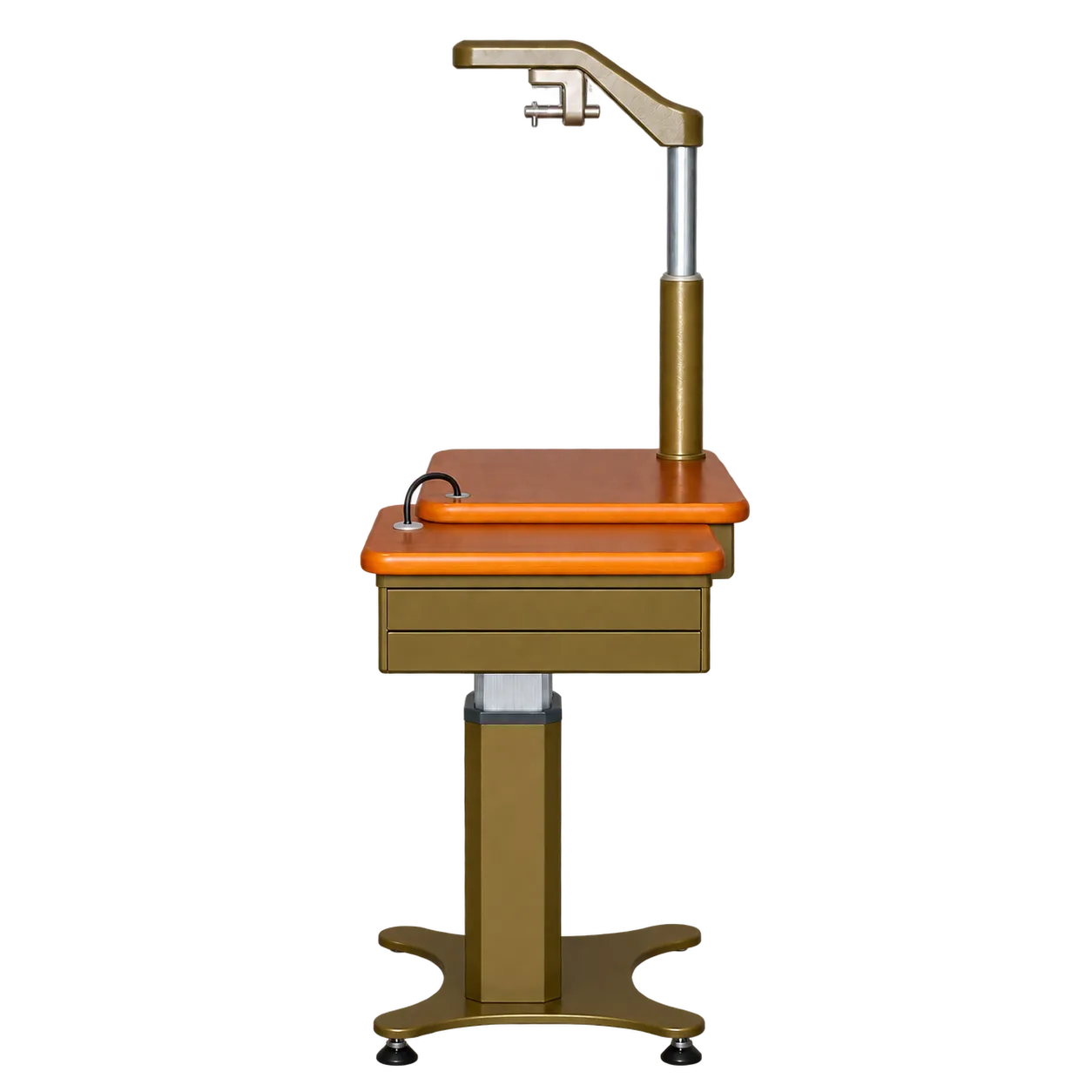
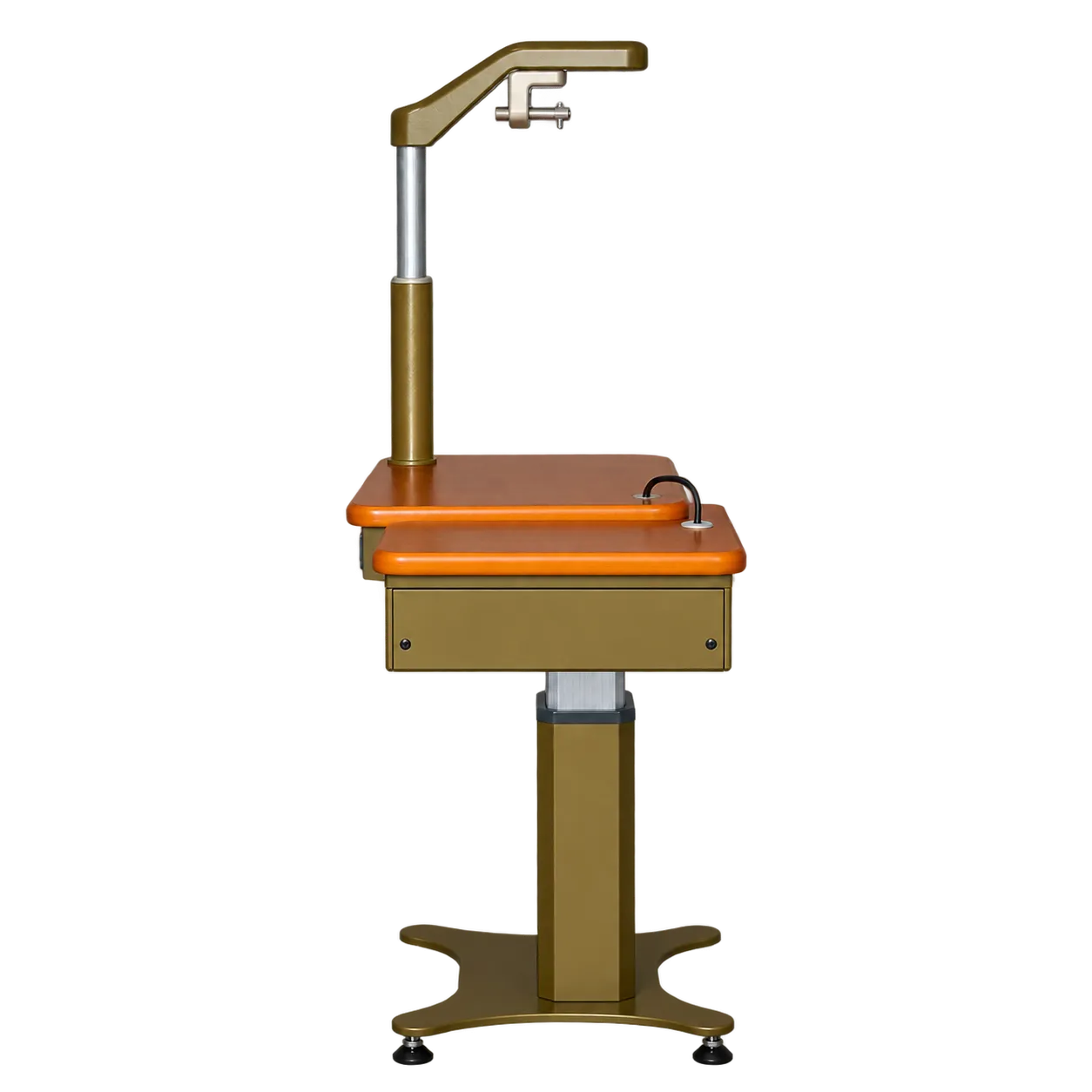
Community optometry refraction rooms are the natural home. A conventional lane uses a floor-standing phoropter stand or chair unit, a separate instrument table and a trial lens cabinet. The C-400 combines them, so the clinician can swing the phoropter in, check a result on the lensmeter, and reach the trial lenses without leaving the seat. That supports the thorough, efficient sight test the GOC expects.
Small consulting rooms gain the most floor space. Replacing a stand, a table and a cabinet with one unit leaves room for the patient's chair and a clear route to the door, which also makes the room easier to clean.
New practice fit-outs and refurbishments can specify it as the core of a lane, adding a refraction chair and chart or projector. We can quote the whole lane together.
Trial framing and paediatric refraction benefit from the drawer. Children are often refracted with trial lenses in a frame rather than through a phoropter, and patients with high prescriptions or specific needs frequently have results confirmed in a trial frame. A tray-sized drawer at the table keeps the full set within reach.
Low vision assessments draw on trial lenses, near adds and magnifiers, much of which fits the drawer, with the worktop free for reading charts and devices.
Hospital eye service refraction clinics and university teaching clinics can use it as a standardised lane, with the same layout in each room so clinicians and students find everything in the same place.
Wheelchair users are partly served. The arm may reach a patient in their own chair, but the single column and curved base limit knee and footplate clearance, so practices with many wheelchair users usually keep a dedicated accessible position as well.