
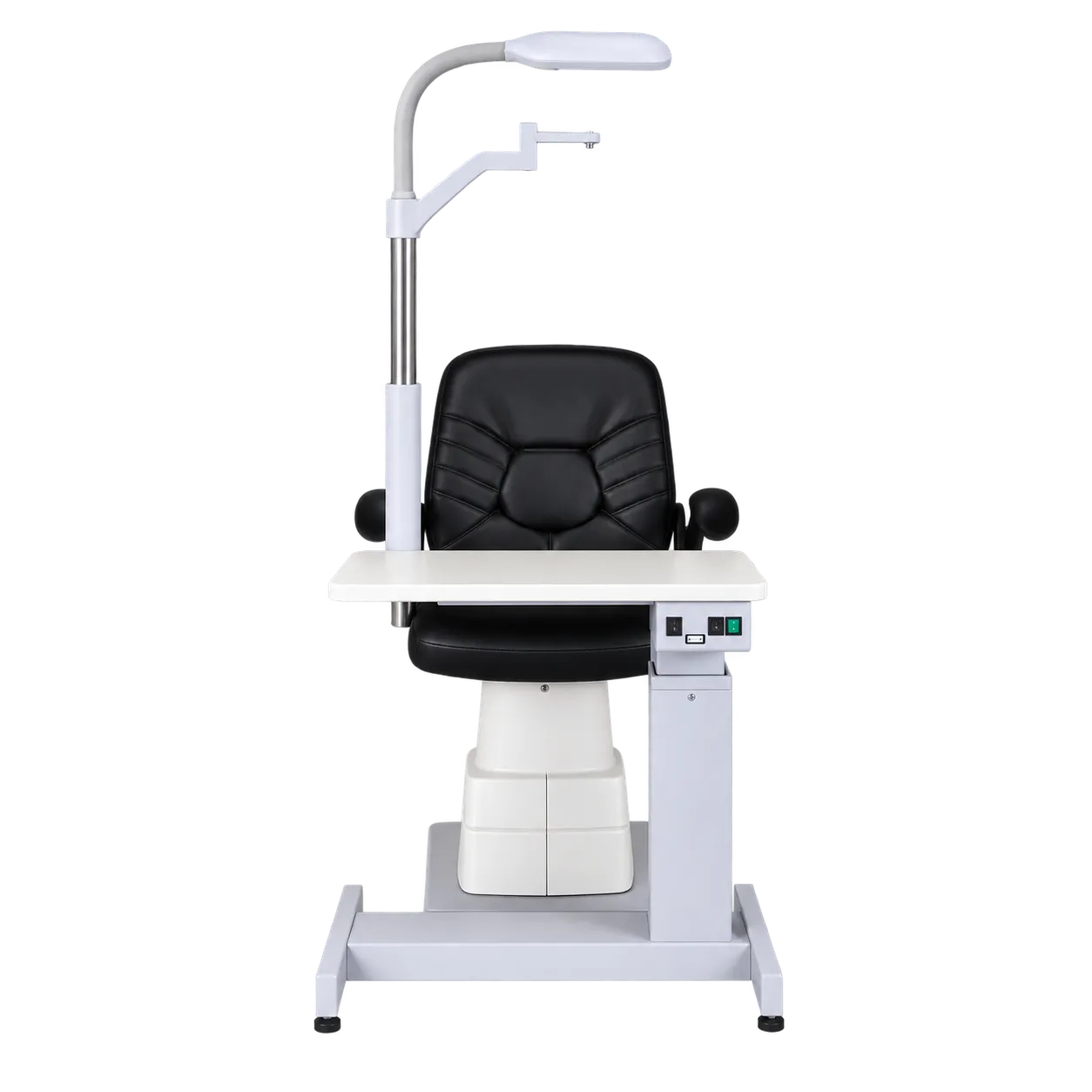
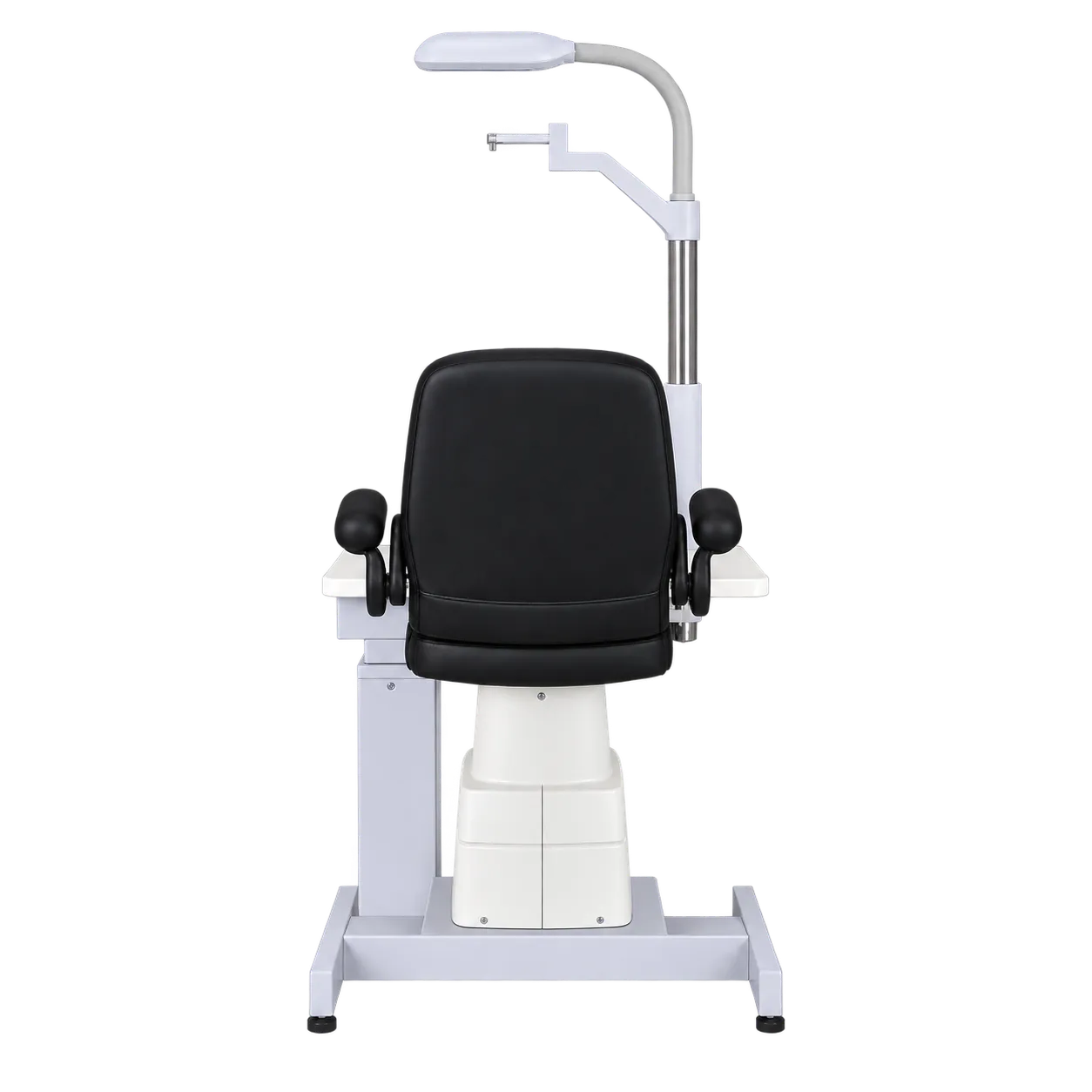
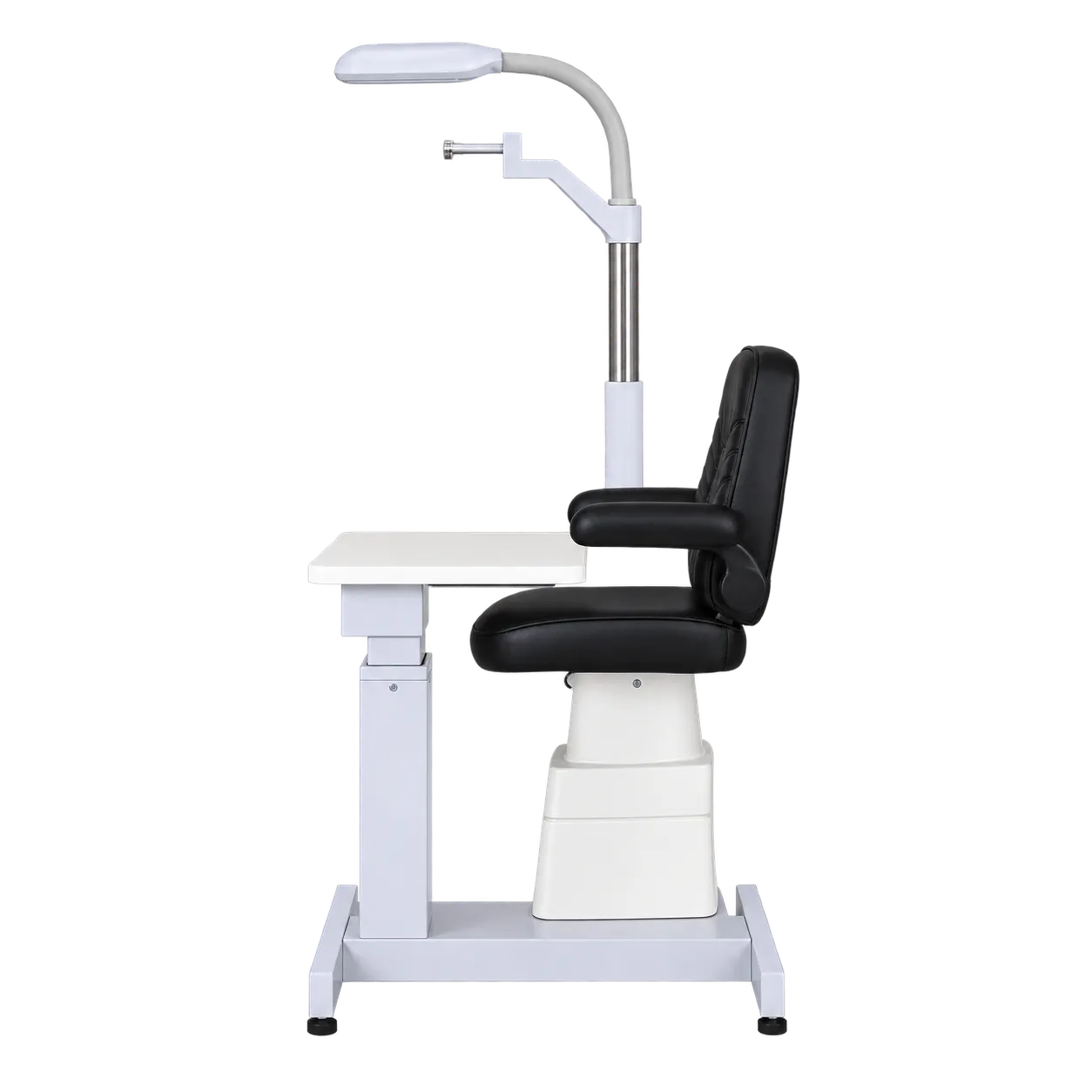
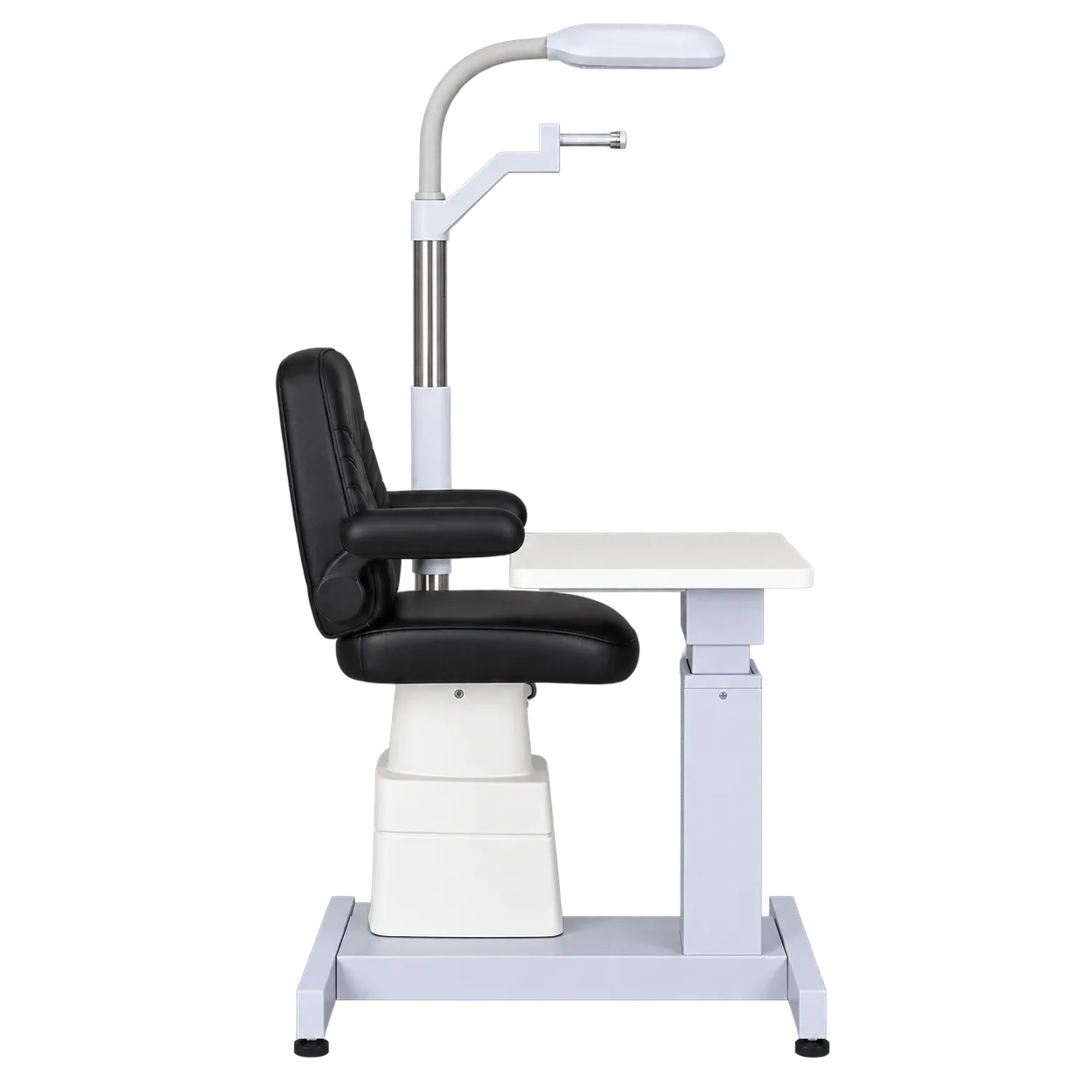
Second and overflow positions are the honest application. A practice adding a room, running a screening station, or using a space two days a week needs somewhere the patient can sit properly and an instrument can be mounted — and does not necessarily need a cabinet, a trial lens drawer or a deep rotating worktop on day one. At 45 kg and 720 mm wide, this fits and funds that requirement where a mainstream unit would do neither.
First fit-outs on a limited budget are served by the same logic. The chair is full size at 460 × 500 mm with a 1010 to 1170 mm envelope, matching seating on units three times the weight, so the patient's experience of the examination is not what has been economised. It is the practitioner's storage and working surface that have been reduced, which is the right place to take it.
Awkward spaces suit the dimensions. A 720 mm width is the narrowest in this range, and 45 kg is the easiest to carry in and the easiest to move afterwards — which matters where a room's role is not yet settled.
Reduced maintenance is a genuine if unglamorous benefit. Fewer mechanisms than any other unit here means correspondingly less to inspect and less to develop play.
Three things belong in the decision. There is no drawer, so trial lens storage must be planned separately. The lamp appears in the illustration but not the specification, and no total power figure is given, so illumination and its electrical requirement need confirming. And the 720 × 430 mm worktable is the smallest in this range — check your intended instrument against it specifically, because the margin is thin.