
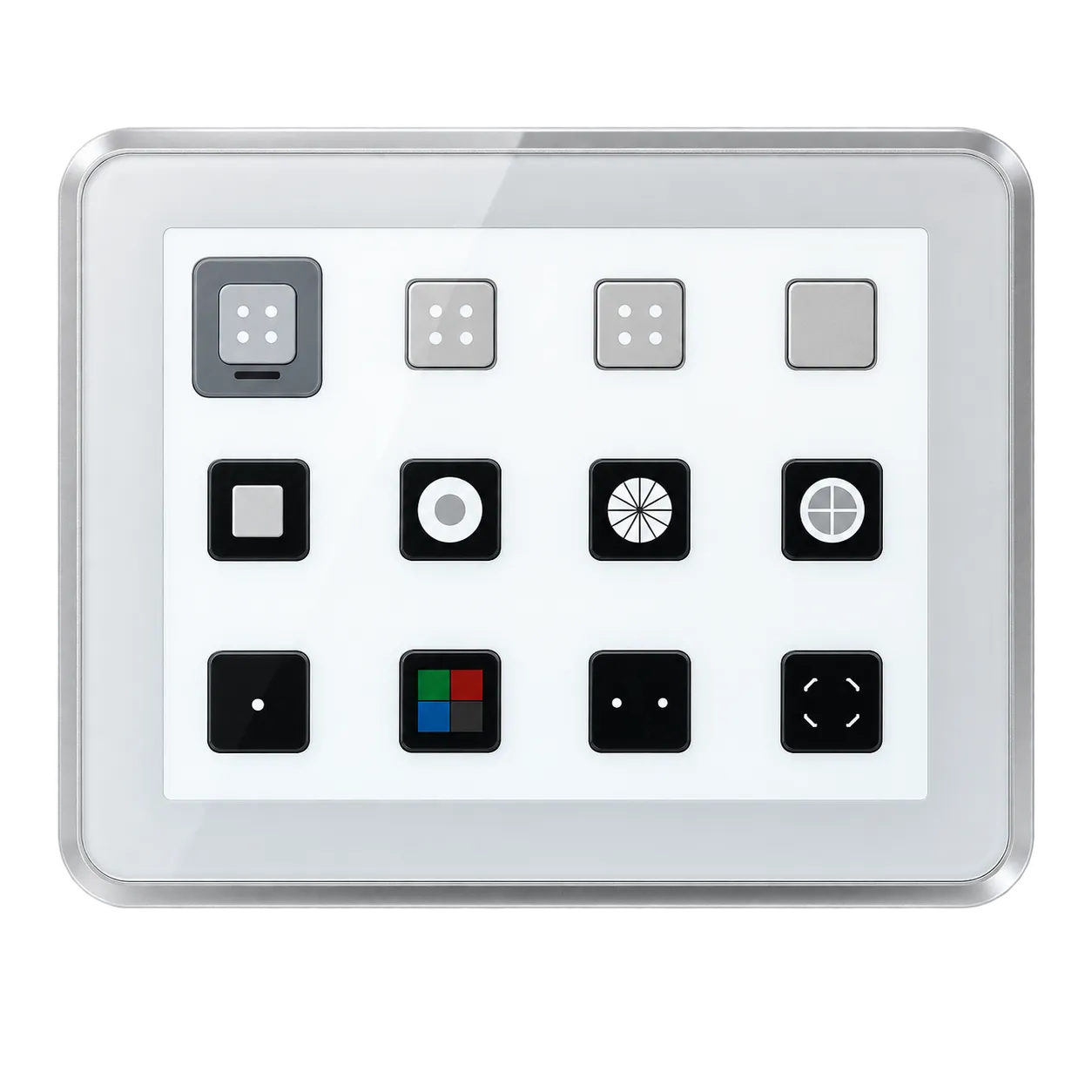
Practices consolidating several instruments into one panel are the natural buyers. A unit carrying ETDRS acuity, Ishihara colour plates, contrast testing and a full binocular suite covers ground that would otherwise require a separate colour vision book, a contrast chart and dedicated binocular targets — each of which occupies space, needs its own illumination and requires the patient to be moved or repositioned. Bringing them onto one display keeps the patient in the chair and the examination in sequence.
Low vision and shared-care monitoring benefit specifically from the ETDRS chart. Its equal letter counts, uniform spacing and logarithmic progression make change over time measurable in a way a traditional Snellen layout does not, which matters in glaucoma and macular monitoring pathways, in hospital shared-care schemes, and anywhere acuity data feeds into audit or research.
Contrast sensitivity assessment, supported by the gamma calibration function, addresses a genuine gap in routine practice. Patients with early cataract, glaucoma or macular disease frequently report visual difficulty while retaining good high-contrast acuity, and contrast testing is what demonstrates the deficit objectively. Having it on the same panel makes it a routine addition rather than a separate procedure.
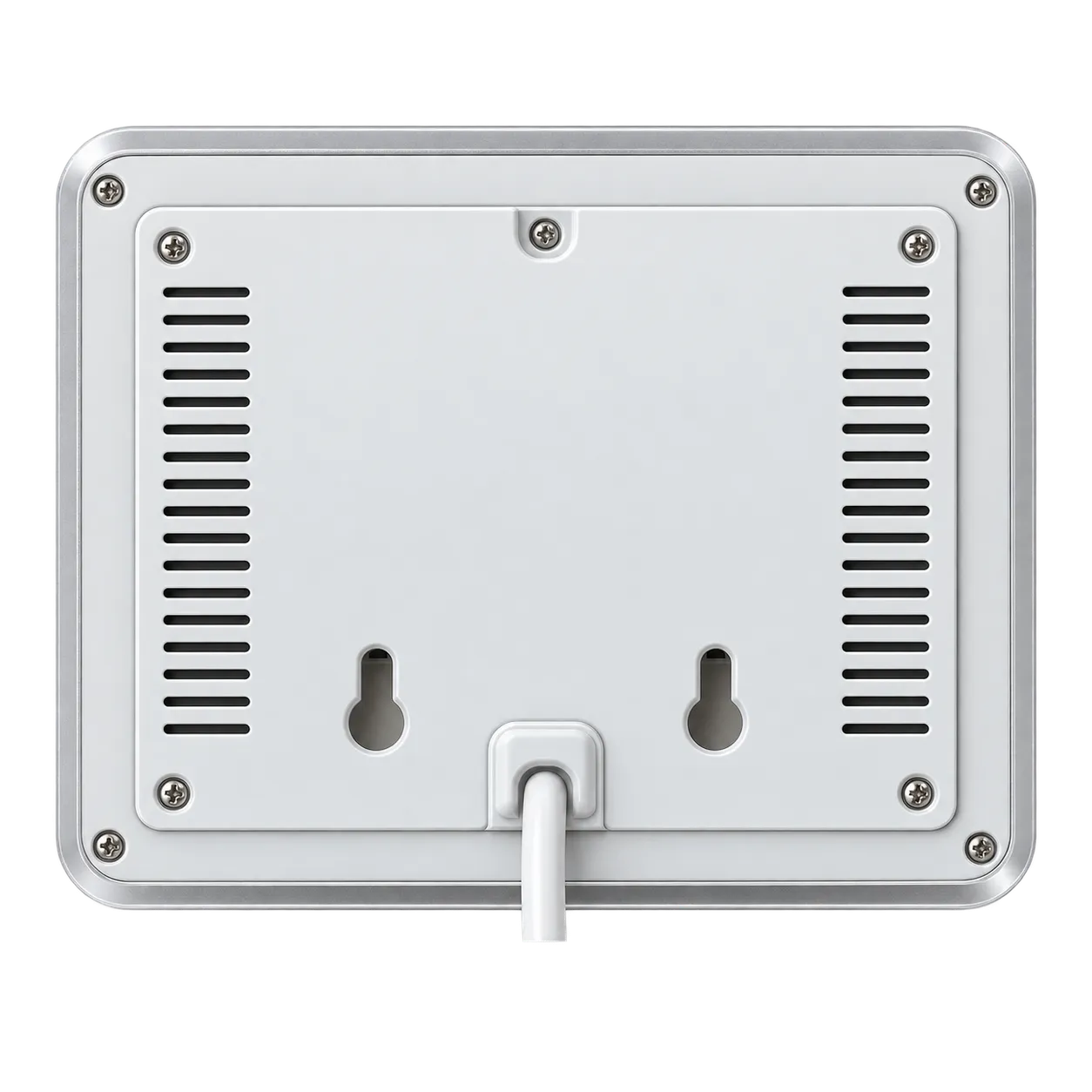
Mirrored consulting rooms are the practical UK consideration the software handles directly. Most practices achieve six metres through a mirror, and reversible optotypes mean the same unit serves either arrangement. Two things should be settled before ordering, and they are not small. Panel dimensions, weight, power consumption, brightness and — most importantly — the chart acuity range are unpublished, and the acuity range determines whether the instrument reaches far enough for the low vision work its ETDRS chart implies. The CNT test is named but undefined, and should be described in writing if it bears on the purchase.