
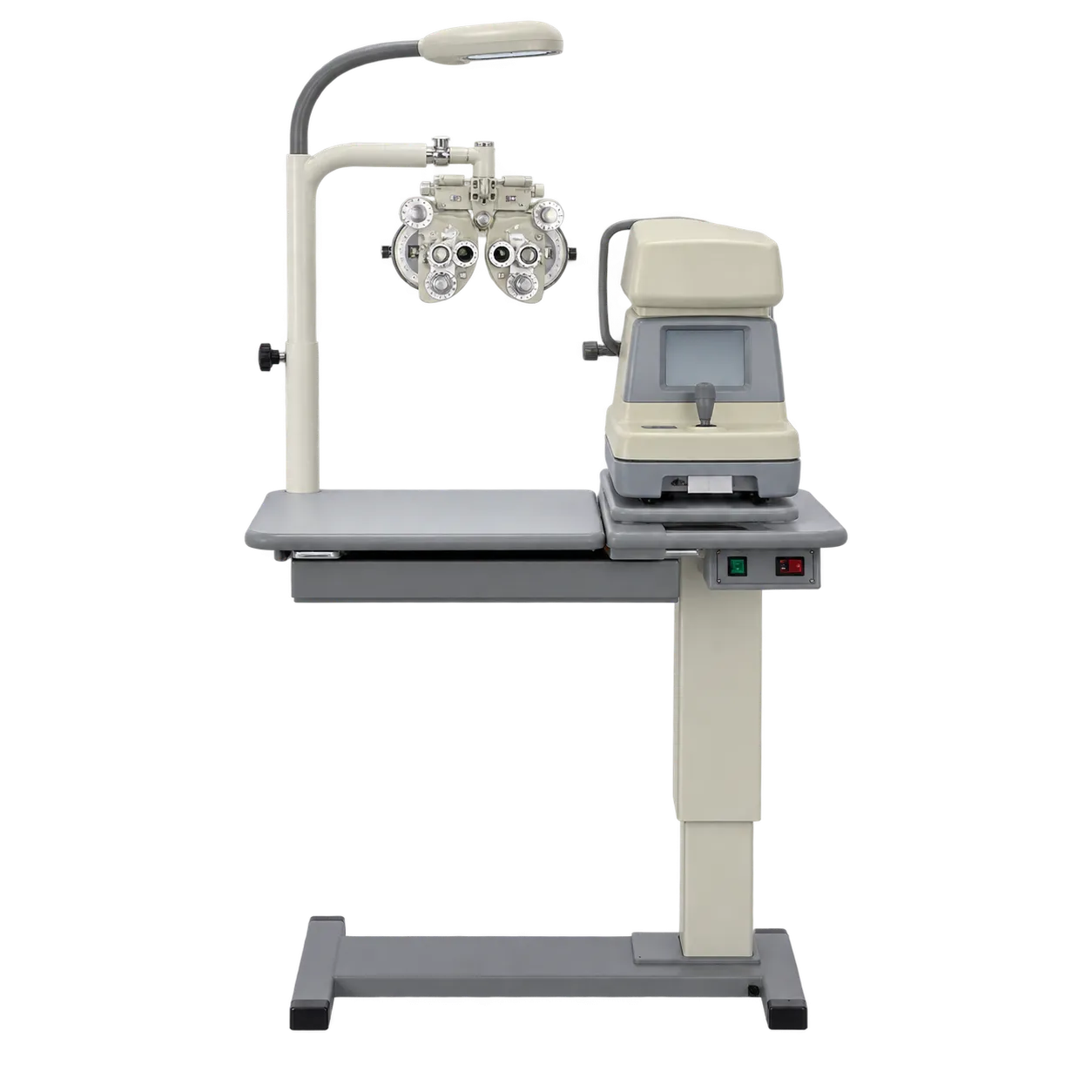
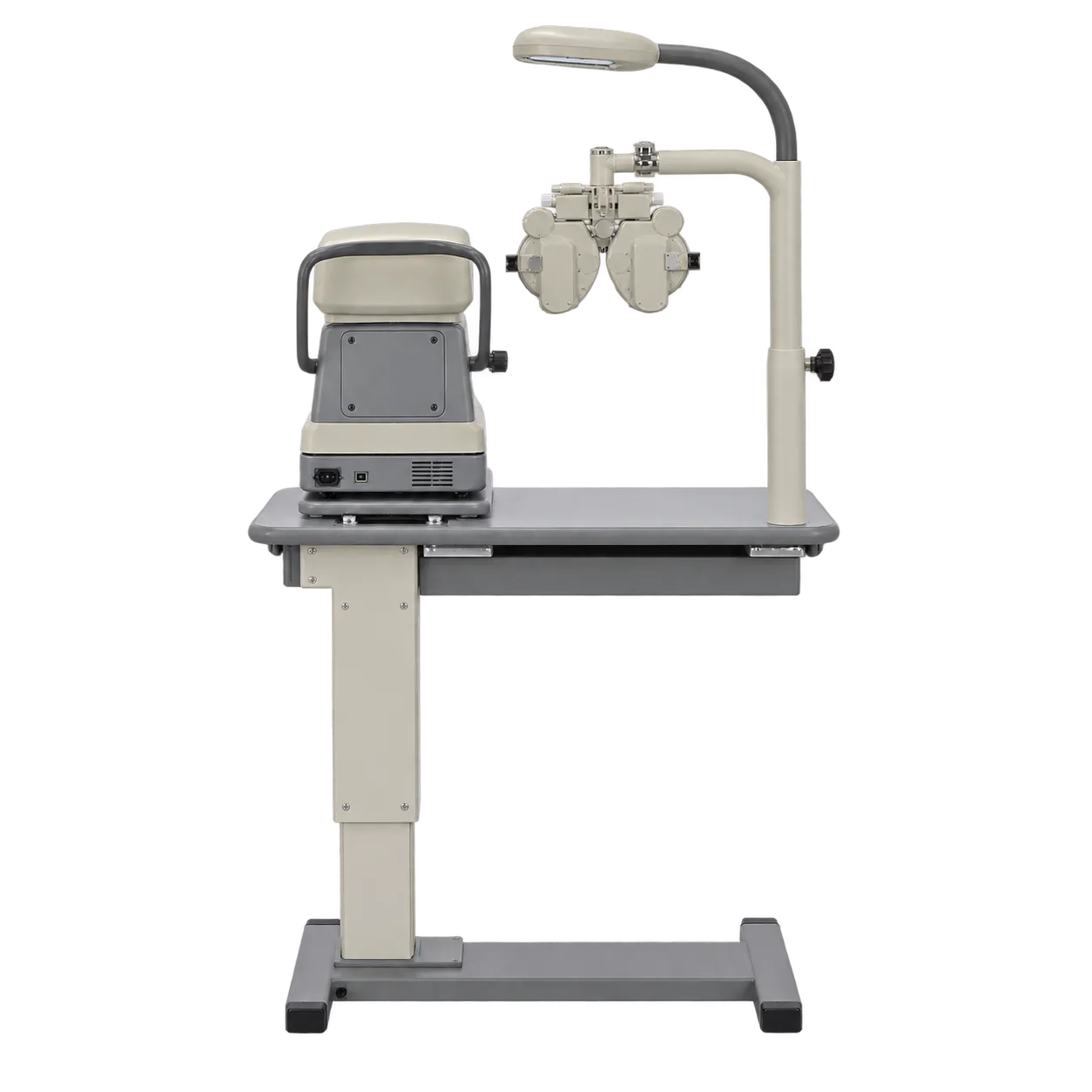
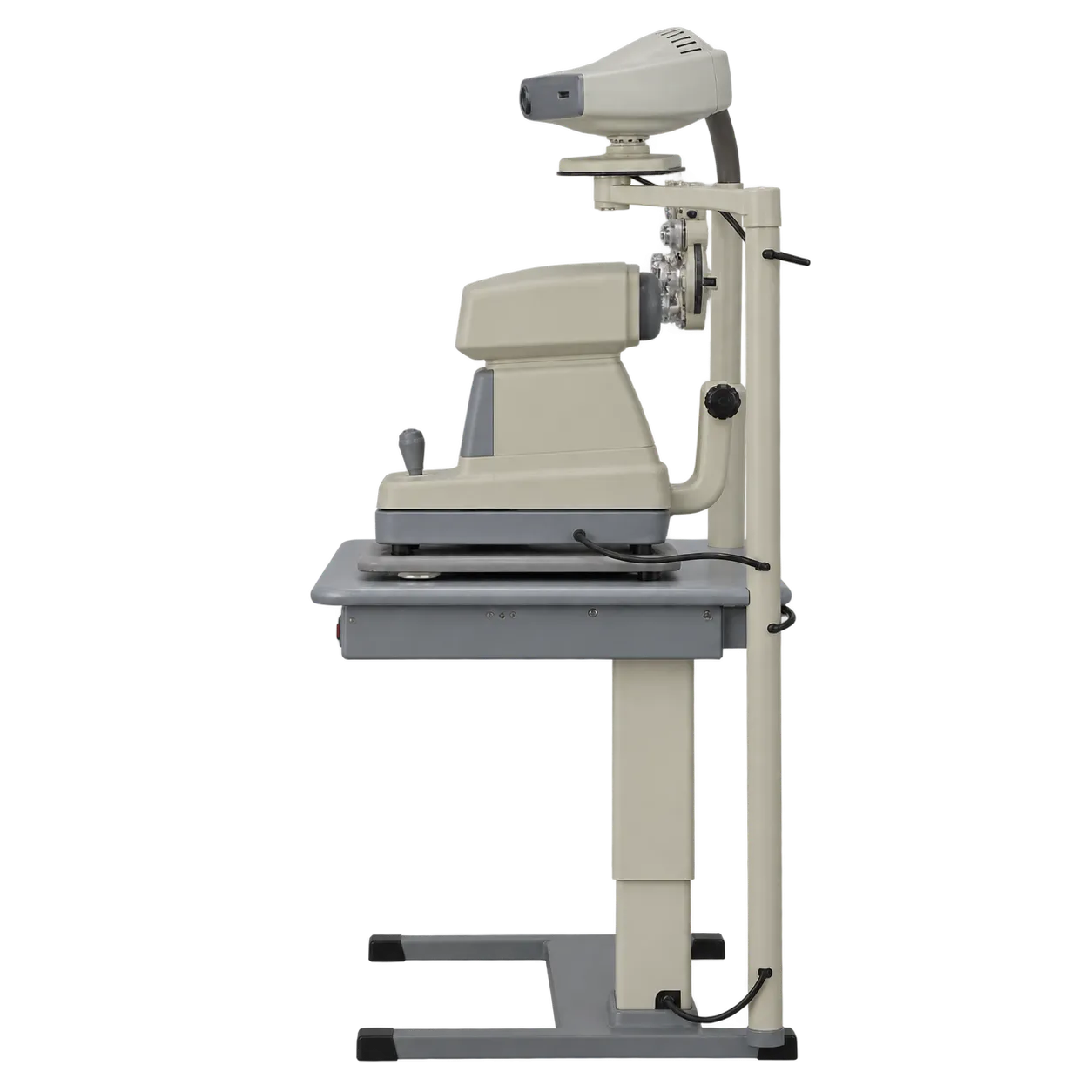
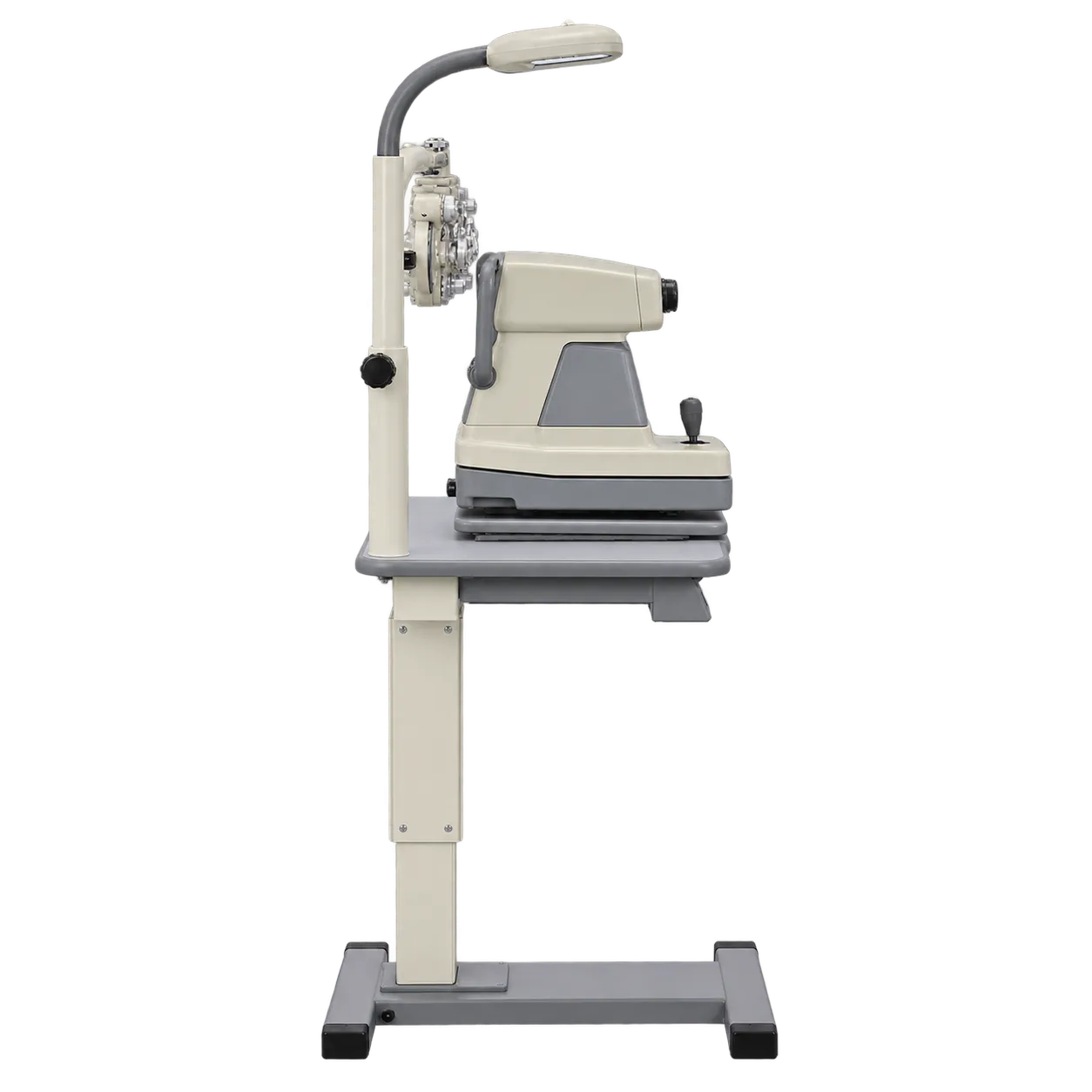
Practices testing from a screen are the whole application. Chart projection is one method of presenting optotypes and chart monitors and illuminated wall charts are others, each with its own installed base. A practice committed to a monitor or a wall chart has no use for a projector upright, and specifying a table that carries one means paying for a mount that will never hold anything.
The visual argument is worth making explicitly. A vertical member standing beside the working position sits in the patient's field of view toward wherever the chart actually is — and when the chart is a screen or a wall panel opposite, that upright is between the patient and the thing they are being asked to read. A patient will look past it, but looking past something is precisely what a refraction is trying not to require. Removing it clears the line entirely.
Small rooms gain the physical saving too: one fewer upright standing in the floor area, one fewer item to clean around, and a table that reads as less cluttered when a patient walks in.
Everything else follows the group — 520 mm depth in the shallowest class here, height ranges published as heights above the floor rather than travel, a single 220V lamp supply, and no shipped-variant question.
Three things need requesting. Total unit power is unpublished, where the stablemate states 80 W. No weight is given. And the datasheet does not indicate whether a projector stand could be retrofitted — if a move to projection is possible within the unit's service life, that question should be settled before choosing this model over the one that carries a stand as standard.