
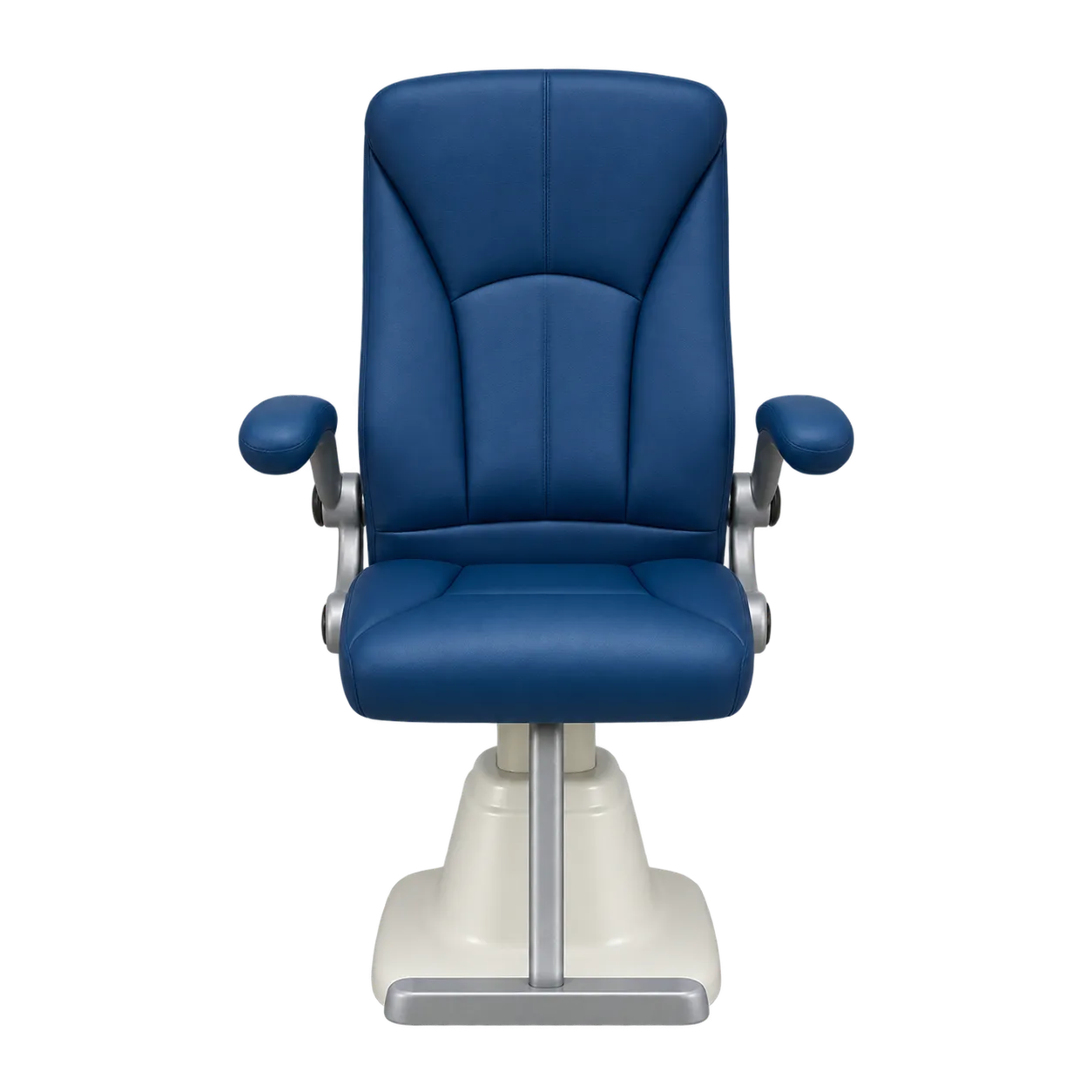
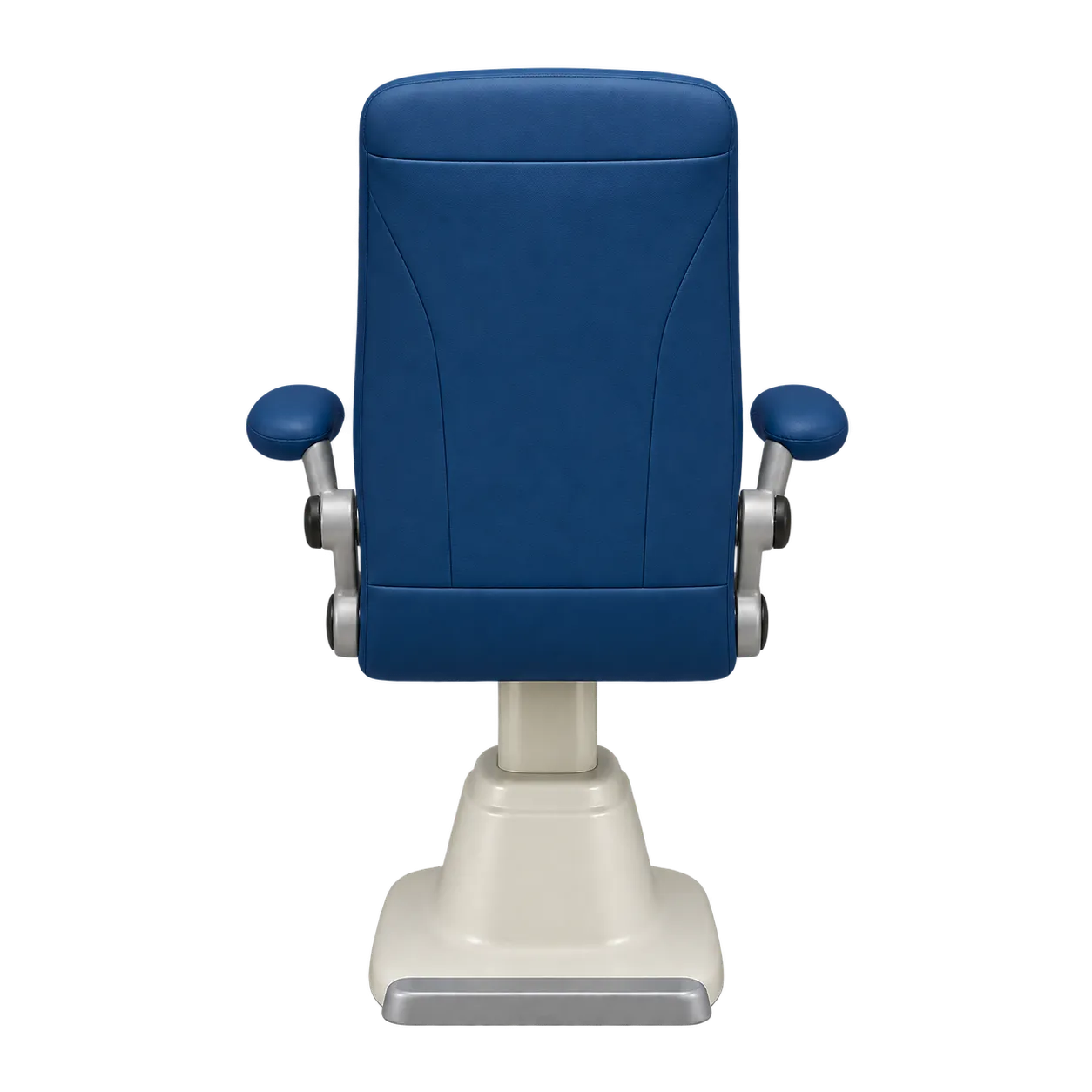
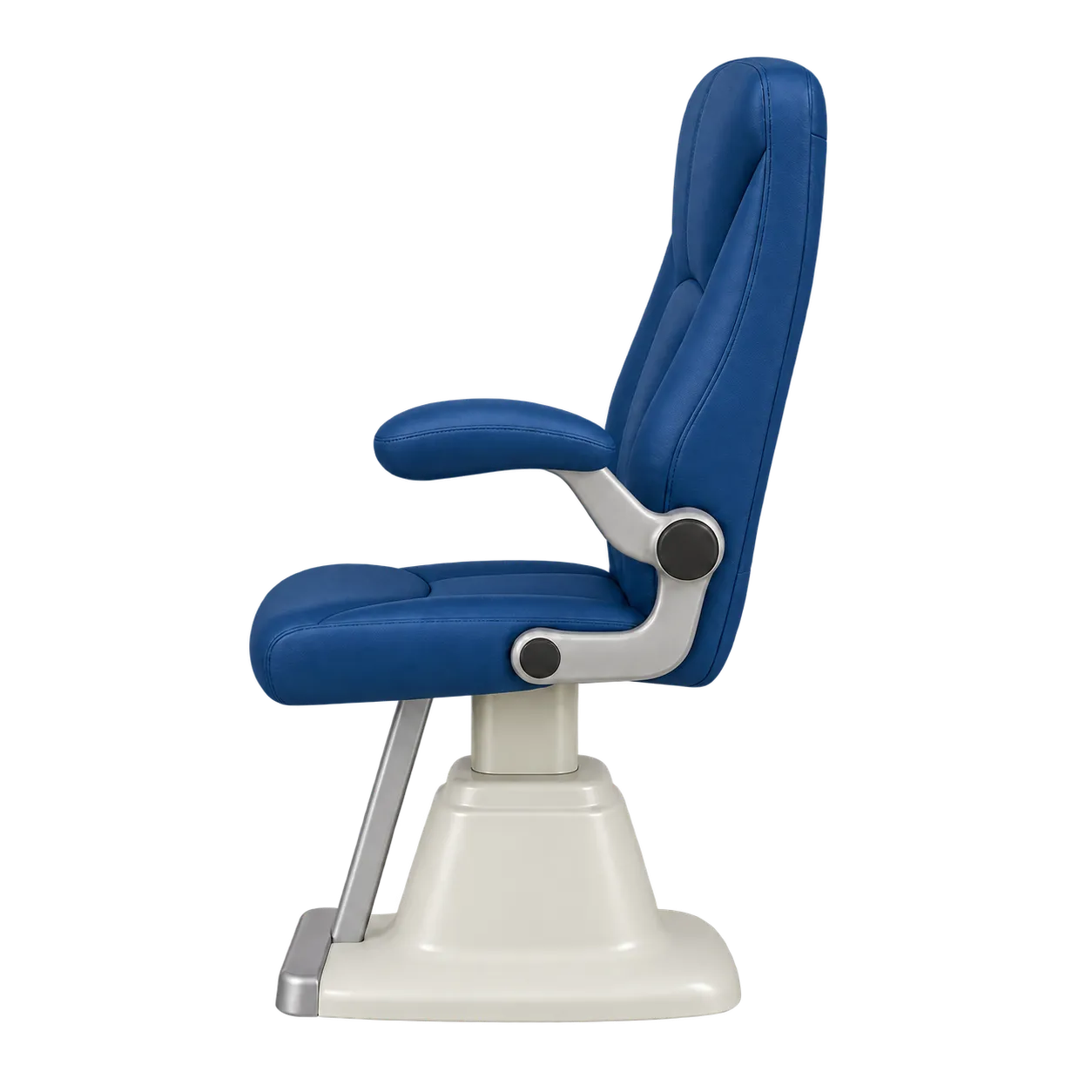
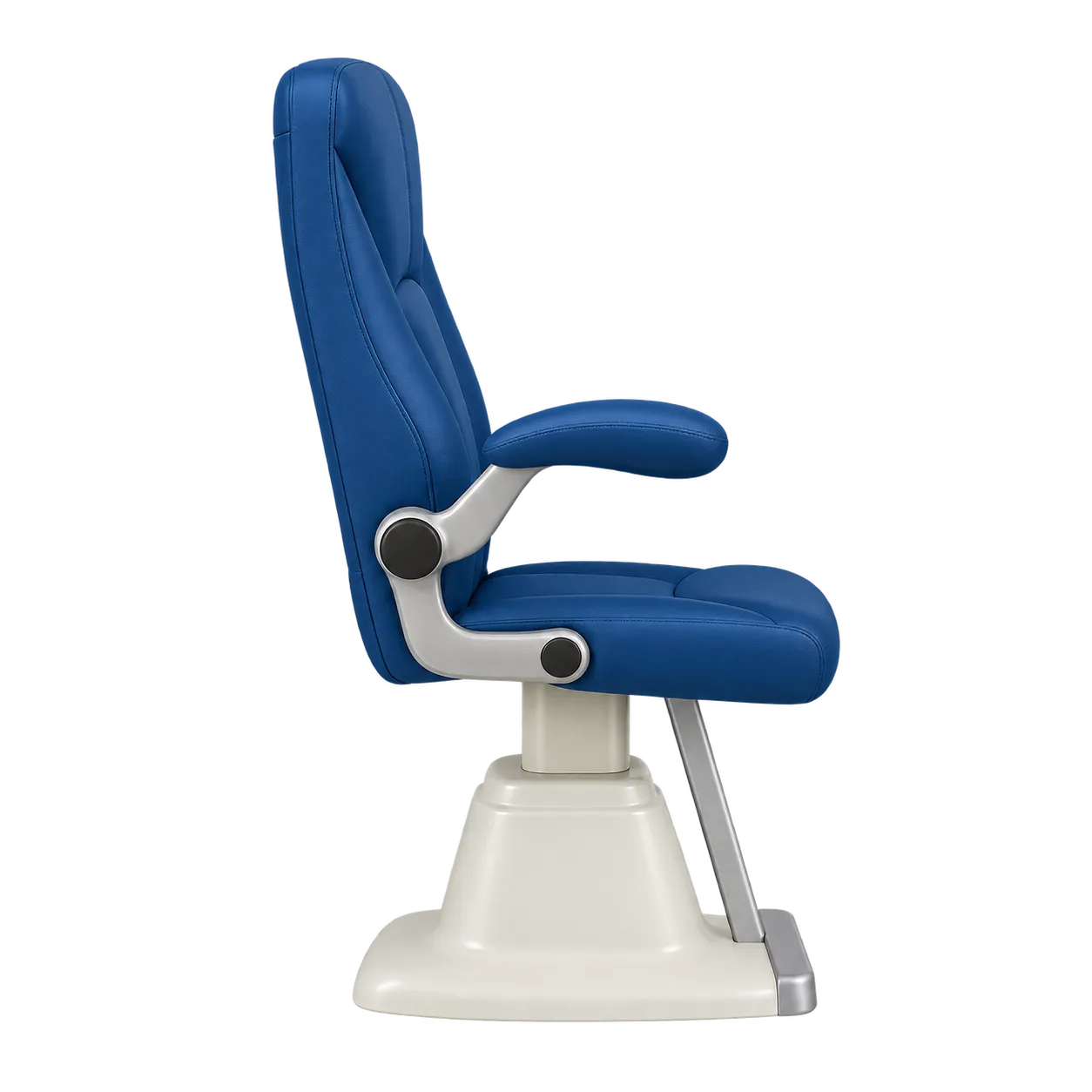
Completing a deferred purchase is the primary case, and it is the reason this chair exists in the catalogue at all. A practice buying the combined table in this range receives a DC24V interface whether or not it orders a lift, and that socket does nothing until a compatible chair is connected. Where the lift was trimmed from an order to meet a number, or deliberately pushed into a later budget year, this completes it — without an installer returning to run a supply and without replacing anything already fitted.
Accessibility commitments made ahead of funding are served by the same route. A practice that specified the interface in anticipation of needing powered seating can honour that when the money arrives, rather than facing a second full purchase.
Patients who need help rising benefit from the armrests, fitted in both illustrated colourways. An armrest gives something to push against when standing and something to hold during transfer, and it is absent from some examination seating.
Two rooms wanting matching finishes are served by the two colourways shown, though whether those are the only options is unstated.
Three things need requesting together, and the gap is larger than on the standalone chairs in this catalogue. There is no seat height — the published 1195–1345 mm range is overall chair height, which does not tell you where the patient sits. There is no chair loading, which means the chair cannot answer an accessibility question until a figure is supplied. And there is no backrest angle, rotation figure, upholstery material or weight. For a chair being bought to complete an accessibility upgrade, the loading figure in particular should be settled before the order goes in.