
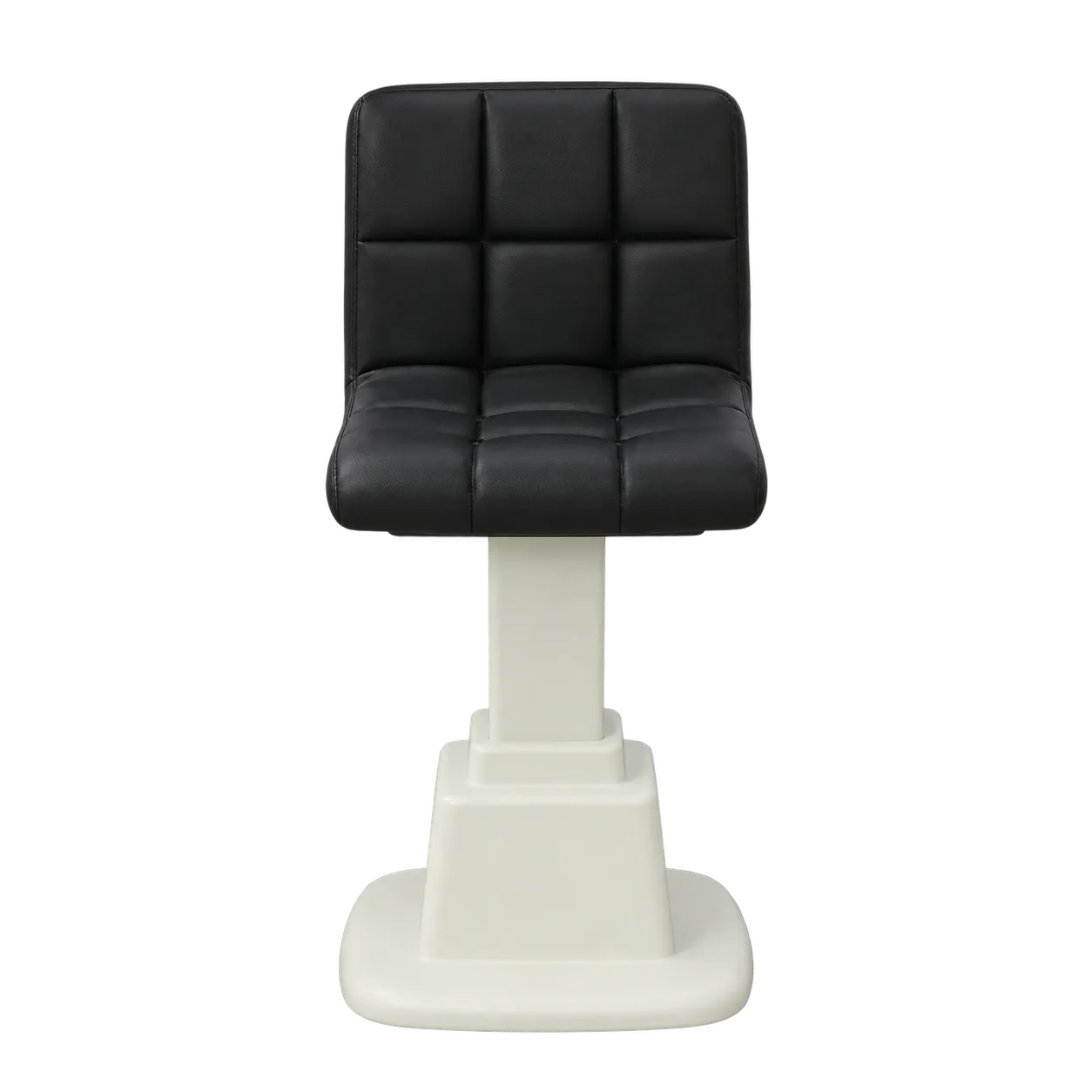
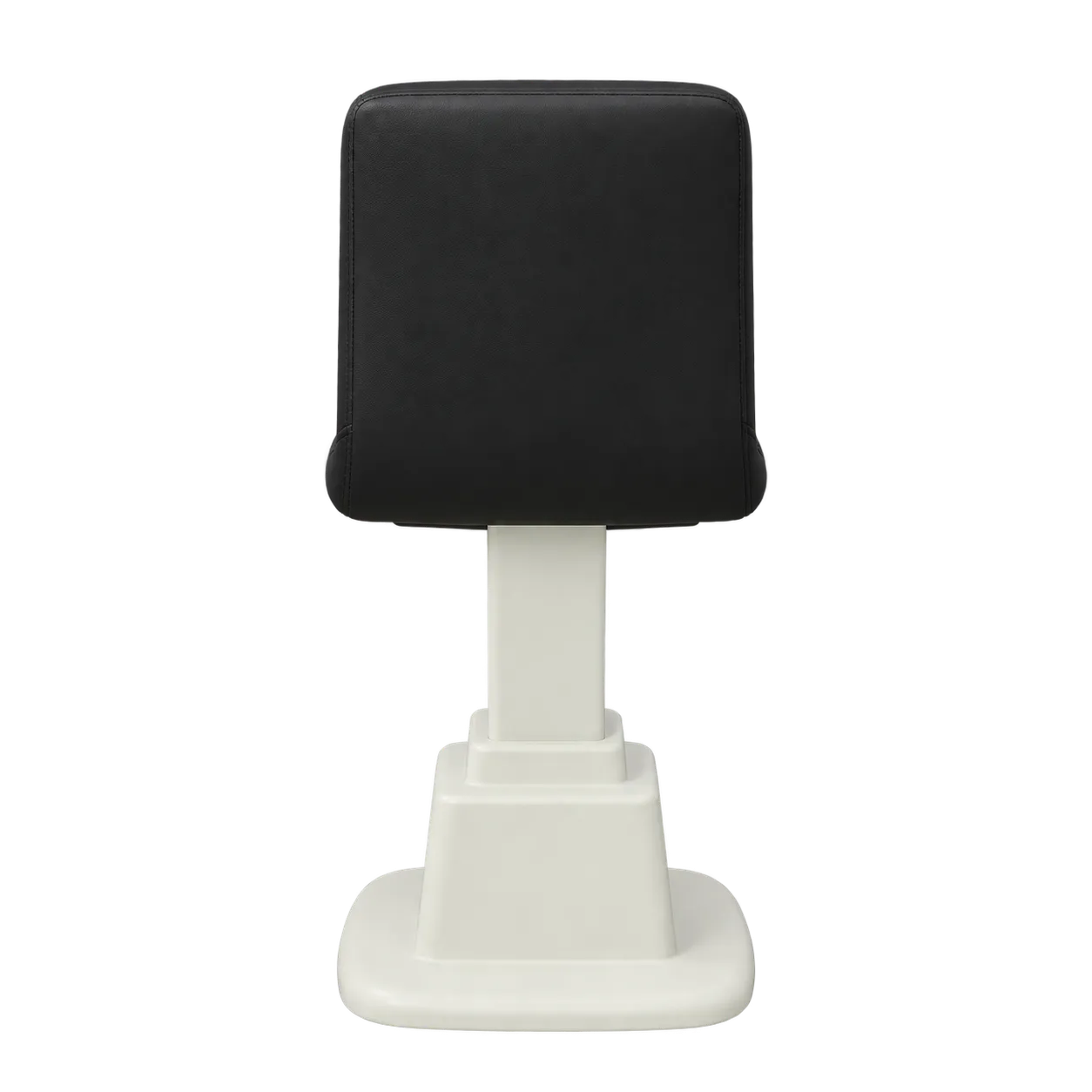
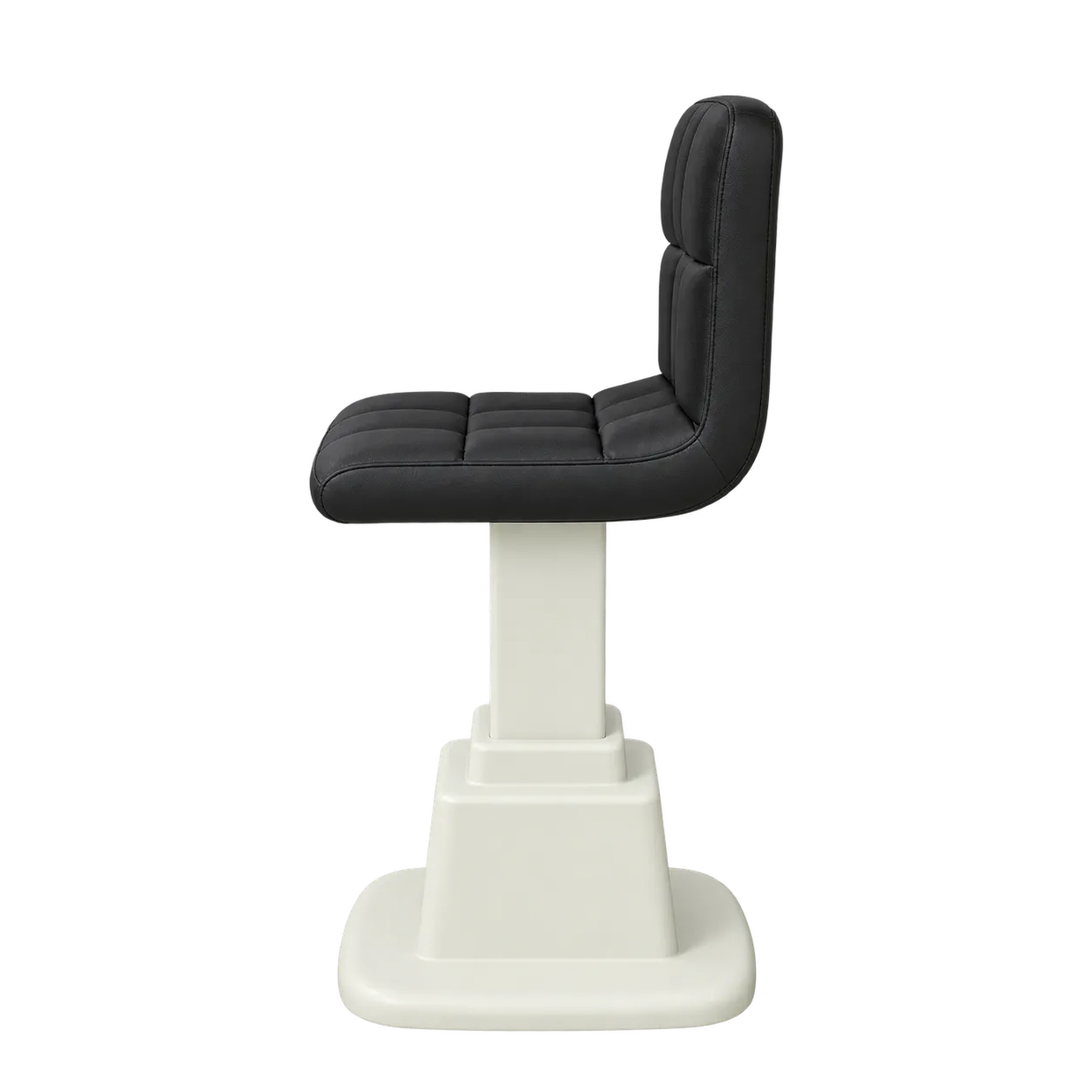
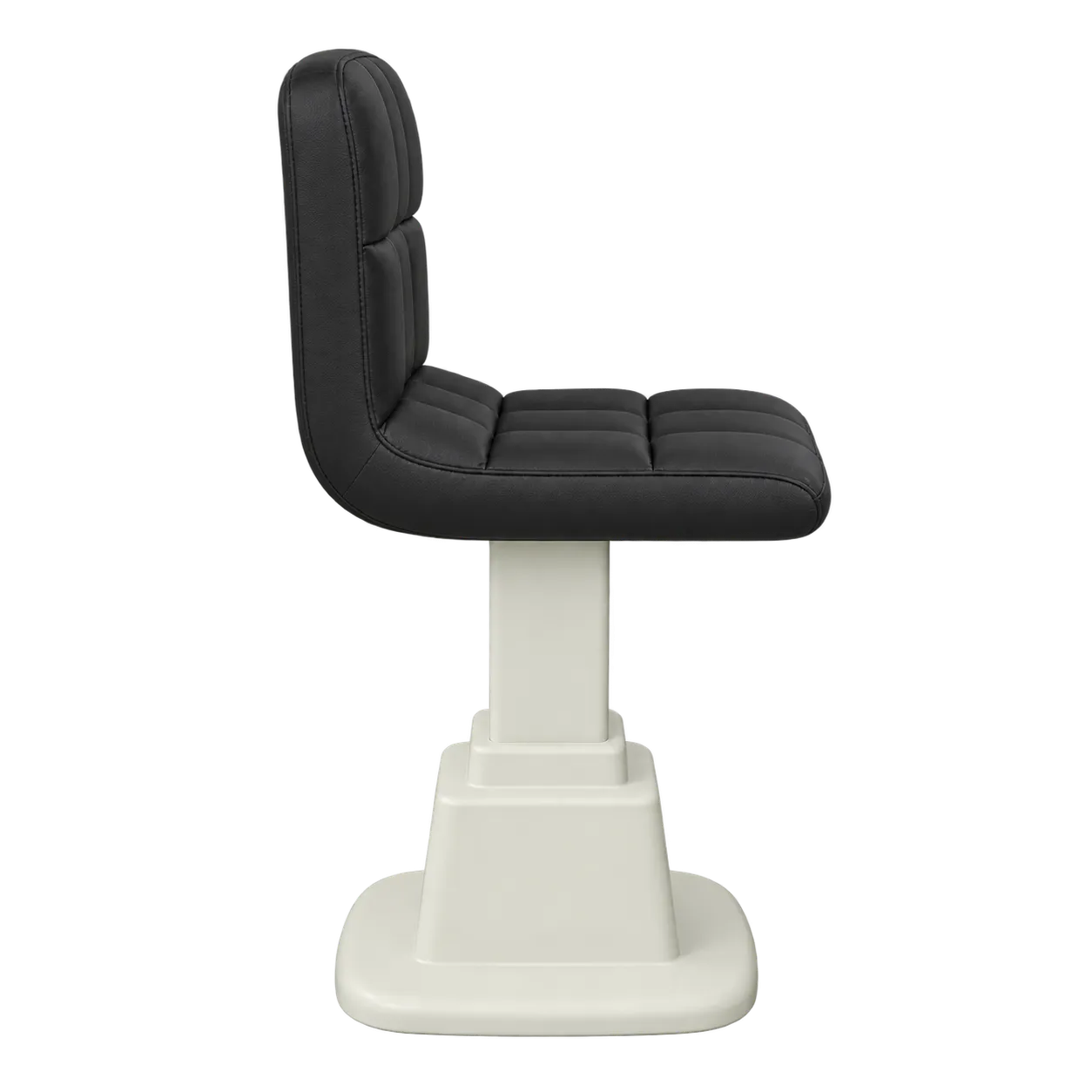
Examinations where both hands are occupied are the direct application, and that is most of them. A clinician holds a lens, a light or an occluder in one hand and steadies or positions with the other, so adjusting seat height by hand control means putting something down, making the adjustment and picking it up again. The interruption is short and lands exactly where concentration is required — and it repeats through every appointment where the height was not right first time. A foot switch removes it.
Close working from several angles suits the armless form. Where a patient must be turned, leaned or reached around, armrests and a tall backrest are obstacles rather than supports, and a compact stool leaves shoulders and arms entirely clear.
Small rooms benefit from the size. At 465 × 480 mm this is a considerably smaller object than the full lift chair in this range, on a footprint 215 mm narrower and 110 mm shallower.
Completing a deferred purchase applies here as to its stablemate: a practice with the table's DC24V interface already fitted can add this unit without new wiring.
The limitation belongs in the decision rather than a footnote. A patient who needs support to sit, something to push against to stand, or a back to rest against through a long appointment is not served by an armless low-back stool. For those patients the full lift chair in this range is correct, and this would be the wrong recommendation. Since most practices see both kinds of patient, the choice should follow the predominant caseload rather than the preference of whoever specifies it.
Loading, seat height, upholstery material and weight are all unpublished and should be requested together.