
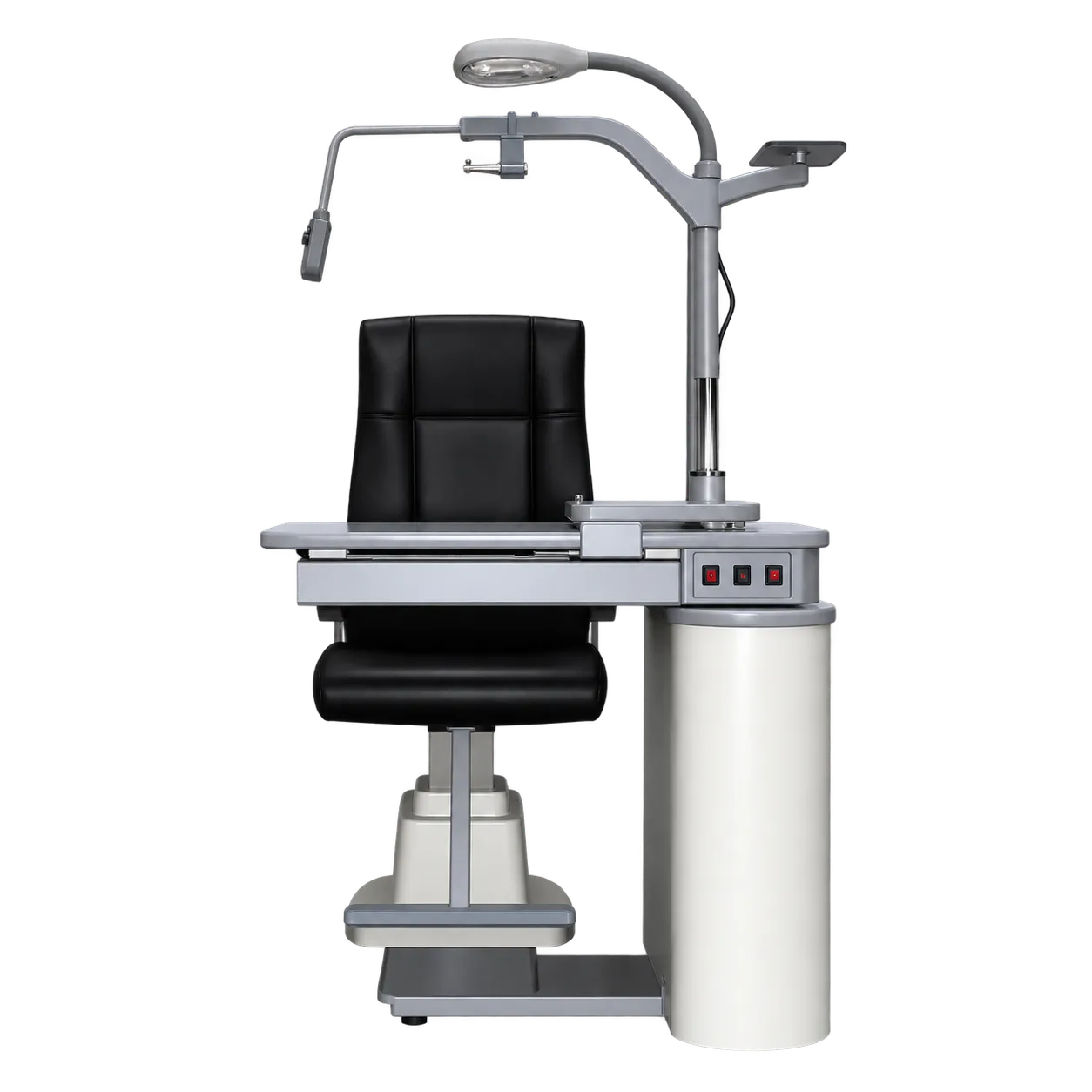
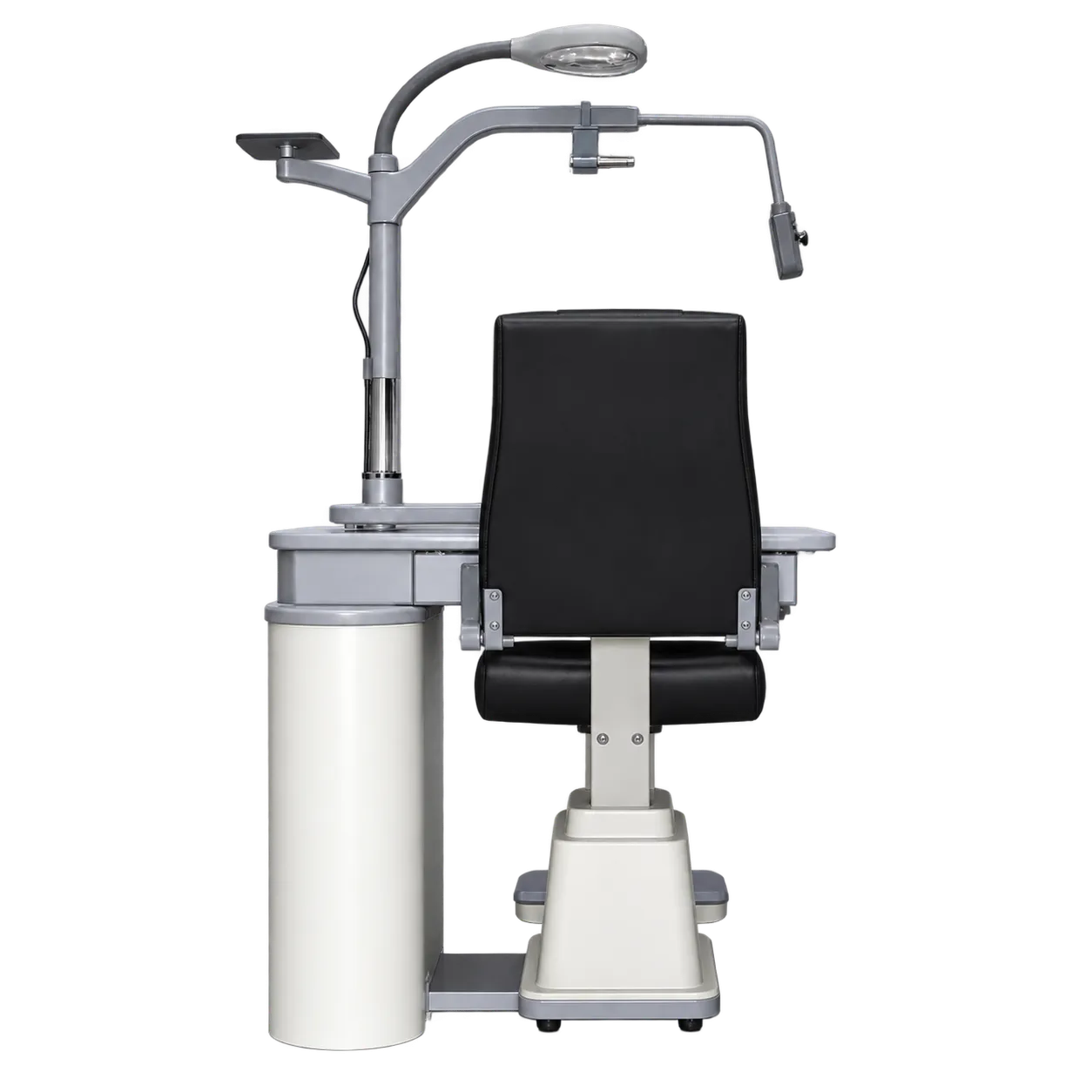
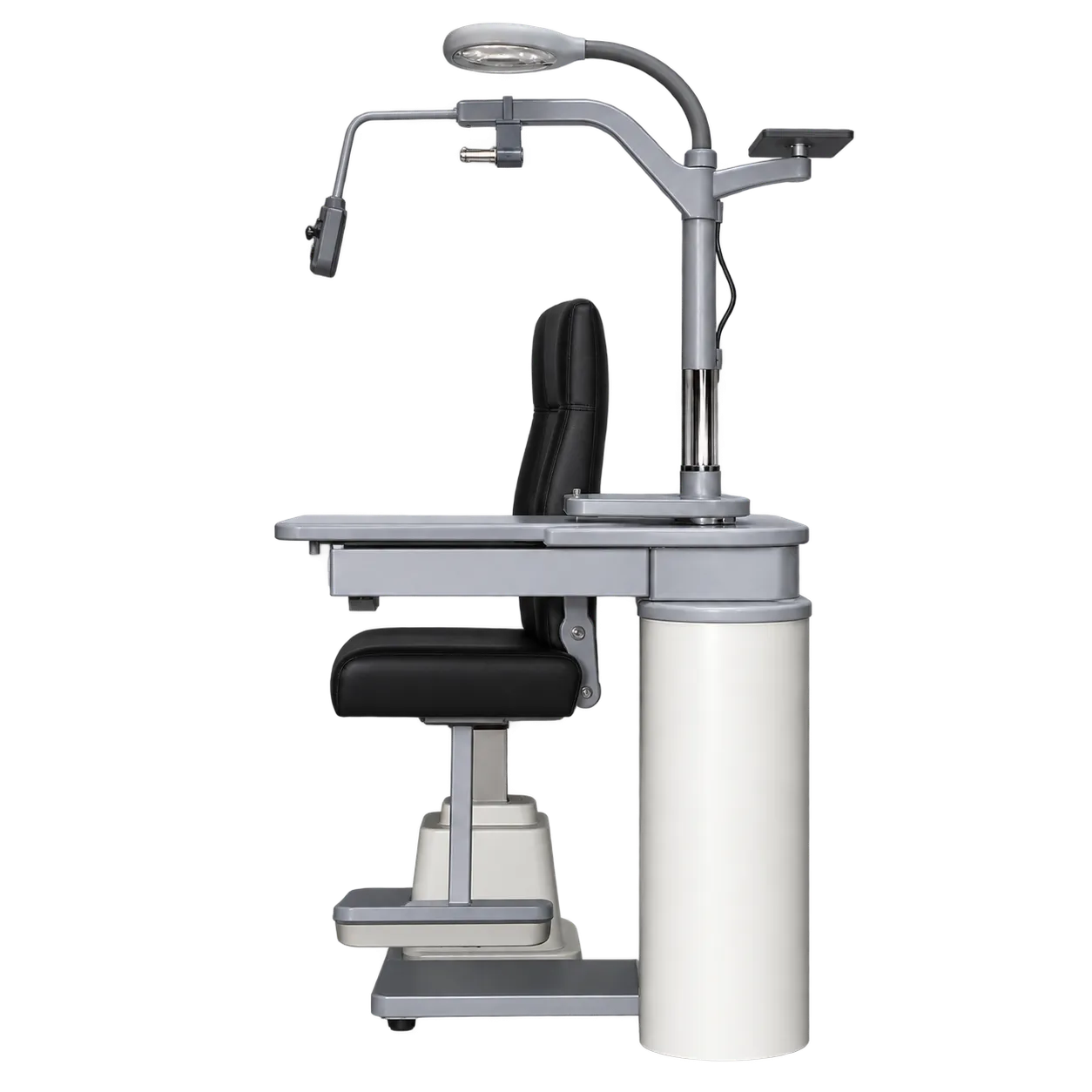
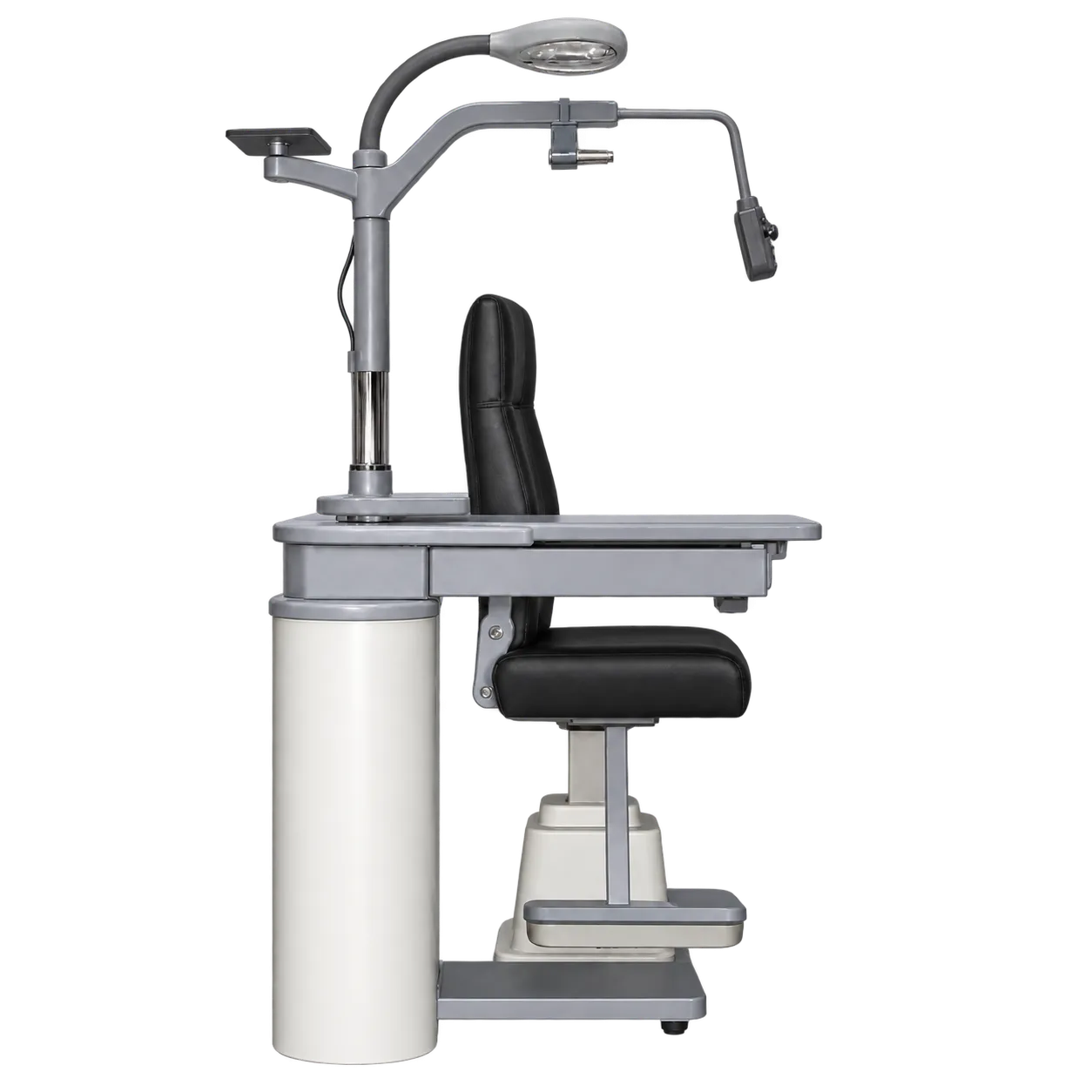
Practices with the funds available this year are the straightforward case. The alternative route through this family is deliberately staged — a table with a DC24V interface and no lift, on the premise that the chair follows when budget allows — and that is a sensible arrangement for a real constraint. But staging costs two orders, two deliveries, two lead times and a socket sitting unused in between, and none of that is a benefit to a practice that can simply buy the whole thing.
Larger consulting rooms suit the increased specification. The table top is 890 × 490 mm against 500 × 500 mm on the smaller models here, the phoropter arm travels 300 mm rather than 190 mm, and the small tabletop 360 mm rather than 330 mm. Those are meaningful increases, and the arm figure in particular covers a wider spread of patient heights without the chair being adjusted.
New fit-outs benefit from arriving complete. A room being equipped from scratch has no existing chair to work around and no reason to defer, so a single order that produces a working position is simply less to manage.
Two constraints belong in the decision, and both follow from the same cause. The unit is 850 mm deep against 520 mm on the shallow models in this family — depth is taken from the floor a patient crosses, so this is a materially larger presence in a small room. And total draw is 165 W, the highest in the CP family and more than double the table-only model, which a small internal room notices as heat by mid-afternoon.
Two figures need requesting: no weight is published for unit or chair, and no chair loading, which a fitted powered seat needs as much as a separately bought one.