

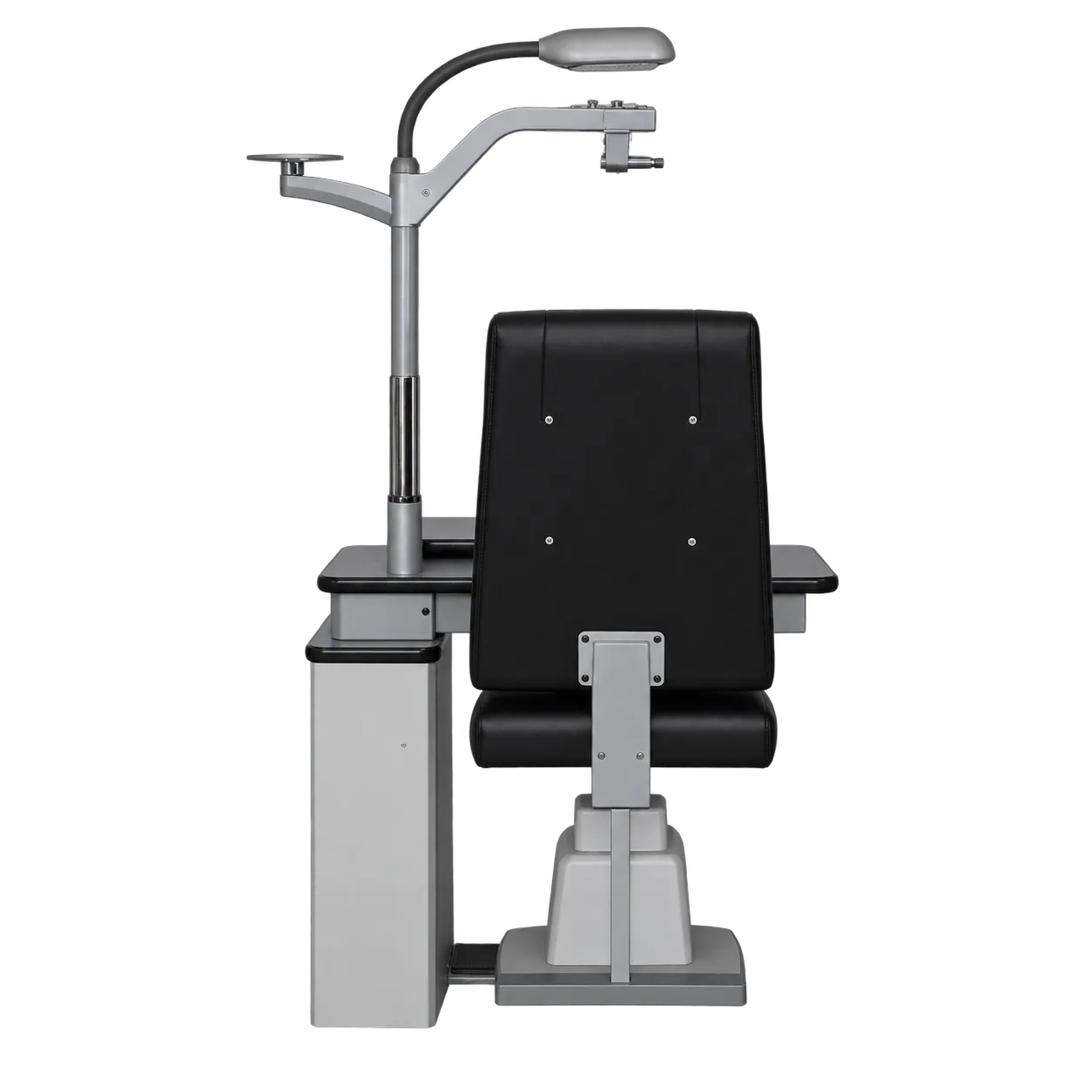
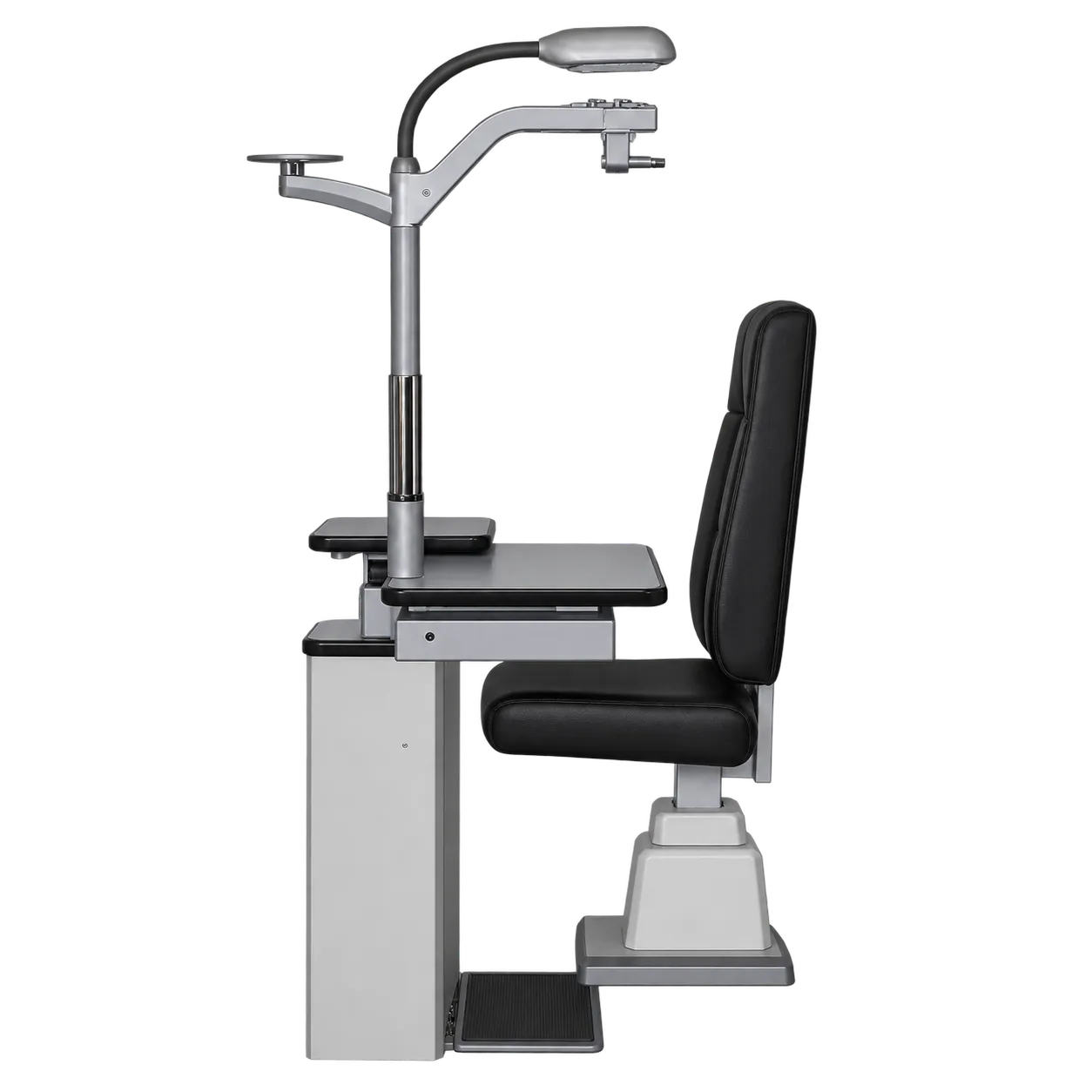

Rooms where the clinician's hands are rarely free benefit most, which is most rooms doing refraction. The movement that matters here is the one made between instrument changes: bringing a refractor head to the eye and swinging it clear afterwards. Elsewhere in this family that is a hand rotation through 360°; here it is a driven rotation through 90°. The smaller arc is the better trade, because the value lies in not having to let go of a lens, a light or the patient's attention rather than in the number of degrees available.
Patient access is served by the driven tabletop. A big top rotating 90° under power clears the approach to the chair without anybody pushing it, which matters for patients using a stick or frame and for anyone accompanied. The small top moving laterally brings a second instrument forward and takes it away again.
Consolidated control suits high-volume lists. One rocker fascia operating chair, tabletop and arm removes the moment spent finding the right control in the right place, repeated through every appointment.
Two things belong firmly in the decision, and the first is unusual. Every published figure on this datasheet is identical to its stablemate's, so it cannot be established from the literature whether this model is genuinely more automated or simply better documented. If the difference is real it is substantial; if it is editorial it is nothing. That must be settled in writing before choosing between them.
Second, three driven systems mean three service items rather than one. Establish intervals and parts availability for each, and confirm what happens to the remaining two if one control fails.
Chair loading and weight are both unpublished, as throughout this family.