
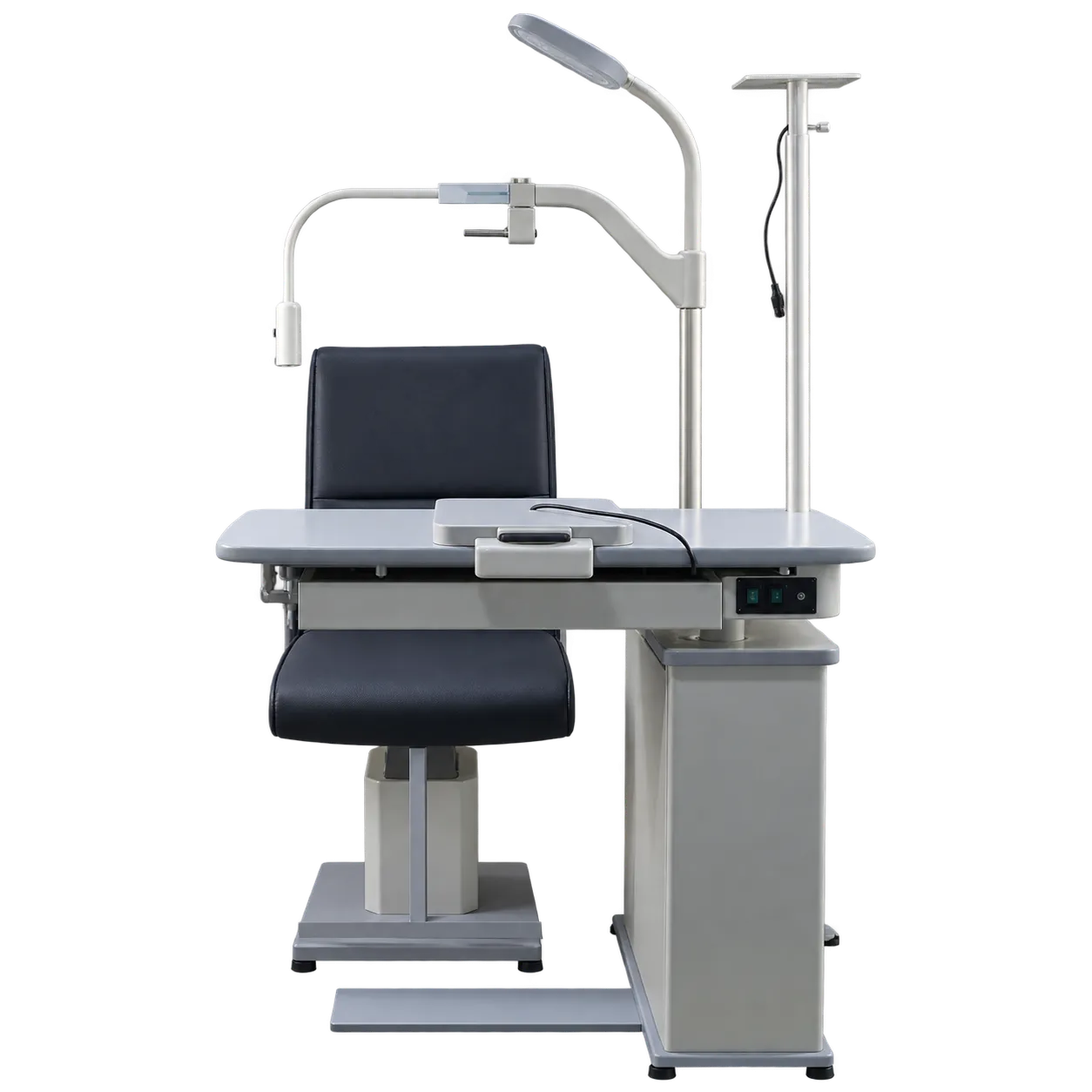
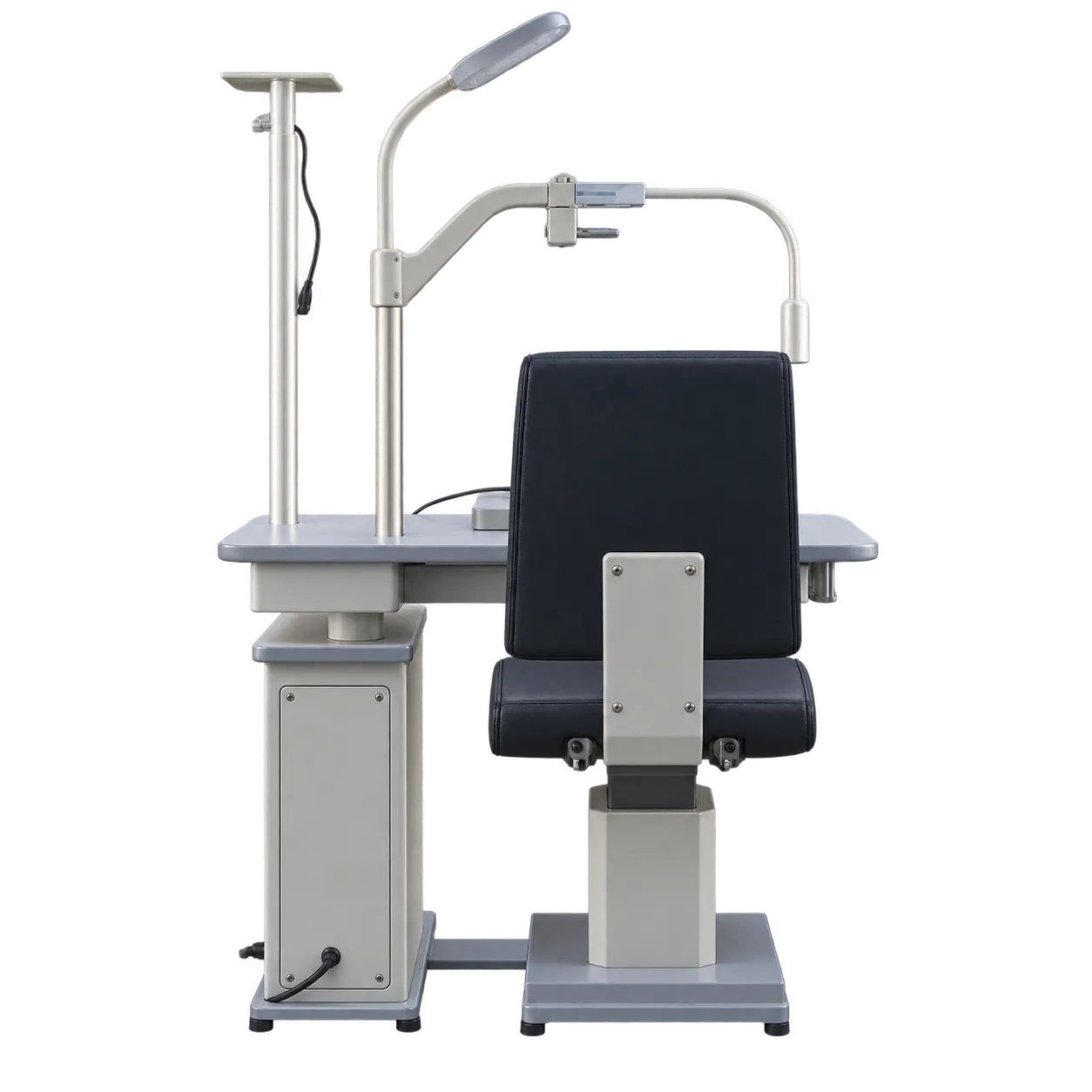
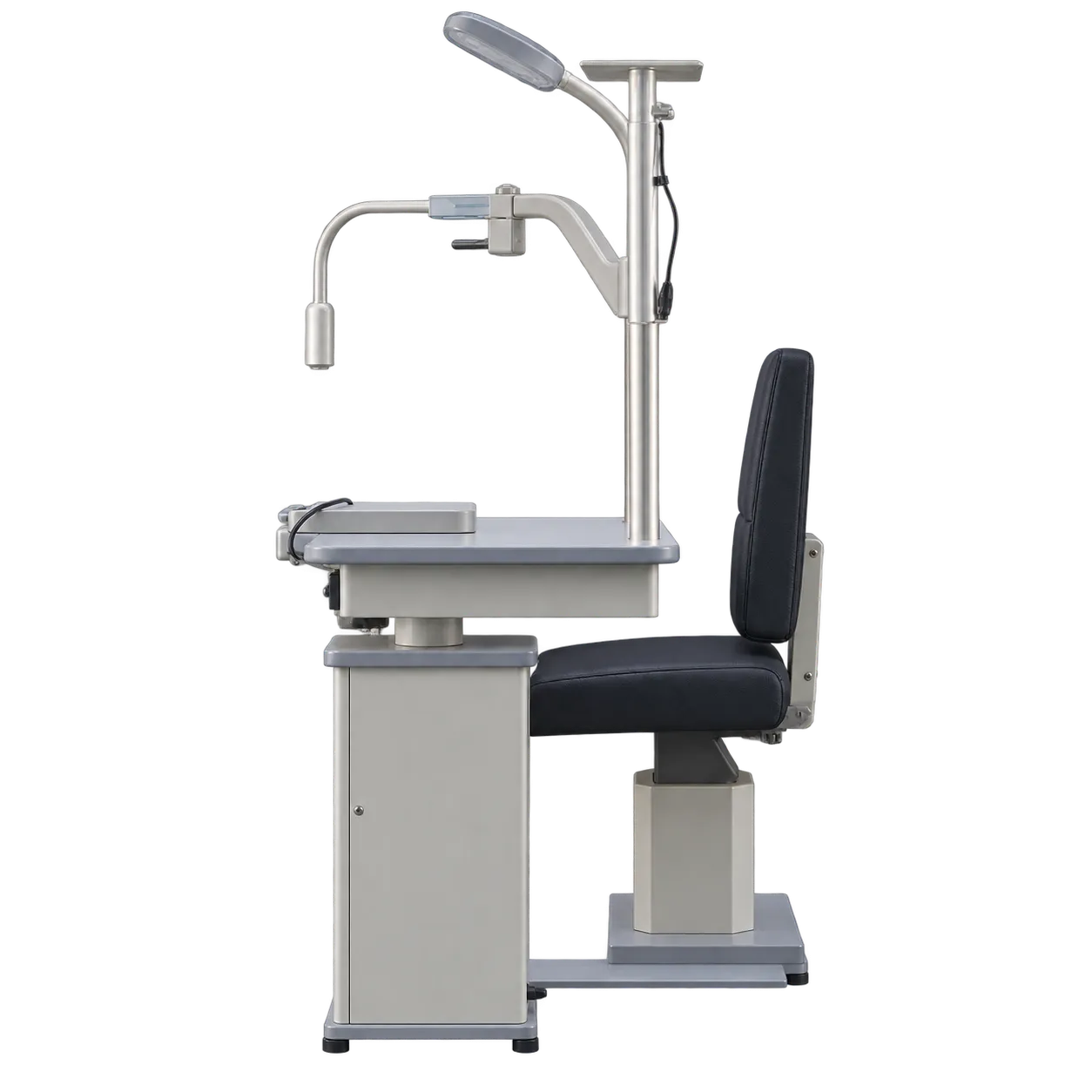

Rooms with adequate rather than generous height are the target, and they are the commonest case in converted premises. A room that comfortably clears 1680 mm but not 1920 mm is neither a low-ceiling special case nor an unconstrained one, and it is where most practices in older buildings actually find themselves. For those rooms, giving up 80 mm to double the arm travel is straightforwardly the better decision.
Mixed-age caseloads benefit from what the extra travel buys. At 140 mm an arm covers fine positioning and nothing more, so the seated eye height difference between a child and a tall adult has to be absorbed by winding the chair — repositioning a patient who has just settled. At 300 mm the arm spans that difference itself, which is the working pattern the longer-armed units in this range are designed around, available here at two thirds their height.
Practices upgrading from a low-profile unit gain the reach without giving up the room. Eighty millimetres is rarely the difference between fitting and not fitting once a room has already accommodated 1600 mm.
The 400 mm published slide stroke and the 560 × 360 × 60 mm drawer — the widest in this range — carry over unchanged.
Two things belong in the decision. Measure the clear height at the exact intended position, including any drop for lighting, ductwork or a suspended ceiling, and confirm working clearance above 1680 mm before choosing this over the lower unit. And no lamp wattage is published, giving only a 120 W total, so whether a lamp is fitted needs confirming rather than assuming.