
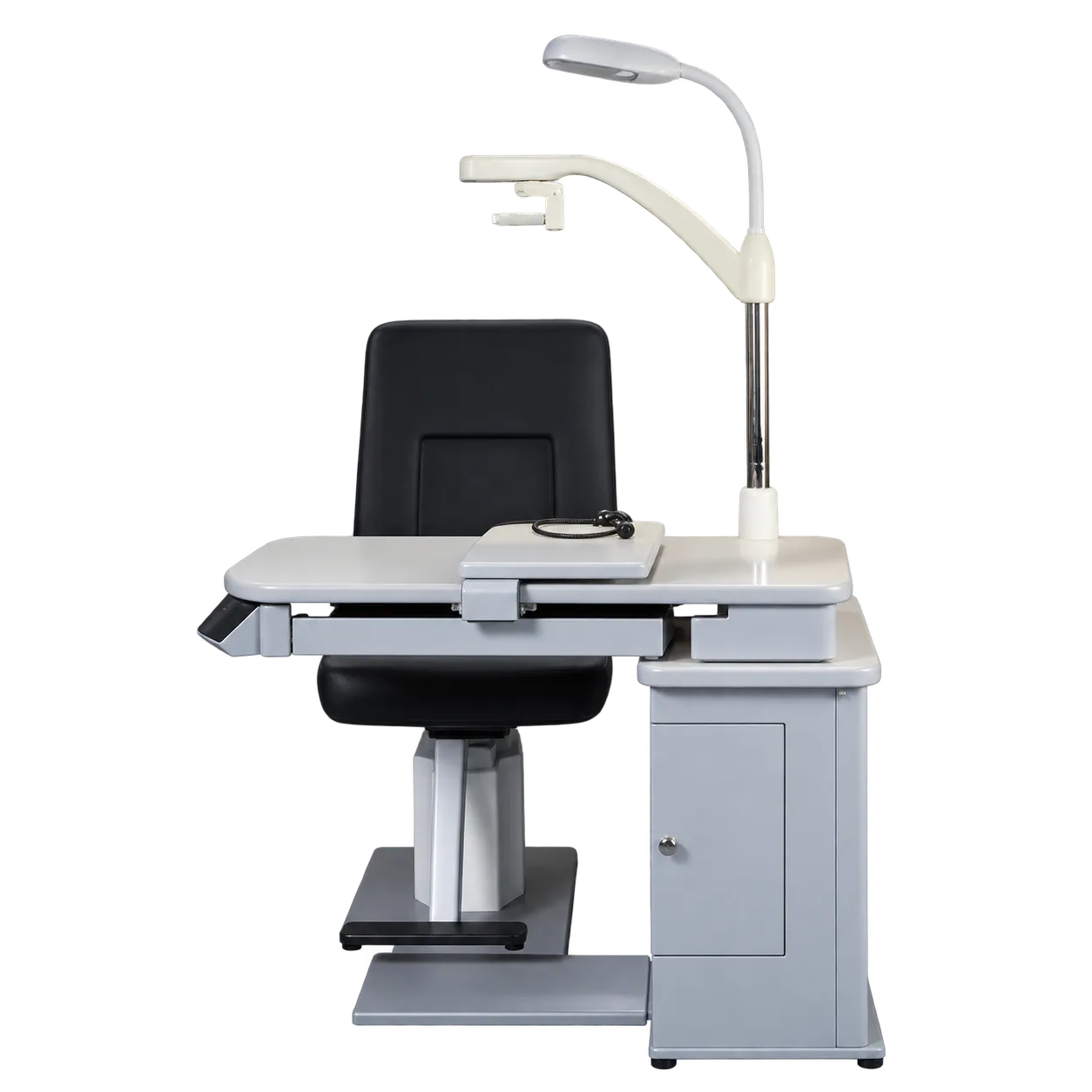
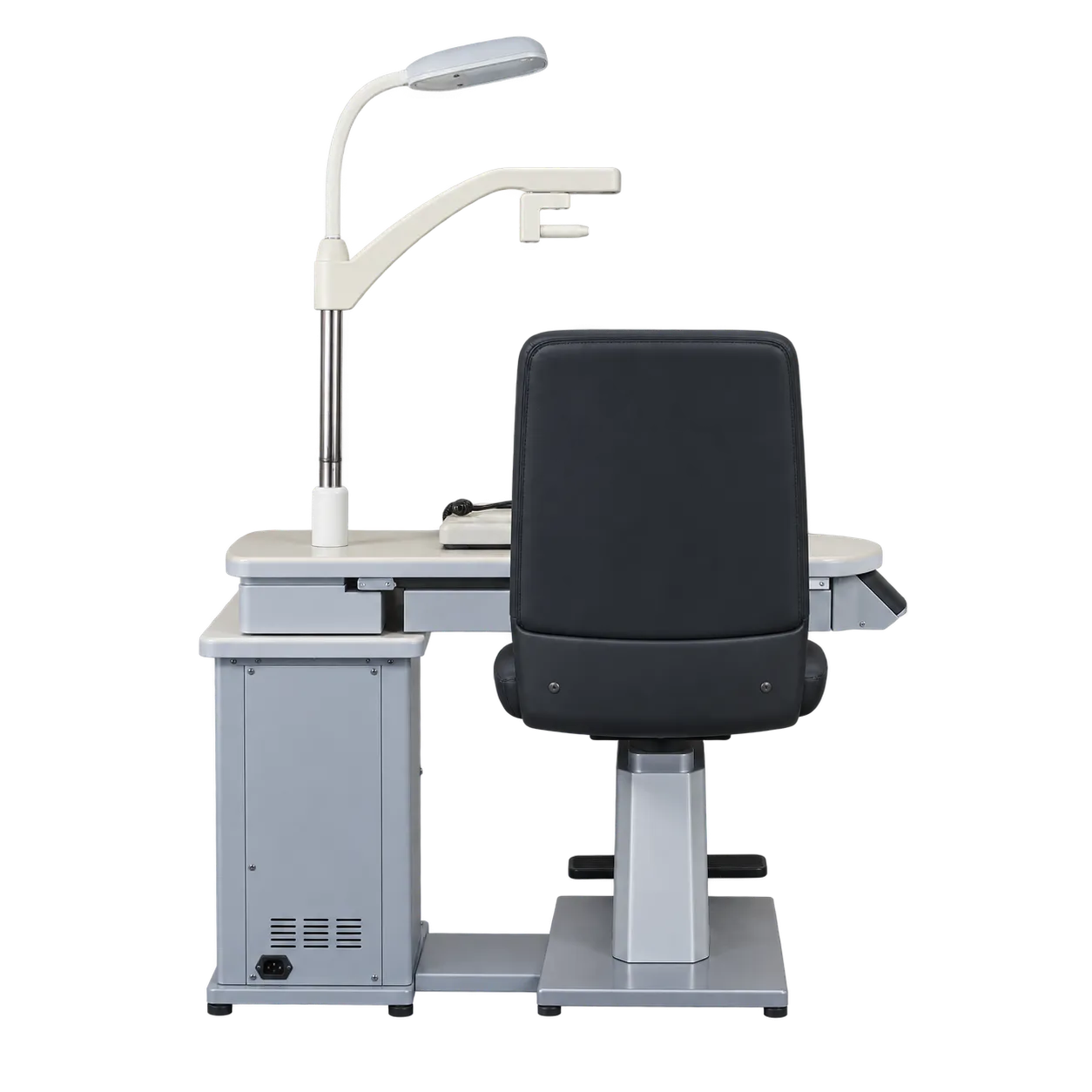
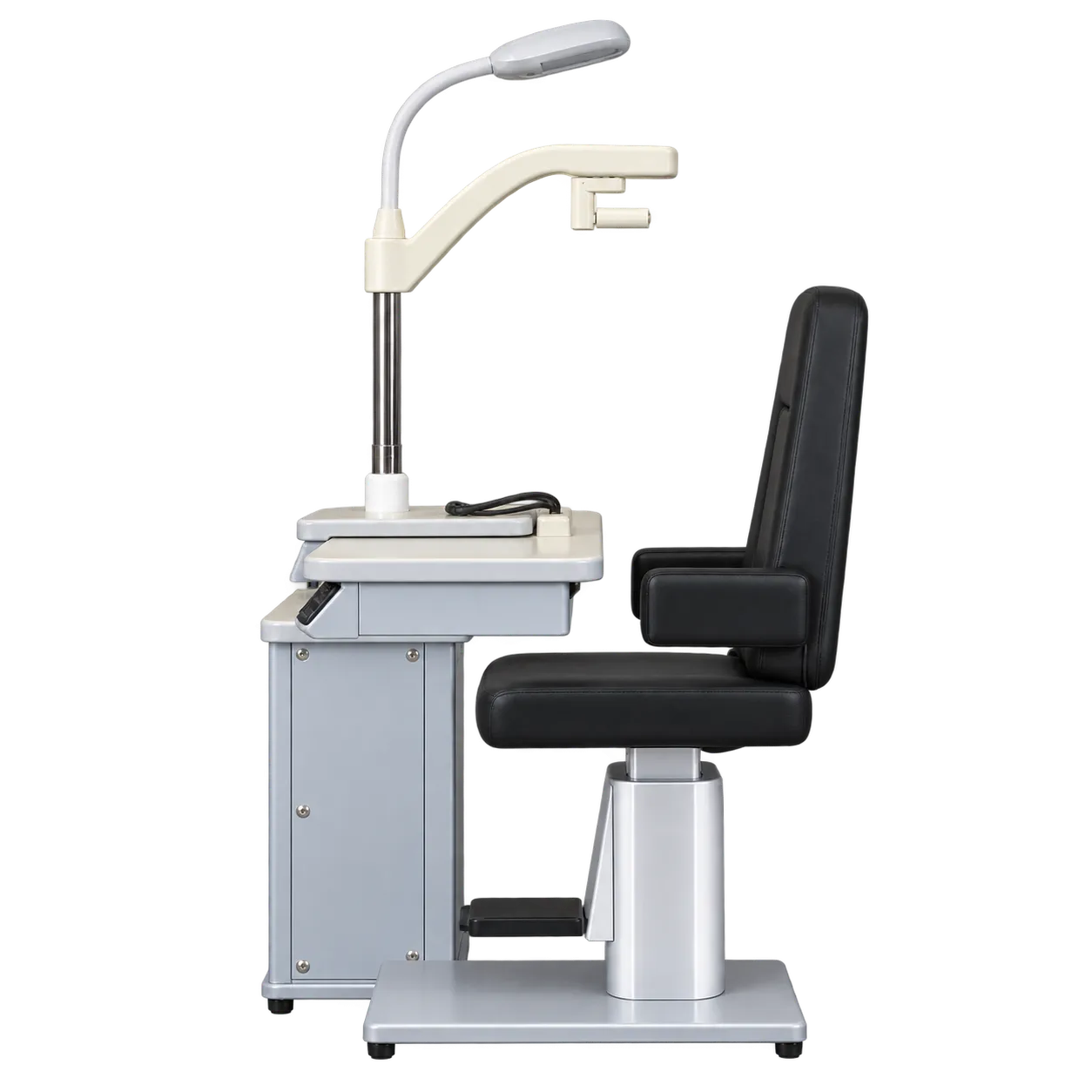
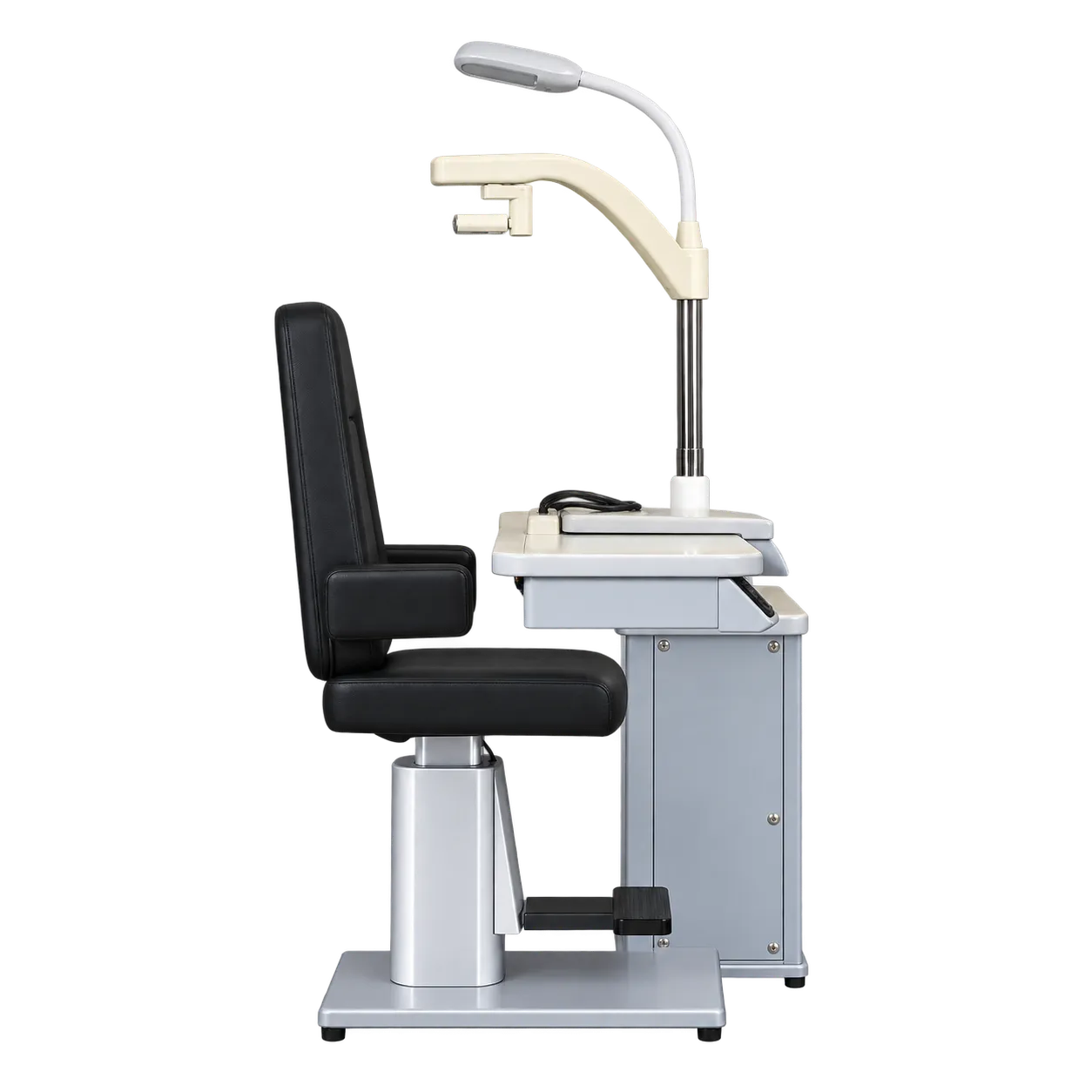
Narrow rooms are the setting, and the argument compounds with the platform. This unit sits on the 910 mm chassis, chosen when a room is short of lateral space to begin with — and a squared cabinet then recovers the crescent that a curved one gives away against the wall. Typically 30 to 60 mm at its widest, that strip is exactly the sort of loss a tight room cannot absorb.
Wall runs carrying several items benefit similarly, and this is often the more common case than a single unit against a bare wall. A flat side abuts a dispensing cabinet, a bench or a second unit without a gap, so a room fitting three items along one wall gains the accumulated clearance rather than losing it three times over.
Corner installations gain twice, since two flat faces meet two walls squarely rather than one curve approximating both. The unit sits into the corner instead of near it.
Cleaning is the quieter benefit. A crescent between furniture and wall collects dust and resists a mop head or vacuum attachment, so it is cleaned less thoroughly than open floor and less often than anyone intends. Flat against plaster removes the recess.
Two things belong in the decision, and the first should be stated plainly. Every published figure on this datasheet is identical to the narrow-format model in this range — the difference is cabinet geometry, visible in the illustration rather than tabulated, and it should be judged on that basis. If the unit stands free rather than against anything, the two are equivalent on every published measure. Second, the cabinet material, finish and edge treatment are unpublished, which bears both on durability against trolley knocks and on what cleaning agents can safely be used.