
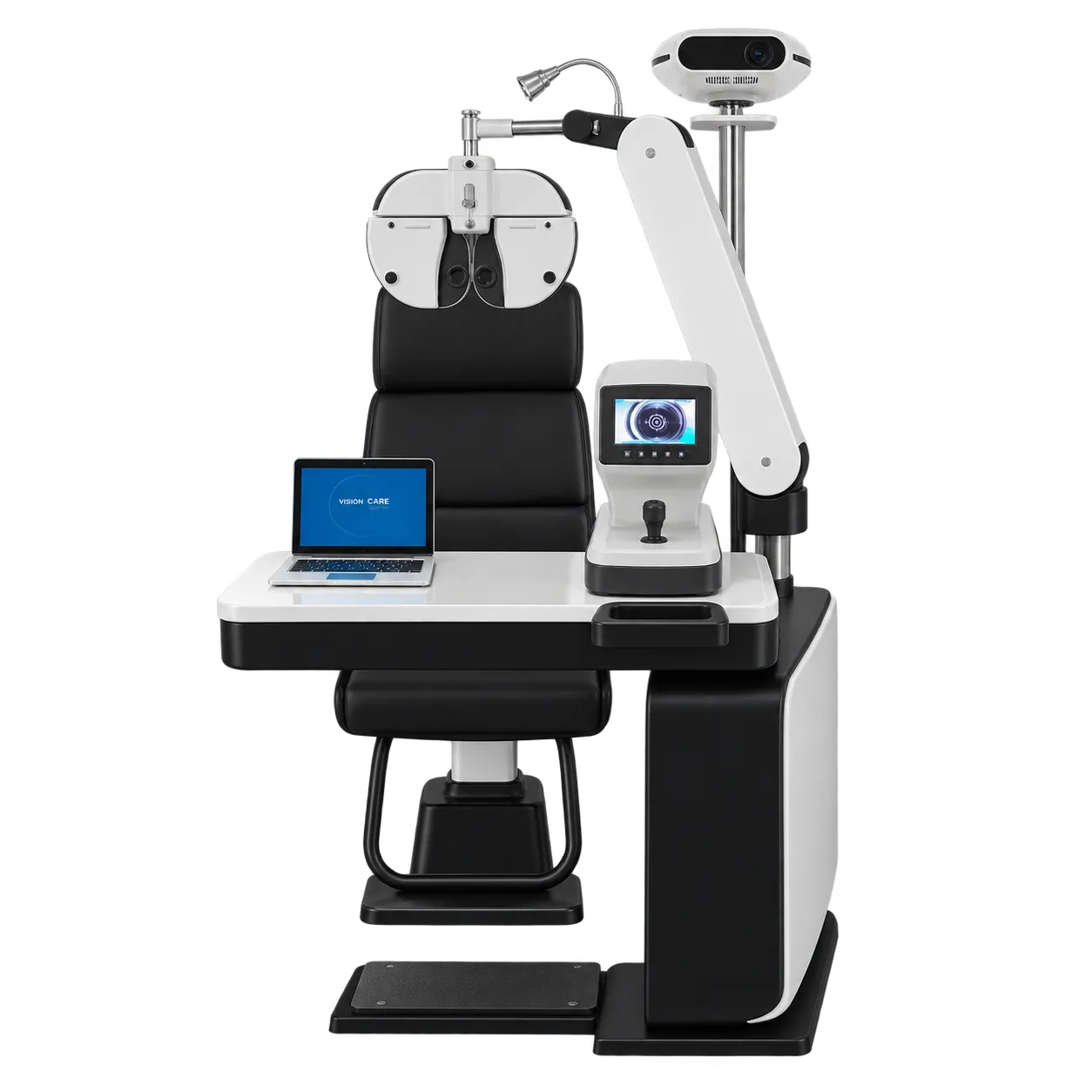
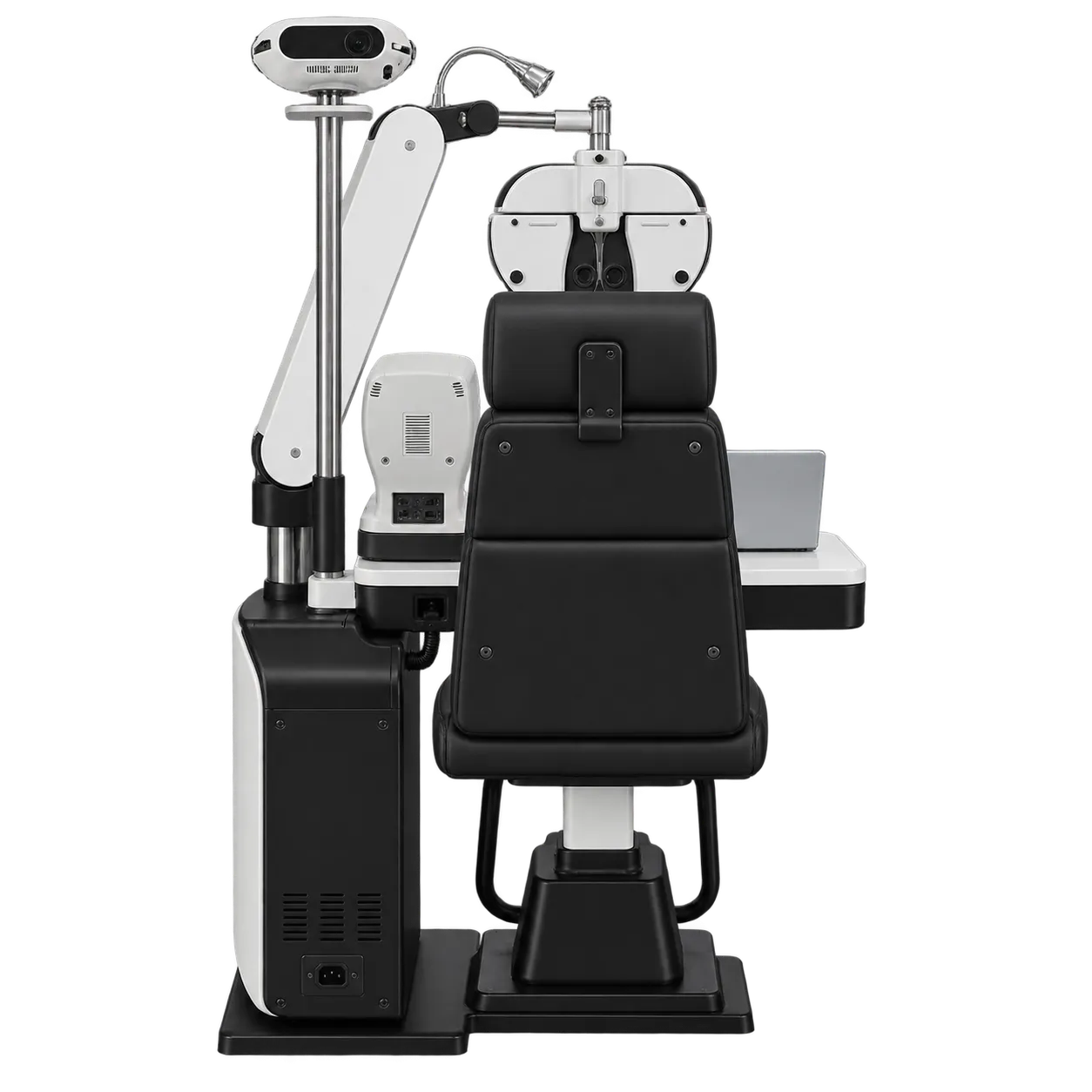
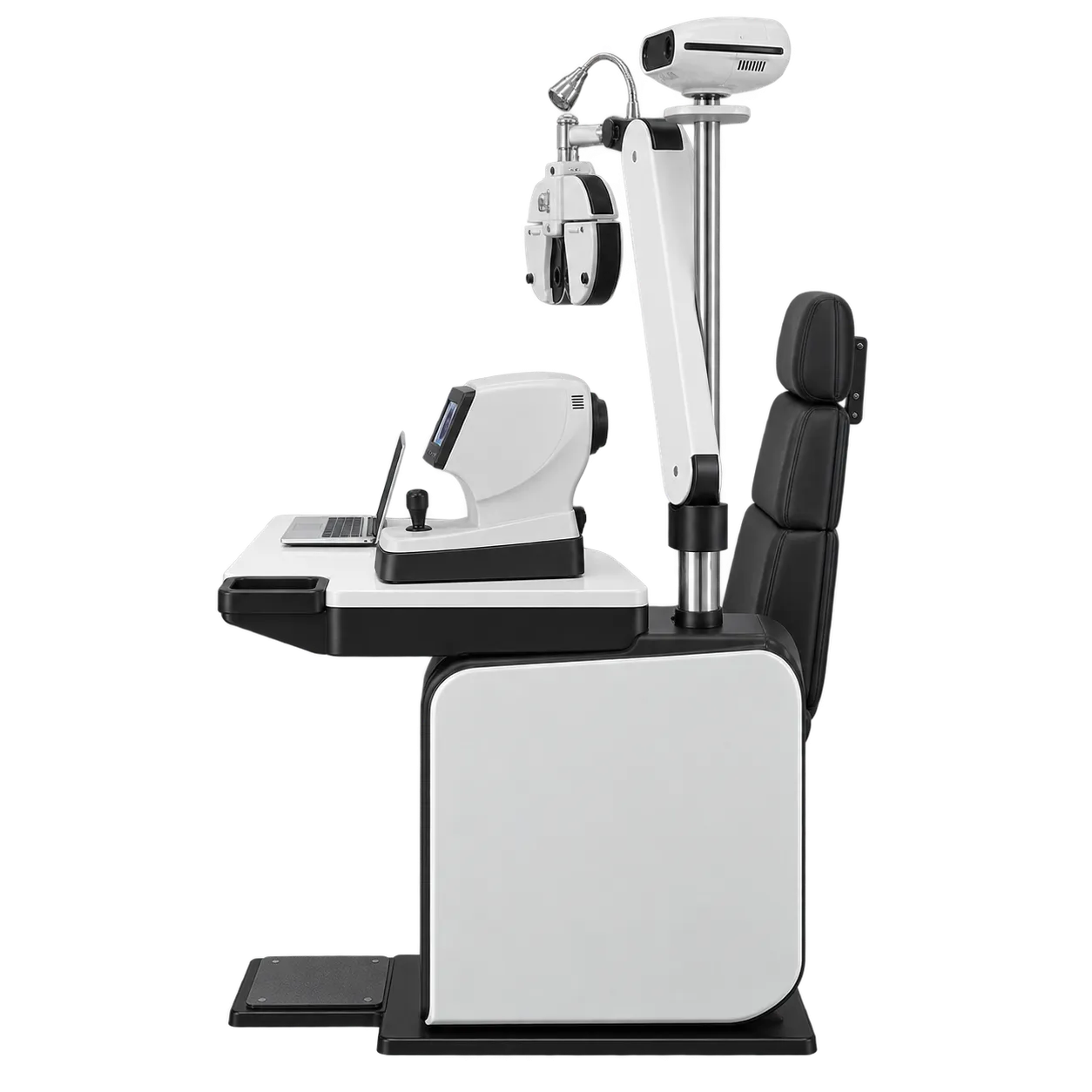
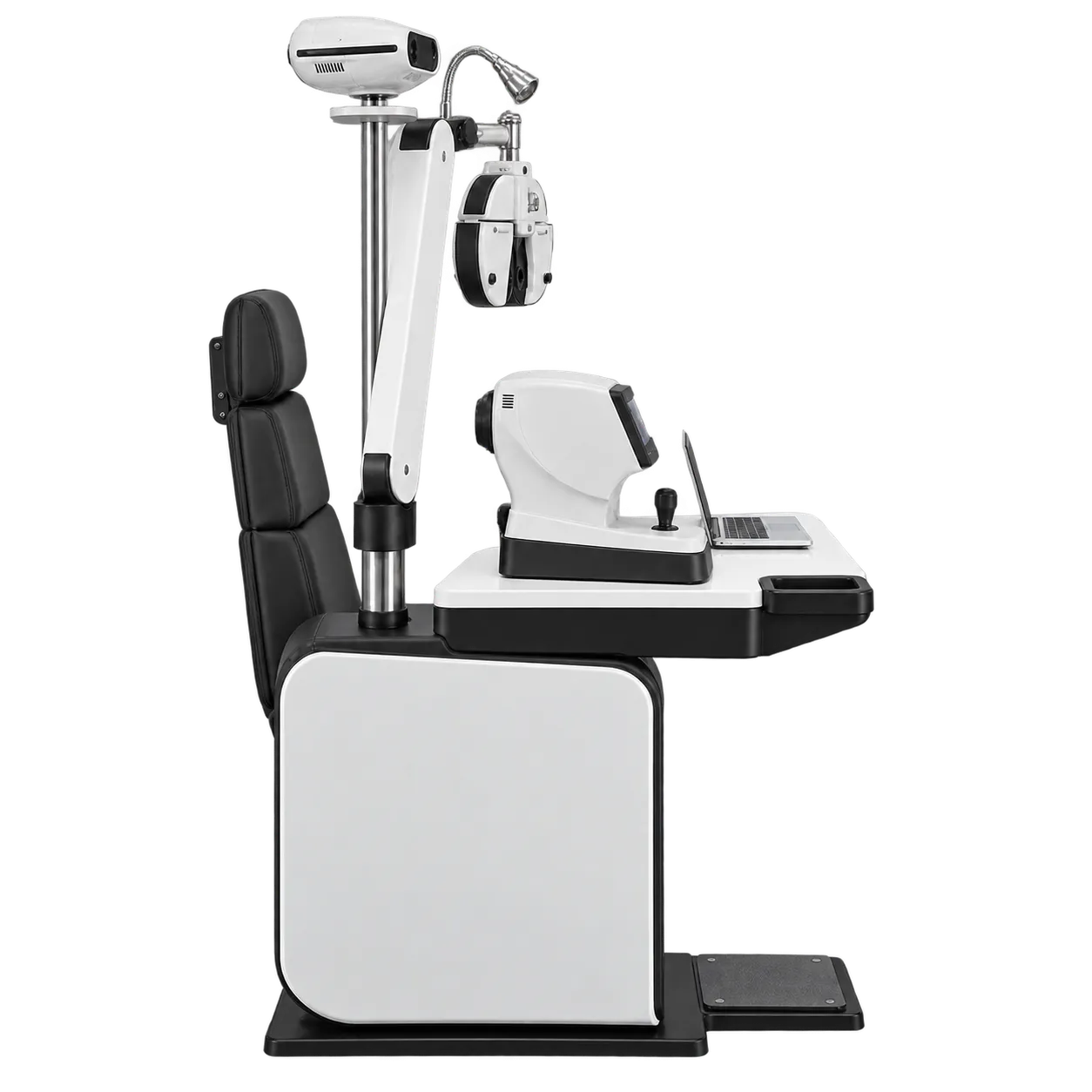
Patients who find the approach difficult are served first, and they are more numerous than the equipment usually acknowledges. Reaching an examination chair on a fixed-table unit means passing through a gap between furniture, and for a patient using a stick or frame, one who is unsteady, one with limited lateral movement, or one accompanied by a carer who also needs room, that gap is the hardest part of the appointment. A table swinging clear through 90° removes it.
The distinction from a low-transfer chair is worth drawing, because the two address different halves of the same journey. A low seat solves getting onto the chair; a rotating table solves getting to it. A patient may face either obstacle independently, and a unit answering one does not answer the other. A practice assessing its access arrangements properly should consider both.
Rooms with restricted ceiling height suit this model particularly. At 1580 mm it stands 250 mm below the next lowest unit in this range and well clear of sloping ceilings, soffits, bulkheads and dropped lighting — the constraints that force a taller unit to be planned around rather than simply placed.
Instrument arrangement is served by the two additional surfaces: a mobile sliding table for refractometer and tonometer, and a dedicated chart projector stand with independent height adjustment.
Two things need settling before ordering. Chair loading is unpublished, which is a gap on a unit positioned around access — a practice answering questions about who it can accommodate needs the rated capacity alongside the entrance arrangements. And at 240 kg, the heaviest in this range, delivery access and floor loading should be confirmed before commitment, particularly for upper-floor premises.