
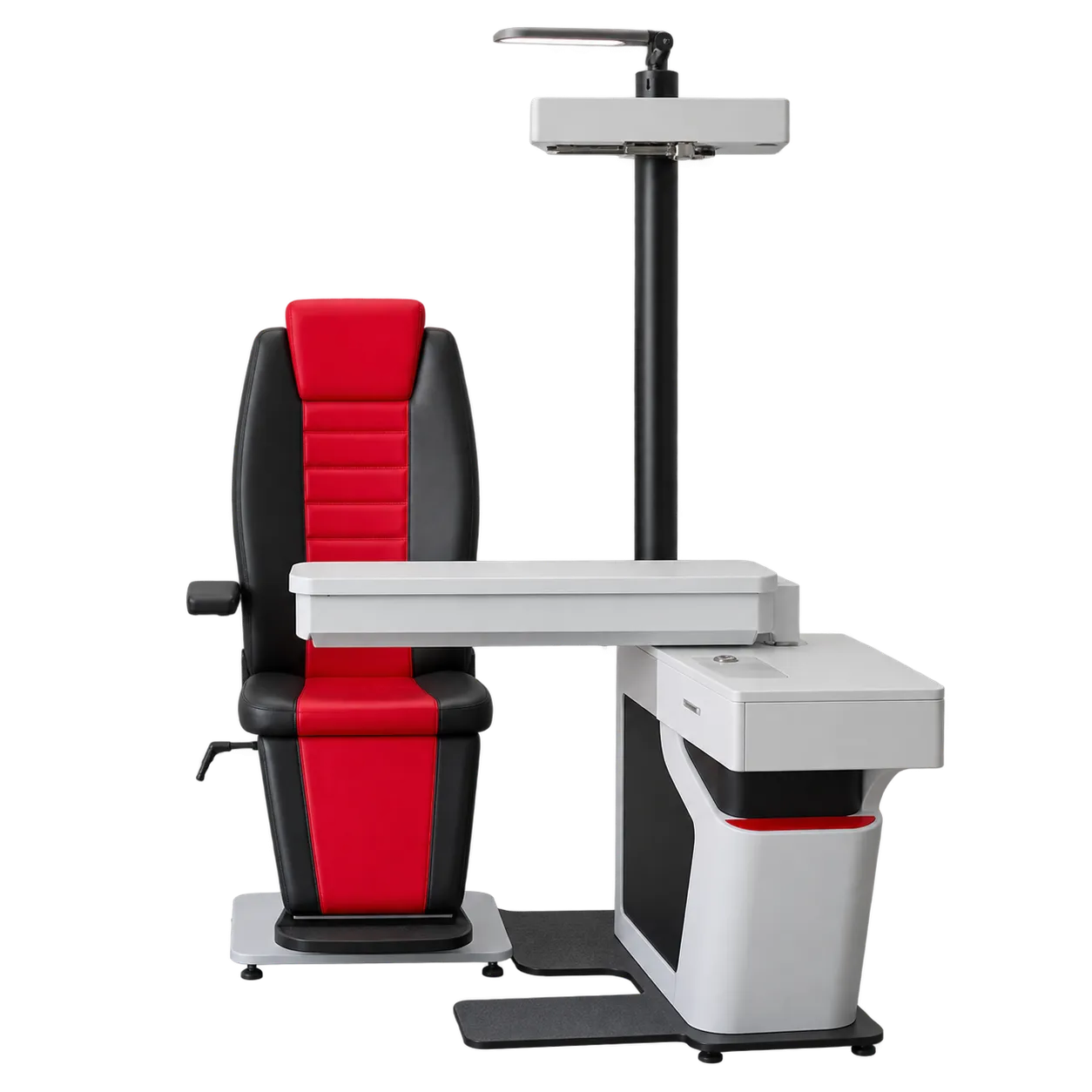
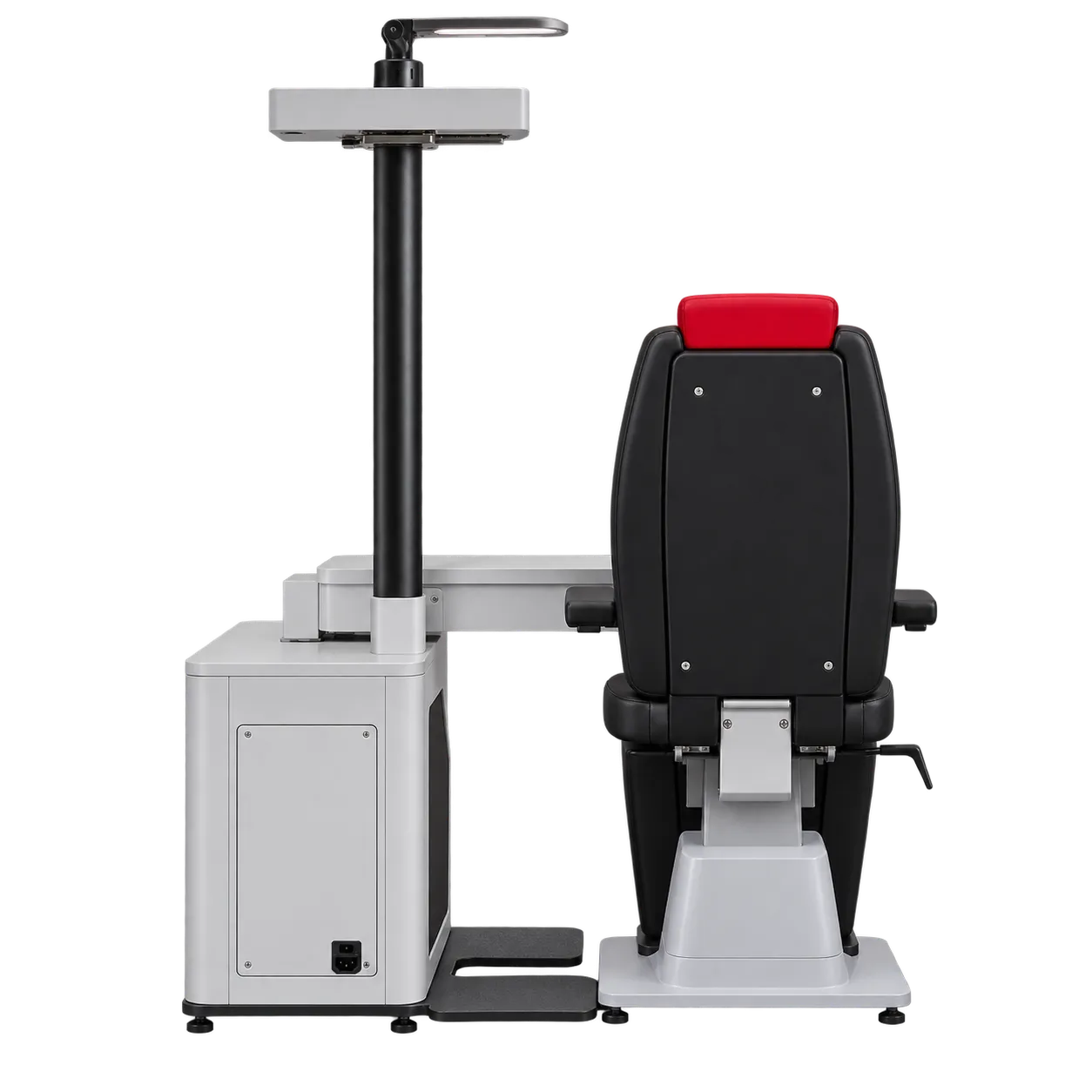
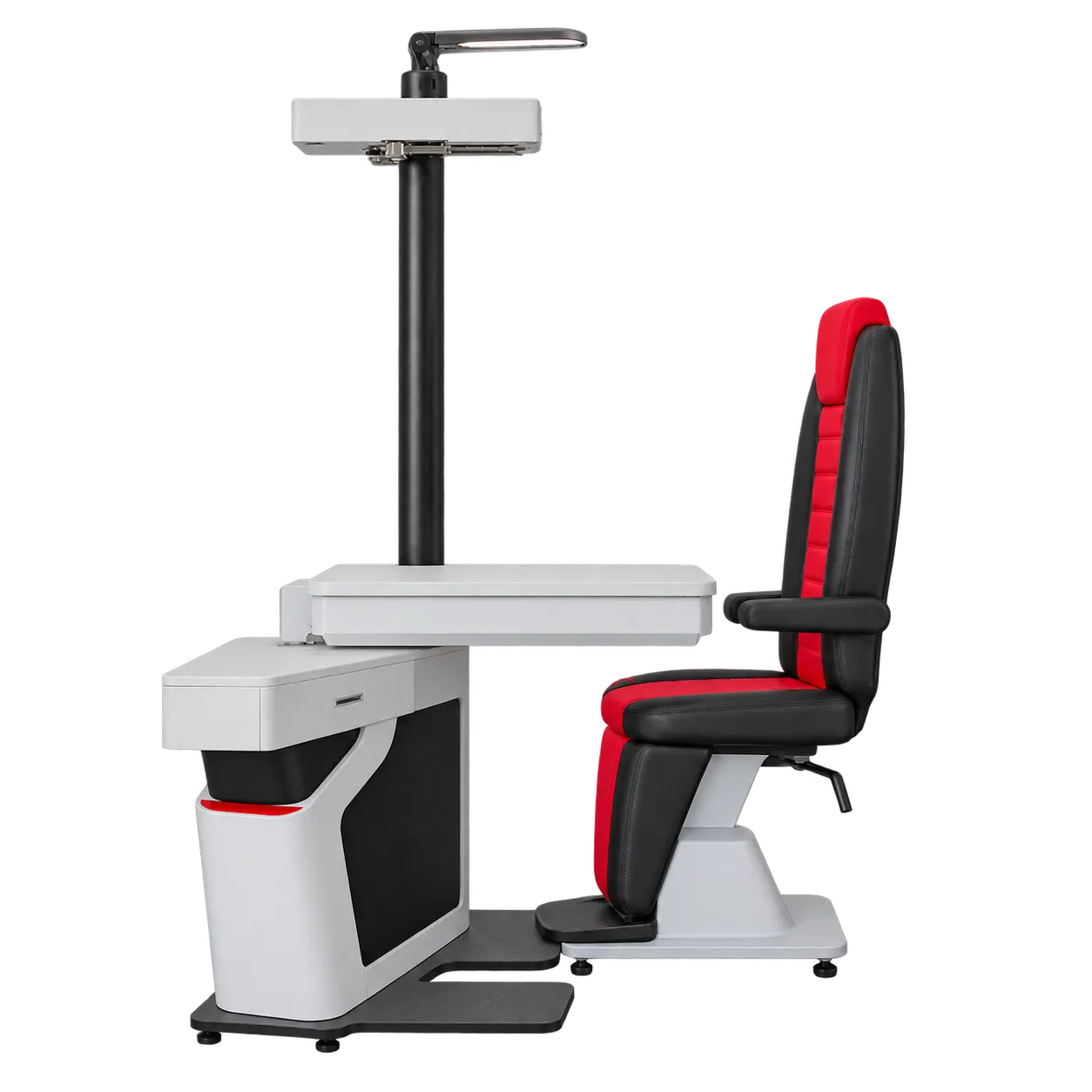
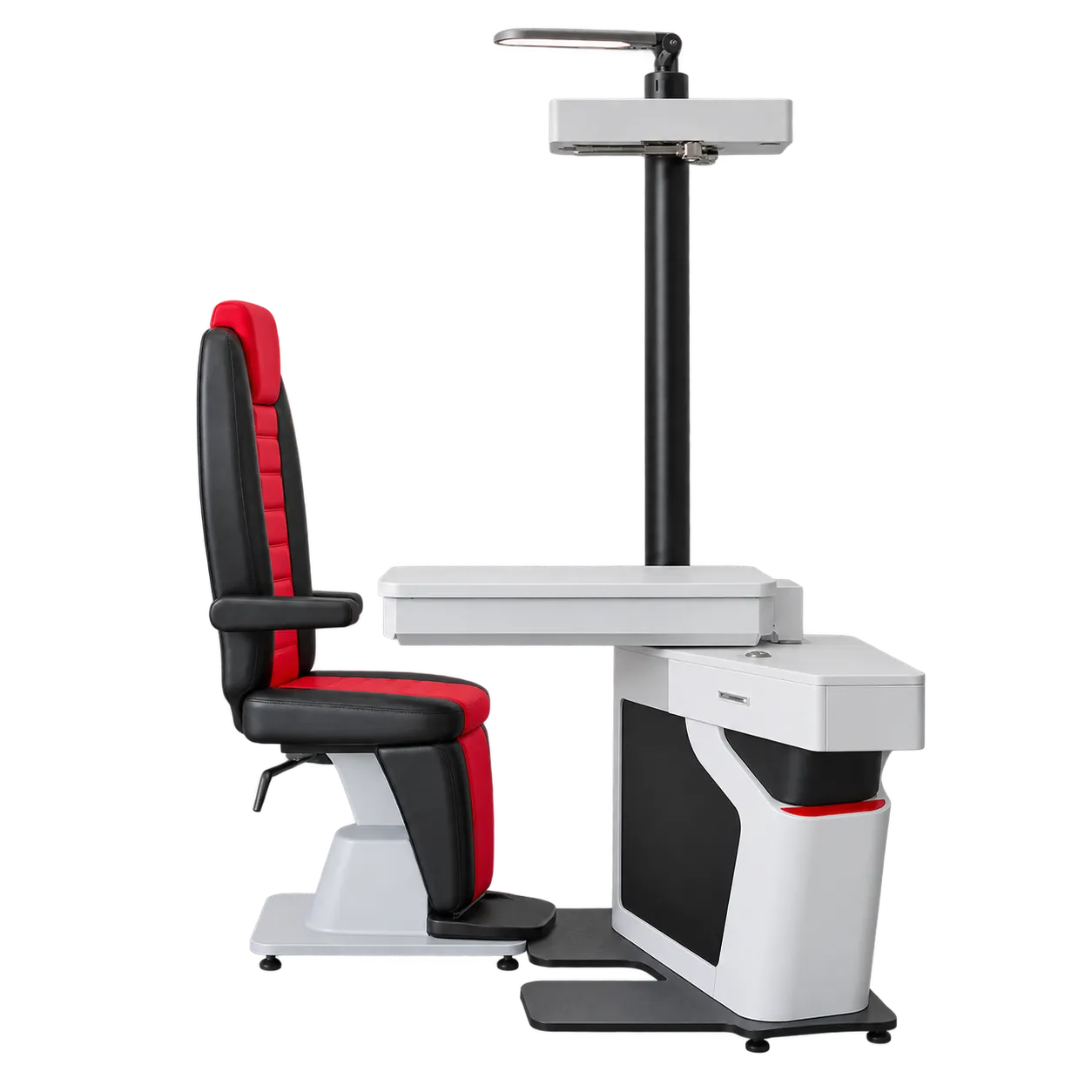
Practices prioritising examination flow gain most from the wireless control. Repositioning the table, column or phoropter arm from beside the patient rather than reaching across them to a fixed panel sounds like a small thing until it is counted across an appointment — a clinician holding a lens, a light and the patient's attention has no spare hand for a control panel mounted somewhere else. Putting the controls on a tablet or mobile removes that constraint.
Subjective refraction benefits specifically from the linear motor. A patient asked to report small differences between lenses is concentrating hard, and equipment noise during that process competes directly with the task. The effect is strongest with anxious patients, with children, and with anyone whose responses are already tentative — precisely the patients where a reliable subjective result is hardest to obtain. A linear motor avoids the gearbox and lead screw that generate that noise.
Automated positioning suits high-volume lists, where four powered axes remove repeated manual adjustment of table, column and arm across a full day. It also suits clinicians with their own physical limitations, for whom moving equipment by hand across forty appointments is not a trivial demand.
Five named instruments — auto refractometer, auto phoropter, slit lamp, auto lensmeter and trial lens set — indicate a unit intended as a complete automated position, with a dedicated drawer for the lens set.
The overriding consideration is the specification gap. This datasheet publishes no dimensions, weights, travel ranges, chair loading or electrical supply, which is thinner than any other unit in this range. On an automated unit that matters more rather than less: a travel range that falls short of what a room needs is not correctable after installation. Obtain the full written specification, and the tablet control system's supported platforms, application support and wireless security, before committing.