
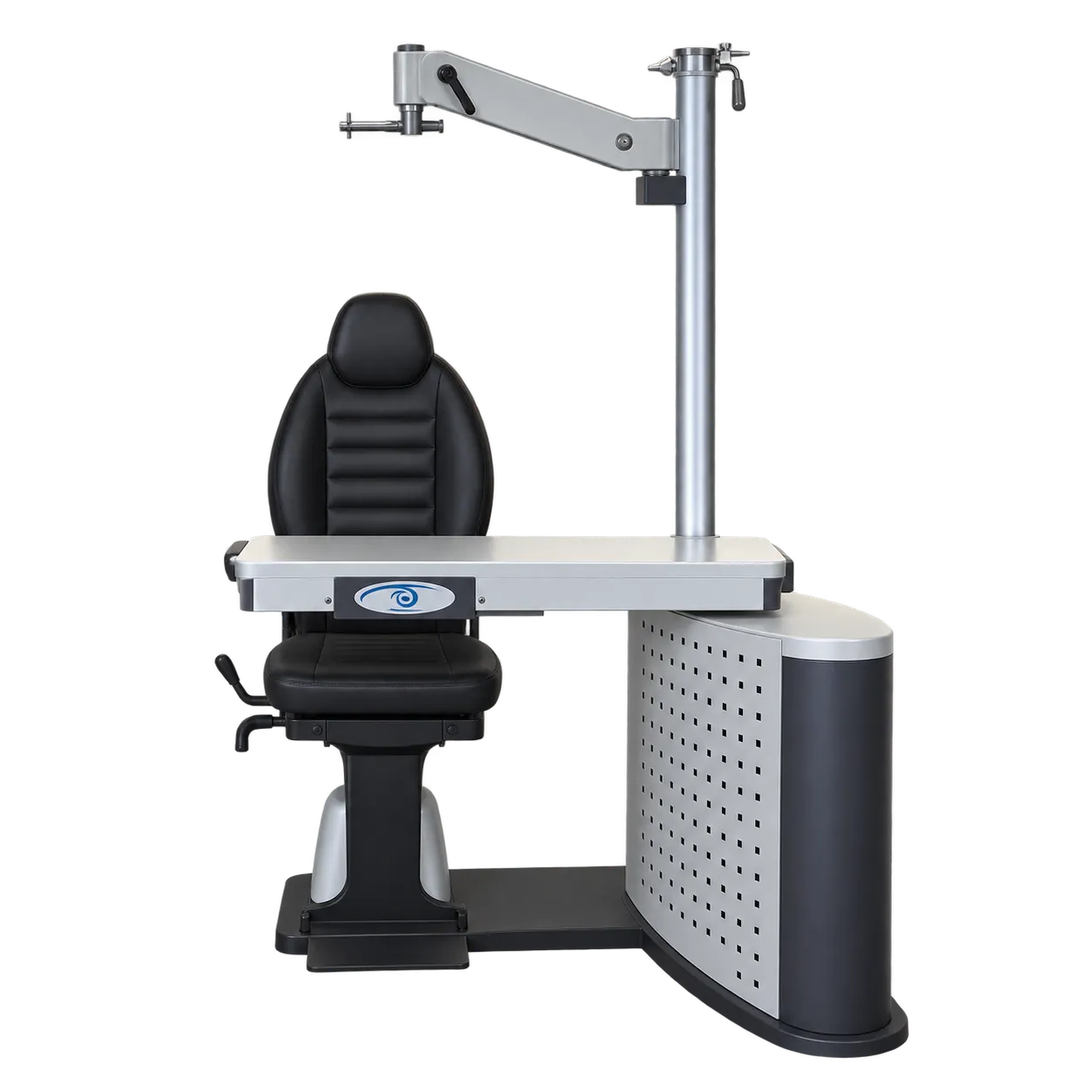
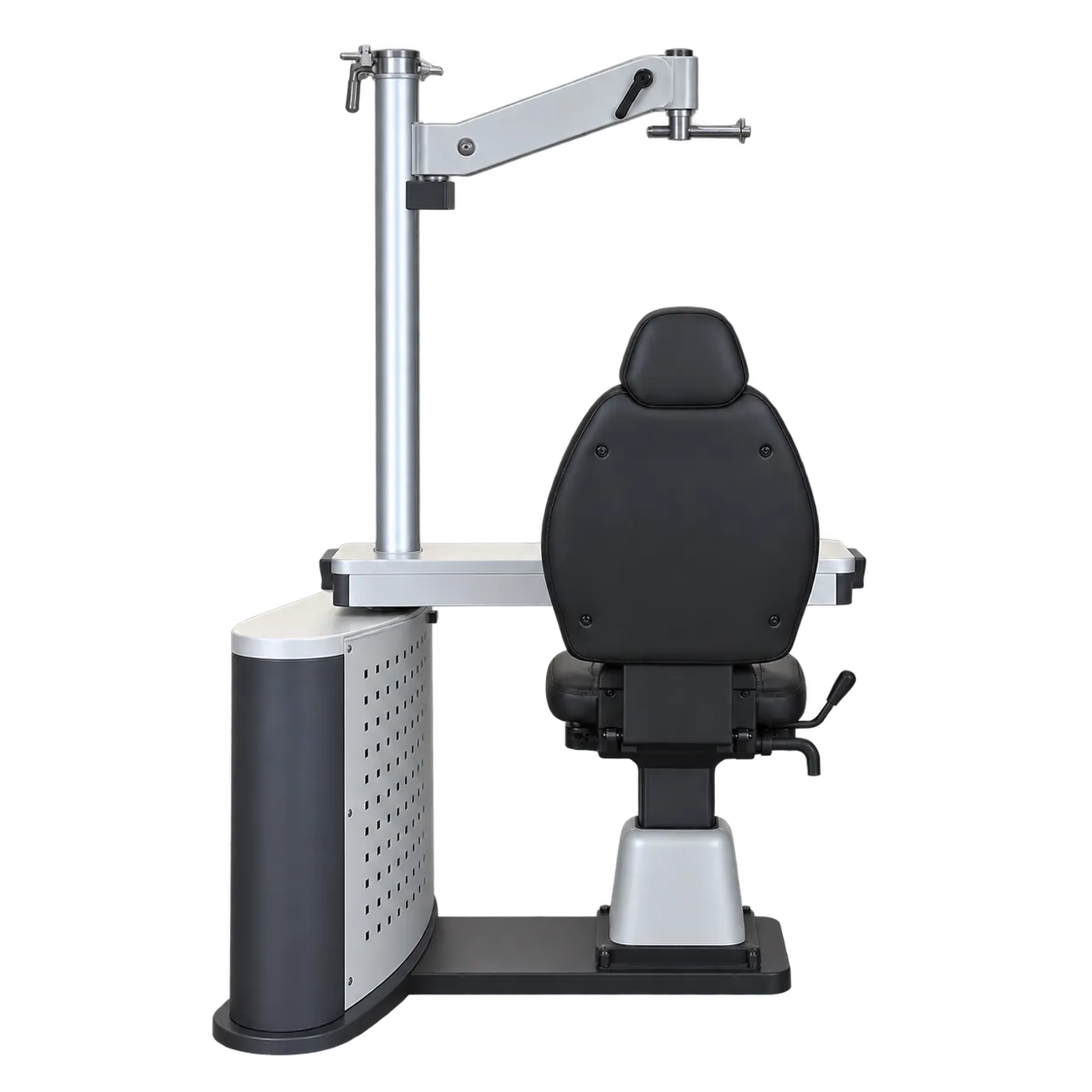
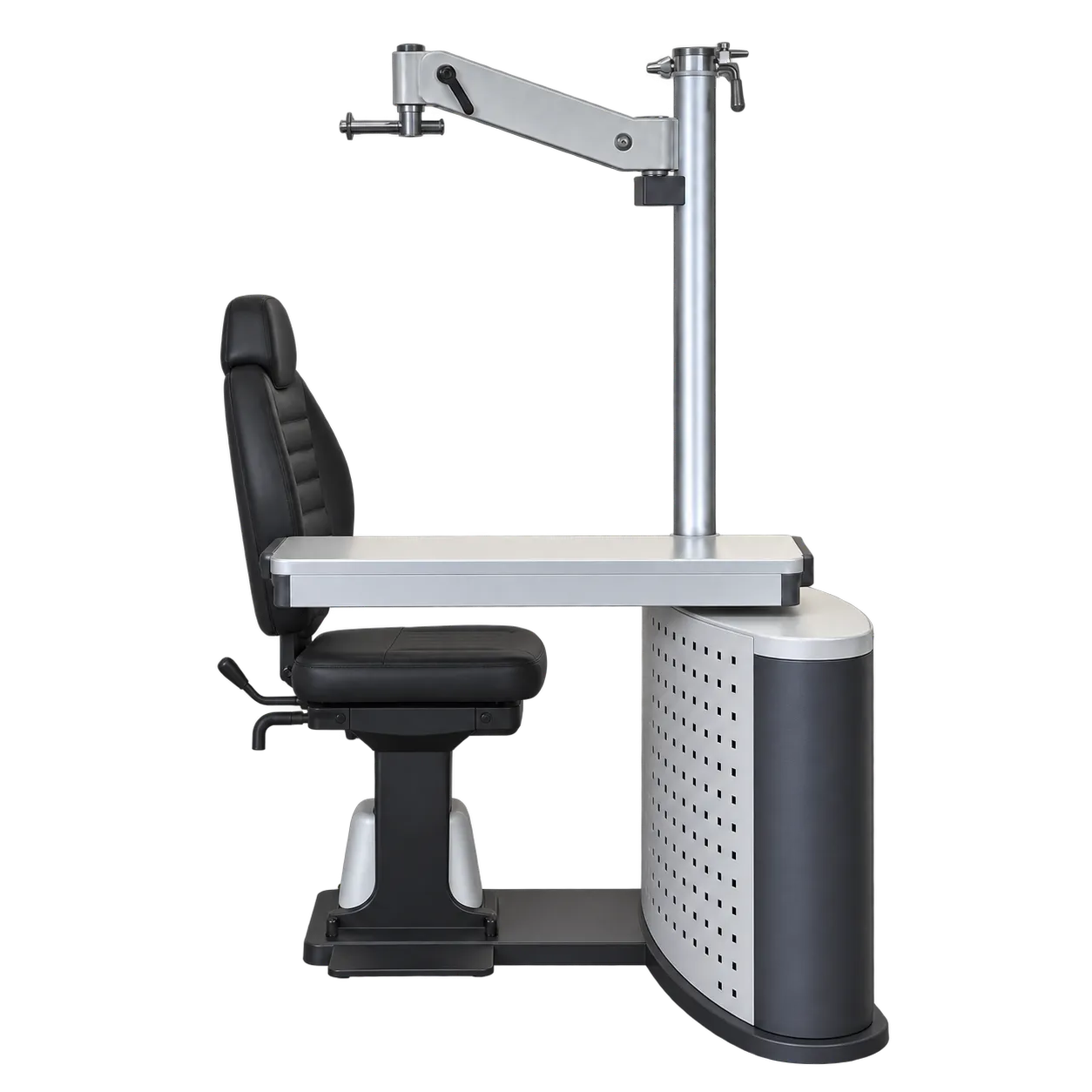
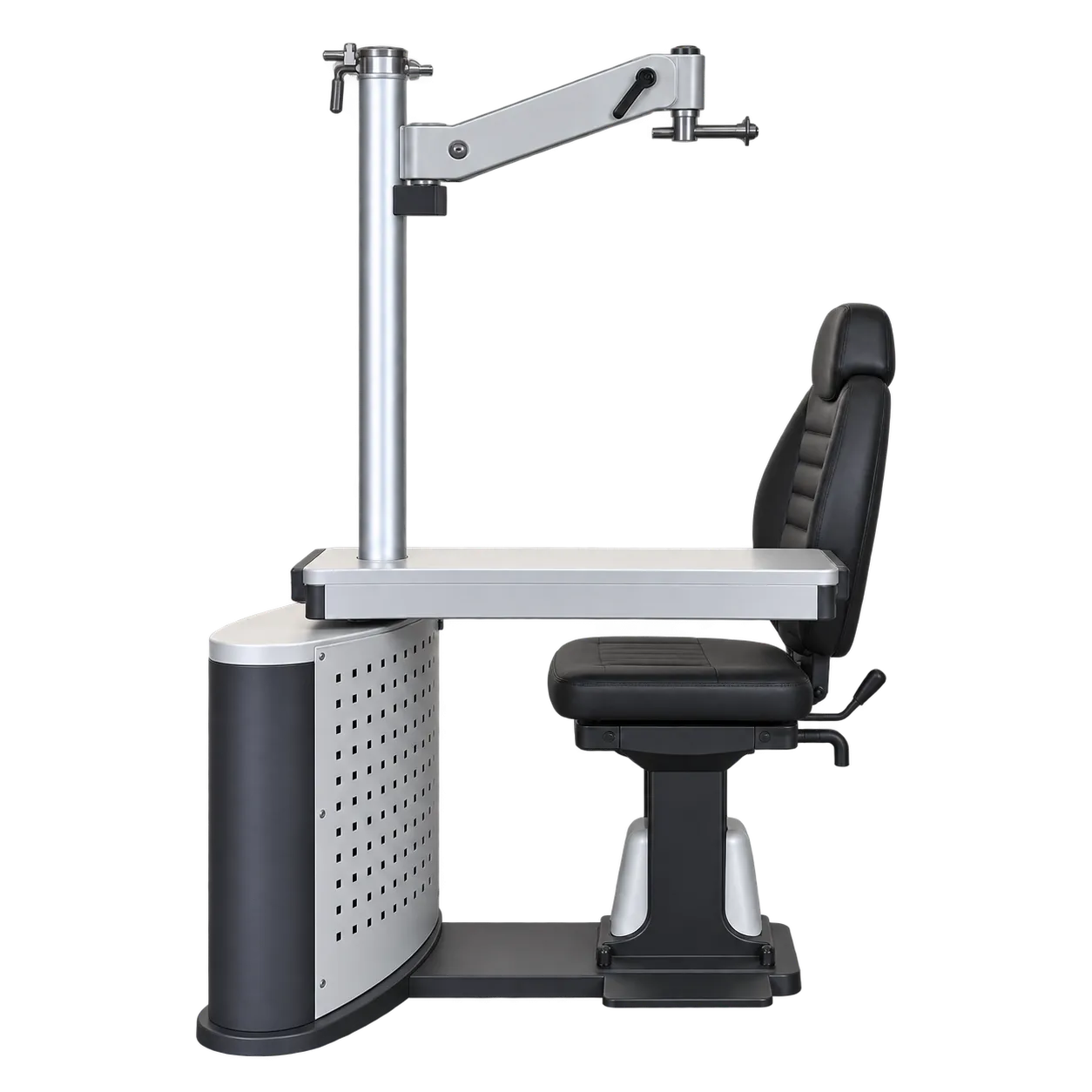
Single-room practices fitting a complete examination position benefit most directly. A combined unit brings the instrument table, patient chair, swing arm and lamp into one installed assembly occupying one corner, which suits practices with a single consulting room, those adding a second, and community or hospital settings equipping a room from scratch. The 360° table rotation means both instruments serve the patient from one seating position rather than requiring the room to be laid out around a long bench.
Accessibility is where the chair specification earns attention. A rated loading of 200–250 kg accommodates the great majority of adult patients including bariatric patients that lighter chairs exclude, and a stated figure is what allows a practice to answer an accessibility question with something better than an assumption. The 540 mm minimum seat height makes transfer straightforward for patients with limited mobility, walking aids or hip and knee restrictions, and the 690 mm maximum brings them to instrument height without them doing the climbing.
Patients who cannot sit fully upright are served by the 160° backrest — those with respiratory or spinal conditions, and patients who feel faint during examination and need reclining quickly.
Rooms with restricted ceiling height suit this model over the taller alternative. At 1850 mm it stands 250 mm lower, which decides converted upper floors, buildings with sloping ceilings and rooms with soffits or bulkheads.
Three things should be settled before ordering, and all are absent from the literature. The chair movement mechanism is unstated — electric, hydraulic or gas — and it determines the electrical requirement, installation, maintenance and price. The electrical supply beyond the 24V 3W lamp is unpublished. And no installation or delivery requirement is given for what is a substantial fixed assembly.