
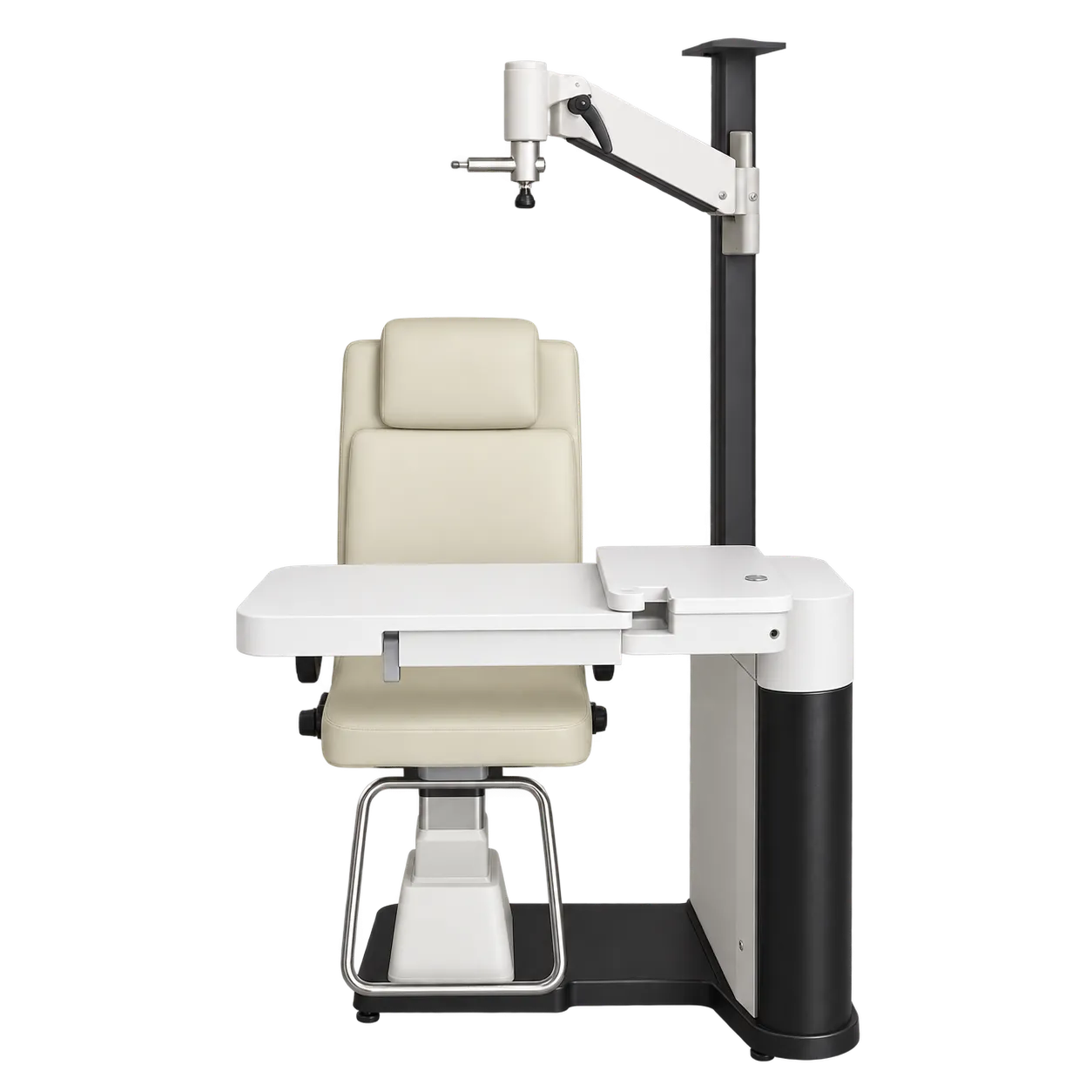
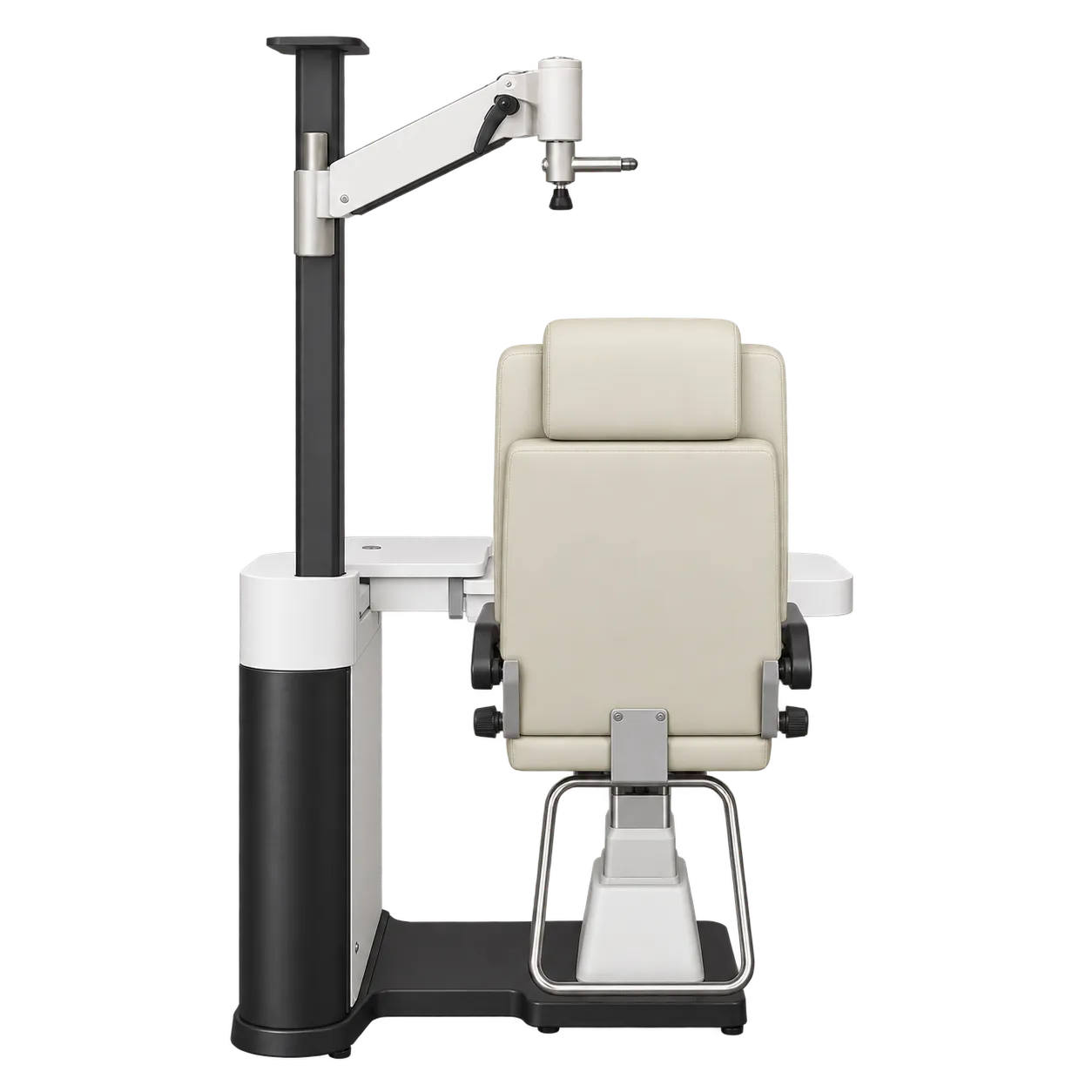
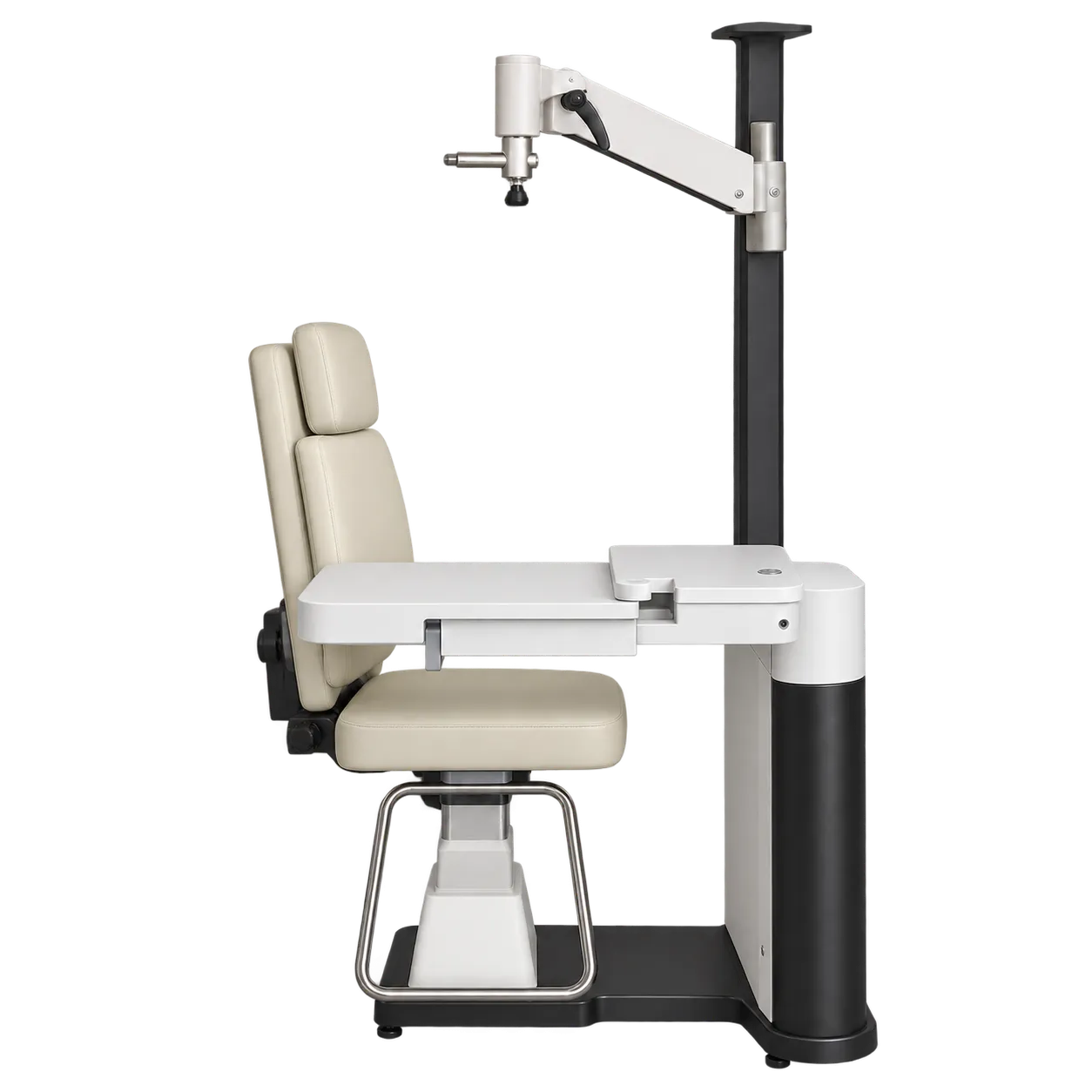
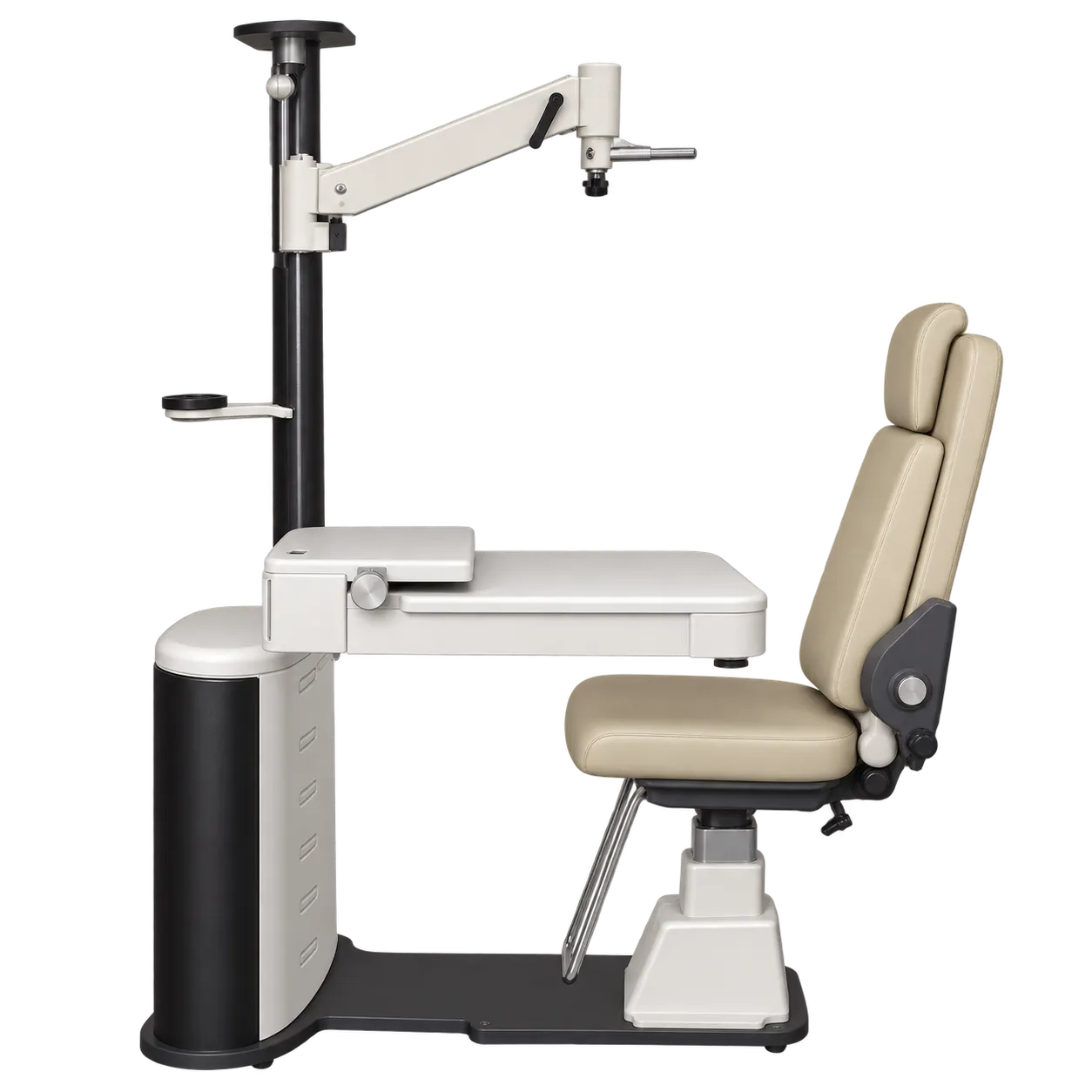
Practices equipping a refraction room from scratch have the clearest case. Buying a combined table and chair conventionally leaves the phoropter arm, the projector mount and the trial lens storage to be sourced separately, each one needing to be positioned and aligned against equipment already installed — and the geometry between phoropter, patient, chart and autorefractor is precisely the part that goes wrong when the pieces arrive from different suppliers on different weeks. Here that coordination is settled at manufacture.
Full appointment lists benefit from the electric seat more than the specification suggests. Adjusting seat height by hand for every patient across a day is repeated physical work falling on the clinician's back and shoulders, and it accumulates across years rather than across a morning. A powered 150 mm range on a switch removes it entirely.
Accessibility gains from the same feature. A powered seat can be brought fully down for a patient using a stick, frame or wheelchair transfer and raised precisely to instrument height afterwards, which is a materially better experience than a manual adjustment made approximately while the patient waits. The 200–250 kg loading accommodates bariatric patients that lighter chairs exclude.
Practices working from a trial frame rather than a phoropter still gain from the fitted 550 × 350 × 40 mm drawer, which keeps the lens set in the unit rather than on a shelf across the room — though the case dimensions should be checked against it before ordering.
Two things to settle at order: the trial lens drawer's 40 mm internal depth against your specific case, and the delivery and installation arrangement, which is unpublished for a 120 kg fixed assembly. Confirm the supplied voltage variant too, since dual-voltage equipment usually ships configured for one market.