
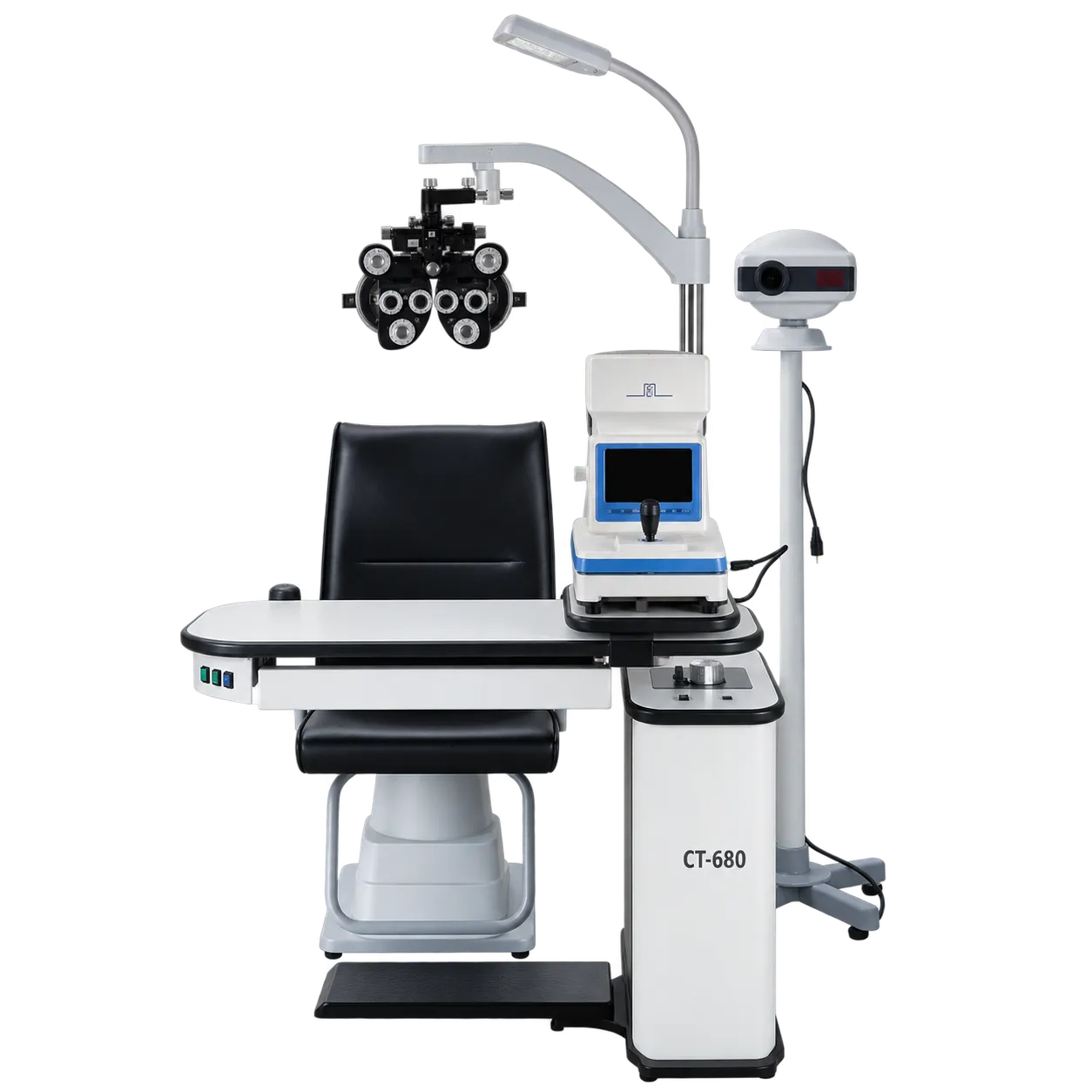
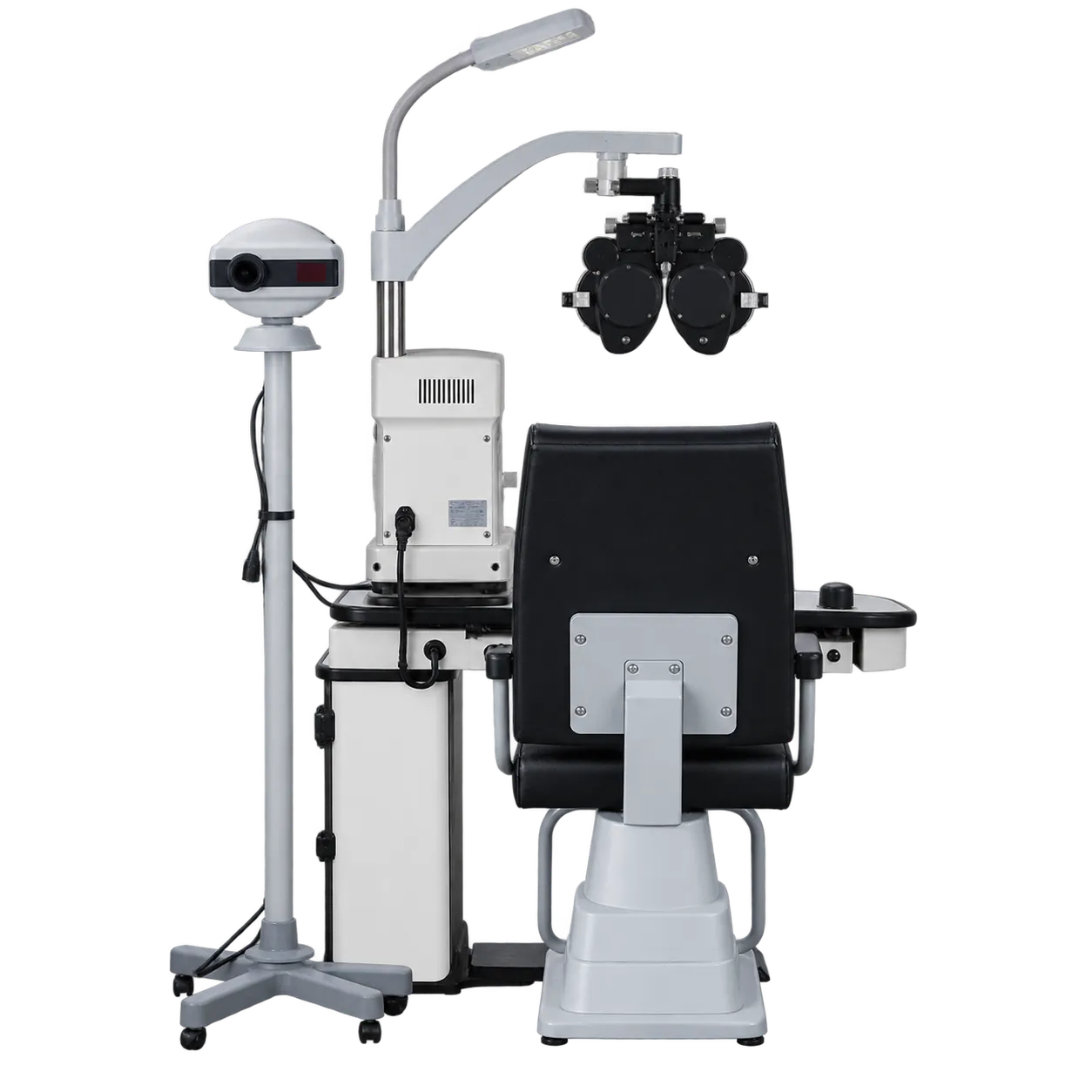
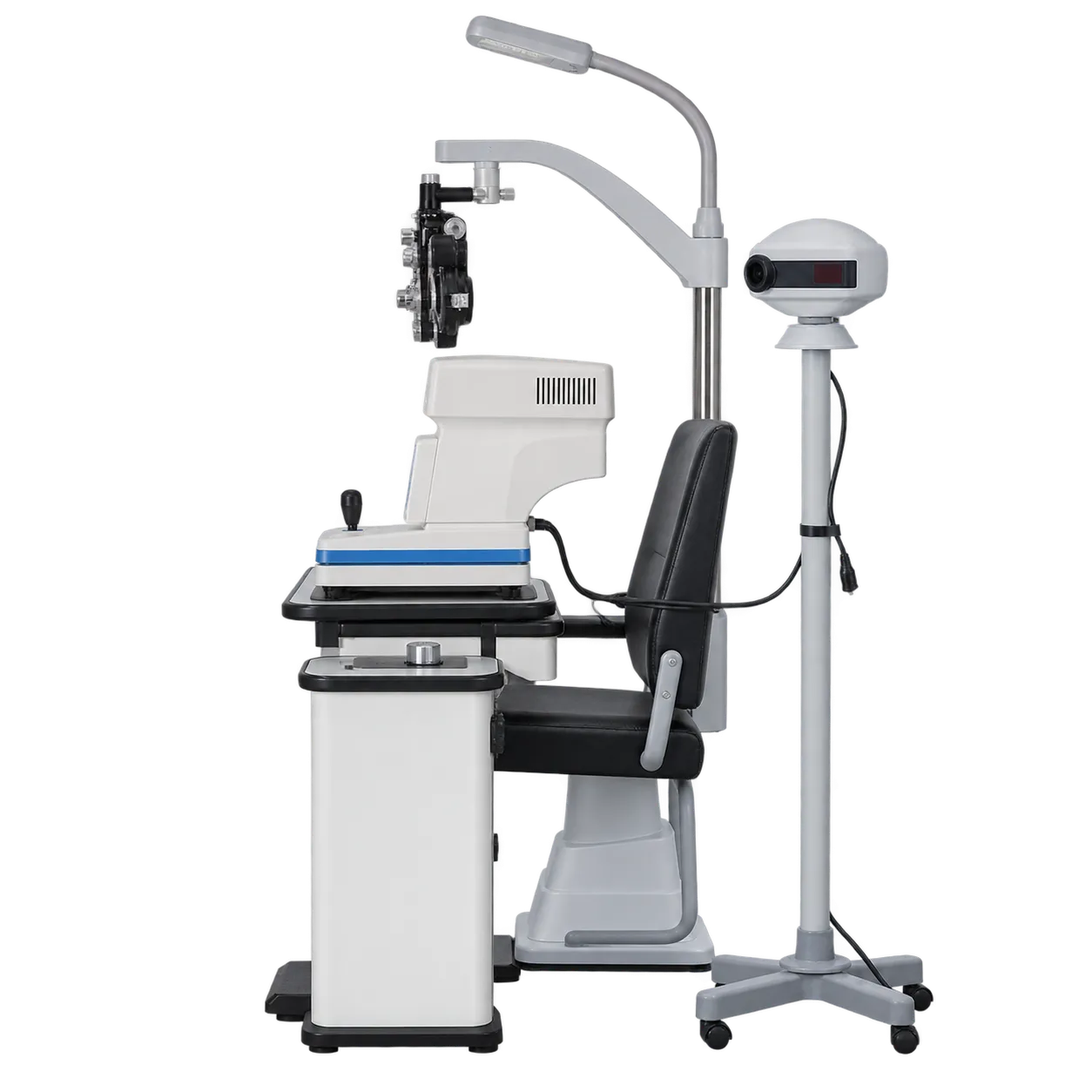
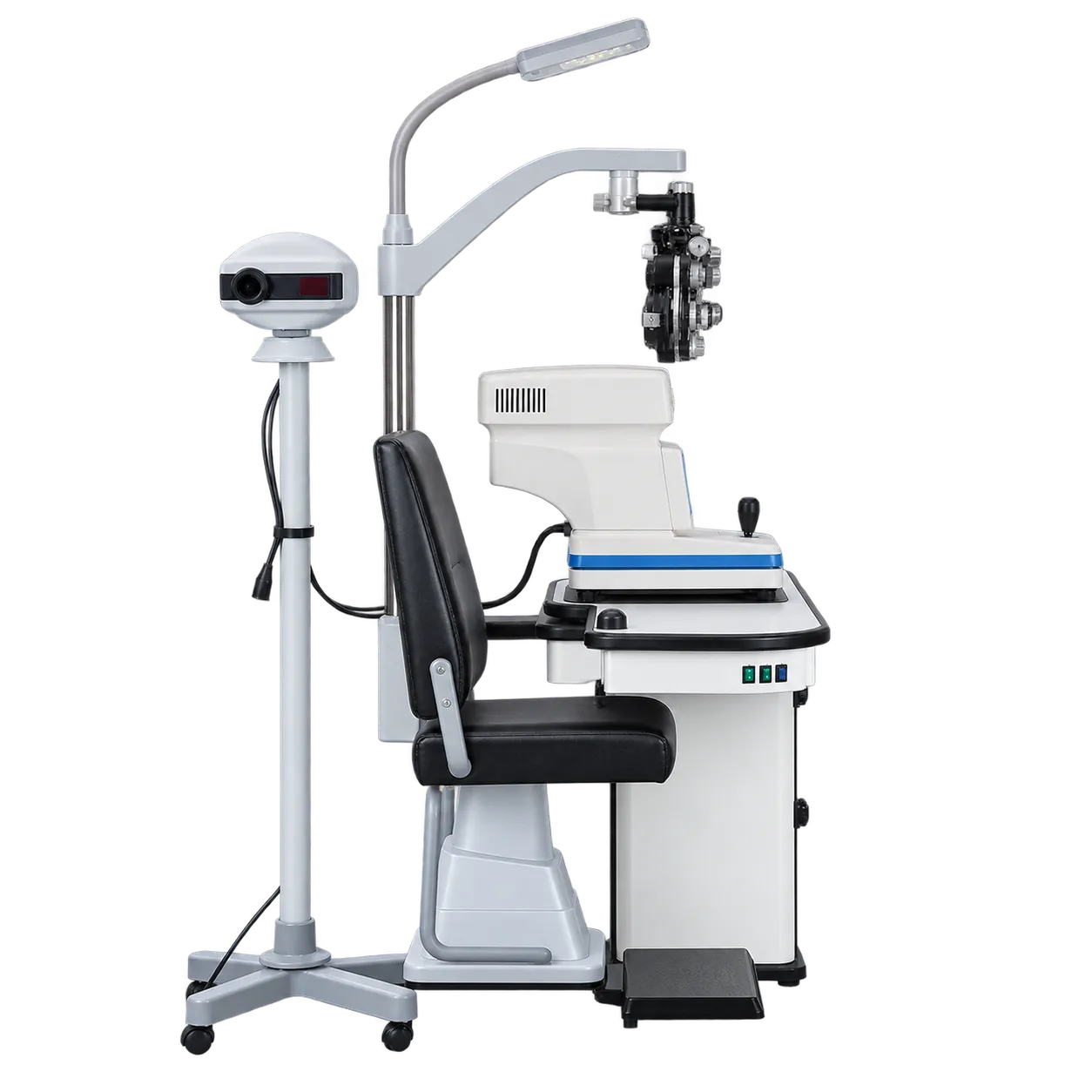
Sustained high-magnification work is where structural rigidity earns its cost. At slit lamp magnification a fraction of a millimetre of table movement is a visible shift in the image, and the sources of that movement are entirely ordinary: a clinician resting an elbow on the worktop, a patient gripping the edge to steady themselves, somebody closing a drawer at the other end. On a lighter table each of those produces a small deflection, the clinician refocuses, and the appointment carries on. Nobody records it, but it happens repeatedly through every examination.
Practices seeing older or unsteady patients encounter the second source constantly. A patient reaching for the table edge as they sit or stand is doing exactly what the room invites them to do, and a unit that does not move when they do is worth having.
Anterior segment photography and any procedure requiring the instrument and eye to hold a fixed relationship for minutes benefit similarly, since accumulated small movements are harder to work around than a single large one.
The working specification otherwise matches the standard units in this range: a 500 mm deep worktop with 90° rotation, 300 mm of arm travel, a sliding secondary surface and a 160 mm chair lift, with a marginally longer 1050 mm table.
Two things belong in the decision, and the second is practical rather than clinical. No manufacturer in this category publishes a deflection figure, so the case rests on 200 kg against 150 kg in a near-identical envelope — strong evidence rather than proof, and it should be weighed as such. And at 200 kg the delivery route, floor loading and positioning labour need establishing before ordering, particularly for upper-floor or converted premises. The mass that steadies it in use is the mass that complicates getting it there.