
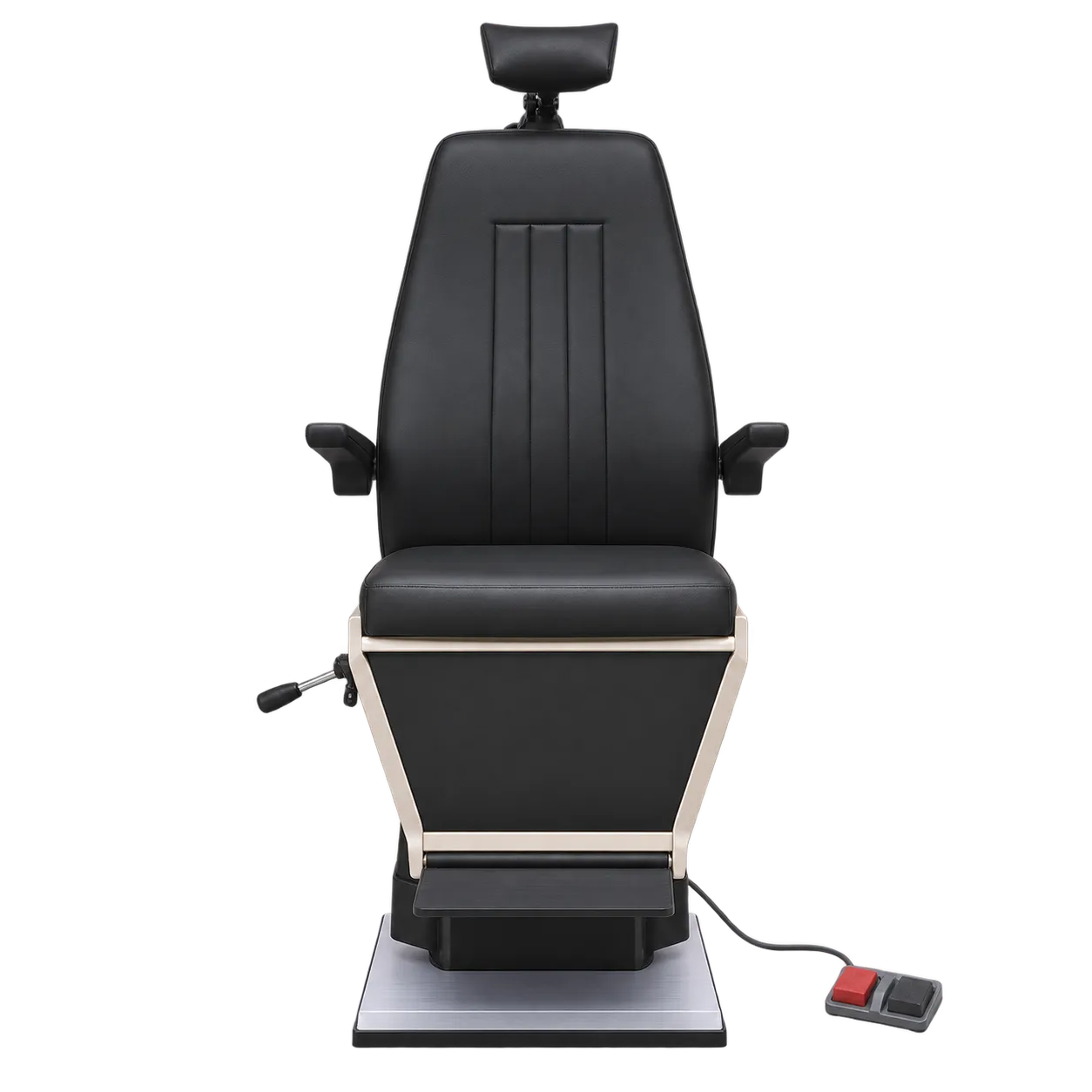
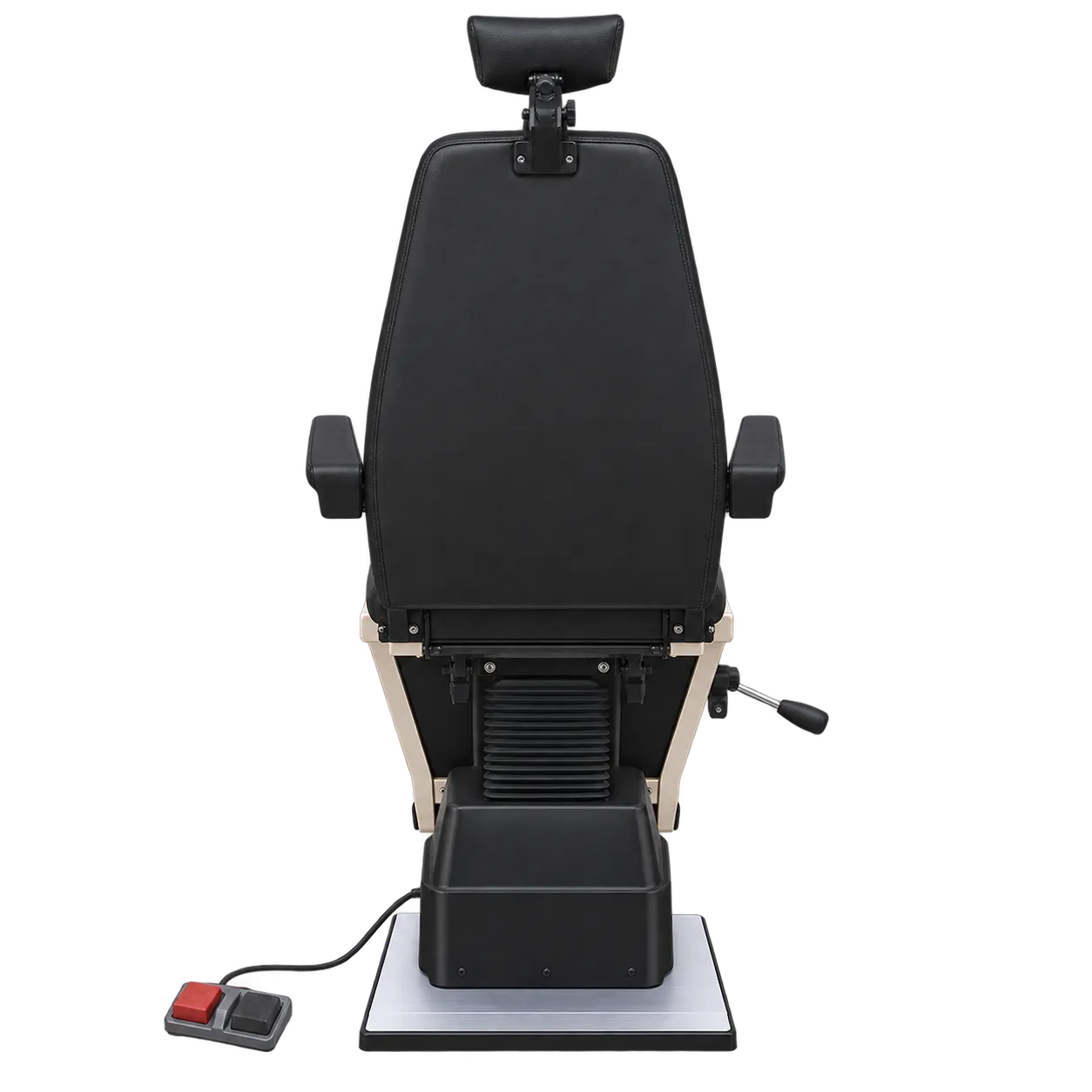
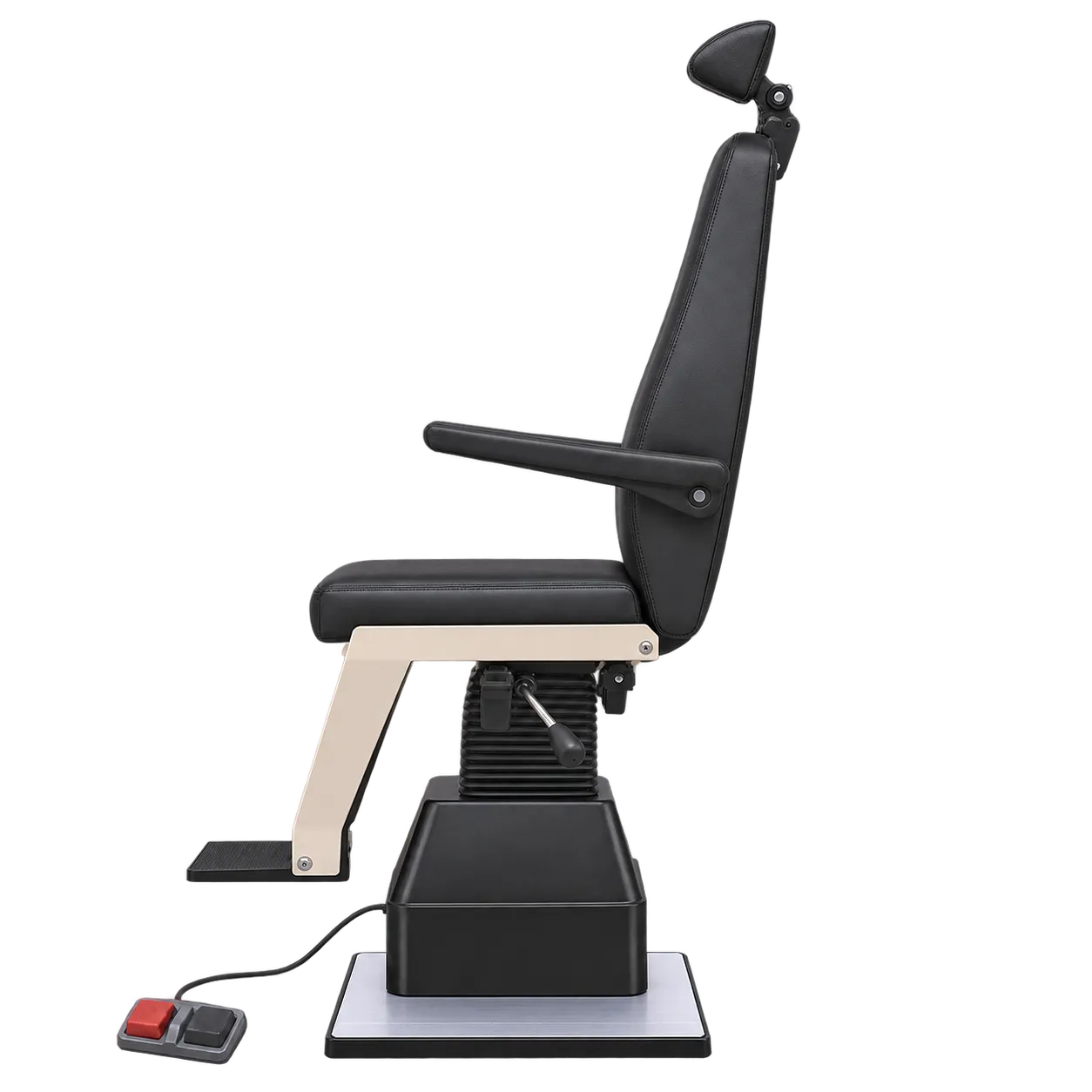
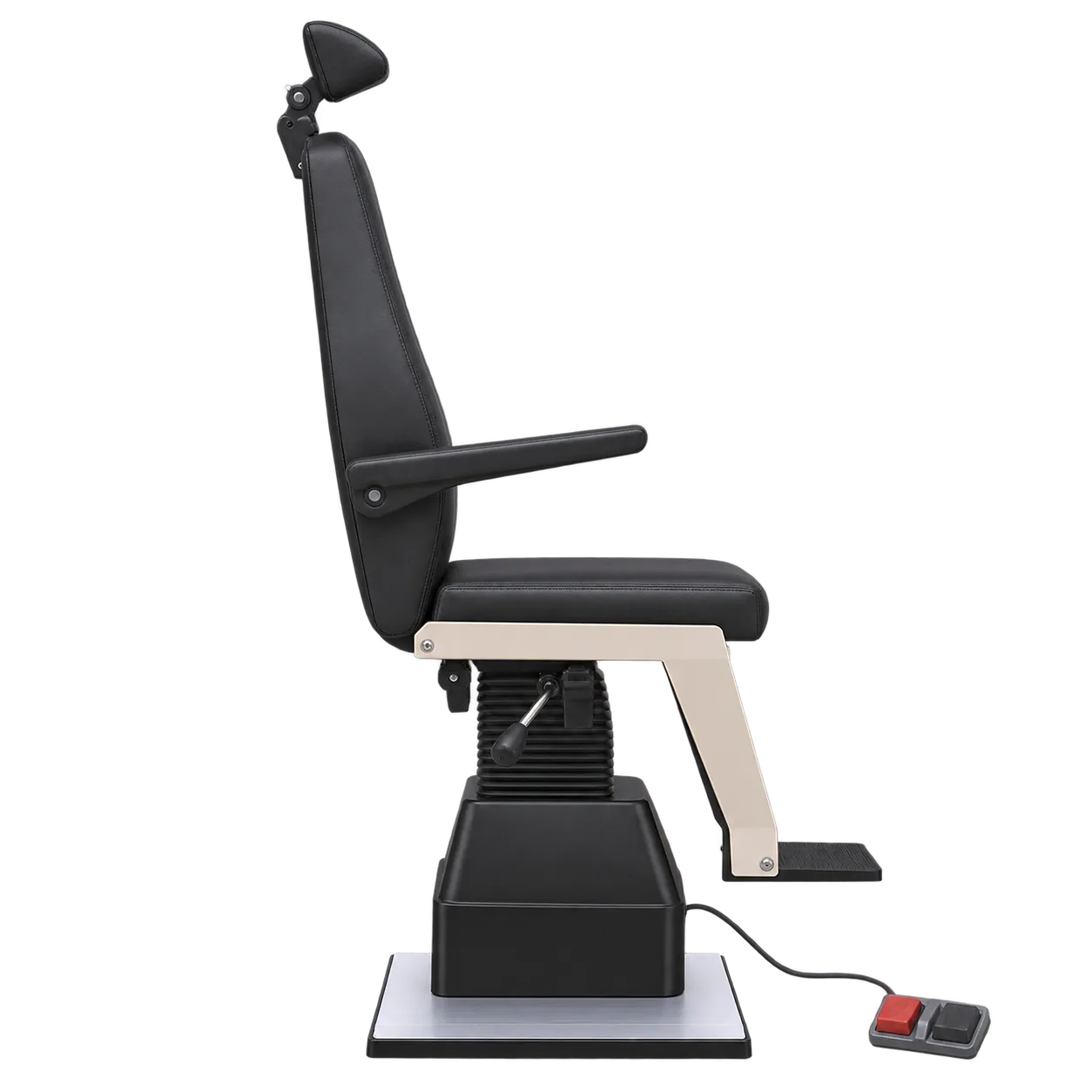
Chair replacement without column replacement is the primary case, and it is the mirror of buying a column without seating. Upholstery, lift mechanisms and rotation bearings wear on their own schedule, and a practice with a serviceable instrument stand and a tired chair should be able to replace the tired part alone. Supplied separately, this is that purchase.
UK installations benefit from the voltage specification more than the figure suggests. Nearly every ophthalmic unit sold into this market publishes a dual specification and ships configured for one of the two, which has to be established at order and confirmed in writing — and occasionally is not. A chair stating 230V ±10% removes the question entirely.
Wheelchair transfers are served by the 460 mm minimum, below standard wheelchair seat height, so the move is lateral rather than upward — which matters for the patient and for staff handling assessments alike.
Multi-instrument rooms suit the ±60° rotation, since a patient can be turned toward a second device without the chair being repositioned or equipment wheeled around a seated person.
Patients who cannot recline are accommodated by the backrest being published as a 90° to 135° range rather than a maximum, so the upright end is known to be genuinely upright.
Two things need requesting before ordering. Upholstery material and finish are unpublished, which bears on durability under daily use and on which cleaning agents are safe — an unsuitable product does visible damage. And no footrest dimension appears in the specification although the illustration shows one fitted, which matters for patients of smaller stature whose seated stability depends on it.